
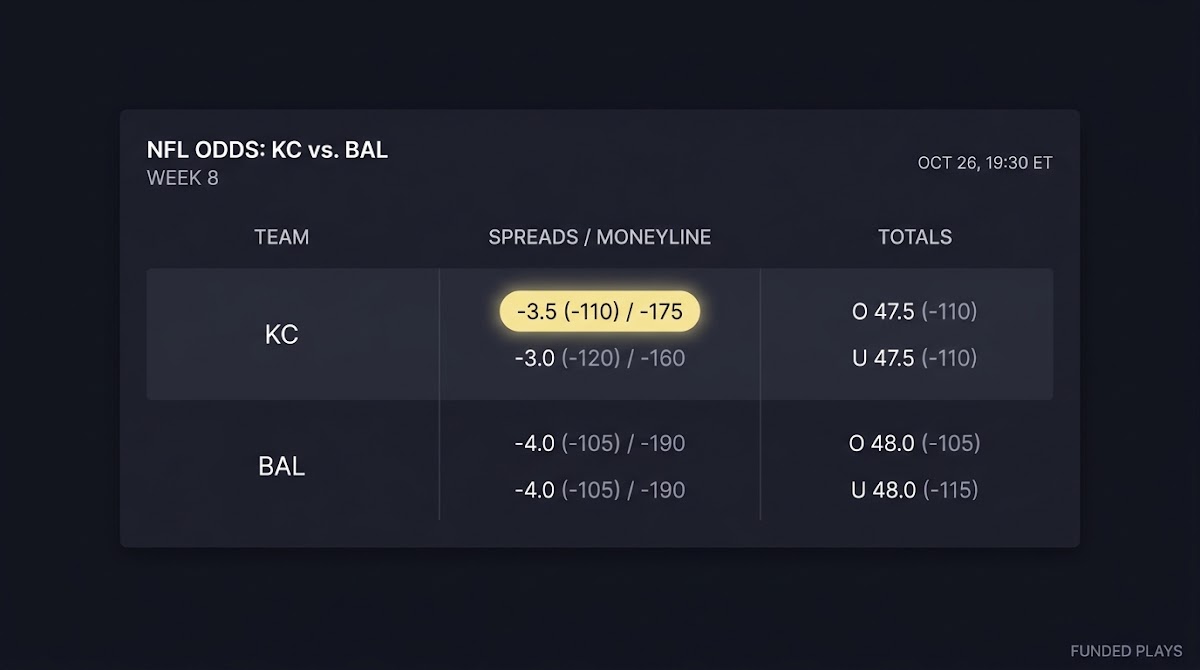
What the point spread on the NFL game tonight actually means
Quick definition: point spread on the NFL game tonight
The phrase point spread on the NFL game tonight refers to a published line that identifies the market favorite with a negative number and the underdog with a positive number, and that sets how many points the favorite must win by to cover the bet; this definition is standard across regulated U.S. markets when reading lines on an odds screen Point Spread Betting Explained: Favorites, Underdogs and How Spreads Work.
That core definition has two practical implications: first, to find which team is favored tonight, look for the side showing the minus sign on multiple regulated sportsbooks; second, the published line is a settlement reference used by operators and by state regulators when confirming outcomes and payouts Approved Sports Wagering Catalog (Definitions and Wager Types).
Quick check before you act
Before you act, check a live odds screen on regulated operators to confirm tonight's line and where the negative spread sits across books.
Because the spread sets the margin for covering, a favorite must win by more than that number to produce a cover; if the favorite wins by exactly the spread, many operators treat the result as a push and return stakes under their published house rules sportsbook house rules.
How to read negative and positive spread numbers quickly
Interpreting signs and decimals
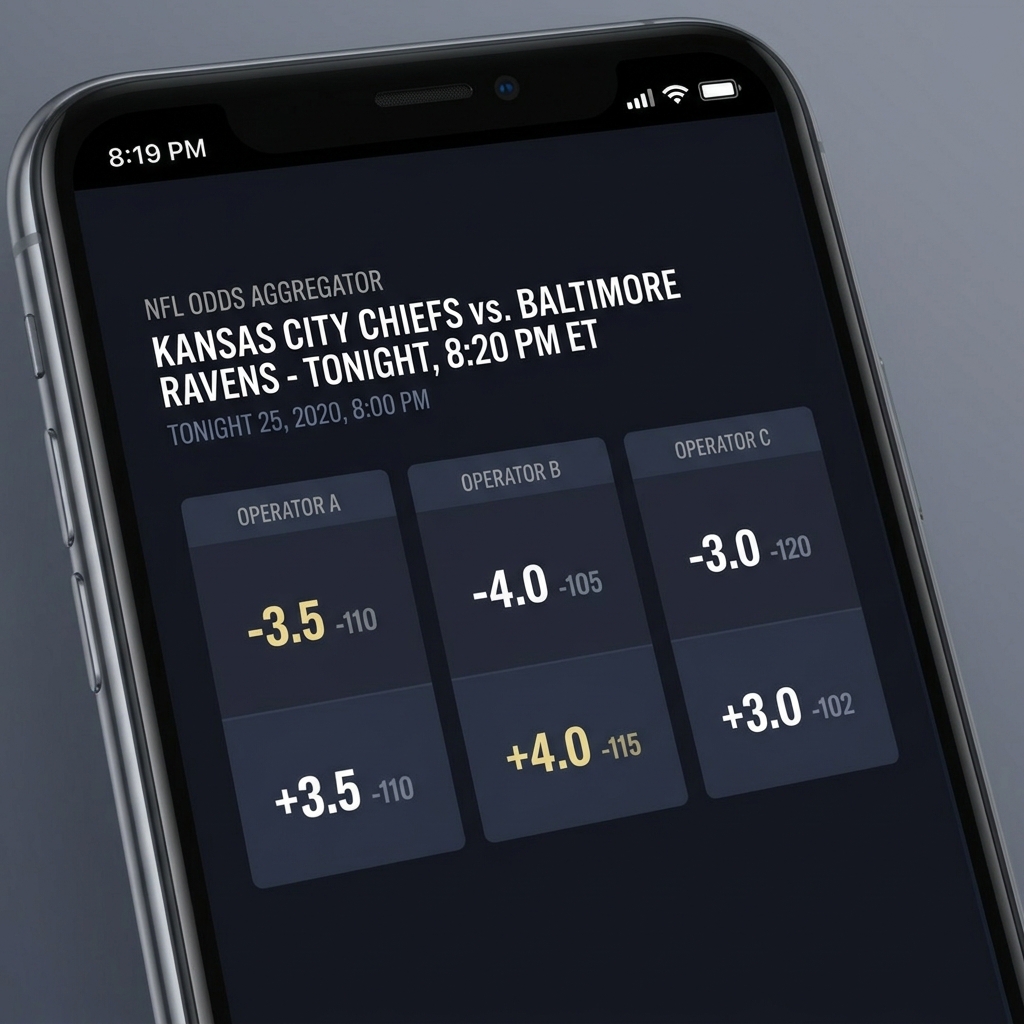
Quick checklist: a minus sign before the number marks the favorite, a plus sign or no sign with a positive number marks the underdog, and half points remove pushes so a listed -3.5 means the favorite must win by four or more to cover; this basic shorthand is what oddsmakers use when they publish NFL spreads on regulated books Point Spread Betting Explained: Favorites, Underdogs and How Spreads Work.
When you scan a listing, look for decimals or half points first: whole-number lines can produce a push if the final margin equals the spread, while half points force a cover or loss; this is why many NFL lines use a half-point increment to avoid stake returns and create decisive outcomes for settlement purposes Point Spread Betting Explained: Favorites, Underdogs and How Spreads Work. For another live-odds reference see SportsLine's NFL odds and lines NFL Odds And Lines - SportsLine.com.
How sportsbooks set the spread and name a favorite
Odds compilers and market forces
Oddsmakers start with matchup data, starting-line projections, and situational factors to publish an initial spread, then incorporate market information and liability concerns to refine the line; this mix of analytics and risk management is the basis of a published favorite on regulated books Point Spread Betting Explained: Favorites, Underdogs and How Spreads Work.
Books manage exposure by adjusting either the spread itself or the price applied to each side, so the side listed as the favorite can reflect expected scoring difference as well as the operator's need to balance action Point Spread Betting Explained: Favorites, Underdogs and How Spreads Work.
The team with the negative spread at most regulated sportsbooks is the favorite; if books are split, the side with negative numbers at a majority of books is the market consensus favorite.
Because injuries, weather, and heavy betting flow can force rapid line moves, a favorite shown early can change by game time as operators react to new information and betting patterns Point Spread Betting Explained: Favorites, Underdogs and How Spreads Work.
Why the favorite can differ between books tonight
Line movement and timing
Different regulated sportsbooks can display different favorites at the same moment because lines and prices move at different speeds, and each operator reacts to unique information and liability, so the market consensus is what matters more than a single snapshot Point Spread Betting Explained: Favorites, Underdogs and How Spreads Work.
If books are split on which side carries the negative sign, the majority rule helps identify the market consensus favorite; in practice, comparing two or more regulated operators or checking an odds aggregator shows whether a single team holds the negative spread at most books Point Spread Betting Explained: Favorites, Underdogs and How Spreads Work.
What happens if the final margin lands exactly on the spread
Pushes and returned stakes
When the final margin matches the posted spread exactly, most U.S. sportsbooks grade the outcome as a push and return the original stake to the bettors, subject to the operator's house rules; that settled treatment is the common expectation among regulated operators operator house rules.

Because operator house rules govern settlement, readers should check the specific sportsbook's rules for edge cases such as timing disputes, suspended games, or alternative settlement language that could change how a push is handled sportsbook house rules.
How juice (vig) changes your real break-even chance
Understanding -110 pricing
Standard NFL spread pricing frequently uses -110 on each side, which implies a break-even percentage around 52.38 percent due to the juice applied to wagers; accounting for that vig is essential when you translate a market spread into an implied probability What Does -110 Mean in Sports Betting? Understanding Juice/Vig and Break-Even Percentage.
Because books sometimes adjust price rather than the spread to manage liability, the listed favorite can remain the same side even if the juice increases; weighing the price change against your own probability estimate helps determine whether the favorite is worthwhile tonight What Does -110 Mean in Sports Betting? Understanding Juice/Vig and Break-Even Percentage.
How to identify tonight's consensus favorite step by step
Check multiple regulated books
Step 1, open two or more regulated sportsbooks or an odds aggregator and locate tonight's matchup; note which side shows the negative spread at each operator, because the team that carries the minus sign at a majority of books is usually the market consensus favorite operator house rules. For live listings you can also reference ESPN's odds page NFL Game Odds with Spread, Moneyline, and More.
Compare regulated lines quickly
Use majority as tie-breaker
Step 2, record the prices attached to each side and convert them into required break-even percentages if needed; step 3, confirm any house-rule language that could affect settlement and then apply your bankroll rules before acting What Does -110 Mean in Sports Betting? Understanding Juice/Vig and Break-Even Percentage. (see how Funded Plays evaluations work here)
Decision criteria: when to trust the favorite and when to avoid it
Value versus probability
Distinguish between a market favorite and a value bet: the favorite is simply the side with the negative spread, but it is not necessarily a profitable play unless your own edge estimate exceeds the implied probability after juice What Does -110 Mean in Sports Betting? Understanding Juice/Vig and Break-Even Percentage.
Practical decision rules include checking whether your model or read predicts a probability higher than the break-even implied by the posted price, factoring in matchup specifics, and avoiding favorites when the juice makes required win-rate unrealistic for your strategy Point Spread Betting Explained: Favorites, Underdogs and How Spreads Work.
Typical errors and traps when identifying tonight's favorite
Relying on a single book
Mistake: using one sportsbook snapshot and missing that other books show the opposite sign; because lines can diverge, relying on a single display risks misidentifying the market favorite Point Spread Betting Explained: Favorites, Underdogs and How Spreads Work.
Mistake: ignoring price differences and treating the favorite as free value when a move in juice changes the break-even required to profit; price shopping and converting moneyline-style prices into break-even percentages helps you avoid that trap What Does -110 Mean in Sports Betting? Understanding Juice/Vig and Break-Even Percentage.
Practical examples: short scenarios showing how to read tonight's spread
Example 1: clear favorite across books
Scenario A: if three regulated books list Team A at -3.5, then Team A is the consensus favorite and must win by four or more to cover, so a bettor who wants exposure to the favorite should check price and house rules before placing the wager operator house rules.
Scenario B: if two books list Team B at -2.5 and two list Team C at -1.5, there is no single universal favorite until a majority forms; in that case, watch price movement, timestamps, and any injury or weather news that could break the tie Point Spread Betting Explained: Favorites, Underdogs and How Spreads Work.
Using odds screens and price comparison tools effectively
What to look for on an aggregator
Use an odds aggregator to compare the sign of the spread across regulated books, view timestamped lines, and spot price discrepancies quickly; sustained majority across a time window is a more reliable indicator than a single early move Point Spread Betting Explained: Favorites, Underdogs and How Spreads Work.

Timing matters: check for sustained consensus rather than the first line posted, and be aware that some operators limit lines or adjust prices faster than others, which can create temporary divergence that resolves as markets settle sportsbook house rules. You can also compare aggregated odds on Covers' odds tool NFL Odds & Betting Lines.
How regulatory catalogs and house rules protect consistent interpretation
Role of state wagering catalogs
State wagering catalogs define wager types and require operators to publish clear house rules, which helps ensure that spreads are interpreted and settled consistently across regulated markets Approved Sports Wagering Catalog (Definitions and Wager Types).
Operators must align their published settlement practices with regulator expectations, so consulting both the state catalog and the sportsbook's house rules is the way to confirm authoritative settlement language for any edge case Sports Betting Catalog of Events and Wagers.
How this matters for skill-based platforms and challenge-style play
Translating spread knowledge into simulation challenges
For users participating in skill-based prediction challenges, understanding how spreads and juice work improves probability assessments and bankroll handling inside evaluation formats; that skill is part of disciplined play on funded-account style platforms such as Funded Plays.

Accurate line reading, price shopping, and applying house-rule awareness are practical skills that help participants measure consistent performance in simulation challenges, while remembering that outcomes and any rewards depend on individual results and platform rules rather than guaranteed returns.
A concise checklist to use before you act on tonight's spread
Three quick verification steps
1) Verify which side shows the negative spread across multiple regulated books or an odds screen. 2) Check the price and calculate the required break-even percentage against your own edge. 3) Confirm house rules for pushes and apply disciplined bankroll limits before placing any stake What Does -110 Mean in Sports Betting? Understanding Juice/Vig and Break-Even Percentage.
These three steps take under a minute on a modern odds aggregator and reduce the chance you misidentify the consensus favorite or miss an unfavorable price, which supports steadier long-term performance in both casual and challenge-oriented play Point Spread Betting Explained: Favorites, Underdogs and How Spreads Work. (see our blog here)
Final takeaways: who is more favored to win and what that means
Key points summary
The team showing the negative spread at most regulated books is the market favorite for tonight; if books are split, use the majority side as the consensus and remember that pushes typically return stakes under operator house rules operator house rules.
Also keep in mind that common NFL spread pricing around -110 implies a break-even near 52.38 percent after juice, so factor the vig into any decision before backing the favorite and always verify live lines, compare regulated operators, and confirm settlement language before acting What Does -110 Mean in Sports Betting? Understanding Juice/Vig and Break-Even Percentage.
Check multiple regulated sportsbooks or an odds aggregator and see which team shows a negative spread at a majority of books; that team is the market favorite.
Most regulated U.S. sportsbooks treat an exact match as a push and return the original stake according to their published house rules.
A -110 price on a spread implies a break-even win rate of about 52.38 percent after juice, so factor that into your probability estimate before betting.
References
- https://www.actionnetwork.com/education/point-spread-betting-explained
- https://massgaming.com/sports-wagering/approved-catalog/
- https://sportsbook.fanduel.com/legal/house-rules
- https://www.sportsline.com/nfl/odds/
- https://www.thelines.com/betting/what-does-110-mean/
- https://sportsbook.draftkings.com/help/house-rules
- https://www.fundedplays.com/challenges
- https://www.espn.com/nfl/odds
- https://www.covers.com/sport/football/nfl/odds
- https://sbg.colorado.gov/sports-betting-catalog
- https://www.fundedplays.com
- https://www.fundedplays.com/blogs/how-fundedplays-evaluations-work
- https://www.fundedplays.com/blogs