
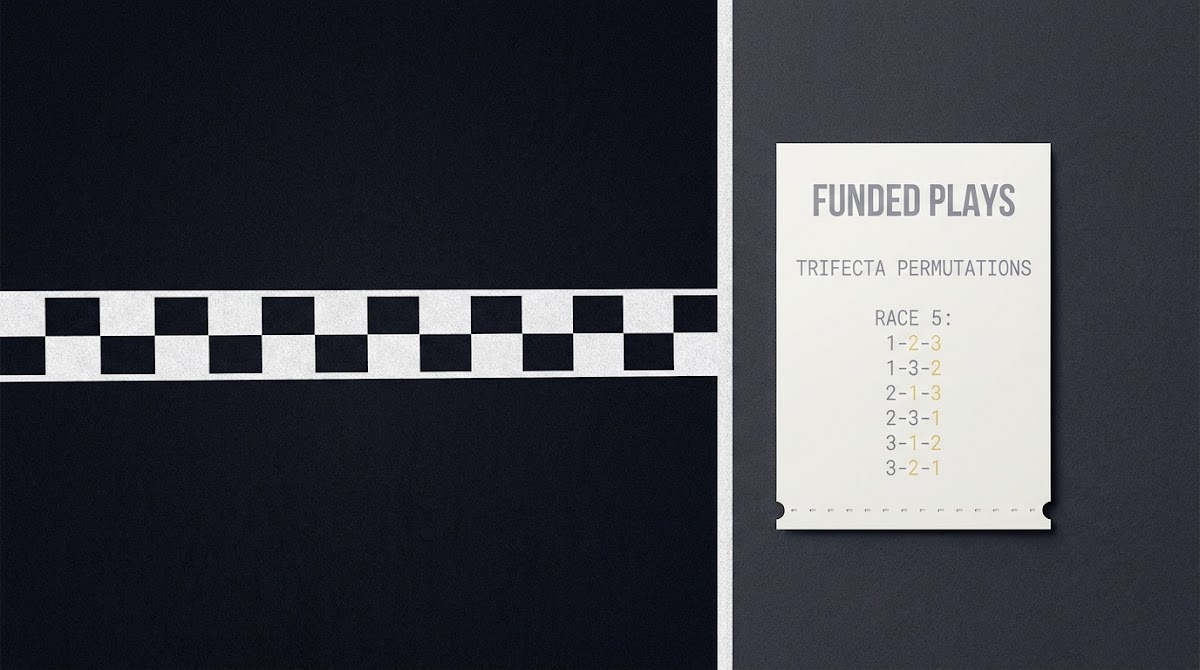
What is a trifecta and what does it mean to box horses?
A trifecta is a wager where you pick the first three finishers in exact order, so the order matters for a winning ticket; boxing those selections covers every order permutation of the chosen horses to let the three finishers appear in any sequence and still win, which changes the number of individual tickets you are buying TwinSpires Edge.
Quick verification checklist for trifecta box calculations
Use before placing the bet
In plain terms, an ordinary trifecta requires the exact finishing order, while a trifecta box removes the order requirement by creating separate tickets for each possible ordering of your chosen horses. That means a boxed trifecta is mechanically equivalent to purchasing many exact-order trifectas at once, so boxing increases cost but also increases coverage compared with a single exact-order ticket.
When someone explains a boxed trifecta at the window or online, they are really describing a bundle of exact-order trifecta tickets that together let the selected horses occupy the top three positions in any order. That mechanic is consistent across operator guides and rulebooks used in the United States and is the practical reason recreational and professional bettors use boxes to manage order risk CHRB rules.
pick 6 horse racing calculator: how to compute the number of bets for a 6-horse trifecta box
Start with the combinatorics behind a boxed trifecta: you need the number of ordered ways to choose three distinct horses from n entries. The formula for that is the number of 3-permutations, written P(n,3), and it equals n times n minus 1 times n minus 2. Using a short formula like P(n,3)=n*(n-1)*(n-2) makes the arithmetic straightforward for any n, and this permutation rule is the foundation of a simple trifecta box calculator Wolfram MathWorld.

Apply the formula to six horses step by step: P(6,3)=6*(6-1)*(6-2). Compute each term in turn: 6 times 5 times 4. That product equals 120, which gives the exact number of distinct ordered combinations that must be covered by your tickets in a six-horse box.
Each of those 120 ordered combinations corresponds to one unique exact-order trifecta ticket. If you were to list them, you would see every possible sequence of three different numbers drawn from your six picks. That one-to-one relationship between permutations and tickets is what makes the multiplication step valid and easy to check on paper or in a spreadsheet.
Check track or operator minimums on the FundedPlays Challenges page
Please double-check the operator or track minimum denomination before placing a boxed trifecta, since some venues accept 50-cent bases while others require a $1 base.
For quick verification when you are planning a bet, use the P(n,3) formula as a mental or spreadsheet check: plug the number of horses into n and confirm the multiplication returned the expected ticket count. That simple step avoids surprises on total-cost calculations when you convert permutations to dollar units.
How much does a $1 trifecta box with 6 horses cost?
The total cost of a boxed trifecta equals the number of unique ordered combinations multiplied by the base stake per ticket. For six horses the number of combinations is 120, so at a $1 base the box cost is 120 times $1, which equals $120 in total; this is the straightforward arithmetic result of the permutation count multiplied by the stake per ticket Wolfram MathWorld.

Some racetracks and operators allow smaller base denominations, commonly 50 cents, which would halve the cost to $60 for the same six-horse box. Because minimum denominations and acceptance policies vary by venue, you should confirm the operator's allowed base stakes before finalizing a boxed entry at the window or in an online interface Breeders' Cup wagering guide.
It helps to think of the total as separate tickets rather than a single bundled bet: buying a $1 six-horse box is equivalent to purchasing 120 individual $1 exact-order trifectas. That perspective clarifies why the boxed cost can be surprisingly large compared with single-order tickets and why bankroll planning matters before you commit to a large box.
How trifecta payouts work: pari-mutuel basics to set expectations
Trifecta payouts are settled pari-mutuel, meaning the dividend for a winning ticket is determined by the size of the trifecta pool and how many winning units are in that pool rather than by fixed odds. The pari-mutuel mechanism pools all stakes of the same wager type, subtracts any takeout, and divides the remaining pool among the winning tickets to calculate the payout Equibase pari-mutuel FAQ.
A $1 boxed trifecta with six horses creates 120 ordered combinations and therefore costs $120 at a $1 base, but payouts are pari-mutuel and will vary with pool size and the number of winning units.
Because payouts are variable, the $120 total you pay for a $1 six-horse box sets how many winning units you hold if any of your permutation tickets win, but it does not determine the per-unit return. A heavy pool or a small number of winning tickets will increase the dividend per unit, and the inverse is also true; this is why shaded expectations and bankroll discipline matter when buying large boxes.
Before placing a sizable box, it is practical to check typical pool behavior for trifectas at the track or operator to get a sense of likely dividends. Historical pool sizes and the number of winning tickets can change substantially by day, race, and level, so routine checks help set realistic expectations about potential returns.
Step-by-step: how to enter a $1 trifecta box with six horses at a track or online
When you order the bet in person, speak clearly and give the clerk three pieces of information: the wager type as a trifecta box, the list of the six horse numbers you want included, and the base amount of $1 per permutation. A short script could be, "Trifecta box, horses 1-3-4-6-7-9, $1 base," which tells the clerk the exact options to record on your ticket TwinSpires Edge.
Online, select the bet type or wager menu, choose trifecta box, click or mark the six horses, and set the base denomination to $1 each. The interface should show a ticket summary with the total number of combinations and the total cost before you confirm; always verify the displayed total agrees with your expected 120 tickets times the $1 base.
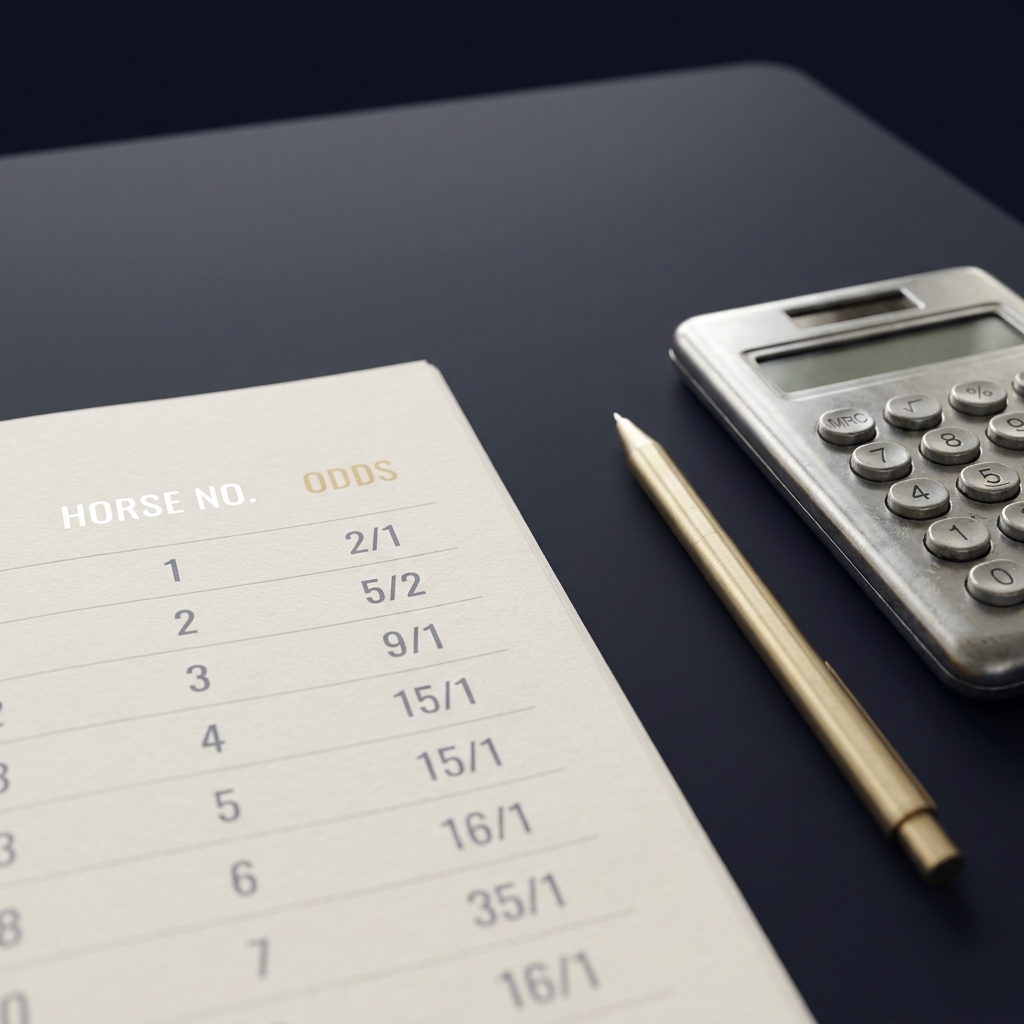
Before finalizing, run a short checklist: ensure the wager type reads trifecta box, confirm the six horse numbers are correct and in your intended set, verify the base stake is $1, and check the displayed total cost equals $120 or the adjusted amount for a different base. If anything is wrong, correct it on the spot to avoid a costly error.
Common mistakes and pitfalls when boxing a trifecta
Entry errors are among the most frequent problems: mistyping horse numbers, selecting the wrong base stake, or misreading an online interface can all convert a $120 purchase into an unintended bet. Confirming ticket fields and watching the summary total prevents these mistakes and helps preserve the intended coverage Breeders' Cup wagering guide.
Another common pitfall is underestimating cost when boxing many horses in multiple races or combining boxes with other exotic wagers. Because the number of permutations grows quickly with the number of horses, even small changes in the selection set can multiply the total expense and overload a modest bankroll.
Finally, bettors sometimes assume a boxed set guarantees a meaningful payout. In reality the payout per winning unit is variable and may be small if many winning units share the pool, so managing bankroll and setting realistic outcome expectations is an important part of responsible play.
Practical scenarios: when a $1 six-horse box might make sense
A six-horse box can be reasonable when a race looks wide open, with several horses plausibly able to fill the top three positions and no single standout favorite. In that case the box buys broad coverage across realistic finishing orders and may be more efficient than trying to pick a single exact order.
That said, coverage comes at cost: buying 120 tickets at $1 each is a meaningful outlay for most bankrolls. Consider alternatives like smaller base denominations if available, partial boxes that lock one or two horses into specific places, or using analytics to narrow the selection before committing to a full six-horse box America's Best Racing guide.
Decide in advance how much of your session bankroll you are willing to allocate to large boxes, and treat a six-horse box as a coverage tool for particular race shapes rather than a routine play. That discipline helps preserve capital for other opportunities and keeps risk proportional to your plan.
Quick calculator walkthrough and verification steps for writers and readers
If you want to build a one-cell spreadsheet check, use a cell formula that mirrors the permutation expression: in a typical spreadsheet enter =n*(n-1)*(n-2) with n set to the number of horses, then multiply that result by the base stake cell to produce the final cost. This reproducible method makes it easy to test alternate set sizes without manual multiplication Wolfram MathWorld.
On the betting slip verify these fields: wager type (trifecta box), the listed horse numbers matching your intended set, the base amount (for example $1), and the total cost presented. A final sanity check is to divide the displayed total by the shown number of combinations to confirm the base stake per ticket.
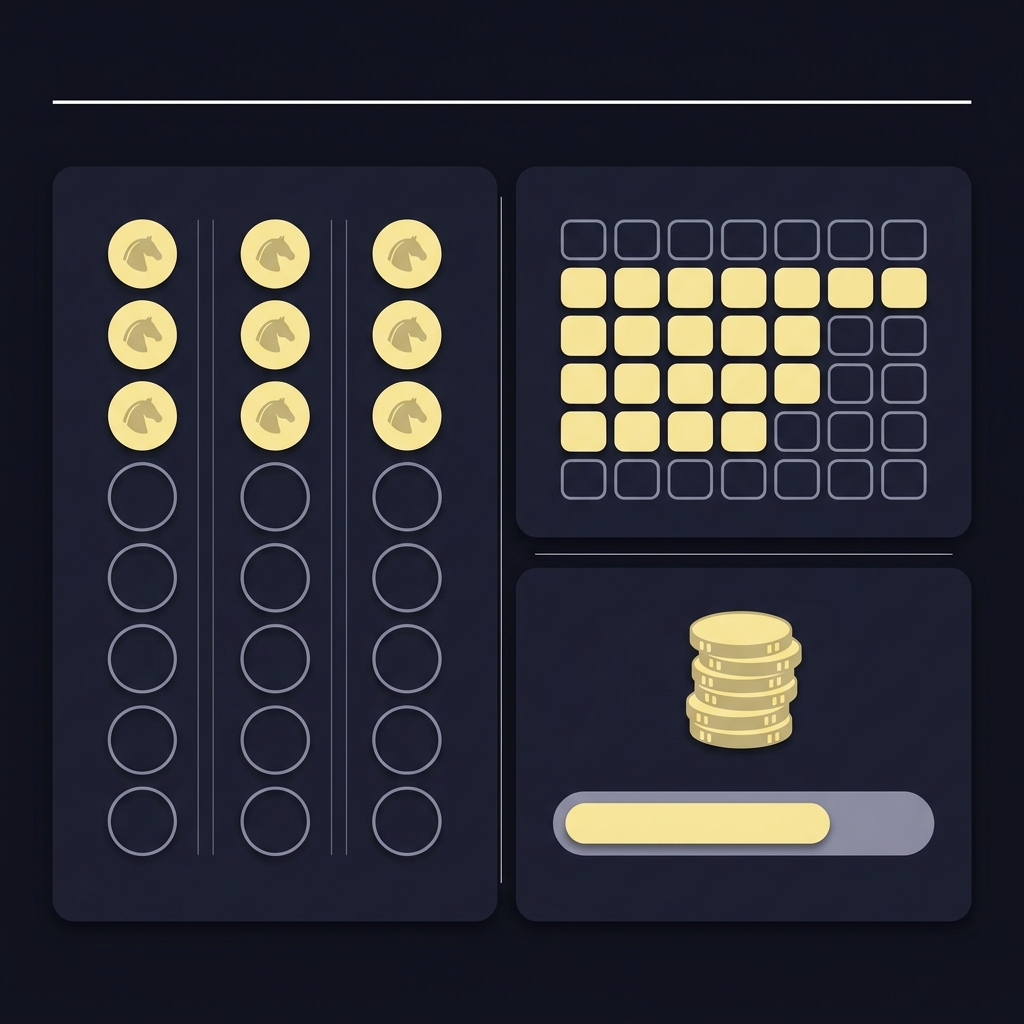
A short mental check before confirming is to remember the twelve-times-ten structure for six horses: 6 times 5 times 4 equals 120. That quick mental anchor helps catch obvious interface or clerk errors in most common scenarios and keeps the math transparent.
Summary and next steps
The core takeaway is simple and arithmetic-based: a boxed trifecta with six horses produces 6 times 5 times 4, or 120 ordered combinations, and at a $1 base stake that equals a $120 total cost; the combinatorics underpin the ticket count and final amount Wolfram MathWorld.
Payouts remain pari-mutuel and depend on pool size and winning units rather than any fixed payout schedule, so plan bankroll and expectations accordingly and confirm the operator's minimum base before placing the bet Equibase pari-mutuel FAQ.
A six-horse trifecta box creates 120 unique ordered combinations, so you are purchasing 120 individual tickets at the chosen base stake.
No, trifecta payouts are pari-mutuel and vary with the pool size and the number of winning tickets; the purchase determines your units, not the dividend.
Some tracks and operators accept 50-cent bases, which would halve the total cost, but you should confirm minimum denominations with the operator before betting.
References
- https://edge.twinspires.com/racing/what-does-it-mean-to-box-a-bet-in-horse-racing/
- https://www.chrb.ca.gov/wp-content/uploads/CHRB-Rules.pdf
- https://mathworld.wolfram.com/Permutation.html
- https://bet-types.com/bet-calculator/trifecta/
- https://www.twinspires.com/wager-types/
- https://www.breederscup.com/wagering/wagering-101/trifecta
- https://www.equibase.com/about/faq.cfm#pari-mutuel
- https://www.fundedplays.com/challenges
- https://www.covers.com/horse-racing/trifecta-wagering
- https://www.fundedplays.com/blogs/how-fundedplays-evaluations-work
- https://www.fundedplays.com/blogs
- https://www.fundedplays.com/
- https://www.americasbestracing.net/gambling/2021-how-bet-trifecta