

What is a parlay ticket?
A parlay ticket is a single wager that links two or more individual selections, called legs, into one combined bet. The ticket wins only if every leg resolves in the bettor s favor according to the operator s house rules, so the result depends on the full set of outcomes rather than any single event. This definition and core settlement convention are commonly explained in sportsbook help centers and betting guides, and they shape how American operators treat multi selection wagers DraftKings help center. See also Fox Sports.
Compared with placing individual single wagers, a parlay multiplies the odds across legs to produce a higher potential payout but a lower probability of winning and higher variance. That trade off is fundamental: you accept a higher chance of losing at least one leg in exchange for a bigger possible return if all legs win. Readers should understand that the exact settlement steps and how edge cases are handled can vary between operators, so it is important to confirm house rules before placing a ticket.
In practice, a parlay ticket will display each leg, the odds type used for each leg, the combined price or payout multiplier, the stake, and the potential return. That ticket view is the primary place to verify the wager is constructed as intended and to spot any settlement notes or operator disclaimers that may affect the result.
How parlay payouts are calculated
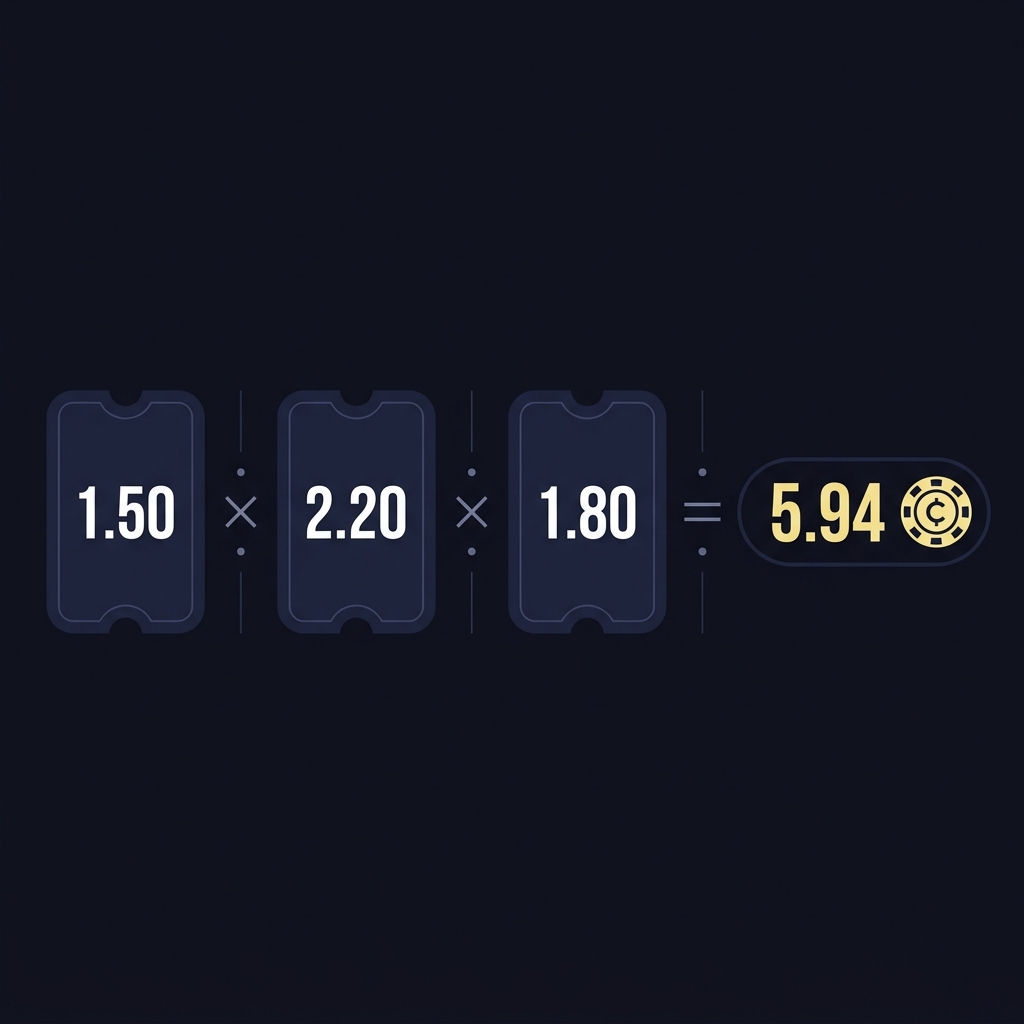
Calculating a parlay payout follows a simple, repeatable formula: convert every leg s odds to decimal, multiply those decimal odds together to get a combined multiplier, then multiply the combined multiplier by your stake to get the total return. Education resources and calculators use this exact procedure when showing parlay math Action Network parlay odds calculator.
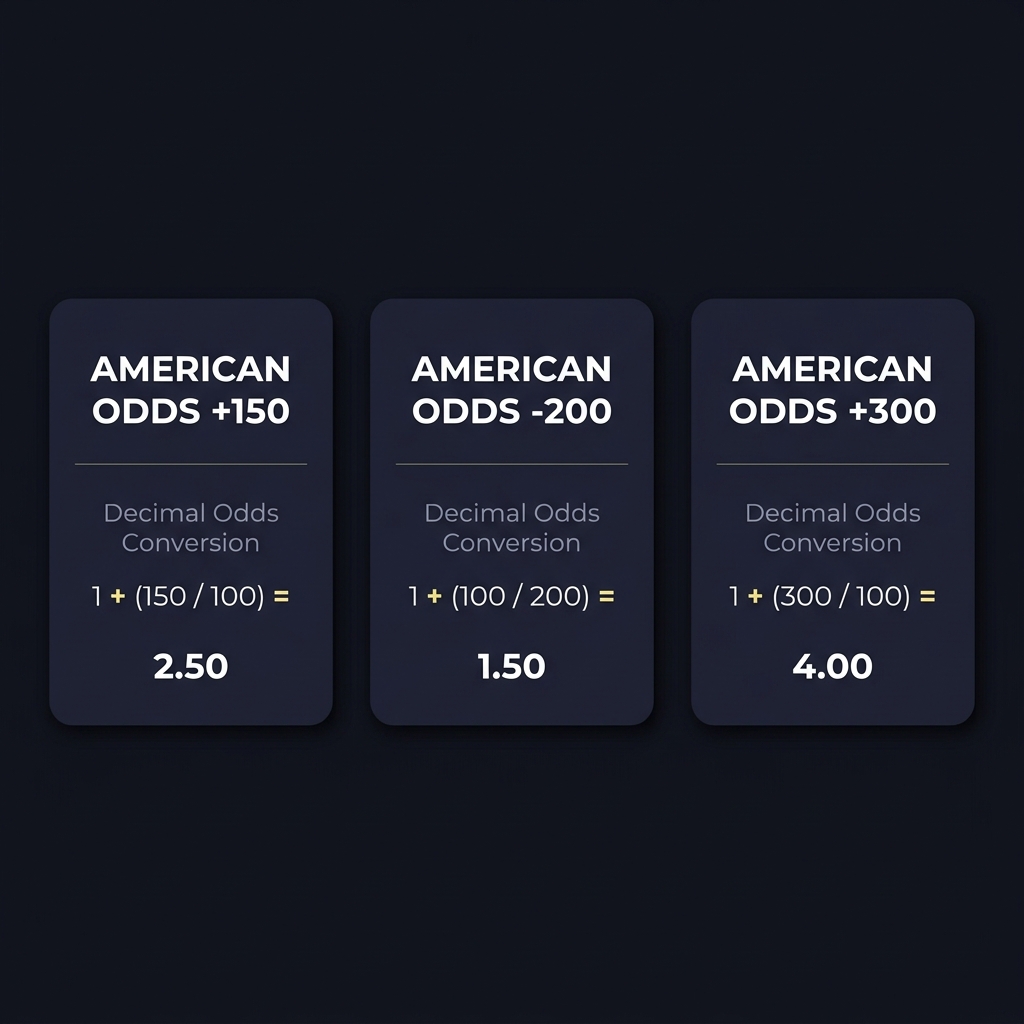
Step 1, convert odds to decimal format. For American odds, the conversion depends on whether the number is positive or negative. See Investopedia. Step 2, multiply all decimal odds together to get combined odds. Step 3, multiply combined odds by the stake to get total return. Step 4, compute profit by subtracting the original stake from the total return. The arithmetic is deterministic and can be reproduced by hand or with a simple calculator.
Example: suppose you build a three leg ticket with American odds +150, -120, and +200, and you stake 20 USD. First convert to decimal: +150 becomes 2.50, -120 becomes 1.83, +200 becomes 3.00. Multiply decimals: 2.50 x 1.83 x 3.00 = 13.725. Multiply by the stake: 13.725 x 20 = 274.50. The total return would be 274.50 and the profit equals 274.50 minus the 20 stake, so 254.50.
This same method underlies most parlay payout calculators and help center examples because it directly models how odds combine to form the ticket price, and it provides a clear check on any displayed potential payout. Read more on our blog.

When you check a ticket, confirm whether the operator displays combined decimal odds, a fractional multiplier, or a moneyline style potential payout. The ticket view may round or truncate displayed values for readability, so allow for small rounding differences when you reproduce the calculation by hand.
How to read a parlay ticket step by step
When you open a parlay ticket, read it from top to bottom and verify these fields in order: each listed leg (team or market), the odds format (American, decimal, or fractional), the combined price or multiplier, the stake you entered, and the potential payout the ticket shows. Confirm the exact matchup, date and market type for every leg so you do not accidentally include the wrong event. Help pages that describe ticket fields show the same checklist approach and explain why each element matters DraftKings help center. See also CBS Sports.

Next, check for settlement notes on the ticket. Many ticket views include clarifying language about how pushes, voids, or technical cancellations are handled. If the ticket lists limits on maximum legs, correlated selection rules, or payout caps in the settlement area, note those items before you confirm the wager. Taking these steps helps you avoid surprises when the ticket settles.
Finally, verify the displayed potential payout mathematically if you intend to rely on that number. Convert the shown odds to decimals and reproduce the multiplication to confirm the ticket s calculation. If a rounding discrepancy or a settlement note appears, reach out to the operator s help resources before finalizing the bet.
What happens when a leg pushes or is voided
A push occurs when a leg's result ends exactly at the boundary set by the market, for example a point spread covering a tie, and the outcome is neither a win nor a loss. A void can happen when an event is canceled, postponed beyond settlement rules, or is declared invalid for wagering purposes. Official help and support articles explain these distinctions and how they influence multi leg tickets FanDuel support article.
Confirm each leg, the odds format, the combined price, the stake, and any settlement notes about pushes, voids, maximum legs or correlated selection rules.
Most operator house rules specify that a pushed or voided leg is removed from the parlay and the ticket is recalculated using the remaining legs, rather than causing the entire ticket to fail or be voided. That recalculation changes the combined odds and therefore the potential payout; the parlay effectively becomes a smaller parlay with one fewer leg under those common settlement rules. Because procedures can differ, check the operator s house rules for examples that apply to your situation Caesars house rules.
As an example of the effect, imagine a three leg ticket where one leg pushes. Under the common rule the parlay becomes a two leg parlay and you are paid according to the two remaining legs at their adjusted combined odds. Some historic or niche markets can have different treatments, so the ticket s settlement language matters for accurate expectations.
Parlay construction rules and restrictions
Operators limit how parlays can be built by setting rules like a maximum number of legs, payout caps, and restrictions on correlated selections. Those constraints exist to manage risk and to prevent certain combinations that are effectively dependent on one event outcome. House rule documents and help centers typically list these limits so customers know what combinations are allowed Caesars house rules.
quick check of parlay return from stake and combined decimal odds
enter decimal odds product from legs
One common restriction is on correlated selections. Correlated selections are markets where two or more legs share an outcome dependency, for example betting both a team's win and a player s performance metric that is closely tied to that outcome. Some operators disallow these combinations or require they be placed in a single market format. Always review the operator s definition of correlated selections to avoid building a ticket that will be rejected at confirmation or adjusted during settlement.
Also watch for maximum leg limits and payout caps. A maximum leg rule prevents extremely long parlays, and payout caps set a ceiling on the amount an operator will pay for any single ticket. These constraints can affect whether a potential high payout actually pays out at the full theoretical value shown during ticket construction.
Parlays increase variance because the probability that every leg wins is the product of each leg s probability, which typically results in a much lower overall chance of winning than placing single wagers. Educational glossaries and betting primers emphasize that compounding odds raises both the possible payout and the chance that at least one leg fails, making parlays a higher variance play than equivalent independent singles American Gaming Association glossary.
From a probability point of view, if each leg has a 60 percent chance of winning independently, a three leg parlay s chance of winning all three is 0.60 x 0.60 x 0.60 = 0.216, or 21.6 percent. That demonstrates how quickly overall probability declines as legs accumulate. For bankroll management, that means parlays are best used sparingly and with clear limits on stake size relative to overall funds, since wins may come infrequently. Read our evaluation guide at how-fundedplays-evaluations-work.
Practically, disciplined players treat parlays as speculative plays with high upside and low hit rates. A responsible approach keeps stakes small relative to the bankroll and avoids using parlays as a primary path to profit. Remember that operator settlement rules, pushes and voids, and construction limits all influence the realized variance of parlay outcomes.
Common mistakes and how to avoid them
A frequent error is failing to read the settlement notes on a ticket, which can result in surprise adjustments when pushes or voids occur. Always read the small print that accompanies the parlay view so you understand how edge cases are handled at settlement DraftKings help center.
Another common mistake is including correlated legs without realizing they are dependent, which leads some operators to reject or adjust the ticket. If you plan to combine markets tied to the same event outcome, check the operator s correlated selection rules first to avoid a rejected or recalculated ticket FanDuel support article.
Entering the wrong stake or misreading the odds type are also common. Confirm the odds format shown on the ticket, and double check the stake field before submitting. If you depend on the displayed potential payout, reproduce the calculation quickly to verify the number and to spot any rounding differences or limits that may alter the final settlement.
Worked examples: calculating a parlay payout and settlement
Numeric example: convert three American odds to decimal, multiply and apply stake. Suppose you choose legs at +120, +150, and -110 and stake 25 USD. Convert: +120 = 2.20, +150 = 2.50, -110 = 1.91. Multiply decimals: 2.20 x 2.50 x 1.91 = 10.505. Multiply by stake: 10.505 x 25 = 262.625. The total return would be 262.63 after rounding, and profit equals 262.63 minus 25 = 237.63. This example follows the same arithmetic used by parlay calculators and tutorial walkthroughs Action Network parlay odds calculator.
Example with a pushed leg: imagine you built a three leg ticket and one leg pushes. If the operator s house rules remove pushed legs and recalculate, the ticket becomes a two leg parlay. For instance, starting from legs with decimal odds 2.20, 2.50 and 1.91 and a 25 stake, a push on the 1.91 leg leaves 2.20 x 2.50 = 5.50. The adjusted return would be 5.50 x 25 = 137.50 with profit 112.50. This demonstrates how a single push reduces the multiplier and the final payout under common settlement conventions FanDuel support article.
When you follow worked examples, reproduce the arithmetic and check for rounding. If a displayed ticket payout differs from your hand calculation by more than a small rounding amount, review the ticket s settlement notes or contact help to confirm whether limits, caps, or alternative treatments apply.
Final checklist before you place a parlay ticket
Quick verification: confirm each leg s matchup and market type, check the odds format, verify the combined price, and double check your stake. Reproduce the payout math quickly to confirm the displayed potential return and look for any rounding or truncation notes DraftKings help center.
Before confirming, review settlement language for pushes and voids, verify maximum legs and correlated selection restrictions, and make sure the stake fits your bankroll plan. Keep stakes modest relative to your available funds and treat parlays as higher variance plays rather than a reliable income source.
When you have completed these checks, place the ticket only if you understand the settlement rules listed on the ticket and accept the risk. Parlay tickets can offer attractive payouts, but they also require careful ticket reading and disciplined bankroll management to use responsibly. Visit Funded Plays for related resources.
When a leg pushes, most operators remove that leg and recalculate the parlay at the remaining odds, so the ticket becomes a smaller parlay rather than being voided. Check the operator s house rules for exceptions.
Some operators restrict or reject correlated selections that depend on the same event outcome. Review the operator s correlated selection rules before building the ticket to avoid rejection or adjustment.
Convert each leg s odds to decimal, multiply the decimals to get the combined odds, multiply by your stake for total return, and subtract the stake to get profit. Reproduce the math to confirm the ticket s displayed payout.
References
- https://help.draftkings.com/hc/en-us/articles/115003435112-What-is-a-Parlay-Wager
- https://www.foxsports.com/stories/betting/how-to-bet-parlays
- https://www.actionnetwork.com/education/parlay-odds-calculator
- https://www.investopedia.com/parlay-bet-5217711
- https://www.fundedplays.com/blogs
- https://support.fanduel.com/hc/en-us/articles/360036096571-What-is-a-Parlay
- https://www.caesars.com/sportsbook-website/help/house-rules
- https://www.americangaming.org/resource/sports-betting-glossary/
- https://www.fundedplays.com/challenges
- https://www.cbssports.com/betting/news/parlays/
- https://www.fundedplays.com
- https://www.fundedplays.com/blogs/how-fundedplays-evaluations-work