
What is a parlay ticket? Quick definition and how it works
Basic definition
A parlay ticket is a single wager that bundles two or more selections, often called legs, into one bet; the ticket typically wins only if every leg wins and pushes are commonly handled by removing the pushed leg under standard U.S. house rules, which reduces the number of legs on the ticket Investopedia parlay definition.
Each leg carries its own price or odds, and the bettor's stake applies to the combined bet rather than to each individual selection. The combined nature means the decimal odds of each leg compound together to create a larger potential return than a single bet on one event.
Confirm house rules and sample tickets on the operator challenges page
Before you place a parlay, check the operator house rules and a sample ticket for your state to confirm how pushes, voids, and mixed combinations are handled.
Why parlays pay more and why they are harder to win
Parlays often offer higher potential payouts because the odds from each winning leg multiply together, increasing the total return while the probability of winning falls as more legs are added; this multiplicative payout principle is the reason parlays trade higher upside for lower likelihood of success Investopedia parlay definition.
Because every leg must succeed for the parlay to pay, variance and the risk of a single upset or an event push make parlays inherently riskier than straight wagers.
Key fields on a parlay ticket and how to read them
Mandatory ticket fields required by regulators
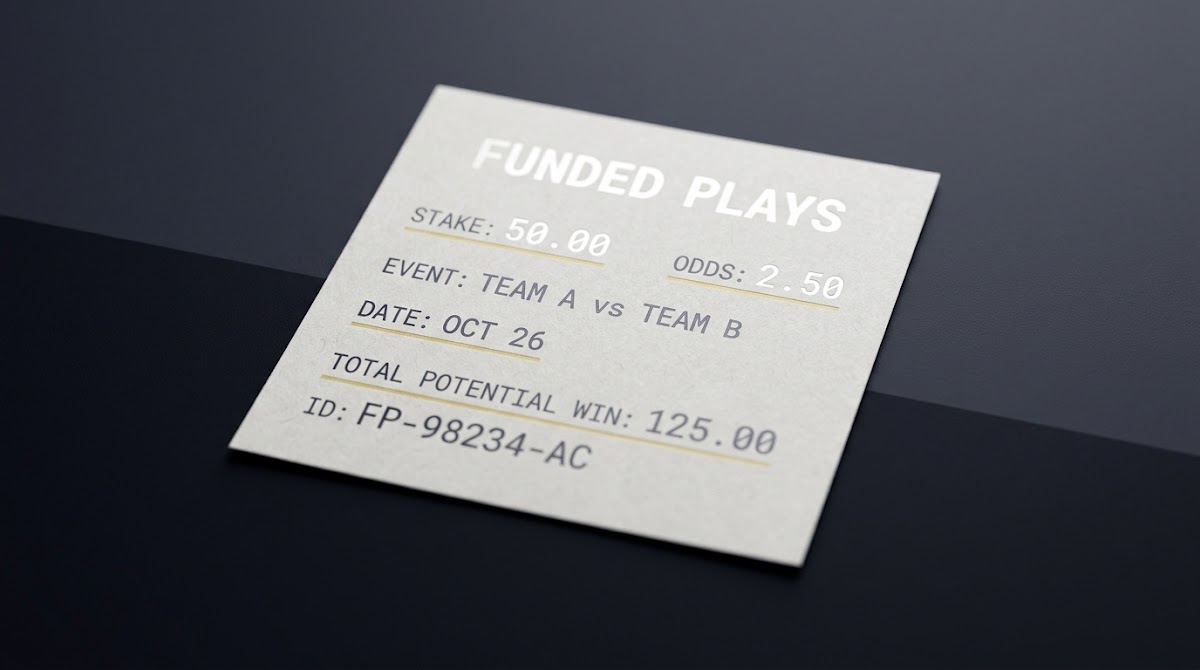
Regulated U.S. markets require tickets to show a set of core fields so consumers can verify their wager; these fields include the stake, wager type such as parlay, event and selection details, odds or price for each leg, date and time, a unique ticket identifier, and the displayed payout or estimated return Nevada Gaming Commission regulation. For an example of operator-specific house rules see William Hill house rules.
Seeing each of these items on the printed or digital ticket helps you confirm the exact contract you placed and simplifies settlement checks later.
How to verify your ticket at a glance
When you inspect a parlay ticket, first confirm the stake and the wager type to ensure you did not accidentally place a single bet. Next, scan the listed legs to confirm teams, markets, and the displayed odds for each leg. See our post on how Funded Plays evaluations work for checking details Funded Plays evaluations.
If any mandatory field is missing or unclear, save or photograph the ticket and contact the operator for clarification, and consult the published house rules for the expected settlement approach in your jurisdiction Ohio administrative rules.
How parlay payouts are calculated, step by step
Converting odds to decimal
Calculating a parlay payout is easiest when each leg's price is in decimal odds because decimals can be multiplied directly; common conversions and the reason decimal format simplifies the math are documented in consumer guides Investopedia parlay definition.
Below are the standard steps for conversion and calculation.
Multiplying leg odds and applying the stake
Step 1: Convert each leg to decimal odds if needed. Step 2: Multiply the decimal odds of all live legs together to get the combined multiplier. Step 3: Multiply that combined decimal by the stake to get the total return. Step 4: Subtract the stake to show net profit.
A parlay ticket is a single wager combining two or more selections that usually pays only if all legs win; settlement, push handling, and prohibited combinations are governed by operator house rules that regulators require to be published and followed.
Operator rounding rules and ticket-level rounding can cause small differences between a manual calculation and the operator's displayed payout, so house rules determine the final settlement Investopedia parlay definition.
These steps let you check an estimated payout and the net profit you would receive if the parlay wins under the operator's published settlement rules.
Common house rules that affect parlay tickets
Pushes, voids, and cancellations
Pushes, voids, and cancellations are common reasons a parlay outcome changes: most U.S. house rules treat a push as a leg removal, meaning the parlay is recalculated without that leg rather than declared a loss, and operators must publish how they treat these scenarios New Jersey wagering regulations. For an operator example see Caesars house rules.
If an event is canceled or voided under the operator rules, the affected leg may be removed and the remaining legs evaluated, or the entire parlay may be voided if rules specify that outcome.
Rounding and price changes after ticket issue
Some operators apply rounding conventions and price freezes at the moment of ticket issuance, which can lead to small discrepancies between a pre-ticket estimate and the final payout shown on the ticket; those rounding and pricing practices should be published in the operator's house rules.
Always review the operator's published rules so you know whether the ticket payout reflects chained decimals or rounded pricing and how changes after issue are handled.
How U.S. regulators protect consumers reading and settling parlay tickets
Regulatory ticket field requirements
State regulators require operators to show core ticket fields and to make house rules available so consumers can verify stake, selections, pricing, and settlement procedures before or after placing a parlay bet New Jersey wagering regulations. For related statutory language see N.Y. parlay regulations.
These requirements help ensure tickets are clear, auditable, and consistent with the operator's public commitments.
Approved wager catalogs and rule frameworks
Regulators often maintain or approve wager catalogs and formal rule frameworks that define permitted bet types and note any restrictions on combinations, which provides consumers with a predictable rule set for how parlays and other wagers are treated Nevada Gaming Commission regulation.
Quick regulator and operator rule lookup checklist
Use to confirm ticket field and push handling
When a consumer needs a binding interpretation, regulator guidance and the operator's published, approved house rules are the primary references for how a parlay will be settled. See our blog for additional context Funded Plays blog.
Parlay ticket versus a straight bet: risk, odds, and when to choose which
Probability and expected return differences
Compared with a straight bet on a single outcome, a parlay multiplies leg odds to create a larger potential return, while the probability of winning declines because all legs must win; that trade-off is central to deciding whether a parlay or a single bet better fits your goals Sports betting glossary.
For many bettors, the decision rests on whether they prefer a lower-variance approach with single bets or a higher-upside, higher-variance strategy using parlays.
Practical decision factors
Consider bankroll allocation, the number of legs, and the correlation between selections before choosing a parlay. Small parlays can sometimes fit a portfolio approach, while large multi-leg parlays often magnify variance.
Always avoid assuming parlays are efficient ways to grow a bankroll; the compounded risk usually makes them speculative compared with disciplined single bets.
How pushes and cancellations change a parlay ticket
When a pushed leg is removed
When a leg pushes, most U.S. operators remove the leg and recalculate the parlay by multiplying the remaining legs' decimal odds and applying the original stake, effectively reducing the parlay's size and changing the payout calculation New Jersey wagering regulations.
As a result, a three-leg parlay with one push becomes a two-leg parlay for settlement purposes, and the displayed payout on your ticket should reflect that removal.

When a full parlay is voided
An entire parlay can be voided if an operator's rules specify such an outcome for particular cancellations or integrity issues; voided parlays typically result in a refund of the original stake or an adjusted credit according to the published house rules.
If you find a discrepancy between the ticket settlement and the published rules, save the ticket identifier and contact the operator and, if necessary, the regulator in your state with documentation.
Correlated parlays and restricted combinations on a parlay ticket
What correlated outcomes are
Correlated parlays pair selections that have a statistical or logical relationship, such as the same player scoring and that player's team winning, and these correlations can raise integrity and risk concerns for operators.
Because of those concerns, some jurisdictions and operators disallow correlated combinations or apply special rules, so always check the approved wager catalog or house rules before placing such bets Massachusetts wagering catalog.
How regulations and catalogs can prohibit certain combos
Operators must enforce prohibitions on restricted combinations where regulators or catalogs require such limits, and these prohibitions will be reflected in ticket issuance systems that block or void certain same-game or cross-market pairings.
Knowing whether a combination is permitted ahead of time prevents surprises at settlement.
Typical mistakes when building or interpreting a parlay ticket
Misreading odds and stake
Common errors include confusing odds formats, entering the wrong stake, or misreading which market the leg covers; these mistakes lead to incorrect payout expectations and should be caught by inspecting the ticket fields before confirming a wager Investopedia parlay definition.
A quick verification checklist before finalizing a parlay can prevent costly errors.
Ignoring house-rule exceptions
Assuming universal handling for pushes, voids, or correlated legs is another frequent mistake; operator-specific house rules govern these edge cases, so reliance on general knowledge without checking the published rules increases settlement risk Nevada Gaming Commission regulation.
When in doubt, document the ticket and consult the operator's public rulebook to confirm how a given situation will be settled.
Practical examples: sample parlay ticket walkthroughs
Two-leg parlay example with full calculation
Example set up: Leg A decimal 1.80, Leg B decimal 2.20, stake 10. Step 1 convert odds to decimal if needed. Step 2 multiply 1.80 by 2.20 to get 3.96. Step 3 multiply 3.96 by the stake 10 to get a total return of 39.60. Step 4 subtract the stake to show net profit of 29.60; this is the standard multiplication approach used to calculate parlay payouts Investopedia parlay definition.
Keep in mind operator rounding or capped payouts may change the ticket's displayed amount slightly, and the published house rules explain which rounding conventions apply.
Three-leg sample and how a push changes the result
Three-leg example: Leg A decimal 1.50, Leg B decimal 1.90, Leg C decimal 2.10, stake 10. Multiply 1.50 by 1.90 by 2.10 to get 5.985, multiply by stake to get total return 59.85, net profit 49.85. If Leg B pushes and is removed, recalculate by multiplying 1.50 by 2.10 to get 3.15, apply stake to get return 31.50, net profit 21.50; this demonstrates how a pushed leg reduces the parlay and changes payout Investopedia parlay definition.
That worked example shows why pushes matter and why the operator's published handling of pushes is important to check in advance.

Strategy tips for managing parlays and your bankroll
When to use small parlays
Smaller parlays with two or three legs can be a tactical tool for increasing upside modestly while keeping variance within reason, but even small parlays increase variance compared with single bets and should be sized accordingly within a bankroll plan.
Use disciplined stake sizing rather than chasing outsized payouts when trying to manage long-term performance.
Alternatives and hedging
Alternatives to large parlays include making single bets, building smaller correlated-safe parlays, or using hedges when market moves create favorable offsetting opportunities; all strategies should respect the operator's rules and not rely on assumed settlement outcomes.
Remember that no platform guarantees results and that consistent, responsible participation and sound bankroll management matter more than occasional large wins.
How operators publish house rules and where to check them before you place a parlay ticket
Where house rules appear and what to look for
Operators typically publish house rules on their website or in account terms and conditions; regulators often require that these rules be available and approved so consumers can confirm push handling, voids, rounding, and prohibited combinations ahead of placing a parlay Ohio administrative rules. For an operator example see William Hill house rules.
Look specifically for sections on push handling, voided events, correlated combinations, rounding, and dispute procedures when reviewing an operator's rules.
How to resolve disputes or unclear settlements
If an operator's settlement conflicts with the published rules, gather the ticket identifier, screenshots, and timestamps, then contact the operator's support and, if needed, the regulator in your jurisdiction to request a review.
Many regulators publish complaint procedures and contact details that explain how to escalate unresolved settlement issues.
How to read payout displays and ticket identifiers for verification
Checking payout estimates versus final settlement
Payout estimates shown before ticket submission are often based on live prices at that moment; the final settlement on a ticket can differ due to post-issue changes, pushes, or rounding rules, so compare the estimated payout with the ticket's printed or account-stored payout at issuance Nevada Gaming Commission regulation.
Saving or photographing the ticket makes it easier to challenge a settlement if the operator's post-event handling does not match its published rules.
Using ticket IDs to confirm outcomes with the operator
The ticket unique identifier is the key reference for any verification or dispute; include it when contacting support and use account history or printed ticket details to cross-check the numbers used in settlement.
Operators and regulators rely on that identifier to trace the accepted wager and the moment the stake and prices were recorded.
Summary: when a parlay ticket makes sense and a final checklist
Quick checklist before you place a parlay
Checklist: confirm stake and wager type, verify each leg and its market, ensure odds format and conversion method are correct, review house rules for pushes and voids, check for prohibited or correlated combinations, and save the ticket unique identifier for future reference. See more resources at Funded Plays.
Using a short pre-submission scan reduces the chance of simple errors and helps align expectations about settlement outcomes.
Final takeaways
Parlays provide higher potential payouts through multiplicative odds, but they reduce the probability of a winning outcome and are governed by operator house rules and state regulation; check those published resources to avoid surprises at settlement New Jersey wagering regulations.
With careful verification, modest sizing, and attention to published rules, parlays can be used responsibly as part of a broader prediction approach.
Most U.S. operators remove the pushed leg and recalculate the parlay with the remaining legs, but you should check the operator's published house rules for the exact treatment.
Convert each leg to decimal odds, multiply the decimals together, multiply by your stake to get total return, then subtract the stake to find net profit.
Regulators require operators to publish and follow approved house rules; if a settlement conflicts with those rules you can raise the issue with the operator and the regulator in your jurisdiction.
References
- https://www.investopedia.com/terms/p/parlay.asp
- https://gaming.nv.gov/index.aspx?page=51
- https://codes.ohio.gov/ohio-administrative-code/chapter-3775-16
- https://www.investopedia.com/terms/p/parlay.asp
- https://www.investopedia.com/terms/p/parlay.asp
- https://www.nj.gov/oag/ge/docs/Rules/DGE_Sports_Wagering_Regs.pdf
- https://www.investopedia.com/terms/p/parlay.asp
- https://www.nj.gov/oag/ge/docs/Rules/DGE_Sports_Wagering_Regs.pdf
- https://www.investopedia.com/terms/p/parlay.asp
- https://massgaming.com/licensing/sports-wagering/sports-wagering-catalog/
- https://gaming.nv.gov/index.aspx?page=51
- https://www.americangaming.org/resource/sports-betting-glossary/
- https://www.fundedplays.com/challenges
- https://www.fundedplays.com
- https://www.fundedplays.com/blogs
- https://www.fundedplays.com/blogs/how-fundedplays-evaluations-work
- https://williamhill.us/us/nv/support/house-rules/
- https://caesars.com/sportsbook-and-casino/ny/support/house-rules/
- https://www.law.cornell.edu/regulations/new-york/9-NYCRR-4010.6