

Padres Phillies prediction: quick verdict and what to check first
Short answer: you can form a defensible Padres Phillies prediction today only after you confirm the day-of starters, verify late scratches, and compare your read to the market price; if those checks produce no clear edge, a disciplined skip is often the correct choice. For a fast verification of the expected starting pitchers, check the official source on probable starters early and again before lock, because that input most commonly flips a pick.
Use this three-item checklist as your first-pass decision filter: 1) Confirm the starters on the MLB probable pitchers page, 2) scan the MLB injury report for late scratches or bullpen changes, 3) compare your read to the market moneyline and total as a sanity check before locking. If either the confirmed starters or the injury report materially alters matchup or run-expectation, pause and re-evaluate against the market price.
Quick checklist to confirm probable pitchers and avoid late-scratch surprises
Re-check at 2 hours, 90 minutes, and 30 minutes before first pitch
This quick verdict is intentionally a snapshot: finalize any pick only after live verification of the probable starters, the official injury report, and current market lines. In many day-of situations those three live inputs together decide whether an apparent edge is real or evaporates when price and personnel are locked.
Confirm the starting pitchers and avoid late-scratch traps
Where to find the starters: start at the MLB.com Probable Pitchers page to see the expected or confirmed starters for each game and note any planned bullpen usage or openers listed for the matchup, because that one page is the day-of source for who is expected to take the mound MLB.com Probable Pitchers or the FanGraphs probables grid FanGraphs Probables Grid.
Timing matters. Re-check starters at sensible intervals: about two hours before first pitch to catch official confirmations, again at roughly 90 minutes for late updates, and once more at 30 minutes in case of late scratches or warmup issues. Each time you re-check, note whether a replacement starter has a markedly different profile than the original, since that change can move both run expectation and the market price.
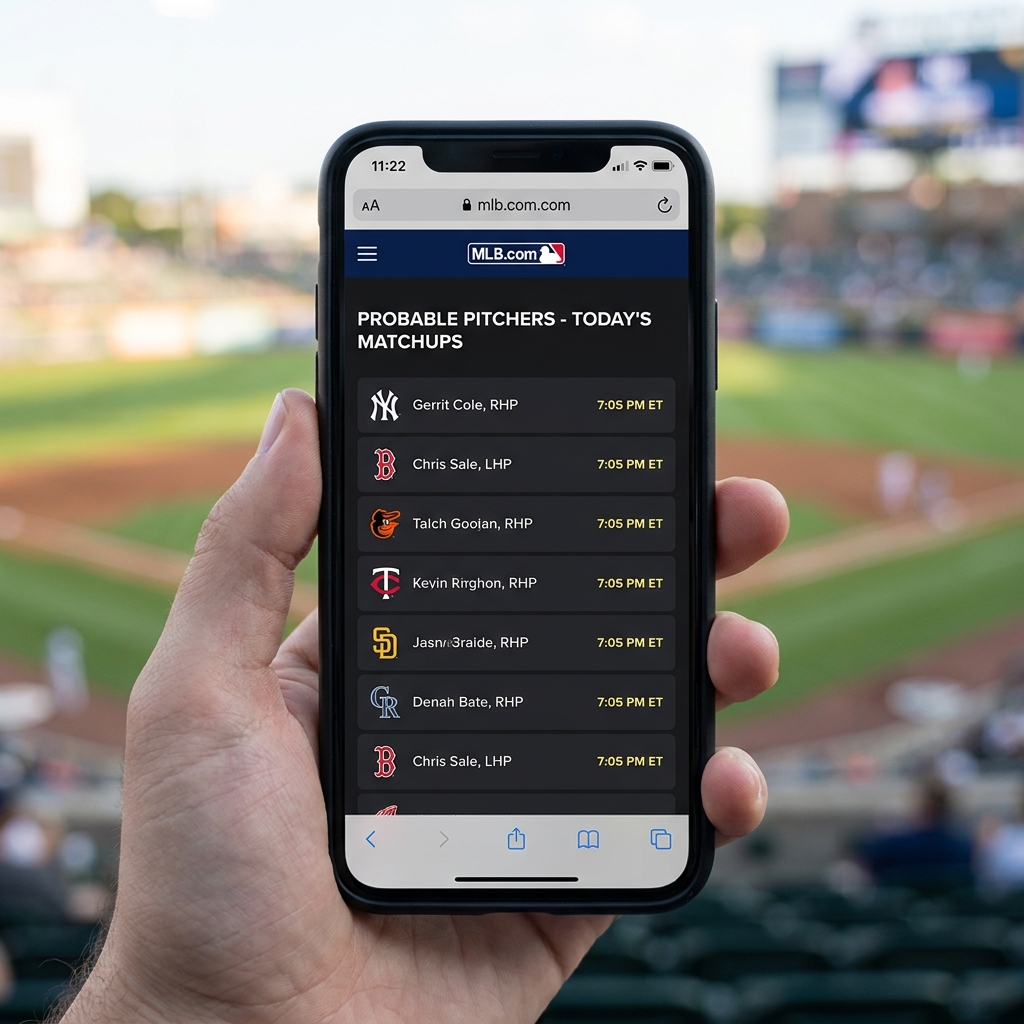
When a late scratch happens, treat the new starter as a separate modeling input. A replacement with a different handedness, a notably higher or lower strikeout rate, or a history of yielding fly balls can change how you value lineups and the park context you expect for the game. Those are the cases where a day-of read shifts most often.
padres phillies prediction: injuries, lineups, and bullpen depth
Begin by reading the MLB injury report to verify which players are active, on the injured list, or listed as questionable; those official notes consolidate day-of roster status and immediate IL moves that often determine whether a lineup keeps its usual power or speed profile MLB Injury Report or see ESPN's injury page ESPN MLB Injury Status.
Typical absences that move the needle are obvious: a lead-off hitter who sets table runs, a top power bat lower in the lineup, or a late-inning closer whose presence closes the book on high-leverage innings. When a club loses one of those pieces, reweight your expectation for scoring innings and the likely leverage of matchups in the middle and late innings.
Quick: verify injuries before you lock a pick
Confirm the MLB injury report now, because a late scratch to a key hitter or reliever is one of the fastest ways to change a pick; checking it before you continue will save you time and reduce error.
Combine the confirmed starter and any injury-driven lineup changes to update your run-expectation. For example, if a heavy-contact left-handed batter is out and the opponent brings in a left-handed starter with high fly-ball rates, the combined effect is a material reduction in the expected total runs and a shift in which side looks favorable.
How the ballpark shapes the prediction: Citizens Bank Park and park factors
Park factors measure how a specific stadium alters run and event rates relative to a neutral park, and they are useful because they help you convert pitcher and hitter profiles into expected run outcomes for a single game. Park factors often explain why fly-ball pitchers and pull-heavy power hitters perform differently on the road than at home.

Statcast’s 2024 park-factor leaderboard showed Citizens Bank Park above league average for home runs, a context that matters when a fly-ball or hard-contact pitcher faces the Phillies lineup in Philadelphia 2024 Park Factors (Statcast). In practical terms, expecting extra carry in the outfield means you should increase the run-expectation for hitters who elevate the ball and temper confidence in fly-ball pitchers who would otherwise succeed in a neutral park.
Adjusting for park effects is straightforward in single-game reads: if the starter you expect gives up more fly balls than ground balls, and the venue is hitter-friendly for homers, treat totals and power-dependent props with extra caution and consider the park when sizing conviction.

padres phillies prediction: benchmark offense and pitching with advanced metrics
For a stable season-level context, use FanGraphs team batting leaderboards to assess offensive strength with metrics like wRC+, which normalizes run creation across parks and leagues and helps you gauge whether a club’s lineup consistently produces above or below average offense FanGraphs team batting leaderboards.
Those season metrics are often more reliable than very short-term hot or cold streaks because they aggregate skill across hundreds of plate appearances. Use wRC+ to set baseline expectations before adjusting for day-of factors like probable pitchers or injuries.
A defensible prediction depends on confirming the probable starters, verifying any late scratches on the MLB injury report, factoring park and season metrics, and comparing your read to market lines; if those live inputs produce no clear edge, skipping is a disciplined choice.
On the pitching side, FanGraphs’ leaderboards for ERA-, FIP, and xFIP provide a clearer sense of underlying pitcher quality than raw ERA, which can be skewed by defensive support or sequencing; consult those numbers to compare rotations and bullpens when you need a steady baseline for matchup adjustments FanGraphs team pitching leaderboards.
Once starters are confirmed, bring these season metrics to bear by asking whether the pitcher you expect is outperforming or underperforming his skill indicators. If the season metrics and the day-of signals align, your confidence should increase; if they diverge, treat the game as lower-conviction or skip it in a skill-based setting.
Comparing the confirmed starters: matchup details that change the number
After you lock the probable starters, check the specific matchup features that meaningfully affect run expectation: starting pitcher handedness, platoon splits among opposing hitters, recent workload and rest, hard-contact rate, and fly-ball percentage. These features move single-game probabilities more than aggregate team records.
Bullpen sequencing and depth matter because a strong starter can still lead to a close game if the back end of the bullpen is thin or if high-leverage relievers are unavailable due to recent usage. Use season-level pitching context to see whether the expected starter is generally supported by a reliable relief corps, and adjust your read when the injury report shows missing relievers FanGraphs team pitching leaderboards.
Also consider how lineup absences interact with a starter’s weakness. For instance, if the opposing lineup is missing a lefty-heavy power bat and the starter struggles more against left-handed power, the net effect reduces the run-expectation against that starter and should be reflected in your pick or in sizing your exposure.
Market lines and consensus pricing: how to use ESPN MLB Daily Lines
Use ESPN’s MLB Daily Lines as a day-of proxy for the consensus moneyline and total; the lines give you a transparent market reference to compare against your model or read and help indicate whether a visible edge exists MLB Daily Lines.
Market movement is information. Late line shifts tied to confirmed starters or injury revelations are often informative; a price that moves sharply after a last-minute scratch usually reflects an incoming roster or pitcher change that matters to probability. Conversely, quiet prices after live inputs suggest the market sees no new edge.

Compare your internal edge to the market price before locking a pick; visit Funded Plays for resources. If your expected probability differs meaningfully from the implied probability and you have confirmation on starters and injuries, that is where a disciplined selection can come from; if you cannot establish a consistent edge after those checks, consider skipping the game in a skill-based challenge context.
Decision framework: when to pick Padres, pick Phillies, or skip
Weighted checklist approach: assign simple weights to your primary inputs and combine them into a repeatable rule. For example, give starters 35 percent of your decision weight, injuries and lineup changes 25 percent, park factor 15 percent, season metrics 15 percent, and market price 10 percent. That weighted view keeps starters as the dominant day-of input while forcing you to account for roster and price information.
Conservative rule: if no single input produces a clear edge versus the market, prefer skipping on a skill-based challenge platform because the objective there is repeatable, measurable edge rather than chasing variance. In practice, that means you require both confirmed personnel and a meaningful discrepancy between your expected probability and the implied market probability before taking a position.
Confidence bands and sizing: translate your qualitative confidence into simple bands. High-confidence picks (multiple inputs aligned) justify larger exposure within your challenge rules. Medium-confidence picks suggest small exposure or a limited selection. Low-confidence cases should prompt a skip. Keep the bands rigid and record each decision to refine calibration over time.
Typical mistakes to avoid in a Padres-Phillies pregame read
Overreacting to small samples is common. Recent hot streaks or a single dominant outing may not reflect sustainable skill; rely on season-level metrics like FanGraphs leaderboards for a stabilizing baseline before letting recent results dominate your decision FanGraphs team batting leaderboards.
Ignoring park or bullpen context weakens many reads. Failing to account for a hitter-friendly park or a late bullpen depletion can turn what looked like an edge into poor value. Always check the injury report and park context before sizing conviction MLB Injury Report Statcast park factors.
Another common error is letting market narrative replace day-of evidence. The market is a useful reference, but it should not be a substitute for confirmed starters and roster status; treat lines as a check, not a decision driver on their own.
Practical scenarios: three example pregame reads and what to do
Scenario A, clear starter edge: you have the confirmed ace on the Padres against a mid-rotation Phillies starter, both starters are confirmed on the probable pitchers page, and the injury report shows both lineups intact. In that case re-run your weighted checklist, compare your expected probability to the market line, and if the market price shows a meaningful gap in your favor you have the conditions for a high-confidence pick MLB.com Probable Pitchers FanGraphs team pitching leaderboards.
Scenario B, late scratch of a key hitter: a Phillies power bat is scratched two hours before first pitch per the MLB injury report. That absence reduces the road club’s run profile, can move the market, and forces you to re-evaluate totals and side exposure. If the market moves substantially after the injury, read the new price; if it does not, consider the possibility the market had already priced similar uncertainty MLB Injury Report MLB Daily Lines.
Scenario C, neutral starters in a hitter-friendly park: when starters are broadly comparable and Citizens Bank Park is in play, totals or props tied to power outcomes often offer better interpretive value than a straight moneyline. In that case your decision may favor adjusting exposure to totals, or skipping if you have no clear edge after including park factors and market price 2024 Park Factors (Statcast).
Risk management and discipline for skill-based challenge play
On skill-based challenge platforms the goal is reproducible edge and disciplined execution, not short-term wins. That means define rules for when you will take a position versus when you will skip, and adhere to those rules regardless of emotional pressure on game day. See how our evaluations work here.
Practical rules include limiting exposure on low-confidence games, keeping a running performance log for each decision, and following platform-specific entry and bankroll rules. Track outcomes and your stated reasons for each pick so you can analyze which signals actually produce long-term skill, and avoid implying guaranteed outcomes when reviewing results.
Remember that platform outcomes depend on your performance and compliance with rules; maintain conservative sizing until you have consistent evidence that a particular approach yields repeatable advantage.
A concise pregame checklist you can run in the last 30 minutes
Five fast checks, in this order and with approximate time: 1) Confirm probable pitchers on MLB.com, 2) check the MLB injury report for scratches or late IL moves, 3) glance at park factor notes if the venue materially favors homers, 4) review FanGraphs season metrics for context, 5) check ESPN lines for the market price. Allocate roughly 8 minutes total to these checks and 5 minutes to compare your internal edge to the market.
Order of operations under time pressure matters. Start with the probable pitchers to lock the biggest input, then the injury report, then park and season metrics for context, and finish with the market lines as your final sanity check. If you cannot complete these checks with confidence within the time you have, skip the game.
Final summary and next steps after you lock your day-of pick
Summarize your process in one line: confirm starters, check injuries, weigh park and season metrics, compare to market price, then pick or skip. If you take a position, record the exact reasons and the inputs you used so you can review them after the game on the Funded Plays blog.
Monitor the game for the specific signals you cited in your decision log, and use the outcome to refine how you weigh inputs over time. Stay disciplined, and remember that consistent process is the main asset in skill-based challenge play.
Where to find the official data and further reading
Primary sources to bookmark: MLB.com Probable Pitchers for starters and the MLB Injury Report for roster status and late scratches MLB.com Probable Pitchers MLB Injury Report.
For park context and playground effects, use Statcast park-factor pages; for season-level offensive and pitching benchmarks consult FanGraphs team leaderboards; and use ESPN MLB Daily Lines for an accessible market-lines snapshot 2024 Park Factors (Statcast) FanGraphs team batting leaderboards MLB Daily Lines.
Check probable pitchers at about two hours, 90 minutes, and 30 minutes before first pitch, and review the MLB injury report at the same intervals for late scratches.
Use park factors to increase or decrease run expectations for fly-ball or power matchups; a hitter-friendly park raises totals and favors power hitters.
On a skill-based challenge platform, prefer skipping when confidence is low, even if the market price seems fair, to preserve long-term performance metrics.
References
- https://www.mlb.com/probable-pitchers
- https://www.fangraphs.com/roster-resource/probables-grid
- https://www.espn.com/mlb/injuries
- https://www.mlb.com/injury
- https://baseballsavant.mlb.com/leaderboard/park-factors?type=year&year=2024&hand=all
- https://www.fangraphs.com/leaders?pos=all&stats=bat&lg=all&qual=0&type=8&season=2026&month=0&season1=2026&ind=0
- https://www.fangraphs.com/leaders?pos=all&stats=pit&lg=all&qual=0&type=1&season=2026&month=0&season1=2026&ind=0
- https://www.espn.com/mlb/lines
- https://www.fundedplays.com/challenges
- https://www.fundedplays.com
- https://www.fundedplays.com/blogs
- https://www.fundedplays.com/blogs/how-fundedplays-evaluations-work