
What it means to be "favored" in oscars betting markets
A market favorite is the selection that the betting market currently treats as most likely to win, based on money and prices. In oscars betting markets, that label points to higher implied probability than other contenders, but it does not mean a guarantee.
Markets reflect collective sentiment and the flow of money and information, not a formal ruling from the Academy. The ceremony date and official rules shape which candidates are eligible and which contests markets focus on, so favorites can shift when eligibility or campaigning changes 98th Academy Awards.
A current favorite is the contender with the highest de-margined implied probability across live aggregators; check timestamps, convert odds to implied probability, remove bookmaker margin, and compare multiple sources after nominations and key precursor events.
Do you treat the market favorite as the most likely winner or as one input among many?
Definition of favorite vs long shot
A favorite is simply the option with the highest market-implied probability. A long shot occupies the opposite end of the scale, with a lower implied chance of winning. Both labels describe market position, not intrinsic quality or certainty.
What odds reflect: market sentiment not certainty
Odds summarize how the market collectively prices an outcome. That price moves with new information, campaign developments, and where money flows. Because these forces change during awards season, a favorite at one point may not remain the favorite later. Live markets and expert trackers update throughout the 2025 to 2026 season to reflect those shifts Gold Derby odds and predictions.
How to use this guide: quick snapshot and what to check first
Use this guide as a checklist when you encounter a favorites list. First verify whether the list is current, then check how the odds were converted and whether the quoted probabilities account for bookmaker margin.
Quick checklist, in order of priority: confirm the timestamp on the odds page; compare at least two live aggregators; look for notes about stale feeds or delayed updates; and check recent nominations or major precursor results. Aggregators and consensus pages update frequently during the 2025 2026 awards season, so timestamp checks matter Oddschecker live odds.

Checklist to verify before trusting a favorite
Look for a clear update time, confirm whether the odds are presented in American, decimal, or fractional format, and check if the page shows multiple book prices or a single-book feed. If the page aggregates many books, it is less likely to be distorted by one outlier.
When to look for live updates
Watch markets closely around nomination announcements, guild awards, and major precursor events. Those milestones often trigger the largest price moves, so a favorites snapshot is most meaningful shortly after those events have settled.
Basics of oscars betting odds and how to convert them (American, decimal, fractional)
Reading odds is a practical skill. Converting American, decimal, or fractional odds to a common implied probability scale lets you compare favorites across books and formats. The implied probability calculation is the foundation of comparing market favorites.
American odds conversion, short guide. For positive American odds, implied probability equals 100 divided by (odds plus 100). For negative American odds, implied probability equals the absolute value of odds divided by (absolute odds plus 100). Knowing these formulas helps convert the most common format used on many aggregator pages Implied probability: definition and formula.
Decimal and fractional conversions are straightforward. For decimal odds, implied probability equals 1 divided by the decimal odds. For fractional odds, first convert the fraction to decimal, then apply the same 1 divided by decimal approach. Converting to probability makes it easy to compare a favorite listed differently across sources.
Example conversions, brief. If you see +200 in American odds, that converts to an implied probability of about 33.3 percent using the positive formula. If you see 2.50 decimal, implied probability is 40 percent. Work through at least one example per format to confirm you understand the mechanics.
Keep the conversion formulas and aggregator list ready for quick checks
Bookmark the conversion formulas and a reliable aggregator to check probabilities quickly when markets move.
Why convert odds. A single favorite may appear stronger or weaker depending on the format that is displayed. Converting to implied probability reduces that presentation layer and lets you compare apples to apples, particularly when checking consensus across books.
Quick formulas and worked examples
American positive example, worked. For a positive American line you divide 100 by the line plus 100. Decimal example, worked. For decimal odds you divide one by the decimal number. Fractional example, worked. These short exercises are enough to spot obvious reporting errors or a misread format on an aggregator.
Adjusting for bookmaker margin: finding the true consensus probability
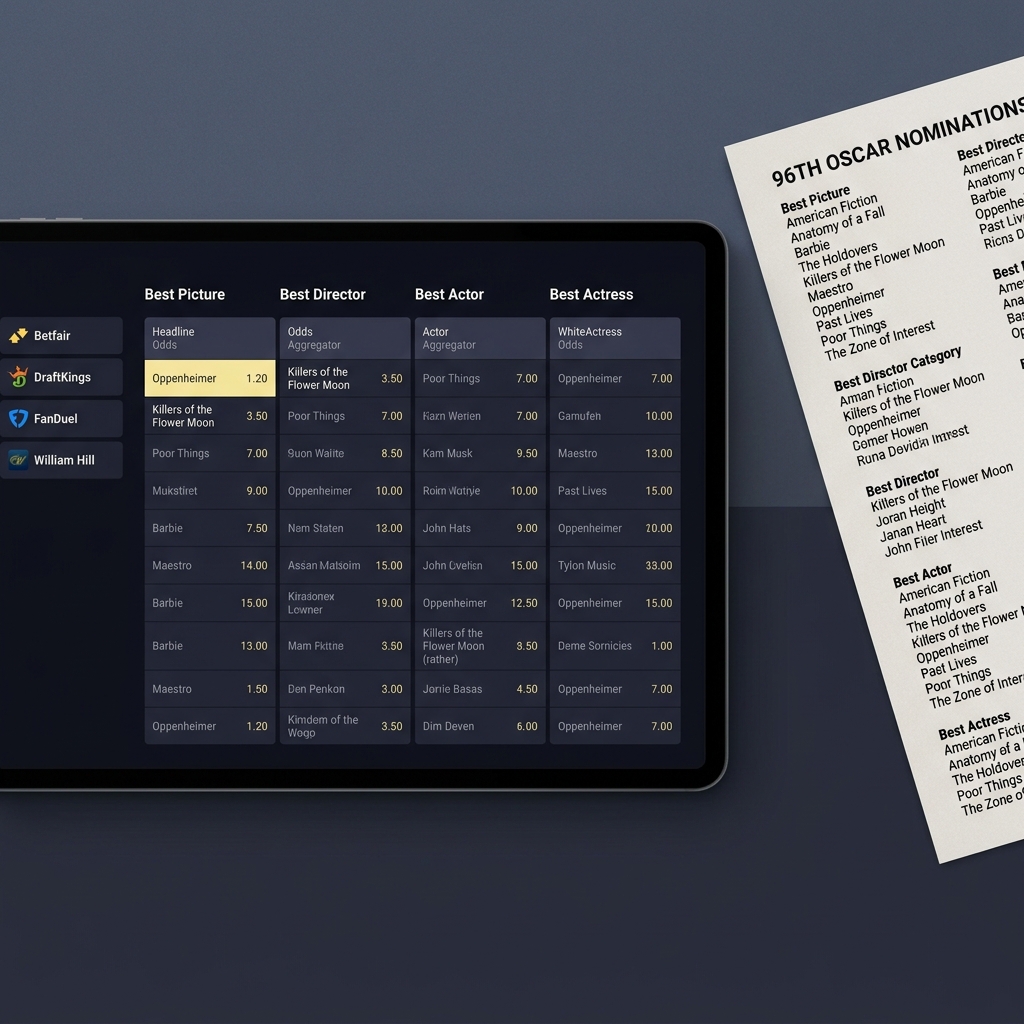
Bookmaker margin, often called overround, is how books build a profit cushion into prices. When implied probabilities from a single book sum to more than 100 percent, the excess is the margin. That margin inflates the apparent chance of favorites if you read raw implied probabilities without adjustment American odds explanation.
Simple de-margin method. A common practical approach is proportional scaling. Convert each odds price to implied probability, sum them, compute the overround, then scale each probability down proportionally so the total equals 100 percent. This yields a de-margined, or consensus, set of probabilities suitable for cross-book comparison.
What is overround and why it matters
Overround matters because it hides the true consensus. Two books may show different favorites' implied probabilities because one book has a larger margin. Always check whether an aggregator shows de-margined numbers or raw prices, and apply a simple proportional de-margin if needed to compare.
Simple methods to remove margin
Proportional scaling is simple and transparent. More advanced methods exist, including consensus models that weight books by liquidity or historical accuracy. For most practical uses, proportional de-margining is fast and reveals whether a market favorite really leads the field after removing the house edge.
Where favorites live: using odds aggregators and expert consensus pages
Odds aggregators pull quoted prices from multiple sources and show which options lead in the market. Those pages are the most efficient place to see a snapshot of current favorites because they expose pricing dispersion and often show multiple book quotes side by side Oddschecker. Also check the Oddschecker US feed for a US-specific view Oddschecker US.
Expert consensus pages combine market prices with editorial or analyst input, offering context on why a contender leads or lags. Consensus pages can be useful for understanding the non-price signals that move markets, such as campaign momentum and precursor awards Gold Derby. For film-level predictions at Gold Derby see their 2026 film predictions Gold Derby 2026 film predictions.

Why consult multiple sources. Aggregators and expert pages use different data feeds and editorial models. Checking more than one reduces the chance that an outlier price or stale feed shapes your view of the favorite. Cross-referencing brings clarity, especially during volatile parts of the season. See how Funded Plays evaluates challenges for an example of a review process how Funded Plays evaluations work.
How aggregators combine prices
Aggregators may show a best-price feed, an average, or a displayed consensus. Read the aggregator's notes to know which method it uses. A best-price feed highlights the single most competitive offer, while an average smooths across books but may hide extreme values.
What expert consensus pages add to raw odds
Expert pages synthesize market prices, voting patterns, and awards-season context. They do not replace odds math, but they can explain why markets price a certain contender as the favorite, by referencing nomination strength or precursor performance.
How awards-season milestones move favorites and prices
Nominations announcements reset markets because they change the candidate set and refocus votes and money on confirmed contenders. When nominations land, prices typically move to reflect the new field and that movement often clarifies favorites for a short window.
Guild awards and precursor events, such as major guild votes, create fresh information that can shift both sentiment and pricing. Markets are sensitive to these milestones since they indicate industry momentum and can meaningfully alter implied probabilities Gold Derby odds and consensus.
Nominations window
The nominations window is one of the most consequential calendar moments. Unnominated titles or performances are effectively removed from many books, and favorites can change abruptly when the list of qualified candidates updates.
Guild awards and precursor effects
Guild awards often move markets because they proxy segments of Academy voting behavior. A string of precursor wins can push a contender from long shot to front-runner in a matter of days, so monitoring those results is essential for a current favorites view.
How to compare odds across books and identify a true consensus
Comparing multiple books removes single-source bias and helps reveal whether a favorite is a market-wide consensus or a single-book artefact. The workflow is straightforward and reproducible in a small spreadsheet.
Step-by-step workflow, short: collect quoted odds from several books or an aggregator, convert all prices to implied probability, de-margin each source if needed or de-margin the combined set, then compute an average or median to find the consensus leader. This approach highlights pricing dispersion and reduces the influence of outliers Implied probability reference. Guides like Action Network also offer practical betting guides and snapshots of favorites Action Network Oscar guide.
Convert odds and remove margin to compute consensus probabilities
Use decimal odds for consistency
Handling outliers. If a single book shows a dramatic, unexplained price, treat it as an outlier. Verify the feed timestamp before excluding it. Use median rather than mean if outliers persist, because median is less sensitive to extreme values.
Step-by-step comparison workflow
Collect, convert, de-margin, and then summarize with an average or median. Keep the process transparent so you can replicate it when prices change after a news event. A transparent spreadsheet makes re-running the process fast.
Red flags: outlier prices and stale data
Red flags include missing timestamps, delayed feeds, and single-book snapshots presented as an aggregate. If a page lacks an update time or shows obvious display errors, do not rely on it as the sole source for naming favorites.
Decision criteria: when to call someone the favorite and when to call it value
Label a market favorite when, after de-margining and comparing books, the contender has the highest implied probability. Label a selection as value when your independent probability estimate exceeds the market's de-margined probability by a margin that justifies the risk.
Favorites are market-driven, while value is model-driven. Use your own probability model to decide when a market price represents value. If your model yields a higher probability than the de-margined market consensus, you have identified a potential value opportunity, subject to your risk rules and confidence levels Expert consensus context.
Rules of thumb for favorites vs value bets
If the leading de-margined implied probability is only marginally higher than the next contender, treat the lead as a statistical tie. If your model contradicts the market by a wide margin, dig for structural reasons before declaring value.
Balancing market probability and your model
Combine market signals with independent assessments. Markets encode information you may not have, such as funding flows, while models reveal structured, repeatable estimates. Use both, but keep clear records of why you prefer one signal over the other.
Typical mistakes and pitfalls when tracking favorites
A set of common mistakes can mislead readers tracking favorites. Relying on a single book, failing to remove bookmaker margin, and overreacting to small price moves are among the most frequent errors when interpreting which contender is favored.
Corrective steps are simple. Always check multiple sources, convert and de-margin reported odds, and wait for confirmation after major news events before changing your assessment. Markets are noisy, especially around early precursor results Oddschecker aggregator.
Relying on a single book
Single-book snapshots may reflect a temporary price or feed issue. Aggregators reduce this risk by showing multiple feeds. When possible, cross-check the displayed favorite against at least one other live feed.
Confusing short-term moves with lasting trends
Short-term moves often reverse. Distinguish between a sustained trend driven by repeated information and a transient spike caused by a single news item or a liquidity-driven price move.
Practical walkthroughs: reading odds the week before nominations and the week before the ceremony
This section shows two scenarios. The first is a pre-nomination snapshot where candidates are still being debated. The second is a final-week snapshot after nominations and major precursors have shaped a de-margined consensus.
Pre-nomination snapshot, steps. 1) Gather current aggregator prices and note timestamps. 2) Convert all formats to implied probability. 3) Flag likely contenders based on nomination chatter, while remembering that nominations can remove or add names. 4) Avoid strong conclusions until nominations finalize.
Final-week consolidation, steps. 1) Repeat the collection and conversion process. 2) De-margin the set to remove overround. 3) Compute a median or average consensus probability. 4) Check precursor tallies and any late campaign news. The final week often shows narrower spreads between top contenders and clearer favorites.
Example: pre-nomination snapshot
In a pre-nomination stage, expect wider dispersion and more uncertainty. Some books may price speculative futures heavily, while others remain conservative. Use de-margining to standardize the comparison and treat any single-book favorite as provisional until nominations arrive.
Example: final-week consolidation
By the final week, the field typically narrows. De-margined consensus often clarifies who the market favors. Still, be alert for last-minute shifts caused by preview screenings or new critical consensus that can move implied probabilities even in the last days.
How to monitor markets responsibly: timing, frequency, and ethical notes
Monitoring markets responsibly means setting a cadence and defined triggers for action, not checking constantly or reacting to every small move. A sensible routine reduces overreaction and preserves discipline.
Recommended cadence. Increase checks around milestone events, such as nominations and major guild awards. Outside those windows, a once-daily or twice-weekly check may be sufficient for maintaining awareness without overtrading. Also consult official Academy rules to understand eligibility and campaign limits that affect market assessments Rules and eligibility for the 98th Academy Awards.
Responsible monitoring cadence
Define triggers that prompt a deeper review, for example, a 5 percent shift in a leading contender's de-margined probability or an unexpected exclusion from nominations. Use those triggers to run your comparison workflow rather than reacting to minor price noise.
Why transparency and rules matter
Transparency in how you compute consensus helps you and others evaluate past calls. Awareness of Academy rules ensures you do not treat ineligible items as active contenders and helps explain sudden market removals or additions.
How the Academy rules and eligibility can influence favorites
The Academy's official rules set the eligibility period and define campaign conduct, and those rules directly affect which films and performances markets can price for the 98th Academy Awards. Always consult the Academy's eligibility pages when verifying whether an item should be treated as a contender AMPAS rules and eligibility.
Release timing and campaign rules can remove or add potential nominees, which changes the effective candidate set and therefore the favorites. If a title misses eligibility, markets will adjust quickly, and that can produce significant re-ranking of front-runners.
Key eligibility rules for the 98th Academy Awards
Eligibility deadlines and promotional conduct rules determine what the Academy accepts for judging. These constraints are the official baseline for which items markets can meaningfully price for the 2026 ceremony.
How release timing and campaign rules affect markets
A late release that meets eligibility can enter contention and shift favorites. Conversely, a disqualification or missed deadline removes a contender. Markets respond to those adjustments, often rapidly, so rule awareness is essential when naming a favorite.
Rounding up: practical checklist to find who is favored right now
Use this repeatable checklist to identify the current favorites. 1) Confirm the timestamp, 2) collect prices from multiple aggregators, 3) convert all prices to implied probability, 4) de-margin the set, 5) compute median or average consensus, 6) review Academy eligibility and recent precursor results Aggregators and live feeds.

Update your assessment after each major milestone or when consensus probabilities shift materially. Keep records of your steps so you can revisit and learn from past assessments.
Short operating checklist
Timestamp, convert, de-margin, and then compare median or average. If the computed consensus favorite is stable across days after a major event, you have a reliable snapshot of who the market favors right now.
When to update your assessment
Reassess after nominations, key guild results, and any major campaign news. Those events typically justify an updated consensus review, while small daily moves do not.
Resources, where to read live favorites, and next steps
Primary live sources include Oddschecker and Gold Derby for aggregator and expert consensus coverage. For official rule checks consult the Academy site. For odds math, reputable explainers on implied probability and American odds clarify the conversions you will use regularly Implied probability guide. Also review the Funded Plays homepage for related resources Funded Plays.
Next steps for readers who want to follow favorites regularly: establish a simple spreadsheet that converts and de-margins prices, pick two or three aggregators to watch, and schedule checks around the awards-season calendar. Regular practice makes the workflow faster and more reliable over time. See the Funded Plays blog for related posts and examples Funded Plays blog.
Curated list of aggregators and consensus pages
Check Oddschecker for aggregated book prices and Gold Derby for expert consensus and analysis. Use the Academy's site for definitive rules and ceremony dates.
Further reading on odds math and Academy rules
Read straightforward odds math explainers for conversion methods and consult the Academy rules page for eligibility and campaign context. Together, these sources give you the technical and regulatory framework to identify and interpret favorites responsibly.
Favorites can change rapidly around nominations and major precursor events, so check live aggregators near those milestones rather than relying on static lists.
No, odds reflect market sentiment and implied probabilities, not certainty; they are one input among many when assessing likely outcomes.
Consult the Academy of Motion Picture Arts and Sciences rules and eligibility page for definitive guidance on who qualifies for the 98th Academy Awards.
References
- https://www.oscars.org/oscars/ceremonies/2026
- https://www.goldderby.com/odds/oscars/
- https://www.oddschecker.com/awards/oscars
- https://www.investopedia.com/terms/i/implied-probability.asp
- https://www.oddschecker.com/us/awards/oscars
- https://www.goldderby.com/film/2026/2026-oscar-winner-predictions-by-film-one-battle-sinners/
- https://www.actionnetwork.com/entertainment/2026-oscar-odds-predictions-academy-awards-favorites-full-betting-guide
- https://www.investopedia.com/terms/a/american-odds.asp
- https://www.fundedplays.com/challenges
- https://www.oscars.org/oscars/rules-eligibility
- https://www.fundedplays.com
- https://www.fundedplays.com/blogs
- https://www.fundedplays.com/blogs/how-fundedplays-evaluations-work