
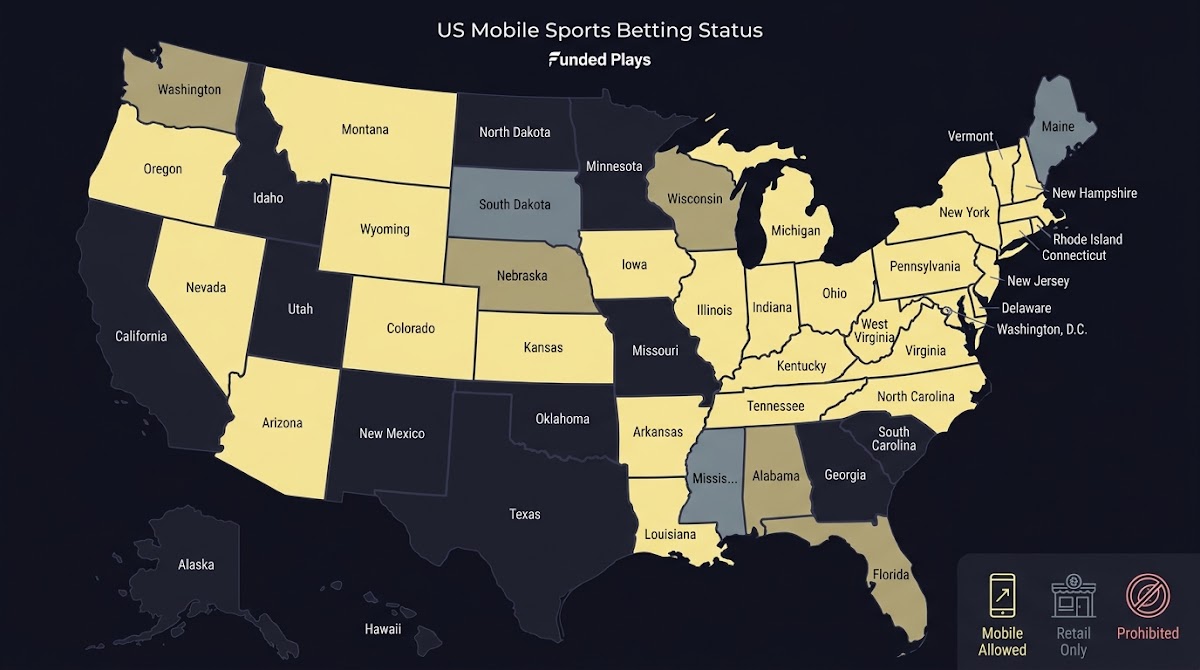
What "online sports betting legal states" means: definition and quick overview
Three legal regimes: full mobile, retail-only, prohibited, online sports betting legal states
The phrase online sports betting legal states refers to where U.S. residents can place wagers over the internet using a licensed, state-authorized mobile sportsbook. Whether a state allows full mobile betting, limits wagering to retail locations, or prohibits sports betting entirely is a decision made at the state level and implemented through law and regulation. For an up-to-date overview of which states fall into each category, the National Conference of State Legislatures provides a state-by-state summary that tracks legalization and major changes NCSL sports betting legalization overview or the USA TODAY legality map USA TODAY legality map.
In practical terms, being in a state that permits mobile wagering usually means licensed operators can offer apps and mobile web betting to users who are physically located inside the same state and who meet that state’s age and identity checks. States that allow only retail wagering let customers place bets at approved casinos, racetracks, or sportsbooks on site, while prohibited states do not authorize sports wagering at licensed operators. These distinctions matter when you try to access an app or place a bet on your phone.
Confirm your state’s licensed mobile sportsbooks
Check your state regulator’s licensed operator list before attempting to wager online to confirm whether mobile sportsbooks are authorized where you are located.
Online casino gaming, often called iGaming, is a separate regulatory track from sports wagering and is legal in far fewer states. That means a state may permit mobile sports betting but still ban internet casino games; rules, licensing paths, and consumer protections are different for each category. The American Gaming Association’s recent overview on iGaming summarizes how those paths differ and where online casino products have been adopted AGA state of play for iGaming.
Even when mobile sports betting is legal, you must meet state-specific requirements before you can place bets. Most regulators require proof of age and identity and use device-based geolocation to confirm you are physically inside the state when you wager. Regulator guidance on internet betting explains how geolocation and identity checks are integral to legal online wagering New Jersey Division of Gaming Enforcement internet gaming FAQ.

State legislatures pass laws that authorize sports wagering and set the broad parameters, and state regulators translate those statutes into licensing and technical rules operators must follow. The legislative act defines whether mobile wagering is permitted at all, while the regulator issues licensing requirements, operational controls, and enforcement policies that determine how and when apps can operate in the market. For a high-level tracking of these legislative changes across states, the NCSL maintains a regularly updated legalization map and summary NCSL sports betting legalization overview.
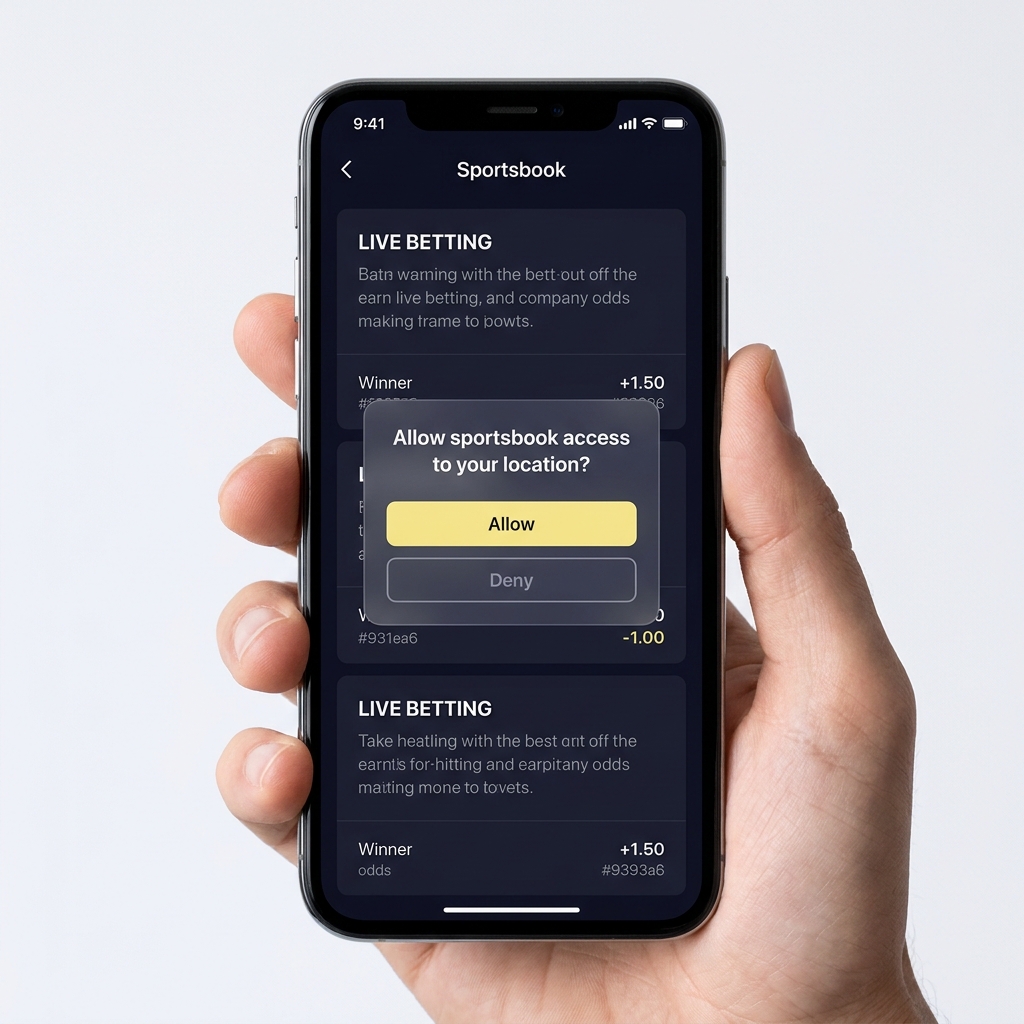
Once a state authorizes wagering, its regulator typically publishes a public list of licensed operators and approved mobile apps. These lists are the authoritative source to confirm whether a given operator may legally accept bets in that state and often show the specific products or app versions that are authorized. The Illinois Gaming Board posts a sports wagering page with regulatory guidance and links to licensed operators and apps to help consumers verify market participants Illinois Gaming Board sports wagering.
Regulator lists are especially helpful because market entries change: an operator can hold a license but delay a mobile launch, or an app may be approved for one product but not another. In Massachusetts, for example, the Gaming Commission’s sports wagering resources include operator lists and consumer guidance that clarify which apps and retail locations are approved to serve bettors in that state Massachusetts Gaming Commission sports wagering.
Regulators and legislatures typically treat sports wagering and online casino games as distinct activities that require separate statutory authorization and licensing systems. That means a state can authorize mobile sports books while continuing to prohibit internet-based casino offerings such as online slots or table games. The AGA provides a clear overview of this separation and the more limited spread of iGaming across states AGA state of play for iGaming.
For bettors, the practical result is that app availability and permitted products vary by state. You might find mobile sportsbook apps listed on a state regulator’s site while seeing no licensed online casino product in the same jurisdiction. That distinction affects which operators you can use for each product and what kinds of gameplay or promotions may be legally offered.
No. Online sports betting is not legal in every U.S. state. Legality depends on state statutes and regulator approvals, and it typically falls into full mobile, retail-only, or prohibited regimes.
Because sports betting and iGaming follow separate regulatory tracks, always check product-specific license lists before assuming a single operator can offer both types of products legally in your state.
Step-by-step: how to confirm you can legally bet online in your state
Quick checklist you can follow now
Follow this concise checklist to confirm legal, compliant access to online sports betting in your state: 1) Consult a current state-by-state tracker to confirm whether your state has legalized mobile wagering, 2) check your state regulator’s public list of licensed operators and approved apps, 3) confirm you meet age and ID requirements, and 4) ensure your device passes geolocation checks when you try to place a bet. For a comprehensive state overview, use the NCSL tracker as a starting point NCSL sports betting legalization overview or FanDuel’s legal map FanDuel legal map.
When you reach a regulator’s site, look for a licensed operator list, app approvals, and player-facing guidance about geolocation and account verification. State regulator pages are the definitive source for what is permitted and the only reliable place to confirm whether a specific operator is authorized to accept online wagers in that jurisdiction. Examples from Illinois and Massachusetts demonstrate how regulators present licensing information and consumer guidance Illinois Gaming Board sports wagering.
Where to find and how to read regulator license lists
Open the regulator’s sports wagering page and locate the licensed operator or mobile app section. Regulators often list operators alphabetically and may flag which products are live. Pay attention to any notes about launch windows, temporary limitations, or restrictions on in-state marketing. If a regulator publishes an FAQ or player guidance, it can clarify minimum age limits, acceptable ID, and the geolocation approach used to confirm a bettor’s location New Jersey Division of Gaming Enforcement internet gaming FAQ.
Last, remember to confirm payment methods and verification steps before depositing funds or attempting a wager. Regulators set rules for account verification that licensed operators must follow, and operator pages usually explain the exact documents or verification steps required to open an account and withdraw funds.
How to interpret regulator lists, market entries, and temporary restrictions
Licensed operators versus available apps in app stores
Holding a license does not always mean a mobile app is immediately available in app stores. An operator may secure state authorization and then phase its mobile launch over several weeks or months, or it may choose to offer retail-only service initially. That is why regulator lists and operator notices are important: they indicate which operators are licensed and often provide launch guidance or expected timelines. The Illinois Gaming Board’s sports wagering resources show how regulators present operator licensing status and provide links for consumers to verify whether an app is authorized Illinois Gaming Board sports wagering.
App store availability can lag regulator approval because app stores operate globally and apps must comply with both store policies and state-level geoblocking or approval requirements. Do not rely solely on app store search results to determine legality; check the regulator list for the authoritative status.

Temporary market restrictions and launch windows
Regulators sometimes issue temporary guidance when a market opens, including phased launches, limited product approvals, or time-limited conditions for new operators. Those temporary controls can affect which apps are live and which promotional features are permitted at launch. For recent or state-specific launch guidance, consult the regulator’s FAQ or operator notices rather than third-party listings Massachusetts Gaming Commission sports wagering.
If an operator appears on a regulator’s license list but you cannot access its app, check for posted launch updates or contact the operator’s support for clarification. Regulators and operators sometimes post state-specific activation windows that explain when a mobile product will be permitted to accept wagers from bettors physically located in that state.
Decision criteria: when you should and should not place an online bet
Checklist for safe, legal participation
Before you place an online wager, verify these core criteria: the state has authorized mobile sports wagering, the operator appears on the state regulator’s licensed operator list, you meet the minimum age and identity requirements, and your device passes the state’s geolocation checks. These checks protect you and ensure you are accessing licensed services rather than unregulated sites. For a consolidated overview of which states have enacted mobile authorization, consult a current tracker such as the NCSL summary NCSL sports betting legalization overview.

Make sure the operator you plan to use enforces geolocation and identity verification as part of account creation and wagering. Regulator guidance explains the technical and procedural checks operators must perform before accepting a wager, and that guidance is an important reference for confirming operator compliance New Jersey Division of Gaming Enforcement internet gaming FAQ.
Do not proceed if an app or site is not listed on your state regulator’s licensed operator list, if the operator does not require identity verification or geolocation, or if the product offered is an online casino in a state that authorizes only sports wagering. Those are the clearest indicators that you may be accessing an unlicensed or out-of-state product, which can expose you to legal and financial risk. Regulators maintain public lists and consumer guidance precisely to help bettors spot these red flags Illinois Gaming Board sports wagering.
Avoid apps that ask you to disable device location services or to use third-party location tools to evade geolocation. Those approaches undermine the regulatory controls that determine whether an operator may legally accept wagers.
Common mistakes and compliance pitfalls to avoid
Using VPNs or traveling across state lines
Attempting to disguise your location with a VPN, proxy, or other tool is a frequent mistake that can violate geolocation rules and the terms of service for licensed operators. Regulators require operators to confirm a bettor’s physical presence in the state before accepting wagers; circumventing those checks can result in account restrictions and legal exposure. For guidance on how geolocation and device verification are used in practice, consult regulator player guidance on internet wagering Colorado Division of Gaming sports betting.
Traveling across state lines to place bets can also create compliance issues. If you are physically outside the state where you registered your account, the operator may block wagers or refuse payouts until you are located inside a state where the operator is licensed to accept bets. These rules protect consumer funds and ensure operators follow state jurisdictional requirements.
Verify device location services and regulator tools before wagering
Enable location services during verification
Confusing third-party lists with regulator lists
Relying on third-party comparison sites or unofficial lists can be risky because market entries and app approvals change frequently. Regulators publish and maintain the authoritative lists of licensed operators and approved apps; use those sources for the final verification step before depositing funds or placing a bet. Both Illinois and Massachusetts regulators provide public operator lists and consumer-facing guidance to help bettors locate authorized offerings Illinois Gaming Board sports wagering.
Also be cautious about assumptions: a site with a polished interface may appear legitimate but still be unlicensed in your state. If an operator does not appear on the regulator’s list for your state, do not proceed with deposits or wagers.
Practical scenarios and final checklist
Scenario 1: You live in a state with full mobile betting
If your state authorizes full mobile wagering, start by confirming the state’s legal status on a current tracker and then find the regulator’s licensed operator list. Once you confirm an operator is licensed and the product you want is approved, follow the operator’s account verification steps and be prepared to allow geolocation on your device. The NCSL tracker is a good starting point for confirming the state’s authorization status NCSL sports betting legalization overview.
After account verification, check the operator’s information on deposit, withdrawal, and identity verification to ensure you can complete transactions in compliance with state rules.
Scenario 2: You are in a retail-only state
When your state allows betting only at retail locations, mobile sportsbooks are not authorized to accept wagers from within the state. Confirm retail authorization and identify approved retail sportsbooks on the regulator’s site, then plan to place wagers in person at an approved venue. Regulator pages usually explain which retail locations are licensed and how to find them Massachusetts Gaming Commission sports wagering.
If you encounter a mobile app that claims to serve customers in a retail-only state, treat that as a red flag and verify directly with the regulator before depositing funds or attempting to wager.
Scenario 3: You are in a state that prohibits sports betting
In states that do not authorize sports wagering, licensed online betting is not an available option. Confirm the prohibition on a state-by-state tracker and review the regulator’s site for any specific consumer notices or enforcement alerts. Do not attempt to use out-of-state apps or to bypass geolocation rules to place bets, as doing so can expose you to legal and financial risk. For state status and legislative change tracking, consult NCSL and your state regulator as primary resources NCSL sports betting legalization overview.
Finally, if you are uncertain whether a product is allowed where you are located, contact the regulator’s consumer help channel or the operator’s support for confirmation rather than risking unlicensed play. See the Funded Plays homepage for related resources.
In states that do not authorize sports wagering, licensed online betting is not an available option. Confirm the prohibition on a state-by-state tracker and review the regulator’s site for any specific consumer notices or enforcement alerts. Do not attempt to use out-of-state apps or to bypass geolocation rules to place bets, as doing so can expose you to legal and financial risk. For state status and legislative change tracking, consult NCSL and your state regulator as primary resources NCSL sports betting legalization overview.
Final checklist and next steps
Use this tidy checklist before placing a single online wager: 1) Verify your state’s authorization status with a state-by-state tracker, 2) confirm the operator and product appear on your state regulator’s licensed operator list, 3) make sure you meet the age and ID requirements, 4) enable device location services and confirm successful geolocation, and 5) avoid apps not listed by your regulator or any solution that asks you to bypass location checks. Recheck these steps whenever you move or before major sporting events, because market entries and app approvals can change rapidly Illinois Gaming Board sports wagering. See how Funded Plays evaluations work for more on funded challenge programs.
Staying informed means subscribing to regulator updates or following official operator communications for launch notices and changes to product availability. If you engage in skill-based sports prediction platforms or funded challenge programs, treat them as distinct from traditional sportsbooks and verify how they are categorized under your state’s rules. Visit our blog for additional background.
No. The ability to bet online depends on your state’s laws and regulator approvals; some states allow full mobile wagering, others restrict bets to retail locations, and some prohibit sports betting entirely.
Not necessarily. Online casino games are regulated separately and are legal in fewer states; a state can permit mobile sports betting while banning internet casino products.
Confirm your state’s legalization status, verify the operator on your state regulator’s licensed operator list, meet the age and ID requirements, and ensure your device passes geolocation checks.
References
- https://www.ncsl.org/financial-services/sports-betting-legalization
- https://sportsdata.usatoday.com/legality-map
- https://www.americangaming.org/research/state-of-play/igaming/
- https://www.nj.gov/oag/ge/igaming.html
- https://igb.illinois.gov/SportsWagering
- https://massgaming.com/sports-wagering/
- https://www.fundedplays.com/challenges
- https://sbg.colorado.gov/sports-betting
- https://www.fanduel.com/legal-sports-betting-us-map
- https://taxfoundation.org/data/all/state/online-sports-betting-taxes/
- https://www.fundedplays.com
- https://www.fundedplays.com/blogs
- https://www.fundedplays.com/blogs/how-fundedplays-evaluations-work