

Quick overview: what the one bet vegas idea is
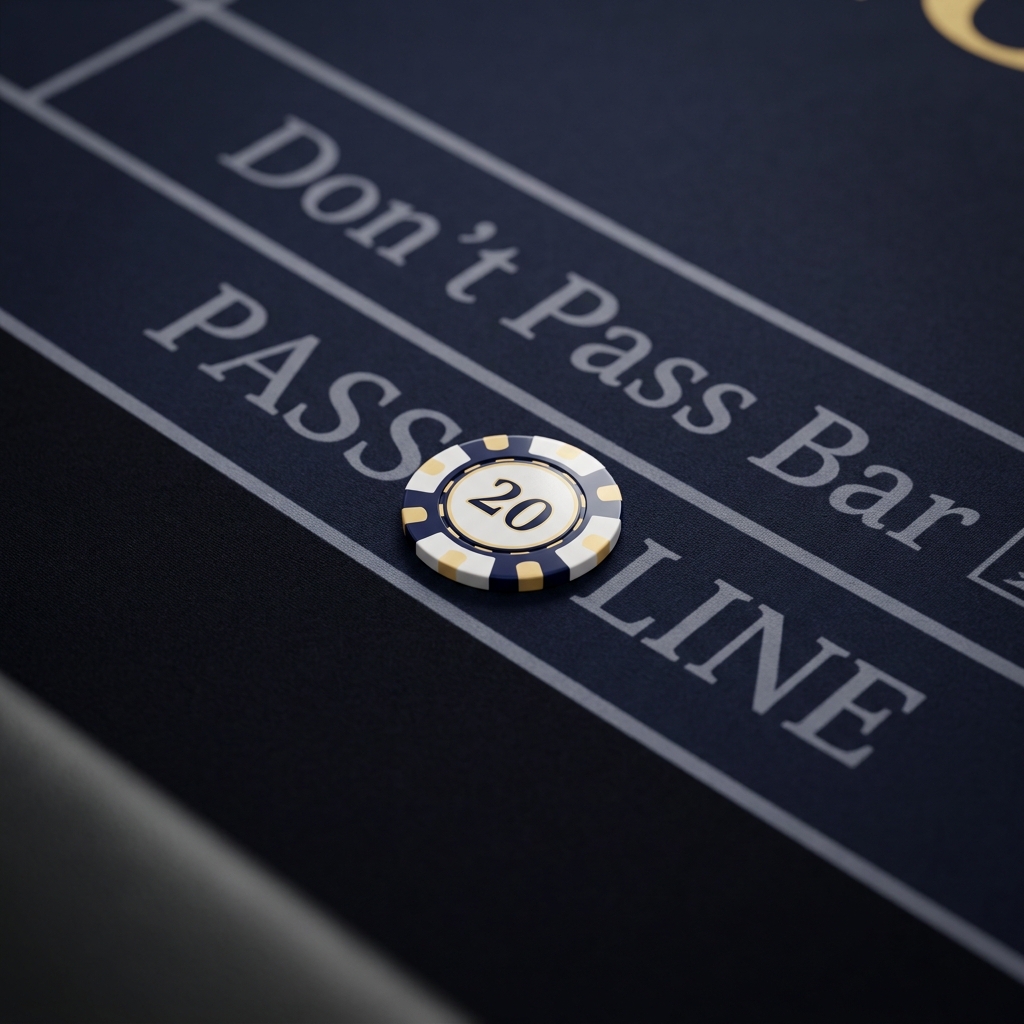
The term one bet vegas refers to a very simple, informal rule some visitors use when they go to a casino: make a single $20 wager, then walk away. This one-and-done approach is a personal limit on time and exposure rather than a betting system that changes how games behave.
No. A single $20 wager reduces cumulative exposure compared with repeated play but does not change the game-level house edge or the long-run expected value, so it does not improve long-run returns.
People who use this tactic usually want a short, low-commitment experience that caps how long they stay at a table or machine. Learn more at the Funded Plays homepage Funded Plays.
Common confusions: the $20 trick versus a betting approach
Searches for the phrase can mix two different meanings. One is the single-bet approach at a casino. The other, often called the $20 trick, is a hotel-front-desk tipping technique travelers sometimes use to request upgrades; the two are unrelated and work on different social dynamics.

The hotel usage has been covered in mainstream travel reporting and can cause confusion for readers who expect a gambling tactic. That coverage explains why many people searching about a $20 method in Las Vegas find articles about tipping and upgrades rather than casino math USA Today hotel upgrade coverage.
How the one bet works in math terms (simple expected-value)
At base, the math is straightforward. Expected value is the long-run average outcome per bet, and the house edge is the percentage of each wager the casino expects to keep on average. Together they determine expected loss for any stake, including a single $20 bet; no betting system changes those game-level parameters Investopedia house edge primer. Investopedia also explains how casinos ensure profitability Understanding the House Edge.
Explore Funded Plays Challenges for structured, limited-stake practice
Decide an entertainment stake you can afford and set a firm walk-away rule before you place any wager.
To compute expected loss, use the simple formula expected loss = stake times house edge. That arithmetic gives a single-number expectation for one bet and helps compare games or stake sizes without complex probability work.
House edge examples: roulette and craps numbers
Roulette and craps are useful examples because their house edges are well documented and different in scale. American double-zero roulette typically carries about a 5.26 percent house edge, while single-zero roulette is commonly around 2.70 percent Wizard of Odds roulette guide. For a list of low-house-edge games see Riverwind Casino Games With the Lowest House Edge.
Craps offers bets with notably lower house edges; the pass line bet is commonly cited near 1.41 percent. Those percentages are game properties that you use directly in expected-value calculations for any stake Wizard of Odds craps guide.
Concrete examples: expected loss on a $20 roulette spin
Apply the formula to a $20 stake on American double-zero roulette by multiplying the stake by the house edge. Using the typical 5.26 percent figure, expected loss on one $20 spin is roughly 20 times 0.0526, or about minus $1.05 on average Wizard of Odds roulette guide.

Interpreting that number means recognizing the difference between an average across many independent plays and the outcome of any single spin. One spin will normally be a discrete win or loss, and the expected loss is a bookkeeping average rather than a prediction of what will happen on your one bet.
Concrete examples: expected loss on a $20 craps pass line bet
Using the pass line house edge near 1.41 percent, the expected loss on a single $20 pass line wager is about 20 times 0.0141, or roughly minus $0.28. That shows how a lower house edge reduces the expected loss per stake but still leaves a negative expectation Wizard of Odds craps guide.
In practical terms, the smaller expected loss per bet makes some table games preferable if your objective is to minimize the long-run average money lost per wager, while recognizing that short-term volatility remains significant.
Time exposure, variance, and why one bet limits loss but not expectation
One of the main appeals of the one-and-done rule is that it limits cumulative expected loss by limiting the number of wagers. The expected cumulative loss grows roughly in proportion to the number of independent bets you make, so fewer bets usually mean less expected money lost overall Investopedia house edge primer. Wizard of Odds provides comparative house-edge data House Edge of Casino Games Compared.
Compute expected loss for a single or multiple stakes
Use integers for bets
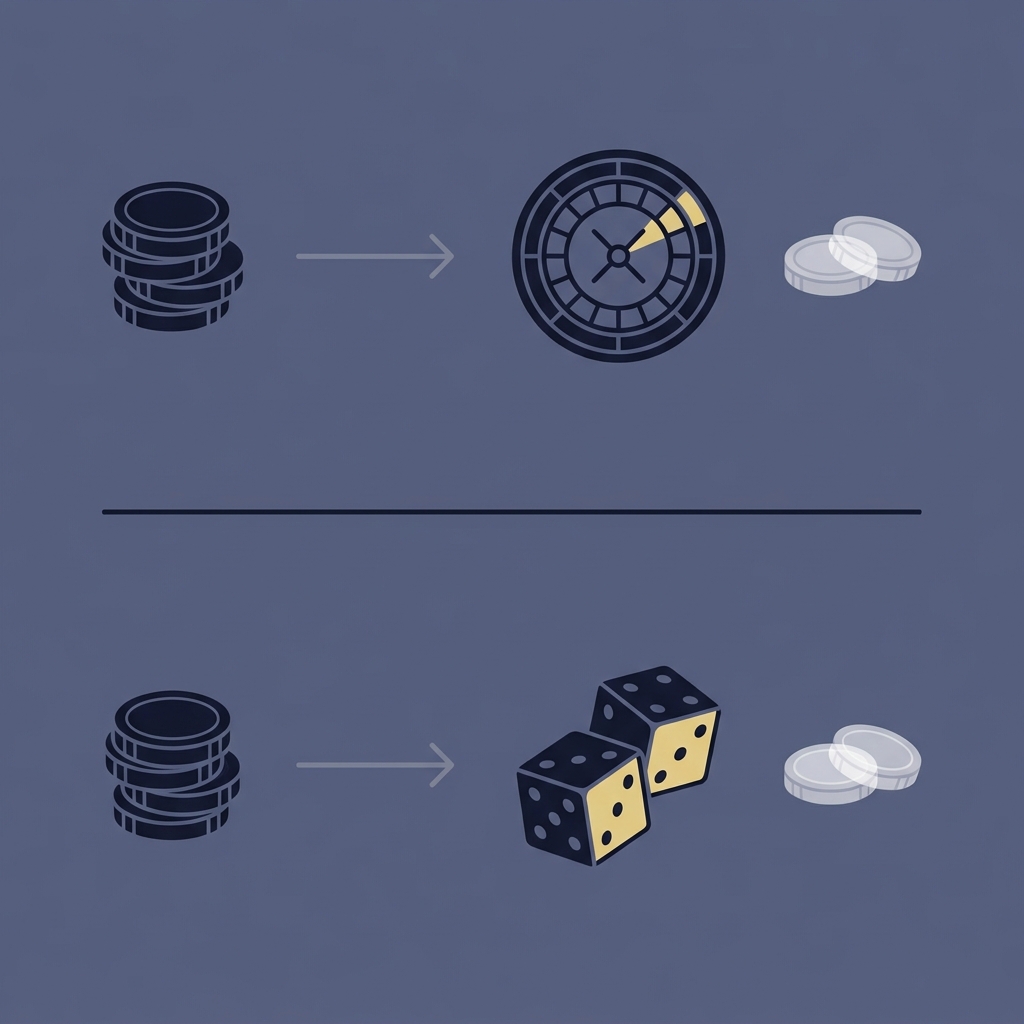
Variance matters because a single wager has high outcome variability. A one-bet plan replaces repeated small expected losses with a single high-variance event. That reduces time-at-the-table risk but does not change the expected value per bet or across many trials.
Decision criteria: when a one bet approach makes sense
Whether to use a one bet approach depends on your goals. If your priority is entertainment and you want a quick experience, a single $20 bet can be a reasonable way to spend a short period without much exposure. If your priority is minimizing expected loss, choose games with lower house edges instead, and keep stakes small.
Match choice of game to the objective, set the stake before you gamble, and use a clear walk-away rule. Those steps make the one bet vegas tactic an explicit risk-control decision rather than an ad hoc habit American Gaming Association guidance.
Bankroll rules and responsible play for a one-and-done plan
Simple bankroll rules pair well with a one-and-done plan. Decide a fixed entertainment budget before you leave home, allocate a single ticket-sized stake such as $20, and treat the bet as the cost of an experience rather than an investment to be recovered.
Practical commitment devices include leaving cash at the hotel, using a prepaid card with a set amount, or having a companion remind you of your walk-away rule. These techniques follow standard responsible-gaming advice to set limits and stick to them American Gaming Association guidance.
Common mistakes and myths about single-bet tactics
A frequent error is to assume a single $20 bet or a particular timing trick can beat the house. Betting systems do not change the underlying probabilities or the house edge; the math remains the same regardless of how you sequence bets Wizard of Odds on betting systems.
Anecdotes of short-term wins can create an illusion of a reliable method, but they do not overturn the statistical expectation. If someone wins on a single bet, that outcome is consistent with variance rather than evidence of a superior system.
Practical scenarios: three example one-bet plans and outcomes
Scenario A: Entertainment-focused single bet. You accept high variance and place a $20 wager on a roulette spin as a brief experience. The likely outcome is either a visible win amount or the loss of the stake; the expectation remains negative but the cost is limited to your stake.
Scenario B: Minimize expected loss. Choose a $20 pass line bet in craps or a small-bet single-zero roulette option if available. The lower house edge reduces expected loss per stake though it does not create a positive expectation.
Scenario C: Test strategy with simulated bankroll. Before betting real money, use a simulated or virtual bankroll to run many repetitions and observe long-run averages. Simulation lets you learn variance patterns and refine rules without real financial exposure Investopedia house edge primer (see our blog post on how Funded Plays evaluations work how Funded Plays evaluations work).
Responsible-gaming resources and next steps
If you want more structured guidance on limits and budgeting, reputable industry organizations publish responsible-gaming advice and tools. They recommend setting a budget, using time and loss limits, and seeking help if play becomes problematic American Gaming Association guidance.
Practical next steps are straightforward: choose a target stake, pick a game with a house edge you understand, and commit to a walk-away rule. Visit the Funded Plays blog for related resources Funded Plays blog.
Short conclusion: what the one bet vegas method really gives you
The one bet vegas plan gives a clear advantage in exposure control: one stake means limited time at tables and lower cumulative expected loss compared with prolonged play. It does not change the math, and it does not create a positive expected value for the player Investopedia house edge primer.
Use the approach if your goal is controlled entertainment and pair it with basic bankroll rules and responsible-gaming practices for the best results.
No. A single $20 bet does not change the underlying house edge or expected value of the game; it only limits time exposure and cumulative expected loss.
Games with lower house edges, such as the craps pass line, produce smaller expected losses per $20 stake, but none offer a positive expected value for the player.
No. The hotel $20 trick is a tipping practice used with front-desk staff and is unrelated to casino betting strategies or expected-value math.
References
- https://www.fundedplays.com
- https://www.fundedplays.com/blogs
- https://www.fundedplays.com/blogs/how-fundedplays-evaluations-work
- https://www.fundedplays.com/challenges
- https://www.usatoday.com/story/travel/hotels/2024/05/21/20-dollar-trick-las-vegas-hotel-upgrade/
- https://www.investopedia.com/terms/h/house-edge.asp
- https://www.investopedia.com/articles/personal-finance/110415/why-does-house-always-win-look-casino-profitability.asp
- https://wizardofodds.com/games/roulette/
- https://wizardofodds.com/games/craps/
- https://wizardofodds.com/gambling/house-edge/
- https://wizardofodds.com/gambling/betting-systems/
- https://www.americangaming.org/news/aga-kicks-off-responsible-gaming-education-month-2024/
- https://www.riverwind.com/blog/casino-games-with-the-lowest-house-edge/