

What does 1 to 1 or even-money mean?
A 1 to 1 bet, often called an even-money bet, pays a profit equal to the stake and therefore returns twice the stake in total when you win; the phrase and its payout mapping are used across sports and casino contexts, and many readers search for one bet vegas information to confirm the simple payout rule early on.
In plain terms: if you stake $50 on an even-money outcome and win, you receive your $50 stake back plus $50 profit for a total of $100. This equivalence is standard in odds conversion resources that map even-money to +100 in American odds, 2.00 in decimal odds, and 1/1 in fractional odds Investopedia betting odds guide. Also see our site for context on practice and challenge environments: Funded Plays.
A 1 to 1 bet pays a profit equal to the stake; in common odds formats that is +100 American, 2.00 decimal, and 1/1 fractional, so total return equals stake × 2.00.
Different games use the same phrase to mean the same payout, but the underlying probability and therefore the long-term expectation can differ by game variant and jurisdiction; later sections unpack those differences with regulator-backed examples.
How to calculate payouts for a 1 to 1 bet
Two short formulas give everything you need: profit = stake when odds are +100 or 1/1. Total return = stake × decimal odds, so for even-money total return = stake × 2.00. The decimal format explicitly includes the returned stake in its quoted value, which makes the total-return calculation direct and reliable Investopedia betting odds guide.
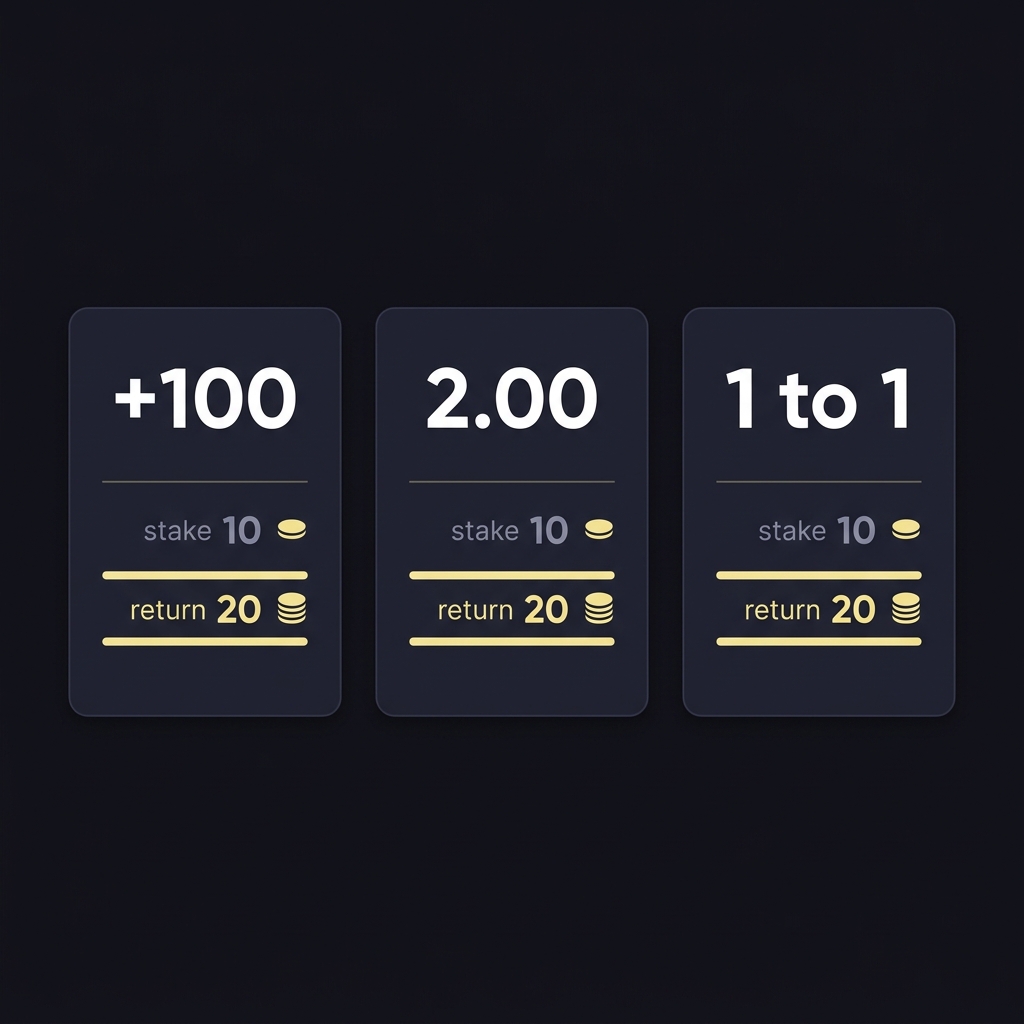
Worked example 1: stake $50. Profit = $50. Total return = $50 × 2.00 = $100. Worked example 2: stake $100. Profit = $100. Total return = $100 × 2.00 = $200. These two short examples show the rule in practice and allow quick checks of how much a +100 wager will pay Investopedia betting odds guide.
Odds formats and quick conversions
American, decimal, and fractional at a glance
The three common formats map for even-money as follows: American +100, decimal 2.00, and fractional 1/1. A reliable odds-conversion reference shows these exact mappings and explains the meaning behind each notation, which helps avoid confusion when comparing markets or reading a payout table Pinnacle odds conversion resource.
Fast mental math for even-money bets (one bet vegas)
Use this quick mnemonic: decimal 2.00 means double your stake for total return. That mental shortcut works whenever you see 2.00 and want the total cash you will hold after a win.
Another way to check is to translate formats: if a bookmaker shows +100, think "stake back plus equal profit," and if you see 1/1 fractional, read it as "one unit profit per one unit staked" to avoid misreading fractional odds.

Practice payout checks with FundedPlays challenge simulations
Use the cheat sheet below to check the stake-to-return math before you place or record a test wager in a practice environment.
Which casino table bets pay 1 to 1?
Several common table-game wagers are paid at even-money under U.S. state gaming rules. In roulette, the typical even-money bets are red/black, odd/even, and high/low and these are defined to pay 1 to 1 in state rule texts that govern table game pay tables New Jersey gaming rules, chapter on roulette. Related administrative text is also available in other repositories N.J. regulations.
In craps, the Pass Line bet is a standard example of an even-money payout for winning outcomes on a come-out roll of 7 or 11 or when the point is made; the relevant state regulations describe how the Pass Line pays 1 to 1 on wins under standard rules Massachusetts craps regulation.
Roulette probabilities and why even-money is not 50/50 on American wheels
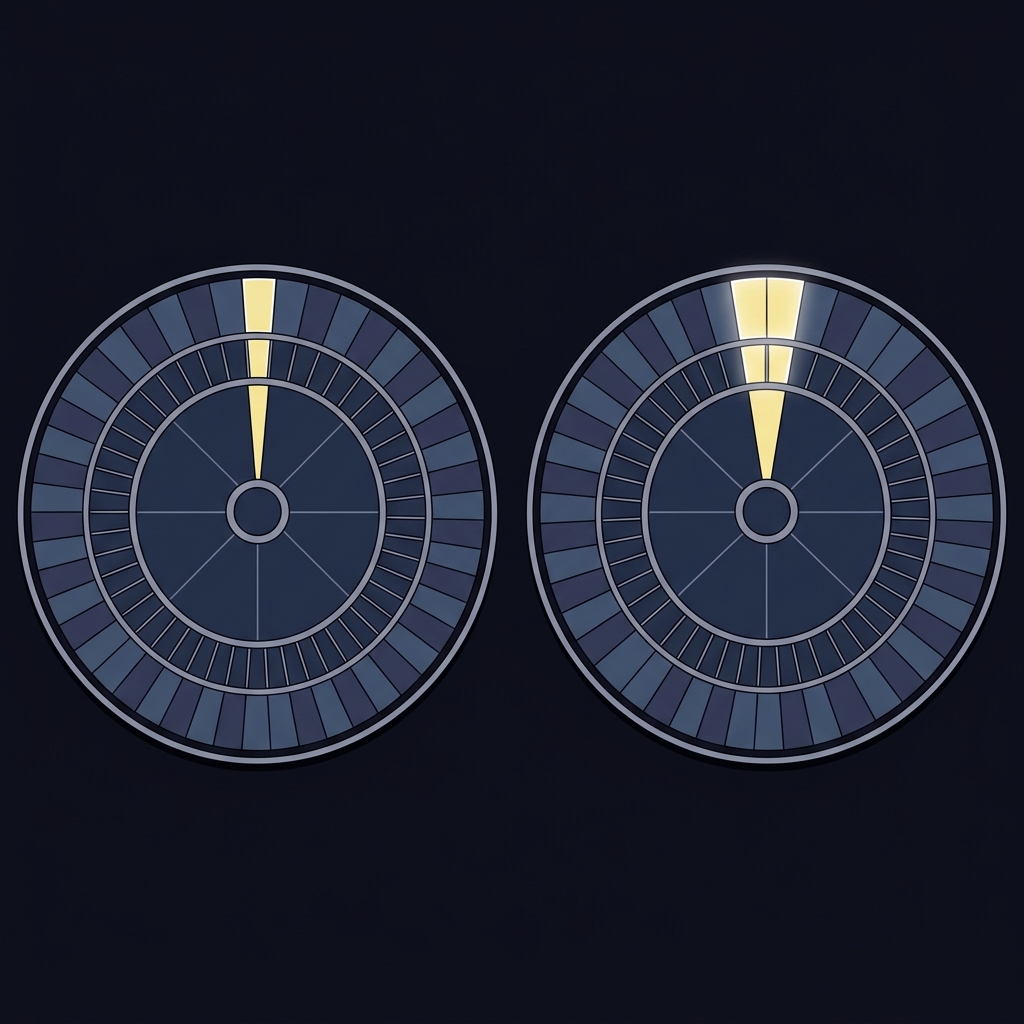
American-style roulette commonly uses a double-zero wheel with 38 pockets; the two green zeros change the underlying probability for red/black and similar even-money bets so they do not pay out at a true 50 percent win rate. The New Jersey rules define the double-zero wheel as a recognized variant and show the standard 38-pocket configuration used in many U.S. casinos New Jersey gaming rules, chapter on roulette. The double-zero layout is also described on casino sites that describe table games Hard Rock Atlantic City roulette page.
On a 38-pocket wheel, there are 18 winning pockets for a typical even-money bet and 20 non-winning pockets (the 18 opposites plus the two zeros). That gives a win probability of 18/38 for an even-money spin and explains why the long-term expectation favors the house; the specialist game resource explains the double-zero impact and the resulting house edge calculations Wizard of Odds, American roulette.

How the house edge affects expected value on even-money bets
Expected value, or EV, links probability and payout: EV = (win probability × win payoff) + (loss probability × loss), where payoffs include returned stakes as appropriate. Using the 18/38 win rate and a 1 to 1 payoff shows why even-money bets can have negative EV on double-zero wheels Wizard of Odds, American roulette.
For a simple EV line on a $1 even-money bet in American roulette: EV = (18/38 × +1) + (20/38 × -1) = (18/38) - (20/38) = -2/38, which equals approximately -0.0526 per dollar staked. That calculation produces the commonly cited house edge of about 5.26 percent on even-money bets when the wheel has two zeros Wizard of Odds, American roulette.
Quick reference cheat sheet and calculators
One-line formulas to keep handy: profit = stake when odds are +100 or 1/1. Total return = stake × 2.00. These two short lines let you convert quickly between formats and check how much you will receive back after a win Investopedia betting odds guide.
When to use a calculator: verify conversions for unfamiliar formats, check EV for table variants with different pocket counts, or confirm returns when combining multiple bets. A simple odds-conversion or EV tool removes manual arithmetic errors and helps you focus on decision criteria rather than arithmetic. See related tools and posts in our blog index Funded Plays blog.
quick even-money payout and EV check
returns EV per stake
Decision criteria: when an even-money bet is a reasonable choice
Even-money bets have lower variance than many other wagers, which can suit short sessions or conservative bankroll approaches; however the house edge on certain table variants reduces long-term expectation, so the choice depends on session goals and tolerance for negative EV. Consider how many spins or outcomes you plan to play when judging whether the lower volatility offsets the house edge for your objectives Wizard of Odds, American roulette.
Actionable criteria: (1) Know the table variant and its pocket count, (2) set a session goal and maximum loss before you start, and (3) treat even-money bets as part of a broader plan rather than a route to consistent profit. These steps help you match the wager to your timeframe and tolerance without assuming payouts or outcomes are guaranteed.
Common mistakes and pitfalls to avoid
Misreading odds formats is frequent: remember decimal odds already include the stake, while fractional odds express profit relative to stake. Confusing the two leads directly to miscalculating total returns, so always convert to decimal to check total payout quickly Pinnacle odds conversion resource.
Another common error is assuming a 50 percent win chance on American double-zero roulette; the double-zero wheel lowers win probability to 18/38 for typical even-money bets and creates a measurable house advantage, which is why checking state rules and wheel type matters before you compare bets N.J. Admin. Code on roulette payout odds and the New Jersey gaming rules chapter on roulette.
Practical scenarios and worked examples
Casino table example: place a $20 even-money bet on red at an American double-zero table. Win probability = 18/38. Payout on a win = $20 profit plus $20 stake returned, total $40. Expected value per $20 bet = $20 × ((18/38 × 1) - (20/38 × 1)) = $20 × (-2/38) which shows a small expected loss built into every spin Wizard of Odds, American roulette.
Odds example with +100: if a line in a sports market reads +100 and you stake $75, profit = $75 and total return = $150. The formula profit = stake and total = stake × 2.00 makes these calculations immediate and avoids ambiguity when comparing decimal and American formats Investopedia betting odds guide.
Wrap-up checklist and next steps
One-line takeaway: a 1 to 1 or even-money bet pays a profit equal to the stake and maps to +100 American, 2.00 decimal, and 1/1 fractional odds. Keep that sentence in mind as the core fact you can use to check any payout table or market Investopedia betting odds guide.
Checklist before you place or simulate an even-money bet: verify the odds format, confirm whether decimal odds include the stake, check the table variant or market rules for probabilities, compute stake × 2.00 for total return, and calculate EV if you care about long-term expectation. Close by treating practice or challenge environments as a way to test these calculations under controlled conditions and to build disciplined decision rules.
A 1 to 1 bet is 2.00 in decimal odds, which means total return equals stake times two and profit equals the original stake.
Yes, state gaming rules define red/black, odd/even, and high/low as even-money bets that pay 1 to 1, though the win probability depends on the wheel variant.
American roulette has two zero pockets on a 38-number wheel, lowering win probability for even-money bets and creating about a 5.26 percent house edge.
References
- https://www.investopedia.com/betting-odds-explained-5215898
- https://www.fundedplays.com
- https://www.nj.gov/oag/ge/docs/RulesandRegulations/chapter69f.pdf
- https://regulations.justia.com/states/new-jersey/title-13/chapter-69e/subchapter-1/section-13-69e-1-7/
- https://www.pinnacle.com/en/betting-resources/betting-tools/odds-conversion
- https://www.mass.gov/regulations/205-cmr-147-craps
- https://casino.hardrock.com/atlantic-city/casino/table-games/roulette-at-hard-rock-atlantic-city
- https://wizardofodds.com/games/roulette/american/
- https://www.fundedplays.com/challenges
- https://www.fundedplays.com/blogs
- https://www.law.cornell.edu/regulations/new-jersey/N-J-A-C-13-69F-5-2