

Understanding odds implied probability: definition and how it differs from pot odds
Odds implied probability is the practical estimate of how much extra money you expect to win on later streets, beyond the immediate pot, when the current pot odds alone do not justify a call. This concept treats future winnings as part of the decision calculus rather than relying only on the present price of a call, and it helps you decide whether a marginal call might become profitable if the hand develops in your favor. For a clear exposition of this distinction, see Upswing Poker on implied odds Upswing Poker implied odds guide.
Pot odds are a current, arithmetic ratio: the size of the call compared with the pot you can win right now. Implied odds add a forecast of later betting, which is necessarily an estimate because opponents may change behavior on future streets and you cannot know exact bet sizes in advance. Use pot odds when the decision is purely about the immediate price; use implied odds when later betting can substantially change the expected value of your call.
In practice, implied-odds thinking ties three concrete items together: the number of outs you have, the likely future bets you can extract if you hit, and how likely opponents are to pay you off when you make a strong hand. Framing it this way keeps implied-odds decisions disciplined rather than wishful. The mathematics of weighing present and future value has been covered in foundational discussions of poker mathematics The Mathematics of Poker.
Practice implied-odds decisions in structured challenges
Try the step-by-step implied-odds checklist on a few hands in practice, focusing on conservative estimates for future bets rather than optimistic wishful thinking.
To decide quickly at the table, start with pot odds and then ask whether realistic future wagers you can win when you hit alter the equity requirement enough to justify a call. Reserve implied-odds calls for situations where that conservative projection turns a negative immediate EV into a positive one.
When implied odds matter: the practical triggers
Implied odds matter most when several table conditions line up: deep effective stacks, in-position control, passive or calling opponents, and a draw that converts into a strong made hand rather than a weak one. These factors increase the chance you will realize extra value after you hit, making marginal calls more plausible. PokerNews outlines the role of stack depth and position in realizing implied value PokerNews on pot odds and implied odds.
Deep effective stacks create room to win additional bets on later streets; without depth, there is simply not enough money left behind to justify drawing. Playing in position increases your control of the pot size and lets you extract value when your draw becomes a made hand. Opponents who call frequently or play passively give you more opportunities to win more than the current pot when you connect.

Conversely, implied odds shrink when stacks are shallow, you are out of position, or opponents tend to fold when faced with pressure. When those adverse conditions are present, prefer pot-odds-based decisions to avoid overreliance on speculative future winnings.
How to calculate implied odds: a step-by-step method
Step 1: Compute current pot odds and convert the call price to required equity. Work out the immediate ratio of the call to the pot and translate that into the percentage equity you need to break even. This arithmetic foundation tells you whether the call is already justified without projection. PokerNews provides a clear primer on combining pot and implied odds when calculating decisions PokerNews pot odds primer.
Step 2: Estimate realistic outs and discount for possible domination. Count live cards that give you the best hand, then reduce that count if some outs make hands that can still be second-best. Foundational strategy texts emphasize discounting outs to avoid systematic overcounting The Theory of Poker.
Rely on implied odds when conservative projections of future bets you can win make a currently unjustified call into a +EV play, and when factors like deep stacks, position, passive opponents, and high-quality draws increase the likelihood you will realize that future value.
Step 3: Project conservative future bet sizes you expect to win when you hit and add that to the current pot for a revised pot size. Use modest estimates, such as expecting to win a fraction of the full remaining stack or anticipating that only one opponent will pay you off. Finally, recompute the equity requirement using the enlarged pot to see whether the call becomes positive EV under those conservative projections. Upswing Poker outlines a similar practical workflow for combining immediate odds with realistic future gains Upswing Poker implied odds guide.
At the table, keep this method short and mechanical: compute pot odds, adjust outs, estimate a conservative extra amount you might win, then decide. If that conservative model still does not justify the call, fold. If it does, the hand is a candidate for a disciplined implied-odds call.
Estimating future bets: realistic projections and why conservatism matters
Players routinely inflate implied-odds value by assuming they will win the entire remaining stack or that multiple opponents will always pay a big river bet. That optimism bias produces repeated losing calls over time because many hands that look good on paper fail to realize full value. PokerNews and Upswing Poker both warn against optimistic assumptions and recommend conservative multipliers when projecting future winnings PokerNews on realistic projections.
Simple rules of thumb reduce optimism: expect to win only a portion of the stack behind, assume only one caller will pay a big value bet when you hit, and discount outs that can produce second-best hands. Applying conservative multipliers keeps your implied-odds analysis grounded and reduces the risk that reverse implied odds will turn a small mistake into a costly pattern.

Conservatism also means reviewing opponent types and recent table history. If callers have folded to river aggression in prior similar spots, lower your estimate of future payoffs. If caller tendencies are sticky and passive, increase the projection slightly but still use modest fractions rather than full-stack assumptions.
Stack size and position: why depth and seat matter for implied odds
Deep effective stacks generally increase implied odds because there is more money to win when you hit, while short stacks leave little additional value to realize. For practical play, treat deep stacks as the scenario where implied-odds calls are most useful and short stacks as the scenario where pot odds dominate. Upswing Poker explains how stack depth alters implied-odds opportunities Upswing Poker implied odds guide.
Out-of-position play reduces your ability to extract future value and raises the risk of reverse implied odds because you will face more decisions without positional control. When you are out of position, require better immediate odds or stronger draw quality before calling for implied value.
Heuristics to memorize at the table: treat only hands with clear two-street realization and good pot control as implied-odds candidates when stacks are less than roughly ten to fifteen times the pot, and favor implied-odds calls more freely when effective stacks are deeper. These one-line heuristics help you avoid marginal calls that depend on unlikely future scenarios.

Opponents and tendencies: who pays you off and who punishes you
Opponent profiles determine how much of the projected future value you can actually collect. Passive callers and loose players who tend to call down with medium-strength hands increase your realizable implied odds, while big-stack aggressors who apply pressure or tight value raisers who seldom call large bets reduce it. Upswing Poker discusses how opponent tendencies affect implied-odds calculations Upswing Poker implied odds guide.
Quick reads you can use: label frequent passive callers as potential payoffs and treat re-raisers and big-stack pressure players as obstacles to extracting full value. Combine this read with the pot-size projection to judge whether a call is likely to be rewarded or punished later.
Reverse implied odds: common traps and dominated draws
Reverse implied odds capture the extra you could lose when a made or drawing hand is actually second-best and you pay more to your opponent on later streets. Dominated draws, backdoor draws against bigger holdings, and out-of-position situations increase this risk and often make implied-odds calls unprofitable. Red Chip Poker explains how reverse implied odds work and how to avoid them Red Chip Poker on reverse implied odds.
Typical dominated-draw examples include low two-card straight draws that complete straights where a higher straight is possible, or a flush draw that is susceptible to being dominated by a higher-suited hand. These cases show why counting raw outs can be misleading if some outs leave you second-best.
quick implied-odds estimator for in-game checks
Use conservative future win estimates
When you suspect domination, reduce your outs aggressively and prefer folding to marginal calls. Practicing this discipline prevents recurring losses that come from repeatedly overestimating the payoff of risky draws.
Practical scenario: deep-stack cash-game example
Preflop: choose a hand with implied-odds potential such as small pocket pairs for set-mining or suited connectors when effective stacks are deep. Preflop plan matters because you select hands that can make strong, hard-to-fold holdings later, and that preflop selection preserves implied-odds optionality. Upswing Poker and PokerNews both highlight set-mining and nut-oriented draws as proper implied-odds candidates Upswing Poker implied odds guide.
Flop decision: compute pot odds, count outs for a set or nut draw, and estimate how much you can win if you hit. If the current pot odds are inadequate but your conservative projection of future bets makes the call positive, proceed with a call only if position and opponent tendencies align. If either position or caller tendencies are hostile, fold even with a tempting draw.
River planning: have an extraction plan. If you hit a set or a nut draw, plan how to build the pot without scaring opponents away, and be ready to check or thin-value when the board looks dangerous. Conservative extraction often wins more over time than aggressive hopes that opponents will always pay big bets.
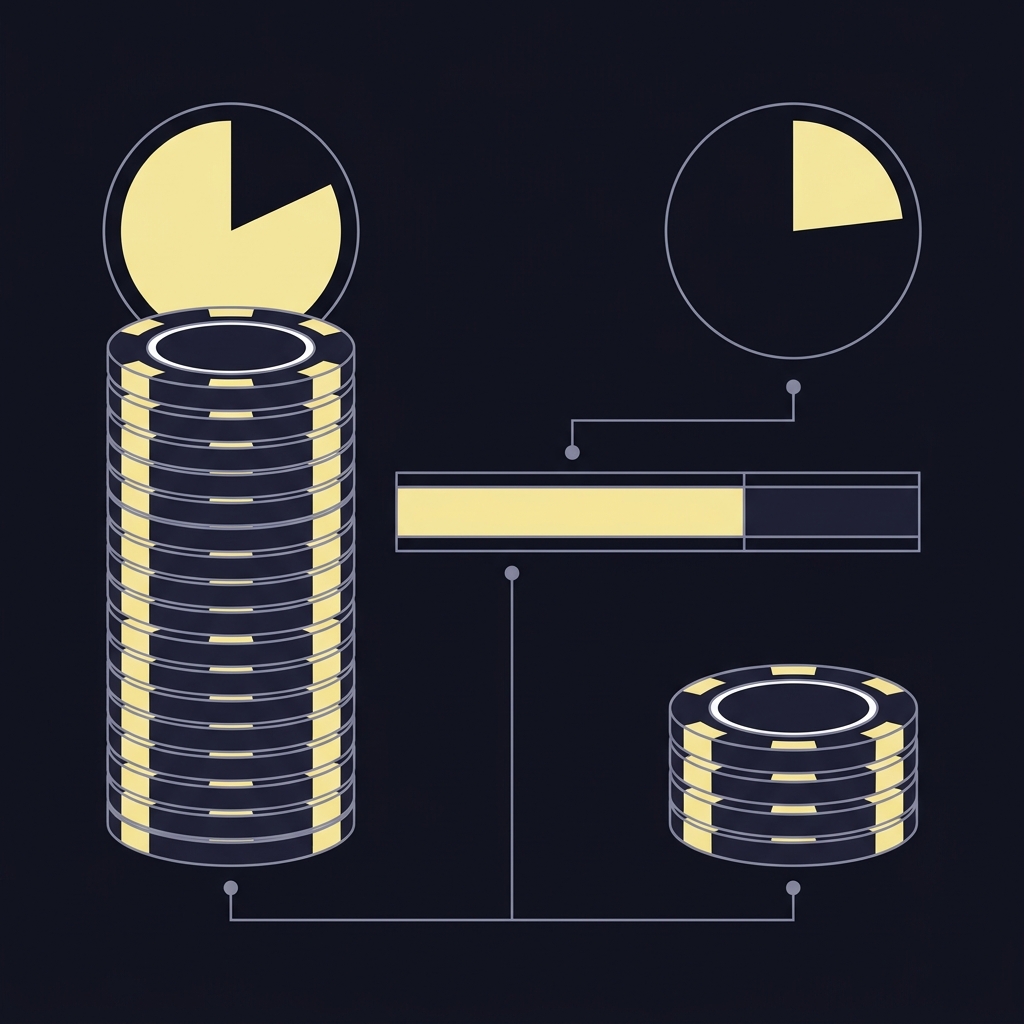
Practical scenario: short-stack and tournament adjustments
Short stacks reduce implied odds because there simply is less money available to win after you hit. In tournaments, stack preservation and ICM considerations further weaken implied-odds reasoning; fold equity and survival often matter more than speculative payoffs. PokerNews discusses when to prioritize pot odds, fold equity, and ICM over implied-value projections PokerNews on tournament adjustments.
When stacks are shallow, ignore implied odds for most marginal draws and focus on immediate pot odds or on plays that create fold equity. Use tighter thresholds for calling with speculative hands and widen them only when stack depth and table dynamics clearly allow for postflop extraction.
Multiway pots and implied odds: special considerations
Multiway pots can increase the pot you hope to win, which superficially improves implied odds, but they also increase the chance that your draw is dominated or that someone else will have a better made hand when the board runs out. Cards that help many players simultaneously often lower your realizeability. CardsChat explains the tradeoffs for implied odds in multiway situations CardsChat implied odds guide.
Rule of thumb: in multiway pots value implied-odds calls only with draws that tend to make strong, top-end hands or when most opponents are passive and likely to pay. Avoid multiway speculative calls when domination is likely or when multiple opponents increase the chance a better hand already exists.
Quick decision checklist and table-ready rules
Memorize this short flow: compute pot odds -> evaluate outs and possible domination -> check effective stacks and position -> assess opponent tendency -> apply conservative future-value multiplier -> decide. This sequence compresses the full method into a table-ready routine you can run in seconds.
One-line rules to keep at hand: prefer implied-odds calls only with deep stacks and in position; treat low-quality or dominated draws as folds; expect to win only a fraction of the remaining stack by default. These concise rules reduce time pressure errors and keep your implied-odds play disciplined.
Common mistakes players make with implied odds and how to fix them
Overcounting outs without discounting for possible domination is a frequent error. Players often list raw outs and act as if every out guarantees the best hand, neglecting the cases where an out creates a second-best holding. The Theory of Poker warns about this overcounting tendency and recommends disciplined discounting of outs The Theory of Poker.
Another mistake is assuming opponents will always pay large value bets. Fix this by checking recent table behavior and tagging players who are likely to fold to river pressure. Make conservative future-win estimates part of your initial calculation rather than an afterthought and avoid chasing marginal situations that depend on exceptional opponent passivity.
Putting it together: a sample preflop-to-river thought process
Preflop plan: select hands with implied-odds potential, such as small pairs or suited connectors, when stacks are deep and you have position. Enter the hand with an explicit plan to realize implied value only if the flop gives you a realistic path to a strong made hand or a disguised two-street improvement. Upswing Poker notes the importance of preflop selection for implied-odds plans Upswing Poker implied odds guide.
Flop update: compute pot odds, reduce your outs for domination, and estimate conservative future bets you can collect. If the revised calculation justifies a call, stay in; otherwise fold. Keep checking opponent tendencies and be ready to abandon implied-odds hopes when later streets reveal stronger ranges than you expected.
Turn and river: update your implied-odds projection after each street. If the turn weakens your expected payoff because opponents start showing strength, stop relying on implied odds and avoid further investment. Abandon sunk-cost thinking: prior investment does not justify further calls when updated information shows low realizeability.
Conclusion: when you should use implied odds and final guidelines
Use implied odds when conservative projection of future bets turns a negative immediate-odds decision into a positive one, and when table conditions support realizeability: deep effective stacks, in-position play, passive callers, and high-quality draws that make strong or nut hands. Upswing Poker and PokerNews both summarize these core triggers for implied-odds play Upswing Poker implied odds guide.
Be cautious with dominated draws, out-of-position spots, shallow stacks, and multiway boards that increase the chance your hand will be second-best. Build the habit of discounting outs and using modest future-win estimates; over time, conservative implied-odds practice reduces costly calling patterns and improves decision stability.
Implied odds estimate the additional money you expect to win on later streets, used when current pot odds alone do not justify a call.
Reverse implied odds capture the risk of making a hand that is second-best and losing more money later when opponents hold stronger hands.
Rarely with short stacks; tournaments require weighing pot odds, fold equity, and ICM more than speculative implied-odds calls.
References
- https://upswingpoker.com/implied-odds-poker-strategy/
- https://www.twoplustwo.com/books/the-mathematics-of-poker/
- https://www.pokernews.com/poker-strategy/pot-odds-and-implied-odds-34640.htm
- https://www.twoplustwo.com/books/the-theory-of-poker/
- https://www.fundedplays.com/challenges
- https://upswingpoker.com/implied-odds/
- https://redchippoker.com/reverse-implied-odds-explained/
- https://www.cardschat.com/poker-odds/implied-odds/
- https://pokercoaching.com/blog/implied-odds/
- https://en.wikipedia.org/wiki/Pot_odds
- https://www.fundedplays.com
- https://www.fundedplays.com/blogs
- https://www.fundedplays.com/blogs/how-fundedplays-evaluations-work