
What nrl betting odds mean: formats and the basics
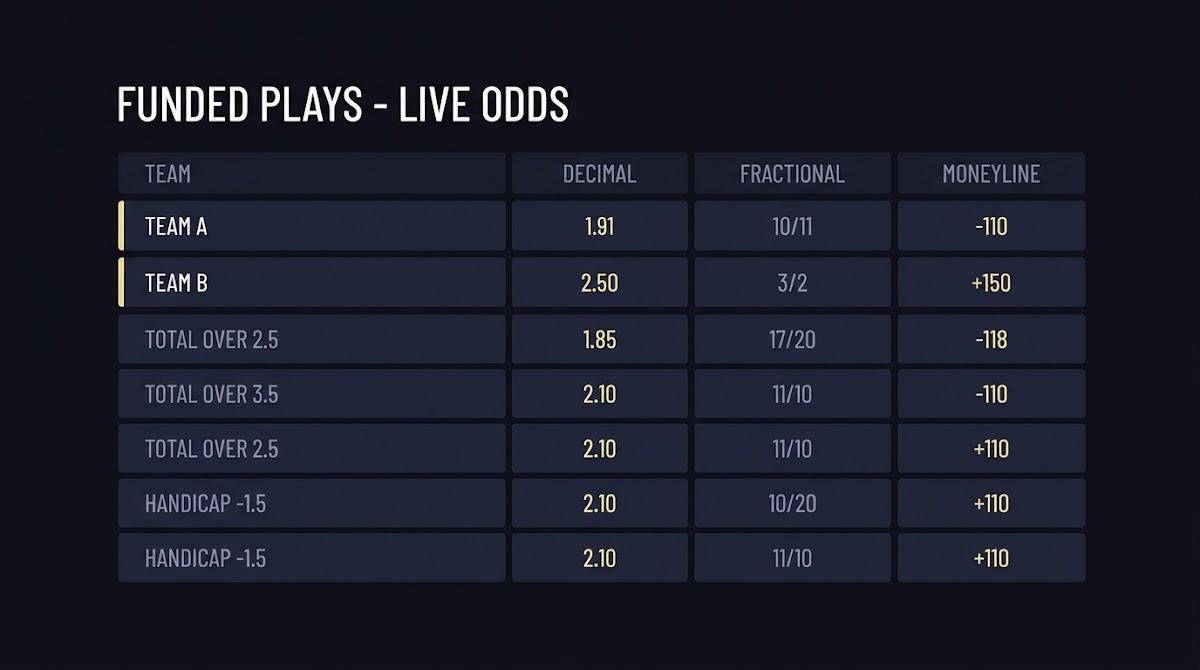
When you see an NRL market quoted, the number you read is an expression of payout and relative chance. The three standard formats you will encounter are decimal, fractional and moneyline; each expresses the same underlying pricing idea but in different notation, so learning how to read each is the first step toward sensible comparison and staking. For a clear primer on how odds formats present payout and chance, consult the comprehensive odds overview from Investopedia How to Read Odds in Sports Betting.
Decimal, fractional and moneyline at a glance
Decimal odds show the total return per unit staked. Read them as a multiplier: stake times the decimal gives your total return including stake, so decimal formats make quick mental comparisons easy.
Fractional odds show the net profit relative to stake, written as A/B. They are traditional in some markets and express how much you win on top of your stake for each B units staked; the fractional view highlights profit rather than total return.
Moneyline odds use positive and negative numbers to indicate risk and return. A positive number tells how much profit a 100-unit stake would make, while a negative number shows how much you must stake to win 100 units. This format is common for readers used to US-style pricing.
How odds show payout vs implied chance
None of these formats are probabilities by themselves; they encode payout rules and can be converted into an implied probability, which is the common comparison metric bettors use when assessing price fairness and value. If you want a straight explanation of how implied probability is derived from odds, see the Investopedia guide on implied probability Implied Probability: Definition, Formula, and Examples.

Key terms you need: implied probability, margin and overround
Implied probability: what it is and why it matters
Implied probability is the share of chance that the quoted odds represent after converting payout notation into a percentage. Converting different formats into implied probability lets you compare prices from different markets on an apples-to-apples basis and identify which lines appear relatively generous.
Turning odds into implied percentages is foundational for any practical NRL odds conversion workflow; authoritative explainers show the straightforward formulas and examples you can use to work across formats Implied Probability: Definition, Formula, and Examples.

Bookmaker margin and the overround explained
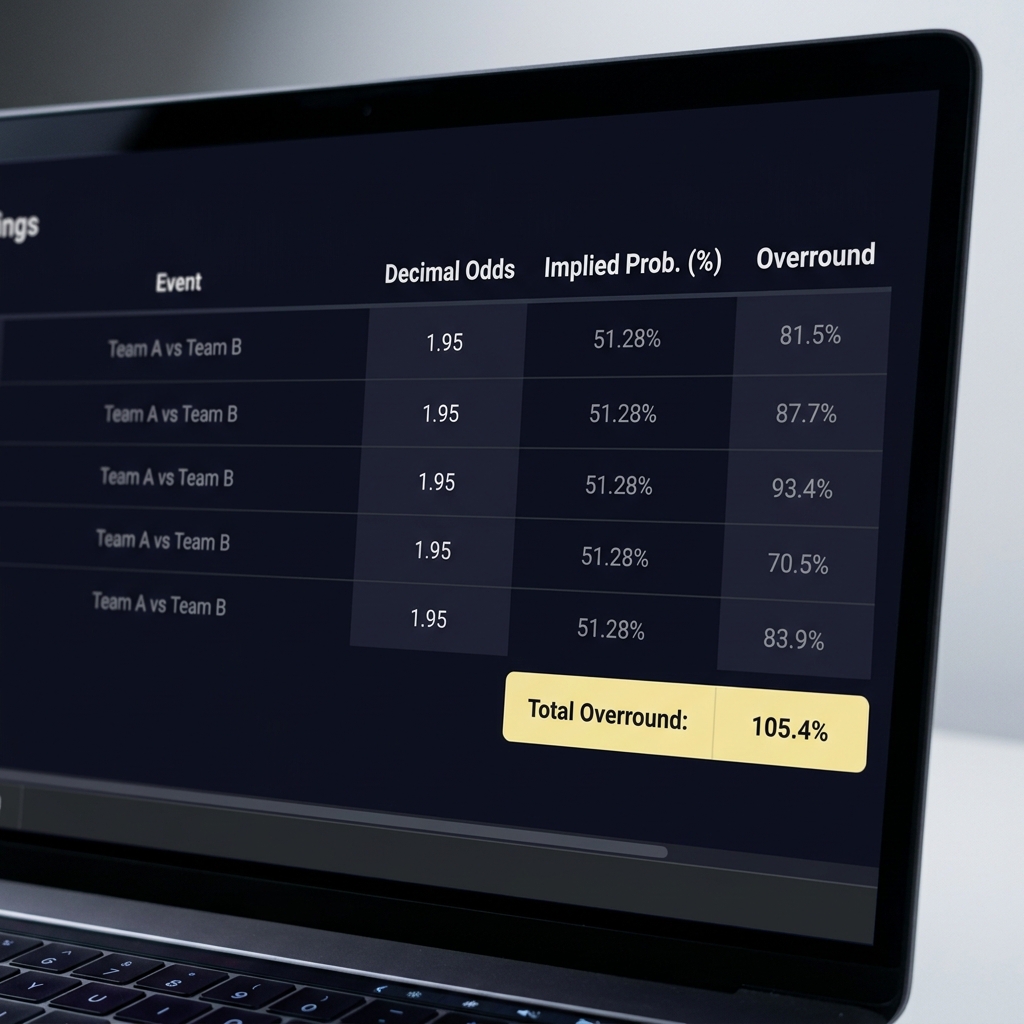
Bookmakers add a margin into quoted prices so that the sum of implied probabilities across all mutually exclusive outcomes usually exceeds 100 percent. That excess, often called the overround, is how operators build a pricing cushion that produces an expected edge over time.
Understanding the overround matters because it creates a long-run headwind for casual players; practical resources on sportsbook margin and how it affects expected value explain why converting prices and checking overround is a necessary step before staking How to calculate betting margins.
How to convert odds into implied probability and check the overround
Formulas for decimal, fractional and moneyline
Use these standard formulas to convert each format to implied probability. For decimal odds, the implied probability is 1 divided by the decimal number. For fractional odds written A/B, the implied probability is B divided by A plus B. For moneyline, use the plus/minus conventions: for a positive moneyline M, implied probability is 100 divided by M plus 100; for a negative moneyline M, implied probability is -M divided by -M plus 100. These conversion methods are standard in practical explainers and educational resources How to Read Odds in Sports Betting, or use an odds converter like Covers' odds converter.
As a short reminder, always express implied probability as a percentage to make sums and comparisons straightforward.
Step-by-step: convert a market and measure the overround
Follow this reproducible procedure when you want to check a quoted NRL market.
- Record the quoted odds for every mutually exclusive outcome in a single market and note the format used.
- Convert each price to implied probability using the formulas above.
- Express each probability as a percentage and sum them; the total is the market overround.
- Interpret the sum: anything over 100 percent shows the operator margin; the greater the excess, the larger the embedded cushion.
Remember that while you can mathematically remove a margin to produce an adjusted probability distribution, that adjusted distribution is a model-dependent estimate and not a verified 'true' probability; resources that explain margin removal and its limits can guide cautious application of margin-adjusted figures How to calculate betting margins.
Practice conversions with the FundedPlays Challenges description in mind
Try converting a single market now using decimal, fractional or moneyline examples to see how the percentages add up; this exercise clarifies how much margin is embedded.
Why nrl betting odds move: news, markets and liquidity
Common information drivers for line movement
Odds move because new information or shifts in market bets change how operators and the market view likelihoods. Typical drivers include injury and team news, public-money flows, large bets that force liability adjustments, and tactical changes from bookmakers managing risk. The Australian MoneySmart guidance on sports betting explains how market activity and information affect lines and the risks of trading on short-term moves Sports betting, how odds work and risks.
For bettors, recognizing why a line moves helps decide whether to act immediately or wait for clearer information.
How futures and season markets update over time
Futures markets, such as season winner or player award markets, are updated continuously as the season progresses and relevant signal accumulates. Early-season prices typically reflect more uncertainty and therefore larger margins and wider variability than mid-season markets with more information.

Because futures update with new results and roster news, it pays to revisit these lines at multiple points in a season rather than relying on a single early price; responsible guides note that prices change as markets incorporate fresh information Understanding odds and probability.
How to use nrl betting odds when planning stakes and hunting value
Comparing implied probabilities across operators
A practical way to spot value is to convert the same market from several operators to implied probabilities and rank them. Differences in implied percentages show where one operator offers relatively better payout for the same outcome; these percent differences are the basis for a value comparison.
Comparing lines across operators is valuable because different operators can present materially different implied probabilities for the same event, and systematic comparison helps you find the relatively more favourable price for the same market before staking How to calculate betting margins.
Simple staking rules and risk management
Convert and compare first, then apply disciplined stake sizing. Set a budget you can afford to lose, limit each stake to a small percentage of that bankroll, and keep records of every bet and its underlying converted probabilities. These practices reduce the risk of chasing losses and help you evaluate whether a strategy is actually profitable.
As a practical convenience, many bettors use a small spreadsheet or a lightweight odds-to-probability calculator to speed conversions and keep consistent records; a simple checklist-style tool can help standardise the steps without needing specialised software. See a betting odds calculator such as Action Network's betting odds calculator for a ready example.
speed up odds to probability conversions for quick comparisons
run conversions before staking
Common mistakes to avoid when reading NRL odds
Misreading formats and doing math errors
Confusing fractional and decimal notations or misapplying the moneyline formulas leads to incorrect implied probabilities, which in turn produces bad comparisons. Double-check format labels and arithmetic before relying on a conversion.
Simple checks reduce errors: convert one known decimal case to confirm your setup, and use percentage sums to catch arithmetic mistakes quickly.
Ignoring the overround and market movement
Forgetting that the sum of implied probabilities usually exceeds 100 percent can make a seemingly attractive line look better than it is. Likewise, not checking whether a line recently moved on injury news or heavy market action can leave you mispriced and exposed.
Responsible gambling guidance recommends setting stake plans and avoiding chasing losses; if you do not understand why a line moved, pause and check the drivers rather than betting reactively Sports betting, how odds work and risks.
Practical examples: converting sample NRL lines and comparing operators
Walkthrough: convert three hypothetical prices to implied probability
Use only generic sample prices for practice: pick three mutually exclusive outcomes and note their formats. For example, you might work with a decimal favorite at 1.80, a decimal underdog at 2.10, and a draw or alternative outcome at 12.00. Convert each decimal to implied probability by dividing 1 by the decimal and express the result as a percentage; this step gives you the basic apples-to-apples comparison.
In the same way, if you have a fractional price like 4/1, convert it using B divided by A plus B to get the implied percentage. If you encounter a moneyline, apply the positive and negative formulas described earlier. The general conversion rules are standard and well documented in odds explainers Implied Probability: Definition, Formula, and Examples, and free calculators such as TheRundown's implied probability calculator can speed the work.
After converting, sum the percentages to compute the market overround. If the sum is, for example, 106 percent, the operator margin is about 6 percentage points above a neutral 100 percent book; you can use this information to compare how generous different operators are for the same market.
Odds express payout and can be converted into implied probabilities for direct comparison; remember to account for bookmaker margin and to compare lines across operators before sizing stakes.
How to record and compare results across operators
Keep a simple table with columns for date, market, format, quoted price, implied probability, and notes. Track each operator's implied percentage for the same event and compute differences; ranking the implied probabilities makes value opportunities visible quickly and reduces guesswork.
These records let you see whether a given operator consistently offers better implied percentages on particular market types, which can inform where you conduct future comparisons.
Summary: what to take away about nrl betting odds
Conversion is the essential skill: translate decimal, fractional or moneyline prices into implied probability to compare apples with apples. Keep in mind that the sum of probabilities usually exceeds 100 percent because of bookmaker margin, and treat any margin-adjusted probabilities as model-based estimates rather than verified truths How to calculate betting margins.
Action checklist: convert prices before betting, compare multiple operators, set a bankroll and stake limits, track every line and result, and always recheck a line after new team news or market movement. These steps help keep decisions disciplined, measurable and aligned with responsible play guidance Sports betting, how odds work and risks.
Divide 1 by the decimal odds and express the result as a percentage; this gives the implied probability for that price.
Overround is the sum of implied probabilities across mutually exclusive outcomes exceeding 100 percent; it represents the operator margin.
Not always; a higher implied probability can still be poor value after considering margin, liquidity and updated information; compare records and context before staking.