
What the point spread means: how to read who is favored
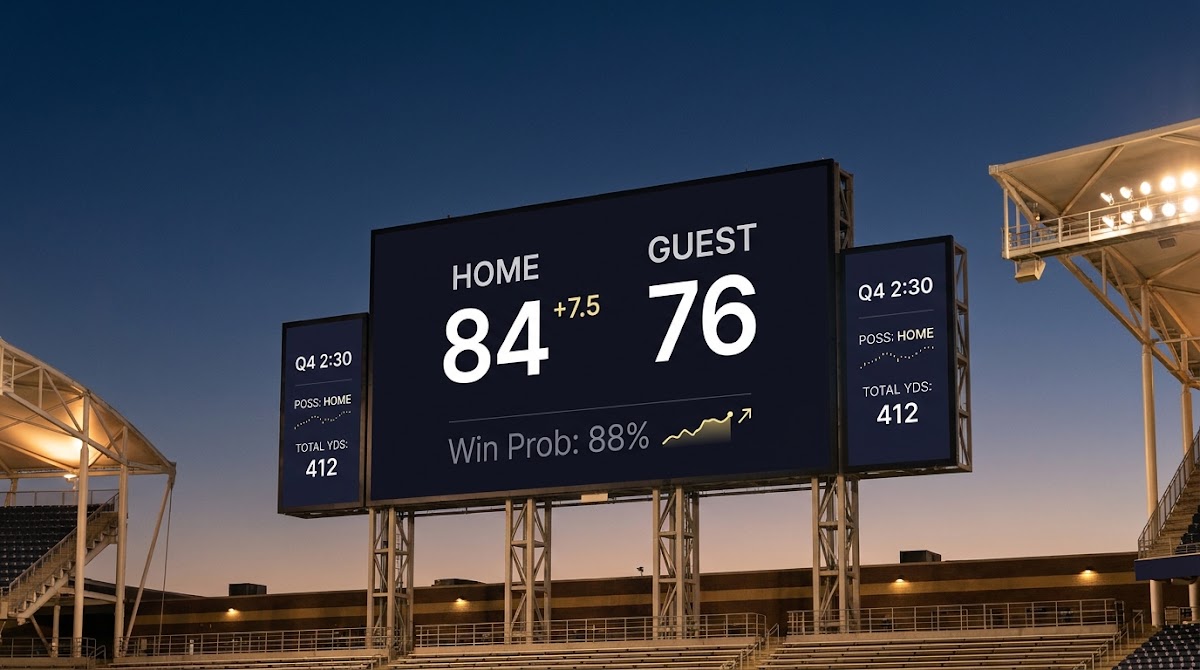
Start by looking at the posted number next to each team. If you see a negative figure, that team is the market-designated favorite; a positive figure marks the underdog. For example, if Team A is listed at -3.5 and Team B at +3.5, markets have assigned Team A as the favorite by three and a half points, which is how to read the spread and understand who is expected to outscore the opponent by that margin. This basic rule is the first step when checking an nfl spread tomorrow because it converts the betting line into a plain-language statement about market expectations, not a prediction of certainty American Gaming Association guide.
Check the posted spread to see which team has a negative number, verify the closing line across multiple regulated books, review official NFL game status and practice reports for injuries, and compare a simple Elo or SRS-based implied spread adjusted for modest home-field advantage to state the market favorite with a confidence range.
To put the example into words: Team A, at -3.5, must win by four points or more for the favorite label to be validated against the posted spread; Team B, at +3.5, is the underdog and can lose by up to three points while still 'covering' that posted number. Remember that the spread is a market opinion and not a guarantee of outcome; the closing number is typically the best single snapshot of that pregame opinion and is what many analysts reference when reporting which side the market favored before kickoff ESPN Chalk glossary.
Common spread formats you will encounter include whole numbers, half points to avoid ties, and decimals on some platforms. The procedural takeaway: negative equals favorite, positive equals underdog, and the absolute value tells you the number of points the market expects the favorite to outgain the opponent. When you learn how to read the spread this way you can instantly translate posted lines into an actionable shorthand about market sentiment without assuming certainty.
Negative versus positive spreads explained
Negative numbers assign responsibility to the favorite to produce a margin; positive numbers give the underdog a scoring buffer. This simple convention underpins every discussion of who is favored and is the standard way U.S. betting markets label favorites and underdogs American Gaming Association guide.
Common spread formats and a quick example
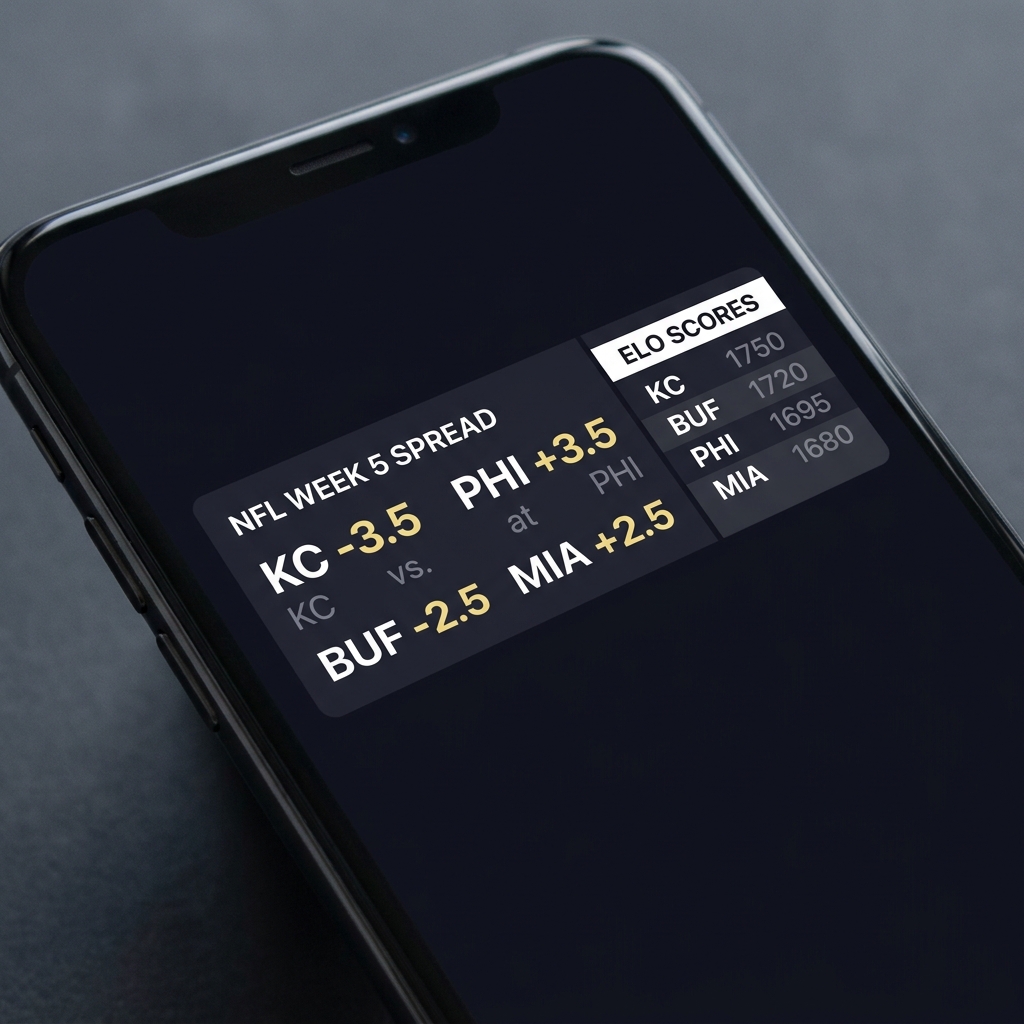
As a quick worked example: a posted line of HomeTeam -2.5 versus AwayTeam +2.5 reads as HomeTeam favored by 2.5 points. Rewriting that into plain language helps: the market says HomeTeam is the favorite by roughly a field-goal margin. That phrasing is useful when you compare the posted line to your own projection or to lines at other books to check whether the market consensus aligns with your view.
Where to check tomorrow's NFL spread and spot market consensus
To judge how a single posted line fits into broader market opinion, monitor regulated sportsbooks, odds aggregators, and mainstream media odds pages. Aggregators and major media explainers collect multiple books and display them side by side, which makes it faster to see whether one posted number is an outlier or part of a converging consensus; see the Funded Plays blog.
Regulated sportsbooks publish the raw posted numbers, while odds aggregators show a range and often report the best available price. When you compare across several regulated books and watch convergence toward a similar number, you gain confidence that the market has settled on a consensus closing line rather than relying on a single operator's figure ESPN Chalk glossary. See the SportsLine odds page for an example of a major odds feed.
Regulated sportsbooks and odds aggregators
Regulated books offer official posted spreads and are your primary source for real-time line checks. Aggregators speed the process by collating those numbers; they are particularly helpful if you need to confirm whether an early retail move has stuck or if sharp money has pushed the line toward a new level.

Why comparing multiple lines improves reliability
Lines can differ across operators for legitimate reasons, including local market exposure, liquidity, or risk management. If three or four major books converge on roughly the same number by closing time, that convergence is a practical indicator of market consensus and is generally a more reliable single snapshot than an early or solitary line. Treat the closing line as the most commonly used snapshot for pregame consensus because it reflects the market after most news and bets have been incorporated American Gaming Association guide. See the CBS Sports odds page for another major aggregator example.

Using simple power ratings to convert team strength into an implied spread
Power-rating systems such as Elo and the Simple Rating System (SRS) translate past results, opponent strength and margin information into a team score that can be converted to an implied point difference between two teams. These frameworks remain methodologically stable for practical projections and are a compact way to produce a quick implied spread you can compare to market lines FiveThirtyEight Elo methodology.
Conversion is a short sequence of steps: obtain both teams' ratings, subtract the away rating from the home rating to get a difference, apply a modest home-field adjustment, and report the result as an implied spread. Because modern analyses show only a modest home-field advantage in recent seasons, use a smaller adjustment than older conventional values when you do this simple conversion Pro-Football-Reference on SRS.
ToolType: | Purpose: | Fields: | Notes:
How Elo and SRS produce a point-difference projection
Elo and SRS differ in calculation details, but both yield a single-number strength estimate per team. Subtracting those numbers gives an expected point difference before home-field adjustment. For many quick checks you do not need the full model machinery; a reliable public Elo series or SRS table will give you the two ratings needed to compute the raw differential and produce an implied spread you can compare to the market line FiveThirtyEight Elo methodology.
Applying a modest home-field adjustment and stating confidence bounds
Instead of applying an old-school large home-field bonus, use the modest home adjustments suggested by modern analyses and your recent seasonal context. After applying that small home-field figure, present a simple confidence band around the implied spread to reflect remaining uncertainty. This framing - an implied spread plus a small confidence range - helps you compare methodological projections to the posted market number and decide whether the market favorite is strongly or weakly favored Pro-Football-Reference on SRS.
How NFL injury reports move lines and what to watch this week
The NFL’s weekly Game Status and practice-participation reports provide structured updates that frequently move lines as the week progresses and new injury-related information becomes public. Monitoring these official reports is a key step when judging whether a favorite is strengthening or weakening because players listed in game status reports are specifically the items bettors and media track before kickoff NFL Player Health and Safety injury report.
Typical designations include limited, did not practice and questionable or out for game status; media outlets and market participants often react to changes in these labels, especially for key skill-position players. A sudden downgrade of a starting quarterback or an unexpected absence for a lead defender can move a line substantially, which is why cross-checking the official NFL updates against team practice notes and multiple market lines is important for a responsible assessment American Gaming Association guide.
The NFL Game Status and practice-participation schedule
Teams submit regular practice reports and a game status list that many outlets reprint. Those entries are standardized enough that a reader can learn when to expect changes: practice participation updates midweek and game status entries closer to game day. Following that schedule makes it easier to anticipate when lines might move in response to new information.
Interpreting designations and their typical market impacts
Markets may price in an injury designation differently depending on the player's role and the timing of the report. For example, a late-week downgrade to out for a starting quarterback tends to have a larger impact than a limited-day report for a rotational depth player. Finally, the speed with which lines adjust to late-breaking injury news can vary, so maintain a cautious posture when interpreting single reports until cross-checked across reputable official sources and market lines NFL Player Health and Safety injury report.
A disciplined workflow to decide who is favored tomorrow
Adopt a concise checklist to move from seeing a posted line to naming which team the market is calling the favorite. Start by reading the spread and labeling the favorite, then compare the number across several regulated books to see if a closing or consensus line emerges, next consult the NFL injury reports, run a simple rating conversion, and finally state a favorite with a confidence range. Following these steps keeps the assessment evidence-led and avoids overstating certainty about outcomes American Gaming Association guide. See Funded Plays evaluations.

Step 1: Read the spread. Label the team with the negative number as the favorite and the positive number as the underdog. Step 2: Verify consensus across books by noting whether multiple regulated operators show a similar closing number. Step 3: Check official NFL game status pages and practice participation items for late changes and apply your simple projection from Elo or SRS after a modest home-field adjustment. State the market favorite and include a small confidence band rather than declaring certainty; this workflow privileges verification and responsible interpretation over hasty claims NFL Player Health and Safety injury report.
Step 1: read the spread
Label the negative-number team as favorite immediately and convert the posted number into a plain-language margin. This first step sets the baseline and has high informational value for anyone checking lines in real time.
Step 2: verify consensus across books
Look for convergence or a closing line across multiple regulated books; if the posted number you first saw is far from the consensus closing line, treat it as suspect until you understand why the discrepancy exists.
Step 3: check injuries and create a simple projection
Review the official NFL game status and practice-participation notes, convert your chosen rating's differential to an implied spread using the small home-field adjustment, and present a short confidence range. That combined check - spread, consensus, injuries, and a simple model - gives you a disciplined basis to state which team the market favors tomorrow without implying guaranteed outcomes American Gaming Association guide.
Typical errors that lead to incorrect favorite calls
One common mistake is overreacting to a single report or an early line move without confirming across other official sources and market lines. A single unverified injury rumor or an early-market directional move can mislead an otherwise careful reader, so always seek corroboration before changing your assessment NFL Player Health and Safety injury report.
Another frequent error is misreading or ignoring the closing line. The closing number aggregates much of the week's public information and many market adjustments; ignoring that snapshot often reduces the reliability of a favorite assessment. Finally, using an overly large traditional home-field adjustment when recent analyses support only a modest value will bias your projected spread away from what contemporary models and market consensus generally reflect FiveThirtyEight Elo methodology.
Overreacting to single reports
Confirm injury information across official team reports and the NFL game status feed before treating it as decisive. Single-source moves have led to false conclusions in many short-term cases.
Misreading the closing line and home-field mistakes
Use the closing line as your anchoring snapshot and apply modest home-field adjustments consistent with modern analyses. Avoid vintage assumptions that add an excessive home bias.
Practical walk-throughs: two example scenarios you can replicate
Scenario A demonstrates an injury-driven shift in the market favorite. Suppose an early posted line opens Team X -3.0. Midweek, the starter at a key offensive position is downgraded to questionable. By late Thursday the same operator moves the line to Team X -1.0, while other regulated books show Team X -1.5 or -2.0. Tracking this pattern across multiple books and checking the NFL game status updates lets you see whether the market is systematically reducing the favorite margin, and the closing line will show how the market ultimately priced that change NFL Player Health and Safety injury report.
Practice the workflow on the FundedPlays Challenges page
View challenges and learn moreIn that injury-driven scenario you revise the favorite label from a clear -3.0 favorite to a marginal favorite in the -1 to -2 range and present your result with a confidence band, for example favoring Team X by 1.5 points plus or minus 1.5. State that range and document the sources you used: the books you compared and the official injury entries you cross-checked before kickoff.
Scenario A: favorite shifts after a key injury update
Step-by-step: note the original posted spread, watch practice reports and NFL designations, list line moves across three or more regulated books, and update your assessment if the closing numbers and official reports point to a smaller favorite margin. That workflow limits overreaction and keeps your revision evidence-led.
Scenario B: quick Elo-based implied spread and comparison
Scenario B shows a simple conversion using Elo or SRS. Take publicly available Elo scores for both teams, compute the difference, apply a modest home-field adjustment, and compare the implied spread to three regulated books' closing numbers. If your implied spread is close to those closing numbers, the market favorite aligns with your projection; if not, investigate injuries, matchup details, or market imbalances that might explain the gap FiveThirtyEight Elo methodology. See related market coverage on Action Network.
Quick checklist and closing takeaways
Printable checklist: read the spread and label the negative-number team as favorite; check multiple regulated books and note the closing line; review the NFL Game Status and practice-participation notes; convert a simple Elo or SRS differential into an implied spread with a modest home adjustment; state a favorite with a brief confidence range and document your sources. This one-page sequence is a repeatable, disciplined way to decide who is favored tomorrow without implying guarantees American Gaming Association guide.
Final cautions: markets express an opinion through the spread, not a promise of outcomes. Use the closing number, verify injury reports through official NFL channels, and compare power-rating projections with the market consensus to form a balanced view. Practicing this workflow improves clarity and reduces the chance of overreacting to isolated reports or early moves NFL Player Health and Safety injury report. See Funded Plays for additional resources.
One-page checklist to decide tomorrow's favorite
Follow the short steps here each game day: read the posted spread, compare multiple closing lines, check NFL practice and game status updates, run a quick rating conversion, and state the market favorite plus a confidence band.
Final cautions and next steps
Keep records of the lines and sources you used so you can review how market favorites compared to actual results over time. That practice helps refine your judgment and supports disciplined, skill-based forecasting.
The team with a negative point spread is the favorite; the team with a positive spread is the underdog. The magnitude shows how many points the market expects the favorite to win by.
Compare regulated sportsbooks, use odds aggregators and consult mainstream media odds pages to see whether multiple books converge on a similar closing line.
It depends on the player's role and timing; late downgrades for key skill players generally move lines more, so verify official NFL game status and practice notes before adjusting your assessment.