
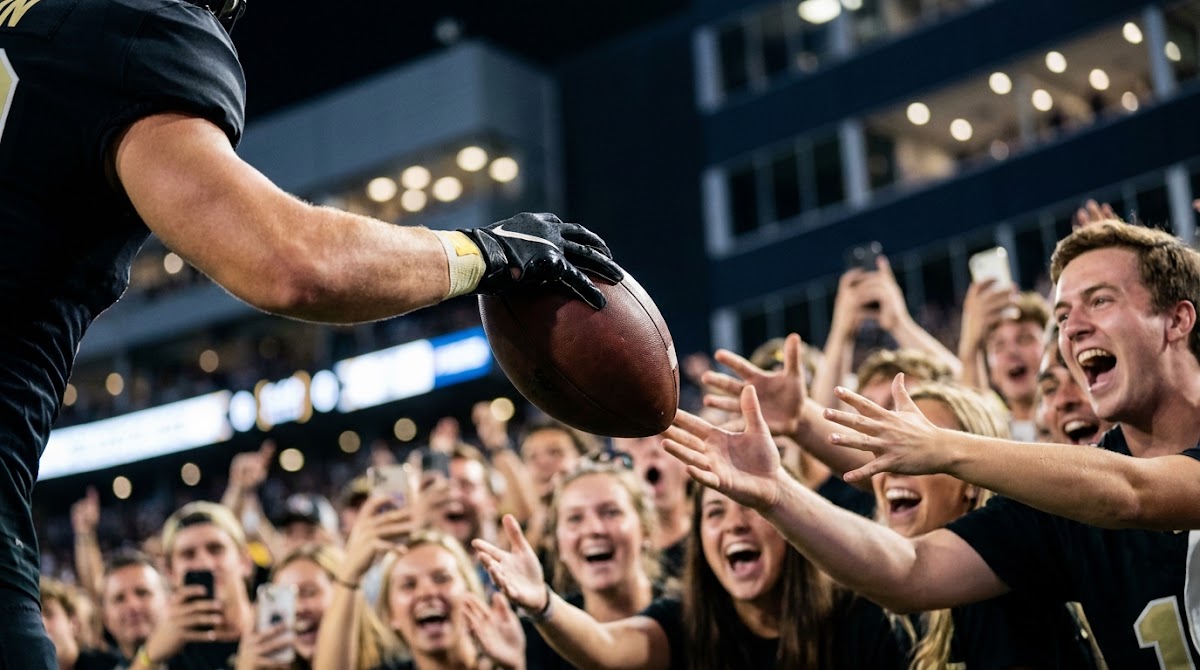
Why fans ask about nfl picks point spread when players give away game balls
Common fan scenarios
A player tossing or handing a game ball to a fan is one of those instant moments that can spark headlines, social posts, and a long string of questions. Fans see the exchange as a personal souvenir, while collectors register a potential item of value. That curiosity often extends into broader game-day conversations, including talk about nfl picks point spread, because memorable plays are the same moments people reference when discussing outcomes and standout performances.
Typical situations include a player giving a ball to a fan after a touchdown, after a milestone such as a career pass or interception, or in postgame meet-and-greet settings. Those are the most familiar scenes where a ball changes hands quickly and informally. Fans often wonder whether the exchange is entirely harmless or whether it could trigger team or league actions because the ball might later be needed for review or considered team property.
Why giveaways attract attention
Part of the public interest comes from the memorabilia angle. A ball from a key play can become a sought-after collectible, especially when it can be tied to a specific moment, player, and game. Another reason is media coverage: an evocative image of a player tossing the ball into the stands can spread fast and prompt questions about the rules behind equipment and evidence handling. For many observers, the mix of emotion, value, and procedure makes the moment worthy of closer attention.
That mix is also why some readers search for terms like nfl picks point spread alongside stories about giveaways. The phrase functions as a topical anchor for people who follow games closely and tie single plays to betting narratives or performance discussions. It does not change how teams or the league treat equipment, but it explains why fans bring the conversation up when a ball is handed to someone in the stands.
Learn how to document and handle a game ball after a memorable play by checking practical steps tied to the FundedPlays Challenges context
If you want practical steps on what to do if you get a game ball, continue reading for a clear checklist and realistic scenarios that explain what teams usually do.
What the NFL rulebook and official policies say in general terms
How official equipment is described in NFL guidance
The league maintains written procedures and standards covering on-field equipment, including the balls used in play, and teams follow operational protocols to ensure consistent competition. Those general procedures focus on ensuring the equipment meets specifications for play and that items needed for postgame review are preserved when necessary. Exact policy language varies in formal documents and team manuals, so this section aims to summarize the typical policy territory without quoting or inventing specific clauses. KCRA's overview of player rules provides a readable summary of common operational points discussed in public reporting.
When commentators discuss NFL ball possession rules they are usually referring to two ideas: the league's control over equipment while it is part of the game, and the practical handling of items when a contest or review requires them to be secured. The distinction matters because a ball in active use is treated differently from a ball that has clearly left play and been handed to a spectator under normal circumstances.

Who owns game balls during and after play
Ownership and custody can be a practical matter rather than a single legal rule stated in public-facing materials. In most sports operations, a team or league will assert control over game equipment until it is clearly released from official custody. That control enables organizations to preserve balls needed for testing, review, or archival purposes. Readers should understand that exact contract language, team bylaws, or league memos may affect how a particular item is classified after a game.
In short, the line between on-field equipment under league control and items that leave the field depends on context and operational decisions made by officials, equipment staff, and sometimes team or league administrators. This article explains common practices but stops short of asserting specific legal ownership in every situation, since those details can vary by contract and internal policy.
How nfl picks point spread conversations intersect with giving away balls during and after games
Media narratives and social media moments
Not every memorable play gets tied to betting talk, but highlight moments often become part of the narrative fans and bettors alike discuss. A dramatic touchdown, a record-setting pass, or a controversial call can all be referenced when people analyze lines and point spreads. That is one reason nfl picks point spread shows up in social threads about giveaways: the same moments that affect betting conversations are also the ones fans want to keep as physical mementos.
Fines are context dependent; most informal giveaways are resolved without penalties, but items tied to reviews or investigations can prompt official requests or disciplinary processes.
Social media amplifies small scenes into larger stories. A fan holding a ball on camera, a player smiling as the ball is accepted, or an exchange that coincides with a late-game swing can all lead to threads where fans and analysts mention point spread implications, momentum shifts, or clutch play. Those connections are conversational rather than regulatory, but they help explain why a game ball giveaway can seem like a bigger event than it might be operationally.
Why betting or picks discussions sometimes mention giveaways
People who follow lines and matchups may point to a specific play as evidence of a player's form or a team's momentum, so a physical reminder of that play fits naturally into the story people tell about a game. That said, mentioning nfl picks point spread alongside a giveaway is about narrative color rather than about rules or fines. It helps explain fan behavior and public interest without implying that betting considerations govern how teams manage equipment.
Overall, the intersection of betting chatter and memorabilia comes down to attention. The more attention a play draws, the likelier conversations about both the competitive implications and the physical artifacts that remain afterward.
When a player giving a ball to a fan can create team or league issues
Chain of custody concerns
There are a few operational scenarios where handing a ball to a spectator could cause problems. One common concern is chain of custody. If a play is under review or if there is potential for postgame testing, losing immediate access to the ball can complicate processes that rely on secure handling. Teams and league officials pay attention to where a ball goes when it could affect the integrity of a review or investigation.
Chain-of-custody concerns are procedural. They matter most when the ball in question is central to an ongoing matter, such as a disputed catch, a field condition complaint, or an incident requiring later inspection. In routine cases, though, teams and officials typically do not need to pursue every ball that leaves the field.
Equipment and evidence implications
Beyond review, other issues can arise if a ball is needed as evidence in disciplinary reviews or in contexts where its condition matters to an inquiry. Staff who manage equipment understand that some balls are more important to secure than others, and they generally take steps to identify and preserve those items. Giving away a ball used in a contested play could prompt staff to intervene or to request its return for proper documentation.
That practical sensitivity is why players and staff are often cautious in the immediate aftermath of a close play. Simple operational rules, like confirming whether a play is final or whether officials need a particular object, help minimize confusion and reduce the chance that a well-meaning giveaway creates downstream complications.
Typical penalties and fines: what is commonly reported and what is official
Where fines come from and who issues them
Fines in professional football usually arise from violations of league rules and are formally issued by the league office following established procedures. Teams may also apply internal discipline under their own codes of conduct or operational policies. In general, an official financial penalty would come through the league's process rather than as an informal reaction by staff or local personnel. For details on typical enforcement channels, see the league's schedule of infractions and fines on the NFL operations site at operations.nfl.com.
It is important to distinguish anecdote from policy. Media reports or social chatter sometimes suggest fines in particular cases, but those reports should be verified against official league communications when available. This piece avoids inventing specific fines and instead explains the mechanics by which fines would typically be assessed.
Examples of non-fine outcomes
Not every problem results in a fine. Often the outcome is logistical: an equipment manager may secure a similar ball for the fan, officials may request a return, or a team may simply document the exchange and move on. Teams also sometimes offer alternative items to fans, like commemorative balls or signed memorabilia, to address both fan expectations and operational needs.
When disputes arise, public relations teams and operations staff usually prioritize clarity and resolution rather than punitive measures. That means the most common results are requests, documentation, or the replacement of an item rather than an immediate financial penalty.
Common exceptions and informal practices that let players give balls away
Team-sanctioned giveaways
Teams frequently plan promotions and community events that include sanctioned giveaways. Those programs are managed so they do not interfere with any operational or review needs, and they often use extra or specially prepared balls to avoid conflicts. Team communications and community relations staff typically oversee these efforts so players can participate without risking procedural problems. See Funded Plays for the organization's main site.
In many of these cases, players are encouraged to hand out non-evidence items or balls that are clearly marked for fans. That practice preserves the memorabilia value while protecting the team's ability to respond to any situation that might require official access to game-used equipment.

What fans should know if they receive a game ball
Preserving value and authenticity
If you receive a game ball, simple steps can help preserve its provenance and potential collectible value. Document the moment with photos or video, note the timing and location in the game, and collect any corroborating details such as seat location or witness names. Those basic records help establish authenticity if you later wish to verify the ball's origin or to sell or insure it. For additional context on documenting provenance see this related write up.
Fans who care about sports memorabilia authenticity should avoid altering the item, such as by cleaning or attempting to remove markings, and should store it in a clean environment away from direct light and extreme temperatures. Keeping the original ball in an archival sleeve or case, and noting who was present, strengthens its provenance for future collectors. The history of the official NFL ball and related authenticity notes can be found at Wilson's background on the official NFL ball.
Record provenance and basic details when a fan receives a game ball
Keep records simple and timestamped
When to expect requests from teams or league
In rare situations, a team or the league might request that a fan return a ball for examination. That is most likely if the ball is implicated in a close call, a safety issue, or a disciplinary matter. If a request comes through, it is usually handled by team operations or legal staff who explain what is needed and why. Cooperating politely and documenting the interaction is the best immediate response for most fans.
Fans should be aware that a request to return an item does not automatically imply wrongdoing; it is often an operational step to preserve evidence or to allow proper documentation. If a fan believes a request is improper, they can ask for a written explanation and consult independent advice, but initial cooperation is typically the quickest way to resolve the situation.
Realistic scenarios and short case studies
Typical touchdown giveaway
Imagine a routine touchdown where the player celebrates and hands a spare ball to a fan in the front row. In most such scenarios the ball is not part of any pending review and the player or staff deliberately used an extra ball to make the exchange simple. The outcome is usually uneventful: the fan leaves with a souvenir and the team documents the giveaway if needed for promotional or archival reasons.
This kind of scenario shows how teams can plan around fan engagement while protecting necessary operations. A deliberate spare-ball approach prevents chain-of-custody issues and keeps the goodwill of a fan moment intact.
When a ball is kept for review
Contrast that with an example where a ball from a close scoring play is involved in a challenge or a review. Officials or equipment staff may secure the ball immediately and remove it from circulation. In that case, a fan who reaches for the ball may be stopped politely and informed that it needs to be retained for a short period. The typical response is procedural rather than punitive.
These two scenarios illustrate the spectrum of outcomes: many giveaways are harmless and planned, while a smaller number involve intervention to protect game integrity or to properly document an incident.
Typical mistakes players and staff make around ball giveaways
Misunderstanding evidence needs
One common mistake is the assumption that all game balls are interchangeable. In reality, when a ball is tied to a contested play or a potential review, it may be essential to keep that exact item intact. An impulsive giveaway can therefore create extra work for staff and, in rare cases, complicate official procedures.
Education and routine checks help prevent these errors. Players who take a moment to confirm with equipment staff or officials before handing off a ball reduce the chance of interfering with operational needs.
Ignoring team protocols
Another frequent misstep is overlooking team guidelines established to handle memorabilia and giveaways. Those protocols exist to balance fan engagement with the operational requirements of a professional sport. Ignoring them, even unintentionally, can create confusion for teammates, staff, and fans.
Simple practices, like keeping a set of marked giveaway balls and consulting equipment managers when in doubt, minimize these problems and maintain both fan goodwill and procedural integrity.
How teams and leagues usually handle disputes about possession or fines
Claims process and communication channels
When a dispute arises about possession or an alleged breach, the usual path involves team operations and equipment staff documenting what happened and communicating with the league if necessary. Teams will often collect statements, photographic evidence, and internal records before escalating an issue. That initial fact-gathering informs whether the league office needs to be involved. Our blog covers related topics in more depth for readers interested in operational discussions.
If the league does open a formal review, it generally follows the established administrative channels. Public statements about discipline or fines tend to come from official team spokespeople or the league office after a review concludes. For readers, the practical takeaway is to trust official announcements rather than early rumors on social channels.
Role of public relations
Public relations teams play a key role in shaping how disputes are presented to the public. Their job is to clarify the sequence of events, explain operational context, and reduce misunderstanding. That means most disputes are resolved with statements that emphasize the procedural steps taken rather than with immediate public accusations or sensational claims.
Because PR typically aims to de-escalate, fans should expect reasoned explanations if a team or the league addresses an incident publicly. Those communications provide the most reliable information on whether any disciplinary action or fine is under consideration.
Practical advice for players, staff, and fans to avoid problems
Checklist for safe giveaways
For players: before handing a ball to a fan, confirm that the play is final, check with equipment staff if the ball might be needed, and consider using a marked spare ball for fan interactions. Small pauses can prevent misunderstandings and preserve essential items for review when required.
For staff: prepare extra balls for giveaways, communicate clear chain-of-custody procedures, and brief players on common protocols. A simple plan executed consistently reduces the chance of a mistake that triggers an operational problem.
How fans should respond if asked to return an item
If a team or league asks you to return a ball, respond politely and document the interaction. Note who requested the return, take a photo of any written request, and keep a record of the exchange. Most requests are logistical and resolved quickly once the item is examined or documented.
Respecting the request simplifies resolution. If a fan is unsure about the legitimacy of a request, asking for an explanation or a written note is a reasonable step while remaining cooperative in the short term.
Wrap-up: key takeaways and realistic expectations
Short summary
Whether a player is fined for giving a ball to a fan depends on context, team policy, and league decisions. Many giveaways are routine and unproblematic because teams use spare balls or manage the exchange carefully. In other cases, operational needs like review or evidence preservation lead staff to secure particular items instead of letting them leave the field.
When to seek official clarification
If you are directly involved in an exchange or if a team or the league contacts you about a ball you received, seek clarification from the official channels identified by the team. Documentation and clear communication make it easier to resolve any questions about possession, authenticity, or possible requests to return an item.
In practical terms, most fans and players will never face fines for a straightforward giveaway, and cooperation with team staff usually resolves any rare complications.
A fine depends on context and official findings; many giveaways are harmless but items tied to reviews or investigations may prompt formal requests or actions.
Document the moment with photos and details, avoid altering the ball, and keep records of witnesses and timing in case the team later requests verification.
Yes, teams often run sanctioned giveaways or prepare spare balls so players can engage with fans without risking operational conflicts.
References
- https://www.kcra.com/article/rules-nfl-players-follow/45040459
- https://operations.nfl.com/rules-officiating/enforcement/fines-appeals
- https://www.fundedplays.com
- https://www.fundedplays.com/blogs
- https://www.fundedplays.com/blogs/how-fundedplays-evaluations-work
- https://www.fundedplays.com/challenges
- https://www.wilson.com/en-us/blog/football/behind-scenes/how-wilson-and-duke-became-official-nfl-football