

What the Super Bowl point spread means
Basic definition and how a handicap works - nfl picks line
The point spread is the sportsbook handicap that reflects the expected margin of victory and determines whether a wager covers or fails to cover the quoted line. In practice, a bettor who takes the favorite wins if that team’s margin exceeds the spread, while a bet on the underdog wins if the final margin is smaller than the spread; if the final margin equals the spread the result is a push and stakes are returned. For a straightforward explanation of how sportsbooks define and use point spreads, see Investopedia's overview of point spreads Investopedia on point spreads
Simple examples help clarify outcomes: when a spread includes a half-point, it eliminates pushes; when a whole-number spread lands exactly on the final margin, the push happens and no money changes hands. Those mechanics remain the standard framework in U.S. regulated markets through 2026, so readers applying spread analysis to the Super Bowl are working within a long-established rule set rather than a new experimental market.

Covering the spread is strictly a comparison between the final margin and the posted number; if you bet the underdog you win when the margin is smaller, and if you bet the favorite you win when the margin is larger. Pushes return your stake; cancellations and voided markets follow the operator’s rules, which is why it is important to confirm settlement policies for special plays or unusual game endings. Treat the spread as a settlement rule, not a prediction guarantee, and plan your staking accordingly.
How opening lines are set and why spreads move
Sources used to create the opening line
Opening lines come from a blend of power ratings, model outputs, and market-aware adjustments that account for expected public behavior and bookmaker exposure goals. Oddsmakers use team ratings, matchup factors, and internal models to propose a starting price that balances expected action with liability management; reputable odds reporting explains how those initial marks serve as the market’s first expression of value Legal Sports Report's Super Bowl odds page
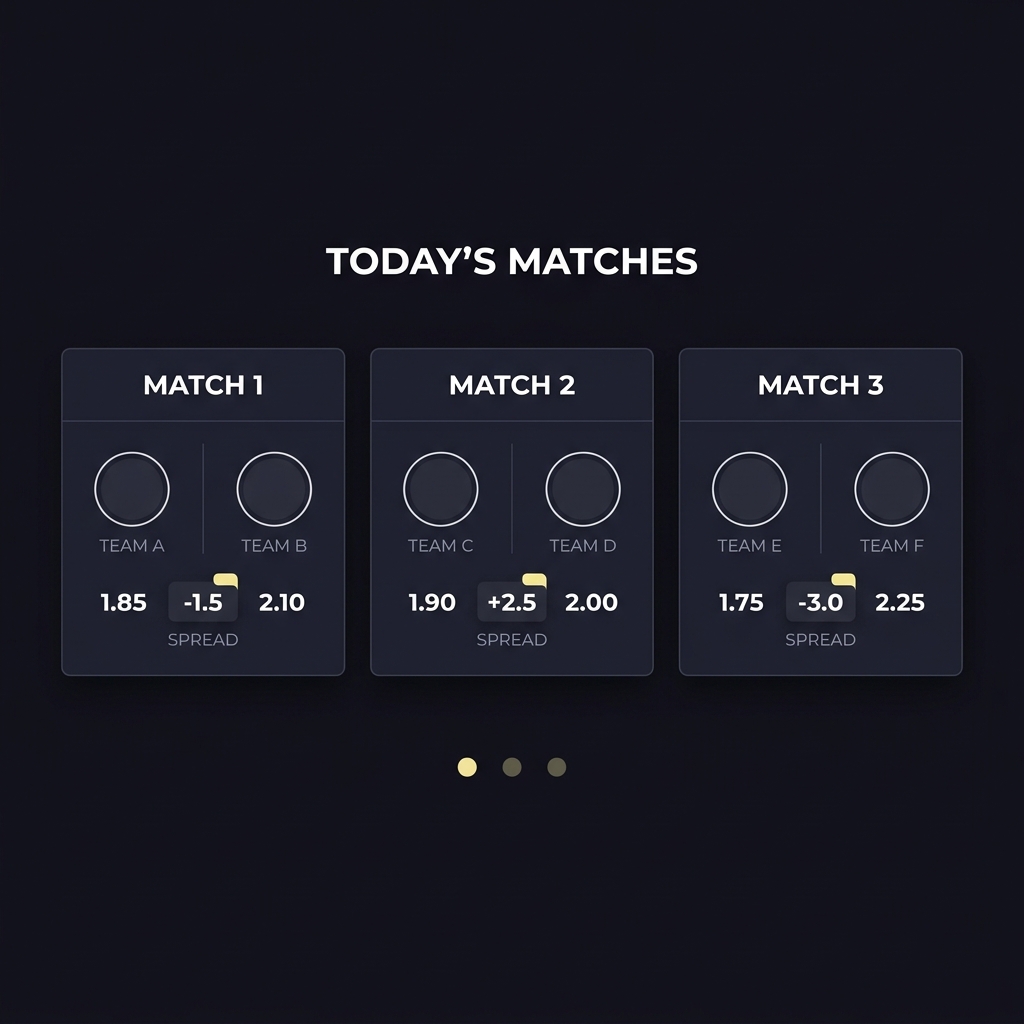
Because bookmakers build openings with both quantitative and qualitative inputs, the opening line is a practical starting point rather than a final prediction. Early moves can happen quickly as sharp bettors or syndicates test the market and as retail interest becomes visible. The initial figure is strongest when it draws balanced money, but it is subject to revision as new information arrives or as exposure accumulates on one side.
Information and market forces that cause early movement
Lines move for three broad reasons: new information such as injury news or weather, concentrated professional action that forces liability shifts, and retail responses that require bookmakers to rebalance. Trackers and odds archives record how opening numbers evolve into closing lines, giving bettors a record of how the market digested information across the pregame window TheLines Super Bowl odds and movement
For those making nfl picks line decisions, understanding that the opening number is mutable helps frame early value claims: a perceived inefficiency at open can disappear quickly if respected action or credible news arrives. Maintain a log of opening prints and the reasons you believe they were mispriced, then watch how the market responds rather than assuming the opening mark is the edge you will keep. See the Funded Plays blog Funded Plays blog.

Reading line movement: open-to-close, ticket splits, and sharp money
How to read open-to-close charts
Open-to-close charts show how a spread changes from the initial posting to the final pregame quote; those charts are useful because the closing line incorporates the most market information and is the benchmark for evaluating your picks. When you compare your selection to the closing number, you are effectively asking whether your view beat the market’s final consensus, a comparison many bettors use to measure process quality. See ESPN's betting notes ESPN.
To read these charts well, note timing, direction, and velocity of moves. A slow drift across days often signals gradual reassessment from public and pros alike, while abrupt jumps shortly after news indicate event-driven re-pricing. Use these visuals to tag moves that appear linked to specific events, which helps separate ordinary noise from meaningful shifts Legal Sports Report's Super Bowl odds page
Track your first pick with a simple checklist inspired by the FundedPlays challenges
Start tracking your first Super Bowl pick with the checklist steps below to learn how the market moves in real time, without needing a sportsbook account.
Interpreting ticket percentage vs money percentage
Ticket splits show the portion of bets on each side while money splits weight action by stake size; when ticket percentage and money percentage disagree, it can signal that large, respected accounts are betting against public volume. Analysts often treat movements that run counter to majority ticket splits as signs of sharp influence, which can be a meaningful signal for adjusting future selection criteria TheLines on movement and splits
Remember that public ticket surges can push lines late in high-profile games, so timing and source matter. When the public floods a side near kickoff, that is often retail-driven and may offer a different interpretation than early professional bets that move a market over days.
Why the Super Bowl is different: public interest and event-driven effects
How heavy public interest changes dynamics
The Super Bowl regularly attracts far more casual, one-off bettors than a typical regular-season game, and that volume can materially influence how spreads behave in the final hours before kickoff. As an example of the scale of public interest, the American Gaming Association estimated that 67.8 million U.S. adults planned to bet on Super Bowl LVIII, a level of participation that can amplify late public pushes and promotional activity American Gaming Association press release on Super Bowl betting and see related reporting from Fox Sports Fox Sports
Event-specific factors-promotional offers, workplace pools, and casual live betting-can increase volatility in the market and cause pronounced late movement. For bettors focused on nfl picks line choices, the practical implication is to monitor not only the number but also the timing and apparent source of movement so you can separate noise from information-driven adjustments.
Quick tracker spec for logging open-to-close movement and published splits
Record timestamps for each update
Examples of event-driven factors that move Super Bowl spreads
Common event drivers include late injury reports, coaching statements that change usage expectations, weather advisory clarifications, and promotional pushes from operators that attract retail volume. These inputs can change both the market’s risk profile and the public’s willingness to bet at certain prices, prompting bookmakers to adjust lines to manage exposure.
For disciplined bettors, recognizing when a move reflects a transient promotional surge versus a concrete informational update helps avoid overreacting and reduces the chance of chasing less-informed public money.
Using closing line value and other metrics to evaluate NFL picks
What closing line value (CLV) is
Closing line value, or CLV, describes whether your bet would have been better or worse priced at the market’s final pregame number; consistently beating the closing number is widely used as a proxy for long-run expected value because it indicates you identified edges before the market consensus moved to fairer prices. CLV is not a short-term guarantee of profit, but it is a useful, objective measure to assess whether your selection process captures value over time Unabated's explanation of closing line value
When you log CLV for a season or a set of Super Bowl picks, you are measuring process quality: did your research and timing produce prices that later migrated toward you, or did you consistently chase lines that became less favorable? Use CLV as one metric among several to evaluate and refine your approach rather than as a standalone verdict.
How bettors use CLV to judge long-run pick quality
Practical CLV tracking is straightforward: record your wagered line, then record the closing line and note the difference. Positive CLV means you secured a better price than the market closing number; negative CLV implies the opposite. Over many wagers, positive average CLV suggests your process identifies value ahead of the market, which is the trait professionals look for when assessing long-run expected value.
To make CLV actionable, combine it with outcome tracking, staking records, and a short rationale for each pick. Those logs let you see whether positive CLV translates into profit after applying your chosen staking plan and help you isolate which information inputs contributed to successful calls.
Managing risk: sizing bets with flat staking and cautious Kelly
Why consistent sizing reduces variance
Flat staking - wagering the same unit size on each selection - is a simple method to reduce volatility, preserve capital, and make results comparable over time. This approach limits the disproportionate effect of single wins or losses on your equity and allows you to judge a process using metrics like CLV and win rate without letting a few large stakes distort conclusions.
Flat staking - wagering the same unit size on each selection - is a simple method to reduce volatility, preserve capital, and make results comparable over time. This approach limits the disproportionate effect of single wins or losses on your equity and allows you to judge a process using metrics like CLV and win rate without letting a few large stakes distort conclusions.

Flat staking suits most bettors because it is transparent, easy to audit, and compatible with disciplined record keeping. If you want a conservative step beyond flat staking, consider small fractional Kelly adjustments rather than full Kelly, which can lead to aggressive sizing under realistic estimation error Investopedia on the Kelly criterion
Practical, conservative Kelly variants to consider
The Kelly criterion calculates an optimal fraction of bankroll to stake based on perceived edge and odds, but using full Kelly often results in volatile and impractically large bets when edge estimates are noisy. Many experienced participants prefer fractional Kelly, such as one-quarter or one-half Kelly, to temper growth targets and reduce drawdown risk while still leveraging informational advantage.
Whatever method you choose, document your unit size rules and stick to them across a season. That discipline makes CLV and other evaluation metrics meaningful because you are comparing like-for-like decisions rather than outcomes biased by variable sizing.
Common mistakes and pitfalls when using the spread for picks
Overreacting to early line moves
A frequent error is chasing early open-to-close moves without clear reason, which can convert apparent short-term success into long-term losses when no durable informational edge exists. Reacting to every shift increases decision noise and often reflects behavioral biases more than superior information TheLines on line movement signals
Another typical mistake is confusing ticket share with sharp money; a heavy ticket percentage on one side does not always equal large professional stakes, and treating them as synonymous can mislead your interpretation of why a line moved.
The point spread is the sportsbook’s handicap indicating the expected margin of victory; use it by tracking open-to-close movement, logging reasons for moves, measuring closing line value, and applying disciplined staking to manage variance.
Confusing ticket share with sharp money
To correct these tendencies, keep a simple register that logs your reason for each pick, the opening and closing lines, and the ticket or money evidence you observed. That record helps you spot confirmation bias, recency bias, and emotional overreaction so you can refine process instead of amplifying mistakes.
Finally, avoid over-sizing after a short streak of wins; short-term variance can make a small sample look conclusive when it is not. A written staking plan combined with CLV review helps counter these impulses and keeps decision-making aligned with long-run goals.
Practical example: tracking a Super Bowl spread from open to close
Step-by-step walkthrough of a hypothetical monitoring process
Begin by recording the opening line and the timestamp when you saw it. Next, note any public, verifiable information that could affect the market -injury reports, weather advisories, and official team announcements -and save screenshots or URLs from reputable odds archives that capture the line at multiple times during the pregame window Legal Sports Report's odds tracking. Examples include Covers.
Continue logging material moves and their timestamps, including ticket and money splits where available. At closing, record the final pregame number and calculate CLV by comparing your wagered line to that closing number. Keeping a short note about why you placed the bet provides context when you review results later.
How to log moves, note sources, and calculate CLV for one pick
Example process: 1) Open record: note opening line, source, and time. 2) Mid-window checks: log any significant moves with a note of the likely cause. 3) Pre-kick: capture closing line and ticket/money splits. 4) Compute CLV: subtract closing line from your wagered line to see whether you beat or lagged the market.
That routine, repeated across a season or sample of Super Bowl picks, produces a small dataset you can analyze for patterns: where did you get positive CLV, what types of news correlated with your best calls, and how did your staking plan handle swings. Over time these observations guide process improvements without relying on single-game fortune. See Funded Plays evaluations how-fundedplays-evaluations-work.
Key takeaways: using the point spread to improve your NFL picks
Summary of practical rules to apply
Remember the essentials: the point spread is a settlement mechanism that indicates expected margin, opening lines are a starting point that will move with information and money, and the closing line is the market benchmark for evaluating whether you found value. Track open-to-close movement, record reasons for moves, and measure CLV periodically to judge process quality rather than outcome luck Unabated on CLV
Combine disciplined tracking with conservative staking-flat units or small fractional Kelly variants-to manage variance and keep your decision-making replicable. These habits make it possible to learn from a season of picks and incrementally improve without assuming short-term certainty.
Next steps for building a disciplined process
Practical next steps: choose reliable odds archives for line movement tracking, set a clear unit size and staking rule, log every pick with a short rationale, and review CLV monthly to detect process drift. Those steps create a feedback loop that rewards consistency and clarity. See Funded Plays Funded Plays.
Using the point spread thoughtfully can improve your nfl picks line process over time, but remember that these tools are aids for disciplined decision-making rather than guarantees of profit.
The point spread is a handicap that indicates the expected margin of victory and determines whether a bet covers; pushes return stakes and half-points avoid ties.
Tracking open-to-close movement shows how the market digests information and helps you measure whether your picks capture value versus the final consensus.
Use simple, consistent sizing like flat units or conservative fractional Kelly to limit variance and make performance evaluation meaningful.