
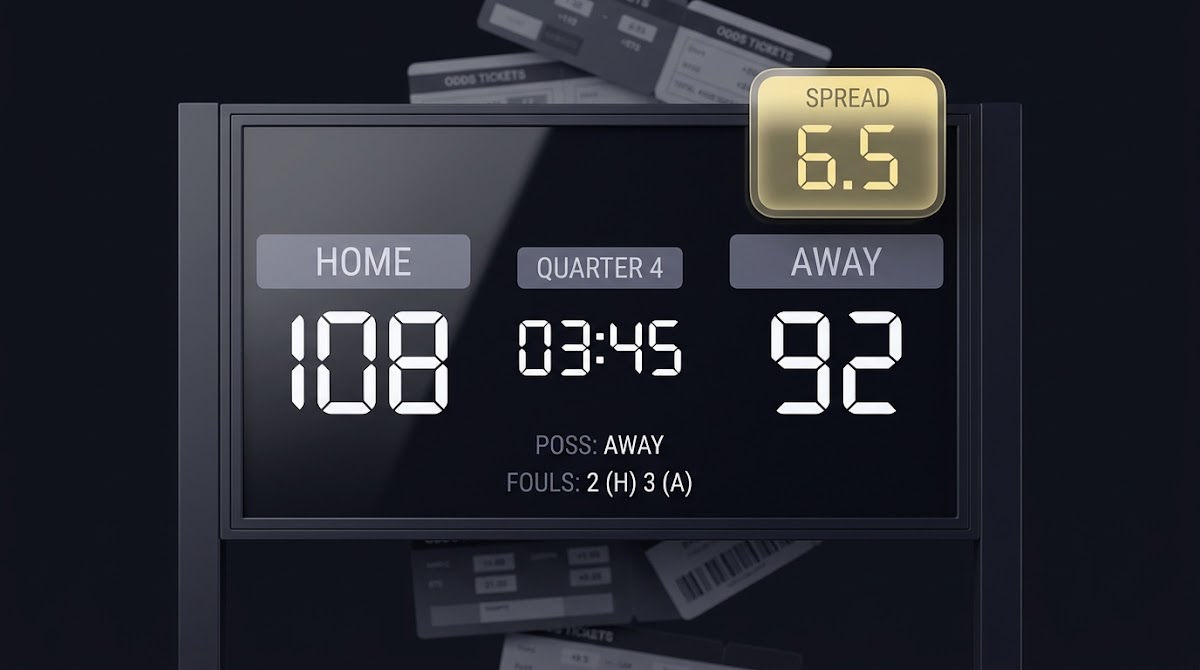
What +6.5 means in NBA point-spread betting
Quick plain-language definition
In simplest terms, a +6.5 point spread gives the underdog a 6.5-point advantage at the start of a full game. If you back the team at +6.5, your ticket wins when the underdog wins outright or loses by six points or fewer; a bet on the favorite at -6.5 requires that team to win by seven points or more to cover.
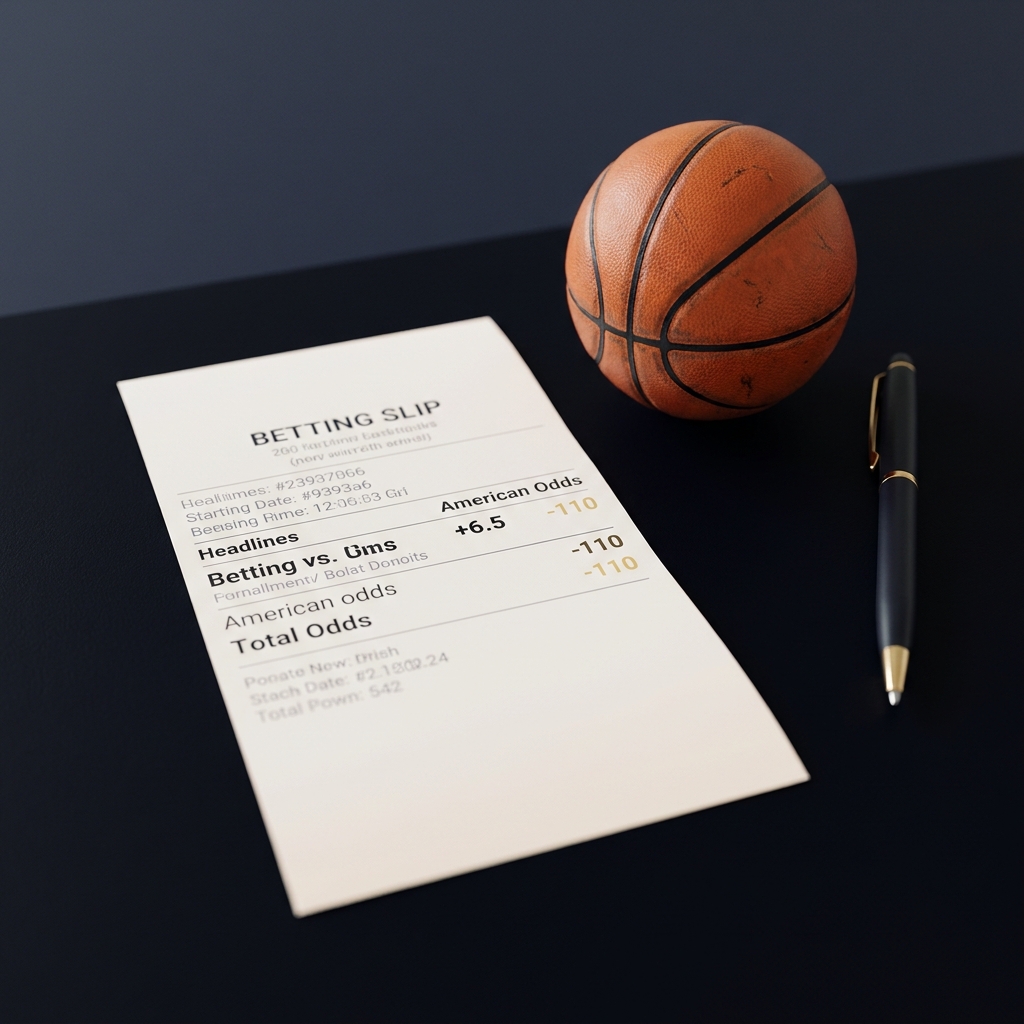
This definition is the basic mechanic of a point spread market and is the foundation for most spread bets in basketball, including NBA games. Point spread definition and examples
Why the half-point (hook) matters
The half-point, often called the hook, prevents a push that can happen when the spread is a whole number. With a half-point in place, there is no tie, so bets resolve to either a win or a loss rather than a refund. That mechanic changes how bettors think about price and risk around the line.
Pushes on whole-number spreads are commonly voided or refunded under sportsbook grading rules, which is why books frequently use half-points to avoid ties in settlement. Push definition and how it works
How sportsbooks settle NBA spreads: overtime, cancellations, and push rules
Full-game versus quarter and half markets
Settlement treatment depends on the market label. For full-game point spreads, major U.S. books typically include overtime when determining the final margin, so the final score that decides a +6.5 wager usually counts all periods, including extra time. General betting rules page
By contrast, many quarter and half markets exclude overtime from settlement. That distinction matters when you consider live play or markets that settle only on regulation time, and it is why checking the market label matters before placing a bet. Overtime betting rules and guidance
Because settlement can differ by market, always confirm whether a specific spread market uses regulation only or includes overtime; the posted market label and the operator's rules are authoritative. DraftKings Basketball Rules
Operators vary on cancellations, postponements, and grading conventions. Some markets are voided if a game is not played as scheduled, while others apply partial settlement rules in specific edge cases. These differences change real outcomes for spread bets and are part of why bettors should read the house rules before staking money.
For example, rules that allow refunds on pushes for whole-number spreads or that define how cancellations are graded directly affect whether a +6.5 wager returns a refund, a win, or a loss in unusual situations. Sportsbook house rules and settlement guidance

Reading the price: vigorish and American odds on a +6.5 spread
The vigorish, or juice, is the fee embedded in spread prices that lets the operator collect compensation over many bets. Commonly, spread markets are priced near -110 on both sides, which changes the break-even probability you need to profit long term.
Understanding juice is essential because a seemingly small price difference can turn a slightly valuable line into an unprofitable one when applied repeatedly. Vigorish definition and examples
American odds show how much you risk or win. For example, -110 generally means staking $110 to win $100, while +110 would pay $110 profit on a $100 stake. Sportsbooks publish these mechanics in their help sections to make payout math explicit.

Using a typical -110 price for a +6.5 ticket, a $110 stake returns $210 total on a win, netting $100 profit; conversely, a losing ticket loses the stake. American odds explained
Simple odds and EV conversion for a spread price
Use implied probability to compare juice
When +6.5 is a better play than +6: decision criteria
Price versus protection trade-off
The core decision is trade-off: +6.5 buys protection against a push but that protection is only worth the price you pay. If the book charges the same juice on +6.5 and +6, the extra half-point can improve long-term expected value because it avoids a push loss that would otherwise require a repeat of the bet or result in a refund.
Think in terms of probability and break-even points; the hook reduces variance from pushes but does not eliminate the cost of juice, so compare implied probabilities rather than raw lines. Push outcomes and implications
Game-level factors that change the value of the hook
Factors that make +6.5 more attractive include a tight expected margin, late-game injury risk, likely foul trouble, and market movement that pushes a favorite past seven points late. Conversely, if you expect a large margin or the book offers notably better price on +6, the extra half-point may not be worth paying for repeatedly.
Also account for operator-specific grading and settlement policies; if cancellation or partial settlement rules are unfavorable in a market you use often, those rules can change the value calculus for taking the hook. Check the operator's general betting rules
A +6.5 line gives the underdog 6.5 points and avoids pushes; choose it when the extra half-point materially improves your expected value relative to the juice and when market or game factors make a narrow margin likely.
How to use the +6.5 hook in common betting scenarios
Pre-game examples and bankroll rules
Practical outcomes for a +6.5 bet are straightforward: an underdog win is a win for +6.5 tickets; an underdog loss by six is a win for +6.5 tickets; a favorite win by seven or more is a loss for +6.5 tickets. That pattern holds whenever the market covers a full game and includes overtime, unless the operator's rules state otherwise.
When sizing stakes, treat the extra half-point as insurance you buy. If you use flat stakes, slightly favor lines that give incremental EV; if you scale by confidence, reduce stake on lines where the hook just covers edge cases and increases variance. Point spread mechanics Funded Plays blog
Live betting, line movement, and when to take the hook
In live markets, timing matters. If in-play momentum or an injury shifts the projected margin by a point or two, taking +6.5 early can lock the protection you need; if the line drifts from +6 to +6.5 overnight, compare the price movement and juice rather than assuming the extra half-point is free.
Always verify the market label and grading terms in live contexts because some intra-game markets settle differently and may exclude overtime or apply partial settlement rules that change the practical value of the hook. House rules clarify market settlement How our evaluations work

Common mistakes and grading traps to avoid with spreads
Ignoring operator-specific rules
A frequent error is assuming settlement conventions are uniform. Not all spread markets include overtime, and not all operators treat cancellations the same way; failing to check those differences can turn a sensible line into a poor result after grading.
Because house rules are authoritative, make habit of checking the specific market terms for OT inclusion, cancellation handling, and partial settlement before placing a bet. Operator rule pages
Misreading odds and overbetting the hook
Another common mistake is overvaluing the half-point while ignoring the juice. Paying heavy stakes on a small perceived advantage without comparing implied probabilities and price can lead to negative expected value over time.
Skilled bettors compare the implied probability implied by American odds and factor in the vigorish; that comparison helps avoid overbetting lines where the hook does not justify the price. Vigorish and price effect
Worked examples: three score scenarios with +6.5
Underdog wins outright (example)
Final score example: Underdog 102, Favorite 99. For a +6.5 bettor, the underdog wins outright and the +6.5 ticket is a winner because the underdog covered the 6.5-point cushion. Settlement follows the final full-game score when overtime is included by the market.
If the market price was -110 and your stake was $110, a successful ticket returns $210 total, netting $100 profit. Odds to payout examples
Underdog loses by 6 (example)
Final score example: Underdog 101, Favorite 107. After applying the +6.5 adjustment, the effective score for the bettor is Underdog 107.5, Favorite 107, so the +6.5 backer wins because the margin is within six points. That is a clear case where the half-point converts a narrow loss into a win.
With a -110 price and a $100 stake, a win would pay $100 profit and return $200 total, after accounting for the juice embedded in the odds. Vigorish effects on payout
Favorite wins by 7 (example)
Final score example: Favorite 110, Underdog 100. The favorite wins by 10 points, which exceeds the seven-point cover needed to beat a -6.5 line; a bettor on +6.5 loses in this scenario. Settlement uses the final scored margin and the posted market type to resolve the ticket.
If the ticket was offered at -110, the losing stake is forfeited, illustrating how juice and outcomes together determine long-term returns. Point spread outcomes
Quick checklist and final takeaways for bettors
Checklist: confirm full-game versus partial-game market, verify whether overtime is included, check juice and the American odds price, weigh protection versus cost, and size your stake according to value and bankroll rules. These checks reduce grading surprises and help preserve expected value over time.
Remember that sportsbook help and house rules are the final word on settlement and grading, and that no line guarantees a favorable outcome. Treat the hook as a pragmatic tool and practice disciplined, evidence-based staking. House rules as authoritative source Funded Plays
Most major U.S. sportsbooks include overtime for full-game point spreads, but you should confirm the operator's market and house rules before betting.
The half-point prevents a push; with +6.5 there is no tie so bets resolve as wins or losses rather than refunds on whole-number ties.
The vigorish changes the break-even probability and payout; compare the implied probabilities from American odds to see if the extra half-point improves expected value.
References
- https://www.investopedia.com/terms/p/pointspread.asp
- https://www.investopedia.com/terms/p/push.asp
- https://sportsbook.draftkings.com/help/general-betting-rules
- https://help.fanduel.com/s/article/Sportsbook-House-Rules
- https://www.investopedia.com/terms/v/vigorish.asp
- https://sportsbook.draftkings.com/help/american-odds
- https://www.fundedplays.com/challenges
- https://sportsbook.draftkings.com/help/sport-rules/basketball
- https://oddsjam.com/betting-education/overtime-betting-rules
- https://help.pa.bet365.com/s/en-us/sportsrules/basketball
- https://www.fundedplays.com
- https://www.fundedplays.com/blogs
- https://www.fundedplays.com/blogs/how-fundedplays-evaluations-work