
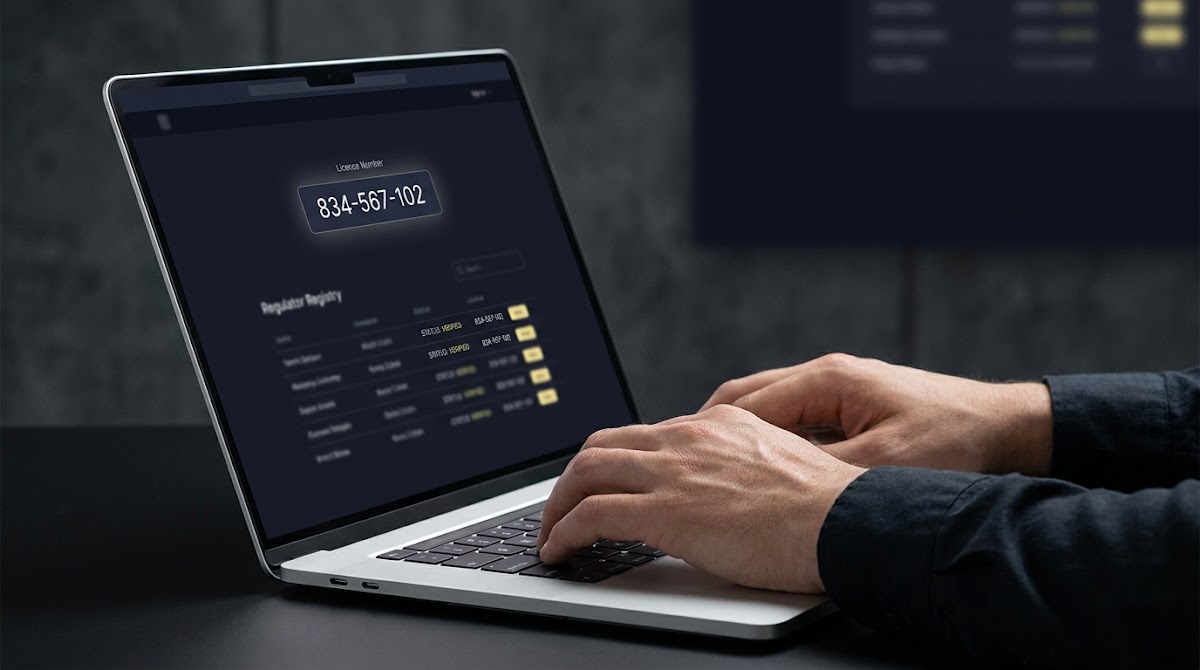
Quick answer: does mystake sportsbook hold a license?
Short answer, this article will not assert a definitive license for MyStake without primary-source verification. If you search for mystake sportsbook licensing claims, you may find statements on the operator site. Those statements need to be checked against an official regulator register before you act on them.
On most operator sites, license information appears in the website footer, in the terms and conditions, or on a dedicated legal or licensing page. A visible badge or a PDF certificate is a starting point, not proof by itself. Always treat a displayed license number as a claim that requires matching to the issuing authority.

When verifying, collect the exact corporate name shown on the site, any posted license number, and the issuing regulator name. If a page lists only a badge without text, note that and look for a matching register entry. Keep short, dated screenshots of any pages you rely on for your records.
What this article will and will not claim
This article will explain how to check license claims, where they typically appear, and what to do if you cannot confirm them. It will not claim that mystake sportsbook holds or does not hold a specific license because that would require checking primary records from a regulator register or other official sources.
Why verification matters before depositing
Verifying a license is a simple step that helps you understand which protections may apply to your account and funds. A claim on a website is useful intelligence, but it becomes meaningful only after you confirm the claim with the named regulator.

What a gaming license means for an online sportsbook
A gaming license is an authorization issued by a regulator that permits an operator to offer betting or gaming services under defined rules. In plain terms, a license signals that an operator has submitted to a regulator's oversight framework and has agreed to certain compliance requirements.
Typical obligations for licensed operators include know-your-customer checks, anti money laundering controls, and requirements about advertising and fair play. These obligations exist to make services more transparent and to give players a route for formal complaints if problems arise.
However, a license is not a cash guarantee. It is not the same as insurance for player funds in every jurisdiction. The strength of protections depends on the regulator's powers and the local legal framework for enforcing decisions.
Typical obligations for licensed operators
Most reputable regulators require operators to perform identity checks to prevent underage use and to deter financial crime. Regulators may also mandate responsible gambling tools such as deposit limits, self-exclusion, and clear dispute procedures.
Operators under certain licenses might be required to segregate customer funds from operating capital, but not all jurisdictions demand segregation. That difference affects how protected player balances are if an operator runs into financial trouble.
Where to check if mystake sportsbook is licensed
Start with the operator site. Look for a license number and the name of the issuing authority in the footer, in the terms and conditions, or on a legal page. Note the exact text and take a screenshot including the page URL and date.
Second, use the issuing regulator's public register or license lookup service. Enter the operator name or the license number and confirm whether the entry matches the corporate entity, the license status, and any linked documents in the register.
Practice verification steps with FundedPlays Challenges
Before making any deposit, verify license claims directly in the regulator's public register rather than relying only on what appears on the operator site.
Third, if the register entry exists, compare the register details to what the operator displays. Confirm the company name, license number, issue and expiry dates, and any conditions or restrictions that the register notes.
Fourth, save evidence. Record screenshots of the operator page and of the regulator register entry, copy any reference or file numbers, and keep the date and time for each capture. These items are useful if you later need to contact support or file a complaint.
How to match operator names to license records
Brands often trade under a consumer-facing name that differs from the legal corporate name on a license. When searching a regulator's register, use the corporate name shown on the site, not just the brand name. If the site lists a company number or registered office, include that in your search.
If you cannot find an exact match, try variations of the name or search by license number if one is given. If searches fail, ask the operator for the precise license reference and then confirm that reference in the regulator register before depositing funds.
Common regulators and differences to be aware of
There are several widely encountered regulators that readers commonly see on operator sites. Examples include national regulators such as the UK Gambling Commission or regional authorities such as the Malta Gaming Authority. Other regulators operate from different jurisdictions and may have lighter or heavier oversight regimes.
Regulators differ in the scope of their oversight. Some can directly enforce consumer refunds and run formal dispute resolution; others may only hold the power to suspend or revoke a license and publish sanctions. Knowing which regulator issued a license helps you understand what practical protections you can expect.
Examples of well known regulators and typical oversight scope
For example, some regulators have strong consumer complaint processes and the legal authority to require financial remedies, while others focus mainly on licensing and compliance checks without the same enforcement mechanisms. The name of a regulator alone does not confirm a license; always use the regulator's register to confirm the presented license number.
Differences between onshore and offshore licensing
Onshore regulators that operate within a country where a player resides may provide clearer legal recourse. Offshore or remote regulators may offer licensing that enables operators to operate internationally, but those regulators' enforcement reach into another country can be limited by local law.
How to read a license certificate and what to check for
A license certificate or a PDF from an operator should show a handful of clear fields: the license number, the issuing authority, the operator or company name, and issue and expiry dates. It may also include a seal or digital signature and a link back to the regulator register entry.
When you see a certificate, check whether the fields match what the regulator's public record shows. If a certificate is a standalone PDF, try to find the same license record on the regulator's site and verify that issuing dates and the company name line up.
Confirm the license by finding the license number on the operator site, searching the issuing regulator's public register for a matching entry, and saving dated screenshots of both pages. If you cannot confirm a match, pause deposits and record all communications before escalating.
If a certificate includes a URL or QR code, do not treat the embedded link as the only proof. Instead, use the regulator's official search tool to find the record independently. A legitimate certificate should correspond to a regulator register entry that you can view without relying on a badge link supplied by the operator.
Key fields on a license certificate
Look specifically for the license number, the operator or corporate company name, the issuing authority, issue date and expiry date. If any of these are missing or appear inconsistent with the regulator register, treat the certificate with caution.
Red flags: signs a mystake sportsbook license claim might be false
Here are quick warning signs that a license claim may be suspect: no visible license number, a listed license number that cannot be found in the regulator's public register, low quality or obviously edited seals, and contact details that do not match the corporate details in a register entry.
Pressure to deposit, payment requests that deviate from normal methods, or a refusal to provide a clear license reference when asked are also strong red flags. Even when a license claim is present, unusual payment behavior or aggressive marketing can indicate risk.
a compact verification tool for license checks
Use the issuing regulator's public register as the single trusted source
What to do if you see one of these signs: stop deposits, document the evidence, and seek independent confirmation via the regulator. If you suspect fraud, preserve all communications and consider contacting your payment provider to stop further transfers while you investigate.
Typical mistakes people make when checking licenses
Relying on third party review sites or advertising badges instead of using the regulator's official register is a common error. Third party sites can repeat incorrect information and badges are easy to copy into a site design.
Another frequent mistake is trusting a visual badge or a logo without checking the underlying register entry. Badges are helpful when backed by a real register record, but they are unreliable alone. Also be aware that the brand name on a site may differ from the legal company name that appears in a register.
How to avoid each mistake
Always cross reference a posted license number with the issuing authority's register. If a site lists only a badge, ask support for the license number and company registration details. If you receive inconsistent answers, treat that as a reason to pause deposits until verification is complete.
Keep a record of your queries and the responses from support, including timestamps. A transparent operator will provide verifiable details quickly; evasive or inconsistent replies are a reason to escalate or pause activity.
Practical checklist: step by step to verify mystake sportsbook
1) Find the license information on the operator site: check the footer, legal pages, and the terms and conditions for a license number and the issuing regulator name. Make a dated screenshot.
2) Use the regulator's public register: enter the company name or license number and confirm the entry. Save a screenshot of the register result and note any conditions or status messages.
3) Compare details: ensure the corporate name, license number, and dates match between the operator page and the register. If they do not, ask the operator for clarification and show them the mismatch in a support ticket.
4) If the operator provides a certificate PDF, check the document fields and verify those against the register entry rather than relying on embedded links inside the PDF.
5) Document communications: save support replies and ticket numbers. If you later need to escalate, these items will help a regulator or your payment provider understand the timeline.
How to keep records of your verification
Store screenshots with filenames that include the date and a short note, for example: mystake-footer-2026-07-01.png and regulator-search-2026-07-01.png. Keep any ticket IDs and copies of emails in a single folder so you can produce them if needed.
Consider using a timestamped note or a simple spreadsheet to log each verification step and outcome. That log becomes useful evidence if you later file a complaint or request a payment reversal.
Be methodical and keep records. Verification is a quick step that reduces risk and gives you clearer options if problems arise.

If you cannot verify a license, the safest immediate step is to pause deposits and avoid further financial exposure to the operator until you have verification. Stopping deposits is the simplest way to limit potential loss while you investigate.
Next, ask the operator for a full license reference, including the corporate name and the register entry link or license number. If the operator refuses or provides an inconsistent answer, raise the issue with your payment provider and consider initiating a dispute or chargeback where appropriate.
Escalation and complaint routes
If the regulator named by the operator does not show a matching license, file a complaint with that regulator and provide your screenshots and correspondence. If the operator listed a regulator in another country, you may still file a report with local consumer protection bodies that handle cross-border problems.
For payment disputes, preserve transaction records and communicate with your bank or payment service promptly. Timely documentation increases the chance of a successful reversal if the operator has misrepresented licensing or has acted in bad faith.
Legal and geographic considerations for players
Your legal protections depend on where you and the operator are located. Local law determines whether you can bring claims in domestic courts and whether a regulator's decisions are enforceable in your jurisdiction.
Age verification, identity checks, and tax obligations are subject to local rules. If you have questions about legal consequences or complex disputes, consult a qualified adviser in your country rather than relying solely on general guidance.
Why country of operation matters
If an operator is licensed in a different country from where you live, the regulator's ability to enforce outcomes may be limited. That does not mean a license is meaningless, but it does mean you should understand the practical reach of the issuing authority.
Be cautious with cross-border operators and consider whether your local laws restrict or prohibit the service you plan to use. When in doubt, seek local guidance or refrain from depositing until you have clarity.
Case scenarios: anonymized examples of verification checks
Example 1: clear match on regulator register. A user found a license number in the footer, searched the regulator register, and found an entry with the same company name and matching dates. They saved screenshots and proceeded, keeping a record of their verification in case of future questions.
Example 2: mismatch and how it was handled. Another user found a badge but no license number. After asking support, the operator provided a PDF with a license number that did not appear in the regulator register. The user stopped deposits, opened a support ticket asking for clarification, and filed a complaint with the regulator when the operator's responses were inconsistent.
Both examples show the difference in outcomes: a verifiable license simplifies resolution, while a mismatch requires caution and documentation. In either case, preserving the evidence and following the steps above makes any escalation clearer and stronger.
Conclusion and safe practice checklist for mystake sportsbook checks
Key takeaways: a displayed license is a claim that must be verified in the issuing regulator's public register. Use the corporate name and license number shown on the site to find the register entry, save dated screenshots, and keep a log of communications.
Final quick checklist to copy: find the license details on the operator site, check the regulator register, match company and dates, save screenshots, ask support for clarification if needed, and pause deposits if you cannot confirm the license. Inability to verify a license is a reasonable reason to stop depositing and seek alternatives.
Be methodical and keep records. Verification is a quick step that reduces risk and gives you clearer options if problems arise.
Check the operator footer and legal pages for a license number, then confirm that number in the issuing regulator's public register and save dated screenshots.
Pause deposits, ask the operator for the precise license reference, save all communications, and consider contacting your payment provider or the regulator to report the discrepancy.
No. A license indicates oversight and rules but does not automatically guarantee funds; protections vary by regulator and local law.
References
- https://www.fundedplays.com/challenges
- https://www.fundedplays.com
- https://www.fundedplays.com/blogs
- https://www.fundedplays.com/blogs/how-fundedplays-evaluations-work
- https://www.gamblingcommission.gov.uk/public-register
- https://www.mga.org.mt/licensee-hub/licensee-register/
- https://justgamblers.com/online-casinos/how-to-verify-a-us-state-license/