
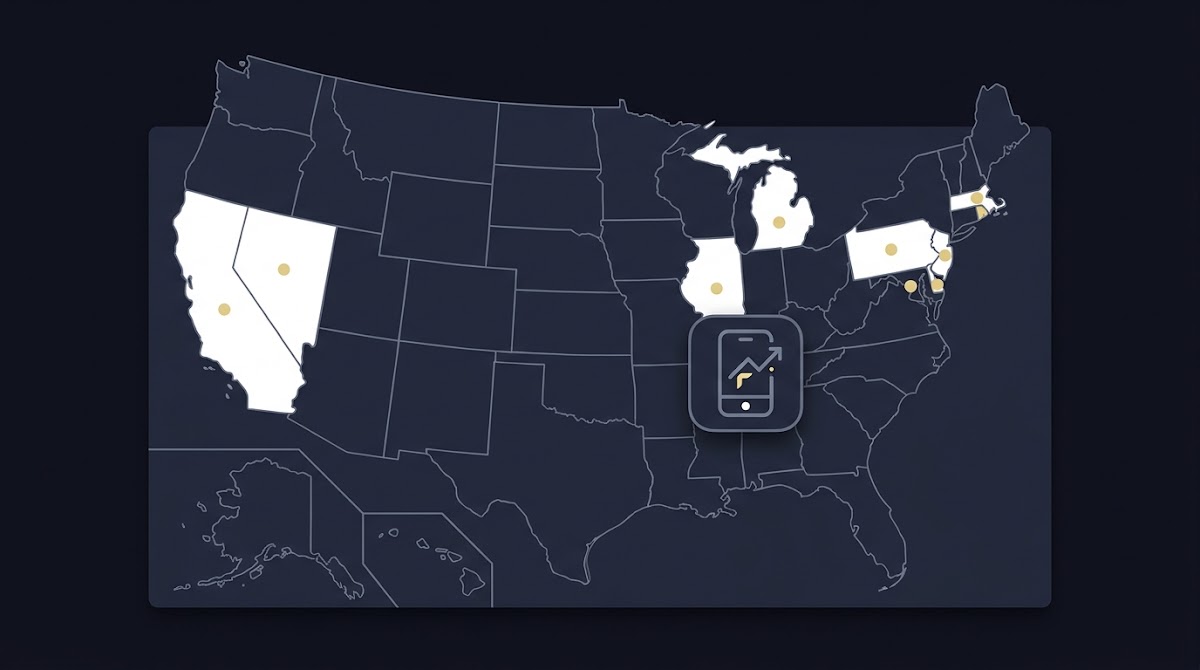
Quick answer and what this article covers
Short verdict for the most bet app
Short answer: the most bet app is not categorically legal across the United States. Whether an app that offers real-money sports betting can lawfully accept customers in a given state depends on that state having licensed the operator and on the app blocking access where it is not licensed. For a high-level view of the state-by-state framework that determines legal access, consult the American Gaming Association state map for current license regimes and status.
What this article covers: a plain-language verdict, the legal framework created after the Supreme Court decision that returned sports betting regulation to the states, how app stores and geolocation are involved, recent enforcement against offshore operators and what those actions mean for users, concrete checks you can make, common mistakes to avoid, and short scenarios with next steps. Read this as a practical verification guide rather than legal advice.
You will learn how to confirm whether a given app is licensed where you live, what to look for in an app store listing, and which public sources to check when you see an app that claims to work in the U.S. The guide also explains why an offshore app that appears online is not the same as an app approved by your state regulator, and what enforcement can look like in practice.
How U.S. law determines whether an app is legal in a given state
The state-by-state framework after Murphy v. NCAA
The Supreme Court decision in Murphy v. NCAA removed the federal ban on state-authorized sports betting and left regulation to individual states, so each state issues its own rules and licenses for sports wagering operators; this decision is the legal turning point behind the current patchwork of state-by-state regimes.
Because authority rests with the states, a company that is permitted to operate in one state is not automatically allowed to accept customers in another. The practical effect is that legality for an app is determined at the state level rather than by a single federal permit, and the official license lists maintained by state gaming regulators are the primary source for confirmation.
In practice, state licensing means regulators evaluate applicants for technical, legal, and financial compliance and then publish the names of approved operators or licensees on their websites. That published licensee list is the clearest public evidence that an operator is authorized to offer mobile sports betting or related real-money gaming in that jurisdiction, and checking it is a key step before using any app that claims to serve U.S. customers. For a consolidated view of which states allow regulated sports betting and which operators are active, the American Gaming Association maintains an interactive state map that is useful for orientation American Gaming Association state map.
Verify operator licensing and jurisdictional permissions
Before downloading any app that claims to accept U.S. bettors, check your state regulator's list of licensed operators to confirm the app appears there.
What state licensing means in practice
Licenses are typically granted to operators that meet a state's technical, financial, and consumer protection requirements; a firm must obtain authorization for each state where it intends to accept bets. An app or operator that lacks a state-issued license is not part of the regulated market in that state, even if its website or app can be accessed from inside the U.S.
Because the legal test is state-specific, the correct question for any U.S. user is not whether an app is 'legal in the U.S.' generally, but whether it is licensed to operate in the user's state and enforces geolocation and other compliance controls required by that state's regulator.
Both major app stores restrict distribution of real-money gambling apps to jurisdictions where the app operator is properly licensed and where the store policies permit such apps. Google Play explicitly requires that real-money gambling apps be available only in jurisdictions where the developer holds a valid gambling license and that the app implement geolocation controls to prevent access from unauthorized places Google Play Console policy on real-money gambling.
Apple's App Store Review Guidelines impose similar requirements: apps that offer gambling or lotteries must comply with local laws and can be distributed only in territories where the developer holds the necessary permissions, and the apps must restrict use to permitted jurisdictions in accordance with the guidelines Apple App Store Review Guidelines.
Geofencing is the technical approach app operators and stores use to ensure downloads and in-app activity are limited to approved jurisdictions. In practice that means an app store listing may not appear to users in states where the operator lacks a license, and even when an app can be installed the app should check location before allowing registration, deposits, or wagering.

For users, app-store metadata and the availability message (which states or countries are permitted) are practical early checks. If an app's store page or the app itself claims broad U.S. availability without listing state licenses or geolocation protections, treat that claim with caution and verify directly with your state regulator.
State regulators have acted against offshore sportsbooks that operate without state licenses, sending cease-and-desist letters and pursuing measures that limit those operators' ability to accept local customers. A recent example involved regulatory action that targeted an offshore operator, illustrating how states enforce their licensing rules and pursue operators who attempt to serve residents without authorization Michigan Gaming Control Board announcement.
An app like Mostbet is only legal in a particular U.S. state if the operator holds a state-issued license for that jurisdiction and the app enforces geolocation and app-store compliance; otherwise, accessible offshore apps are generally unlawful for residents.
When regulators act, consequences for users can include the operator blocking access, app removals from stores for that state, and the operator ceasing to accept bets from certain states. Reporting on the enforcement action provides an example of an operator that stopped accepting bets in some U.S. states after regulatory pressure, showing that availability can change quickly when a provider is found to be operating outside state rules news coverage of operator changes after enforcement.
From a user perspective, the practical takeaway is simple: an app being reachable online does not prove legal availability in your state. Regulators can and do act, and those actions can make an app inaccessible or unsafe to use for residents of the affected states.
What the operator behind an app would need to be legal in the U.S.
State licenses and ongoing compliance
To lawfully accept customers in a particular U.S. state, an operator needs a state-issued license for that specific type of activity. The state license list is the authoritative public record showing who is licensed to offer mobile sports wagering or related services in a state, and operators typically must be named on that list before they can be advertised or distributed to local users. For a consolidated perspective on which states permit licensed sports betting and the overall regulatory landscape, see the American Gaming Association's state map American Gaming Association state map. For example, Pennsylvania publishes its licensee lists Pennsylvania licensee list.
Licensure is only the start: operators must maintain compliance with local rules, which can include age verification, anti-money-laundering controls, responsible gaming measures, reporting obligations, and ongoing technical audits. Lacking those ongoing compliance measures, an operator risks enforcement action or loss of license in any state where it operates without meeting the standard.
In addition to state licensing, an operator must satisfy app-store requirements and implement robust geolocation so that the app only works in states where it is licensed. Both Google Play and the App Store will deny or remove real-money gambling apps that do not meet these jurisdictional requirements, and they require accurate disclosures in the app listing about where the app may lawfully be used Google Play Console policy on real-money gambling.
Visible indicators that an operator is attempting to comply include clear licensing information on the app store listing or the operator website, statements of the states where the app is permitted, and geolocation prompts when the app is opened. Absence of those signals is a red flag that the operator may not be licensed to serve your state.
How to check if the app is legal in your state
Step-by-step verification checklist
Step 1, check the official state regulator license list. Your state's gaming regulator or control board publishes who is licensed to operate mobile sportsbooks and related services; confirming the operator appears on that list is the most direct verification step and the correct place to start American Gaming Association state map, or consult aggregated lists such as Bettor Safe for consolidated operator references.
Step 2, review the app-store listing. Confirm the app page explicitly states which states are supported, shows licensing or operator details, and prevents download or registration in your state if the operator is not licensed. Both Apple and Google limit distribution of real-money gambling apps to licensed jurisdictions and require geolocation protections, so the app listing and permissions are a practical check Apple App Store Review Guidelines.

Step 3, search for recent enforcement or regulatory notices. If a regulator has issued a cease-and-desist or similar action against an operator, that may explain sudden unavailability or an app's decision to stop accepting customers in certain states. Public regulator announcements and credible news reports are the places to check for such developments example regulator action.
What to watch for in app store listings and websites
Look for explicit state-by-state disclosures and a clear operator name that you can cross-check with your regulator's licensee list. If an app listing or operator website has no licensing details or lists ambiguous offshore registrations, that is a strong signal that you should not proceed without verification.
If you see an app that allows registration from your state but you cannot find the operator on your regulator's licensee list, avoid depositing funds, and contact the regulator's consumer or enforcement office for guidance. Doing so protects you from potential loss of consumer protections or recourse in the event something goes wrong.
Common mistakes, risks, and how to avoid them
Mistakes users make when assessing legality
A common mistake is assuming that because an app or website is reachable from a U.S. IP address it is legal for U.S. residents. Reachability is not the same as licensure, and regulators have acted against offshore operators that attempt to serve U.S. customers without authorization.
Another mistake is relying solely on search results, social posts, or community claims that an app works in the U.S. Those signals can be outdated or inaccurate; always cross-check with official regulator lists and recent enforcement notices to be sure.
Practical tips to reduce legal and security risk
If you want to stay within regulated channels, prefer state-licensed sportsbooks or U.S.-based skill-based platforms that explicitly operate under state or federal rules (Funded Plays homepage). Those options offer consumer protections that offshore, unlicensed apps do not provide.
Also protect your privacy and funds: unlicensed apps may offer weaker data protection and no practical regulatory recourse. If you suspect an app is unlicensed in your state, stop before providing identity documents or depositing money, and confirm status with the state regulator.
Short scenarios and next steps for different users
If you see a Mostbet app in the app store
If the app store listing shows availability in your state, cross-check the operator name with your state regulator's licensee list and confirm the app store listing shows the specific states where the app is permitted. If you find matching records on both the regulator site and the app listing, the app is more likely to be authorized for your state; where there is doubt, ask the regulator.
If the app allows you to register but you are unsure about legality
If the app lets you register but you cannot find licensing details, do not deposit funds. Contact the state regulator's consumer or enforcement office with the operator name and the app store link and request guidance. Unlicensed use can mean no consumer protections and higher risk of account blocks or loss.
Legal alternatives and where to look for them
If you prefer legal, regulated options, look to state-licensed mobile sportsbooks listed on your regulator's site or consider U.S.-based skill-focused sports prediction platforms that operate within U.S. law and emphasize structured challenges rather than real-money wagering.
Conclusion: practical takeaways
Key points to remember
The core facts are straightforward: legality of an app like the most bet app depends on state-issued licenses and proper geolocation controls, app-store approvals, and ongoing compliance with state rules. For a clear view of state policies and licensed operators, consult the American Gaming Association's state map and your state regulator's official list American Gaming Association state map. More on our approach is available in this Funded Plays evaluation how funded plays evaluations work.
Regulators have shown they will act against offshore operators that attempt to serve U.S. residents without authorization, and enforcement can quickly change an app's accessibility or operational status, so app availability alone is not proof of legality regulator enforcement example.
Quick verification method to confirm if an app is licensed in your state
Cross-check all three sources
Start with your state gaming regulator's website for an authoritative licensee list, check the app store listing for jurisdictional disclosures, and look for recent regulator or credible news reports about enforcement. Doing these three checks will give you a defensible basis to decide whether an app is legally available in your state. For help finding regulator contacts more broadly, see Consumer Financial Protection Bureau guidance. Also see our blog for related posts.
When in doubt, prefer licensed and regulated options or U.S.-based skill-focused platforms that publish clear rules and operate within U.S. law.

Check your state gaming regulator's list of licensed operators, review the app store listing for jurisdiction disclosures, and search for recent regulator enforcement notices.
No. An app's online availability does not prove it is licensed in your state; legality requires a state-issued license and compliant geolocation.
Avoid depositing funds, contact your state regulator's consumer or enforcement office, and ask whether the operator is licensed to serve your state.
References
- https://www.americangaming.org/research/state-gaming-map/
- https://support.google.com/googleplay/android-developer/answer/10733437?hl=en
- https://developer.apple.com/app-store/review/guidelines/
- https://www.michigan.gov/mgcb/about/newsroom/2024/06/13/mgcb-issues-cease-and-desist-letters-to-offshore-sports-betting-operator-bovada
- https://www.espn.com/sports-betting/story/_/id/40330468/bovada-stops-accepting-bets-michigan-colorado
- https://www.fundedplays.com/challenges
- https://www.fundedplays.com
- https://www.fundedplays.com/blogs
- https://www.fundedplays.com/blogs/how-fundedplays-evaluations-work
- https://bettorsafe.org/united-states-regulator-licensed-operators/
- https://gamingcontrolboard.pa.gov/licensing/gaming-and-non-gaming-service-provider-list
- https://www.consumerfinance.gov/ask-cfpb/how-do-i-find-my-states-bank-regulator-en-1637/