
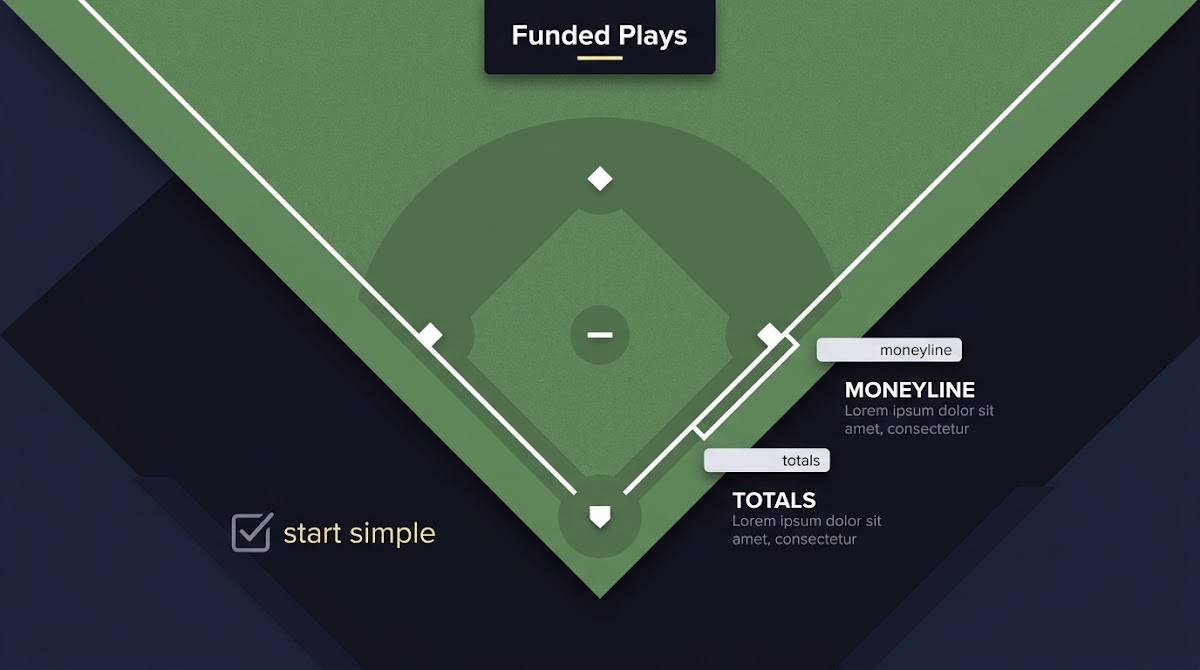
Quick answer: Which MLB bets are easiest for beginners?
Short summary answer, mlb betting tips
If you want one clear rule for a first step in baseball wagering, start with single-game straight markets, primarily the moneyline or the totals. These markets are simple to understand, have straightforward win or loss outcomes, and generally carry lower complexity than parlays or many player props. Use this as a core part of your mlb betting tips when you are building a routine and measuring results.
State regulator files from recent seasons show a practical reason to prefer single-leg bets: parlay-type wagers have produced materially higher operator hold than single-game bets, which increases expected loss for casual bettors and makes big-parlay headlines a costly learning path for beginners. See the Colorado December 2024 report for an example of parlays being broken out with higher realized operator win percentage that month Colorado December 2024 Sports Betting Proceeds Report. For broader industry numbers see a recent sports betting statistics summary sports betting statistics.
Practice a simple unit with FundedPlays Challenges
Start with a small practice unit, treat early bets as learning, and read the short framework below before placing real stakes.
As a complementary point, avoid chasing large payout promises from parlays until you build disciplined bankroll habits and proven results. The New York January 2025 mobile wagering file similarly shows higher hold on parlay-type bets versus non-parlay bets, underlining why beginner-focused strategies should avoid multi-leg combinations at first New York State Gaming Commission mobile wagering by bet type.
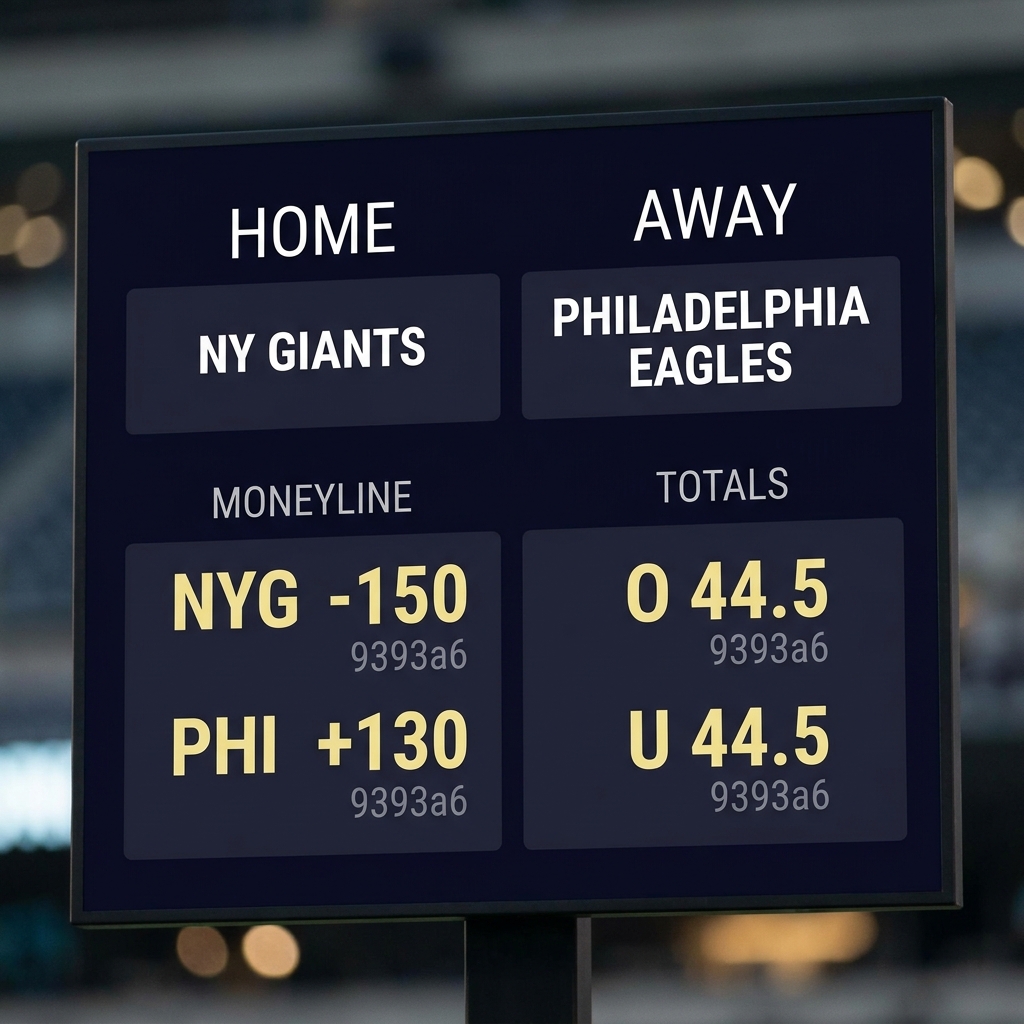
Quick practical steps: choose moneyline or totals, stake small fixed units, keep a record of every selection, and focus on learning line interpretation and variance rather than chasing winners.
Baseball betting basics: moneyline, run line, and totals explained
How each bet type works
Moneyline bets are the simplest: you pick which team will win the game outright. Odds translate to implied probability, so favorites pay less and underdogs pay more when they win. The American Gaming Association glossary defines these common bet types and clarifies how sportsbooks present odds and payouts, which makes it a useful starting reference for beginners American Gaming Association sports betting glossary.
Which outcomes each market favors
The run line is baseball's version of a spread, commonly set at 1.5 runs, and shifts the required margin for a favorite to 'cover' or an underdog to 'beat' the line. Totals, or over/under bets, ask whether the combined runs will be above or below a posted number. For a beginner the main takeaway is that moneylines and totals resolve cleanly: you win if your side of the simple binary outcome happens, which reduces the mental overhead of assessing multi-leg interactions and exotic pricing.
In practice those markets also tend to show lower single-bet variance than many player props or parlays, which helps new bettors manage streaks and understand long-term performance without wide swings.
Why parlays and player props are harder than they look
How multiple legs increase operator hold
Parlays bundle two or more selections into one ticket where every leg must win to cash. Because each leg includes a built-in sportsbook margin, combining legs amplifies the bookmaker's effective hold and raises the expected loss per dollar for a casual bettor. State regulator data for 2024 and 2025 explicitly separates parlays and shows higher realized hold for those wagers, a structural reason to treat parlays as higher-cost experiments rather than a beginner staple Colorado December 2024 Sports Betting Proceeds Report.
Evaluate whether a parlay is worth the extra cost
Use this to favor single-leg value over parlay allure
Complexities of player props
Player prop markets depend on individual performance details and often rely on niche data or projection models. The line construction for props can be less transparent to casual bettors, and variance is generally higher because small in-game events can swing outcomes. The American Gaming Association glossary helps explain prop mechanics and the terminology you will encounter as you explore these markets American Gaming Association sports betting glossary.
Practical takeaway: unless you have a clear, tested edge on a specific prop market, stick with the simpler markets while you build record keeping, model checks, and disciplined staking.
What the regulator data says about operator hold and bettor expected loss
Key state reports to watch
Regulatory proceeds reports and wager-type breakdowns reveal how much of the dollar wagered the operator keeps after payouts, commonly called the operator hold. That measure matters for bettors because higher hold directly raises the expected loss for anyone without a persistent advantage. For plain definitions and industry terms, the American Gaming Association glossary is a concise reference American Gaming Association sports betting glossary.
What 'hold' means for bettors
The Colorado December 2024 report broke out parlay wagers and showed a higher realized operator win percentage for that month, illustrating how combine-leg bets can be more costly over time for casual bettors who do not manage stake size and frequency Colorado December 2024 Sports Betting Proceeds Report.
New York's January 2025 mobile wagering file also separates parlay-type bets and reports higher hold for those bets compared with non-parlay wagers, reinforcing the practical guidance that beginners should prioritize simpler markets until they verify an edge New York State Gaming Commission mobile wagering by bet type.
Where available, monthly revenue reports such as Nevada's provide another place to confirm patterns across states and months as market mix evolves Nevada Gaming Control Board monthly revenue reports. You can also consult a rolling revenue tracker for additional context sports betting revenue tracker.
A simple framework to pick beginner-friendly MLB bets
Step 1: choose the market
Start by preferring single-game moneyline or totals markets. Those are simplest to track and interpret because the outcomes are binary and the pricing is broadly comparable across books. The academic literature on MLB market efficiency suggests that sides and totals are generally efficient, which means that format choice alone does not create a long-term profit path but does reduce complexity for early learning International Journal of Sports Finance article on market efficiency.
For beginners, single-game straight bets like the moneyline or totals are the easiest because they are simple to evaluate and typically expose bettors to lower operator margin than parlays.
Step 2: check line quality and odds
Line shopping matters. Before placing a bet compare the moneyline or total across books to ensure you are getting reasonable pricing. Avoid placing multiple-leg tickets when the same expected return can be obtained by combining small single bets; the effective hold is often worse for parlays. Keep a short checklist: compare implied probability, check for vig or extra margin, and note any movement that signals sharp money.
Step 3: size the stake
Use small, fixed units relative to a pre-set bankroll. Choose a staking plan that limits any single bet to a small percentage of your overall budget so that you can withstand variance while learning. Responsible-play resources recommend setting a budget and using modest units rather than increasing stakes after losses, which protects your learning capital while you evaluate your own skill level Have A Game Plan responsible-gaming resources.
Record each bet, the rationale, the odds taken, and the result. Over time this record is the only objective way to determine whether you actually have an edge or are simply experiencing variance.
Bankroll and staking rules for new MLB bettors
Setting a budget
Decide on an amount you can afford to lose and treat it as the working bankroll for learning. Responsible-play guidance emphasizes that a fixed budget and disciplined staking are central to sustainable practice. Avoid using funds you need for essential expenses and set clear stop-loss rules to prevent chasing losses Have A Game Plan responsible-gaming resources.
Unit sizing examples
A conservative approach for beginners is to size units small, for example one unit equals 0.5 to 2 percent of your bankroll depending on your risk tolerance. Keep units consistent and avoid increasing stake size after losing runs. The goal is not to maximize short-term returns but to gather a meaningful sample of selections while limiting downside so you can learn whether your methods work.
Regularly review your record every set period, such as every 50 to 100 bets, before changing unit size or increasing frequency. Over time disciplined tracking reveals whether you have a repeatable edge or should continue refining your process.
Common mistakes beginners make (and how to avoid them)
Chasing big parlays
One of the most common mistakes is chasing large parlay payouts after a few wins or when tempted by a big advertised return. Because parlays compound operator margin and variance, they often cost more over time than straight bets with similar risk profiles. State-level reports in 2024 and 2025 highlight this pattern and explain why large parlays are a poor starting strategy for beginners New York State Gaming Commission mobile wagering by bet type.

Ignoring line context
Another frequent error is accepting the first available price without comparing books or considering timing. Line shopping is a simple, free habit that can materially improve effective returns, especially on close moneylines or totals. Keep notes on when and why prices moved so your future decisions incorporate context, not impulse.
Corrective actions: use straight moneyline or totals bets while learning, limit stake size, and track outcomes. Consider structured practice environments or simulation platforms to refine process and decision-making without increasing real-money exposure.
Concrete examples: three beginner bet scenarios and reasoning
Example 1: small moneyline stake
Scenario: You like Team A at -150 on the moneyline and have judged the implied probability to be fair after line shopping. Decision: place a small unit, for instance one unit equals 1 percent of your bankroll, and log the bet, the odds, and the reasoning. Treat this as a learning trade to observe variance and line behavior rather than a high-stakes wager.
Example 2: betting the total
Scenario: The posted total is 8.5 runs and you believe game conditions favor the under. Decision: stake the same small unit size, note weather, starting pitchers, and bullpen form in your record, and compare outcomes across several games. Totals are a clean way to practice integrating simple game-level variables into a betting thesis without the complexity of props.
Example 3: when not to parlay
Scenario: A tempting three-leg parlay promises a large headline payout but each leg is only marginally favorable after accounting for implied hold. Decision: decline the parlay and instead place single-leg wagers at modest unit sizes if you truly have conviction. The state reports from Colorado and New York suggest that, on average, parlays carry higher realized hold than single-leg wagers, so avoiding them preserves your learning bankroll and reduces expected loss while you gain skill Colorado December 2024 Sports Betting Proceeds Report.
Across these examples the shared discipline is small, consistent sizing and careful record keeping rather than reacting to big short-term payouts.
When a prop or parlay might still make sense
Finding a real informational edge
Advanced bettors sometimes find occasional mispricings in niche prop markets or structure a small, carefully sized parlay that, by their analysis, yields positive expectation. Such opportunities require deep domain knowledge, robust data, and consistent testing because academic work on MLB markets finds sides and totals broadly efficient, which makes persistent mispricings uncommon International Journal of Sports Finance article on market efficiency.
Sizing when variance is high
If you do engage with props or a parlay for which you believe you have an edge, cap the size tightly and reduce frequency. Consider a much smaller unit, for example half your standard unit, and count such plays as experimental rather than core strategy. Track these separately so you can evaluate them without confusing results from your base approach.
Finally, keep an eye on the evolving same-game parlay and player prop market structures; regulator reports and book-level data often reveal whether those markets are expanding in ways that change realized hold.
How to practice and build skill without risking real money
Simulated bankrolls and paper betting
Paper betting and simulated bankrolls let you practice discipline, line shopping, and record keeping without placing real funds. Use a consistent unit definition and treat simulations as binding practice; the behavioral lessons on staking and record review carry over to real-money decisions. Responsible-play guidance recommends setting a budget mindset for practice as well, to build habits that transfer to actual staking when you are ready Have A Game Plan responsible-gaming resources.
Using challenge platforms
Structured, skill-focused challenge platforms provide a formal way to test predictive ability with simulated or funded account models and transparent rules. These environments can help you measure consistency and discipline in a controlled format without implying guaranteed outcomes. See our blog for more on structured evaluations. FundedPlays is one example of a funded sports simulation platform that offers structured evaluation challenges for users who want to practice prediction skills under clearly defined rules.
Whichever route you choose, keep objective metrics: win rate by market, return on units, and breakdowns by game conditions. Over time those measures tell you whether a strategy is working or needs revision.

Advanced note: market efficiency and what it means for long-term profits
Academic findings on totals and sides
Academic studies on MLB pricing indicate that sides and totals are broadly efficient markets, meaning the available public information is often priced into the odds and sustained long-term profit opportunities are difficult without unique informational advantages or better models. That research provides a caution that simply choosing moneyline over parlay does not create a guaranteed profit path; it reduces complexity and operator margin exposure but does not eliminate the need for demonstrated skill International Journal of Sports Finance article on market efficiency.
Practical implications
The practical implication of market efficiency is that beginners should prioritize learning processes that reveal whether they truly possess an edge: record keeping, disciplined staking, and slow, data-driven scaling. Use simple markets to build the signal-to-noise ratio of your decisions before exploring higher-variance prop markets.
How to stay updated: monitoring state reports and market changes
Which regulator files to check
Useful public sources to watch include the Colorado Division of Gaming proceeds reports, the New York State Gaming Commission's by-bet-type files, and state monthly revenue statements such as those published by the Nevada Gaming Control Board. These files reveal realized hold by wager type and can identify patterns over time Colorado December 2024 Sports Betting Proceeds Report. For an overview of state regulations, consult a state regulations guide state betting regulations guide.
How often to review
A simple cadence is to scan new reports quarterly and dig deeper when you notice structural changes in market mix or the emergence of new products like expanded same-game parlay options. Incorporate any changes you find into your staking rules and market selection process and continue to prioritize a fixed budget and small units during adaptation Have A Game Plan responsible-gaming resources.
Bottom line: safest first bets and a plan to improve
Key takeaways
For most beginners the safest first bets are single-game moneyline and totals because they are simple to evaluate and typically expose you to lower effective operator margin than parlays. The American Gaming Association glossary and state regulator reports support a simplicity-first approach to early practice American Gaming Association sports betting glossary.
Next steps for practice
Three short next actions: set a clear budget, use small fixed units on straight moneyline or totals while you keep a record, and practice with paper betting or structured simulation challenges to build repeatable process and discipline. Avoid parlays initially because regulator data shows they often carry higher hold and therefore higher expected loss for casual bettors New York State Gaming Commission mobile wagering by bet type. For more on Funded Plays tools and resources, visit Funded Plays.
Paper betting and simulated bankrolls let you practice discipline, line shopping, and record keeping without placing real funds. Use a consistent unit definition and treat simulations as binding practice; the behavioral lessons on staking and record review carry over to real-money decisions. Responsible-play guidance recommends setting a budget mindset for practice as well, to build habits that transfer to actual staking when you are ready Have A Game Plan responsible-gaming resources.

Start with single-game moneyline or totals. They are simplest to judge, easier to track, and generally lower in effective operator margin than parlays.
Generally no. Parlays compound operator margin and variance, making them a higher expected-loss option for casual bettors until you have proven, disciplined results.
Use small, fixed units as a percentage of a preset bankroll, for example 0.5 to 2 percent per bet, and avoid increasing stake size after losses.
References
- https://sbg.colorado.gov/sites/sbg/files/documents/December%202024%20Sports%20Betting%20Proceeds%20Report.pdf
- https://www.gaming.ny.gov/pdf/SportsWagering/2025/2025_January_Mobile_Sports_Wagering_by_Bet_Type.xlsx
- https://www.americangaming.org/resource/sports-betting-glossary/
- https://gaming.nv.gov/index.aspx?page=154
- https://fitpublishing.com/content/examination-market-efficiency-totals-lines-major-league-baseball-games
- https://haveagameplan.org/responsible-gaming-resources/
- https://www.fundedplays.com/challenges
- https://www.fundedplays.com
- https://www.fundedplays.com/blogs
- https://www.fundedplays.com/blogs/how-fundedplays-evaluations-work
- https://track360.io/blog/sports-betting-statistics-2026-us-handle-revenue-by-state
- https://www.legalsportsreport.com/sports-betting/states/revenue/
- https://rg.org/guides/regulations