

What happened with Mattress Mack and the Astros: a quick definition and context
Who is Mattress Mack
Jim "Mattress Mack" McIngvale is a Houston-based furniture retailer known for high-visibility promotions that promise customers refunds if a team wins. Those promotions tie sales outcomes to sports results and can create a large, contingent liability for the retailer.
Headline events: the 2022 Astros wagers and payout
In 2022 McIngvale placed large futures wagers connected to a furniture refund promotion and when the Houston Astros won the World Series the associated payouts were widely reported; major coverage documented a reported stake of about $10 million and a payout near $75 million, numbers that framed the story as both a hedge and a headline-making marketing event ESPN report.

The basic promotional setup was straightforward: qualifying purchases made customers eligible for full refunds if a specified sports outcome occurred within the promotion window, creating a contingent payout obligation for the store that needed to be managed through hedging, insurance, or both.
How those big bets function in practice: the mechanics of hedging a promotion
Why a futures bet can act like a hedge
A futures wager can offset promotional refund exposure because the sportsbook payout, if it happens, pays the promoter when the same outcome triggers customer refunds; treating the bet as a financial offset means the win on the futures market helps cover the refund liability rather than being placed for pure betting profit New York Times article.
Because the large wagers function primarily as risk-managed marketing: they hedge refund liabilities from qualifying promotions while generating significant earned media and foot traffic, with insurance as a common alternative.
How bet size is calibrated to estimated promotional exposure
Promoters size a hedge by estimating the maximum likely qualifying sales during the promotion window and calculating the worst-case refund amount; the wager is then chosen so that the possible sportsbook payout approximates that exposure, rather than reflecting a bettor's expected-value calculation CNBC coverage.
Operationally, that calibration relies on conservative sales scenarios and clear product eligibility rules; these inputs make it possible to plan a bet that reduces net promotional risk while accepting the cost of lost marketing spend if the wager does not pay off.
Why he places eye-catching wagers: marketing, earned media, and foot traffic
PR value and earned media returns
One primary reason for publicized, large wagers is the earned media they produce: national and local outlets cover the story, amplifying the promotion beyond paid advertising and delivering sustained attention for the retailer Forbes coverage.
That publicity can be treated as measurable marketing value because it raises brand awareness, drives earned impressions, and often produces immediate spikes in store traffic that may partially offset the cost of the promotion.

Customer behavior and in-store effects
Promotions tied to a simple, bold refund promise change customer behavior during the campaign window: eligible shoppers may accelerate purchases to qualify, and general awareness of the offer can increase foot traffic even among customers who do not claim refunds.
Businesses planning similar campaigns should consider that the marketing return is not only the earned headline but also the induced sales lift and repeat-customer opportunities that follow increased store visits.
Common promotional mechanics: rules, eligibility, and operational controls
Typical terms: minimum purchases and time windows
To limit exposure, promotions usually specify minimum purchase amounts, eligible product categories, and explicit start and end dates; these controls narrow the set of qualifying transactions so liability can be estimated and hedged more reliably Forbes coverage.
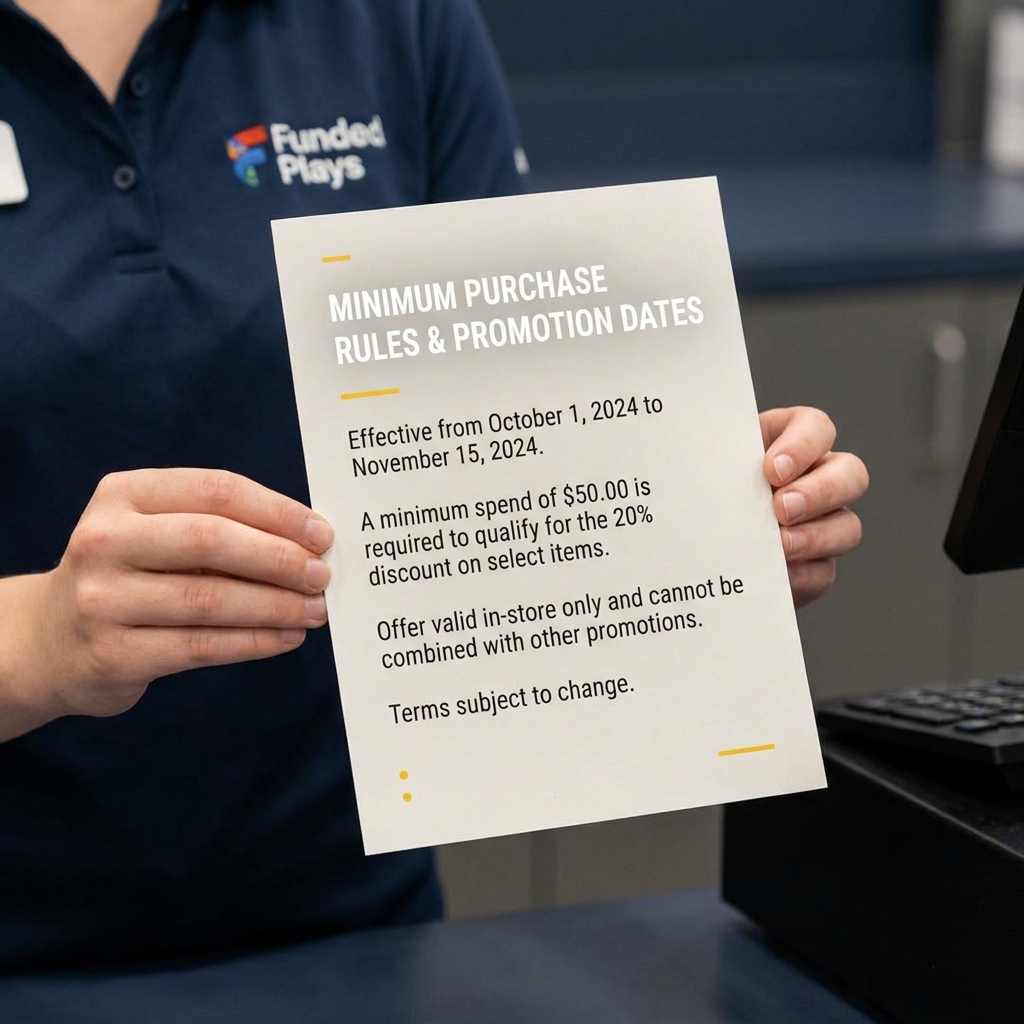
Clear consumer-facing terms also reduce confusion and disputes at redemption, which helps keep actual refund obligations close to forecasted values.
Operational checks: tracking sales and qualifying transactions
Practical operational safeguards include item-level tracking, timestamped receipts, and centralized logs of qualifying purchases; these systems let promoters measure exposure in near real time and verify claims if the outcome triggers refunds.
Tools that support this work are straightforward but critical: sales reporting, a clear terms-of-sale template, and transaction logs allow teams to reconcile promotion liability against any hedges or insurance arrangements.
Simple pre-launch controls to measure promotion exposure
Use these consistently before and during a promotion
Prize indemnity insurance and other alternatives to betting-based hedges
How prize indemnity insurance works
Prize indemnity insurance transfers the risk of a large promotional payout to an insurer in exchange for a premium; the insurer evaluates the promotion, estimates the probability of a payout, and then quotes a price that reflects that risk Investopedia explainer.
For many campaigns, insurance provides certainty: a defined premium replaces uncertain upside or downside from betting markets and can be preferable when betting is impractical or when regulators or corporate policy restrict direct wagers.
When to choose insurance, betting hedges, or both
Deciding between insurance and betting depends on cost, timing, and the companys appetite for publicity: betting-based hedges can produce additional earned media but may be more volatile, while insurance tends to be predictable though it carries a premium and may exclude certain exposures.
Some promoters use a mix: insurance for the core exposure and a smaller bet for publicity or to fine-tune net risk, treating both costs as components of marketing spend and documenting the assumptions behind each choice.
How promoters decide: sizing hedges and choosing tools
Estimating worst-case exposure
Promoters start with conservative scenarios that define the maximum likely qualifying sales in the promotion window, drawing on historical traffic, seasonality, and product mix; those estimates form the baseline for any hedge or insurance purchase CNBC coverage.

It is important to document assumptions such as conversion rates and average qualifying order value so decision makers can evaluate whether a hedge is sized appropriately or whether additional controls are needed.
Balancing cost, certainty, and publicity
Trade-offs are central: cheaper hedges leave promoters exposed to tail risk, while more certain solutions like insurance cost more upfront but limit variability; betting hedges can be cheaper in some market conditions but carry the reputational and legal complexity of placing public wagers.
For many organizations the right approach treats hedging and publicity as part of a single marketing budget, with explicit thresholds for acceptable risk and contingency plans if exposure grows beyond expectations.
Common mistakes and legal or operational pitfalls to avoid
Underestimating exposure
One common error is understating potential qualifying sales; vague terms or optimistic forecasts can inflate actual refund liability beyond the planned hedge and create material financial stress New York Times article.
Conservative, well-documented assumptions and stress-testing against unlikely but possible scenarios are essential to avoid this pitfall.
Before you run a large promotion
Before running a large promotion review the consumer terms, estimate worst-case liability, and consult legal or insurance advisors to choose an appropriate hedge method.
Unclear terms and consumer confusion
Ambiguous eligibility rules or poorly communicated timelines can lead to disputes and reputational damage; promotions that feel like risky or reckless wagering can generate negative attention that outweighs any earned media benefit Forbes coverage.
To reduce operational and reputational risk, clearly state minimum purchase thresholds, eligible products, and the exact redemption mechanics in plain language and make that information easy to find for consumers.
2022 Astros case study: step-by-step breakdown and takeaways
Timeline of the promotion and bets
In 2022 McIngvale ran a promotion tied to the Astros World Series run while simultaneously placing large futures wagers; outlets reported a roughly $10 million stake and about a $75 million payout when the Astros won, and those figures were central to analyses that framed the activity as a hedged promotion rather than a simple bet New York Times article.
The documented sequence shows how qualifying-sales exposure, public promotion, and large futures positions can be coordinated so that a media-generating wager also reduces net promotional cost if the specified outcome occurs.
Measured lessons for marketers and observers
The key lesson is that these wagers function as risk-managed marketing decisions: their value to the retailer includes both the financial offset against refunds and the substantial earned media they generate, a dual rationale that mainstream business reporting emphasized when analyzing the 2022 events CNBC analysis.
Practical takeaways include treating large hedges as a marketing expense to be budgeted, documenting assumptions about sales and eligibility, considering prize indemnity insurance as an alternative or complement, and preparing clear consumer communications to avoid confusion.
Reportedly he collected large payouts when the Astros won, but the wagers are best understood as offsets to refund obligations and as marketing investments rather than pure profit-making bets.
Yes, prize indemnity insurance is a common alternative that transfers payout risk to an insurer in exchange for a premium, and it is often used alongside or instead of betting-based hedges.
Document conservative sales scenarios, define clear eligibility and redemption rules, estimate worst-case liability, and consult legal and insurance advisors before launching.
References
- https://papers.ssrn.com/sol3/papers.cfm?abstract_id=5246229
- https://www.espn.com/mlb/story/_/id/34870415/houston-astros-superfan-mattress-mack-lose-no-matter-wins-world-series
- https://www.espn.com/chalk/story/_/id/34968901/mattress-mack-wins-historic-75m-payout-astros-title
- https://www.nytimes.com/2022/11/07/sports/baseball/mattress-mack-astros-bet.html
- https://www.cnbc.com/2022/11/07/mattress-mack-wins-75-million-bet-on-houston-astros-world-series.html
- https://www.forbes.com/sites/erikkain/2022/11/06/mattress-mack-wins-75-million-bet-on-the-houston-astros/
- https://www.fundedplays.com/challenges
- https://www.fundedplays.com
- https://www.fundedplays.com/blogs
- https://www.fundedplays.com/blogs/how-fundedplays-evaluations-work
- https://www.investopedia.com/terms/p/prize-indemnity-insurance.asp
- https://abc13.com/post/mattress-mack-loses-at-least-$116-million-in-astros-bets/5660656/