
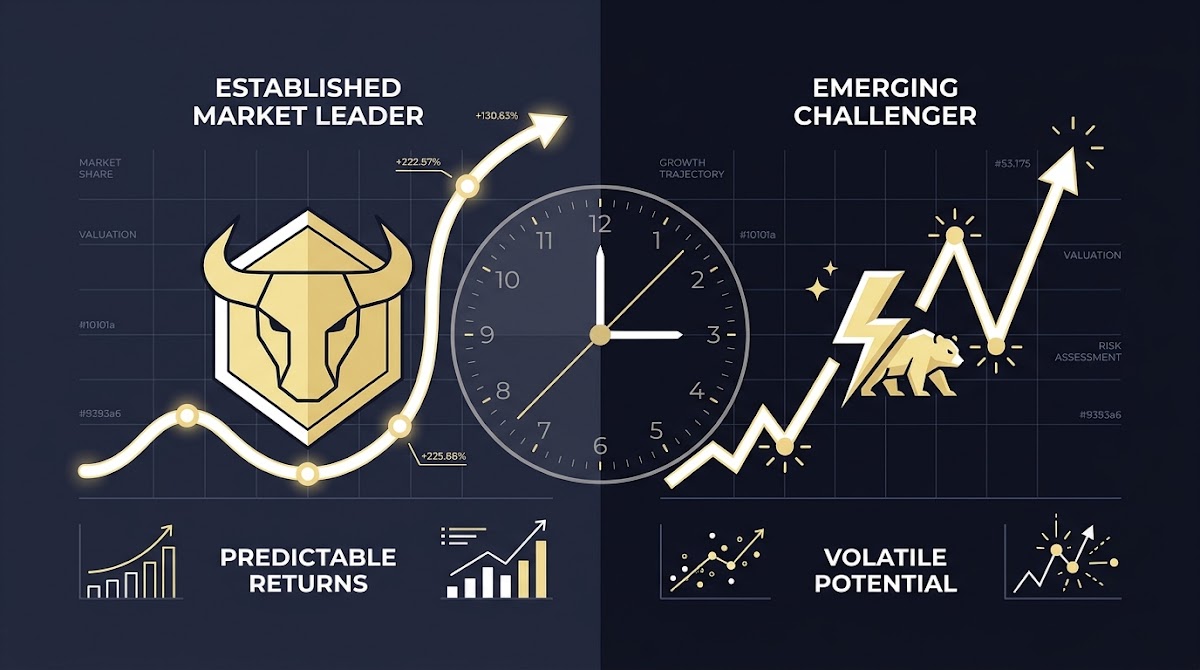
Introduction: why timing matters for favorites and underdogs
What this article covers, Market Timing for Favorites vs Underdogs
Market Timing for Favorites vs Underdogs is focused on the practical differences in timing decisions when you are backing favorites compared with when you are backing underdogs. This piece aims to help readers recognize the market signals that matter, weigh volatility and stake sizing, and apply a repeatable decision framework in simulated or challenge environments.
Who will benefit
Readers who will gain most are sports enthusiasts and experienced predictors who want tactical, low-noise guidance on timing. Secondary readers include fantasy players and analytics-minded users looking to translate concepts into backtesting or funded-challenge practice. The content does not promise guaranteed outcomes and instead asks readers to prioritize discipline, rules, and responsible participation.
Try your timing rules within FundedPlays challenge simulations
Consider signing up for a simulation or downloading the decision checklist to test timing ideas in a controlled environment.
Definitions and market context
What we mean by favorites and underdogs
In this article, favorites are outcomes with higher market-implied probability and correspondingly lower payout price, while underdogs are outcomes with lower implied probability and higher payout price. Using the language of implied probability helps keep the focus on relative market pricing rather than emotion or labels.
How probabilities and implied odds relate to prices
Market prices reflect a mix of implied odds, public sentiment, and the margin built into the market. Think of implied odds as the market view converted into probability terms; the same basic idea applies whether you are looking pre-game lines or in-play pricing. Defining terms helps ensure the timing advice that follows is grounded in shared vocabulary and practical decisions, not claims about certainty.
How the market moves: liquidity, information and line movement
Sources of line movement
Prices move because information changes and because money flows through the market, a pattern known as line movement. Common drivers include injury or lineup news, weather updates, sharp limit action, and shifts in public sentiment. Understanding these drivers explains why timing can matter and why a late move may create value or remove it.
Role of liquidity and large bettors
Market liquidity describes how much capital is available at each price. Low liquidity markets tend to swing more sharply when a large amount of capital arrives, while deeper markets absorb flow with smaller price displacement. Recognizing liquidity conditions helps you judge whether a price move represents durable new information or a short lived swing you might fade.
Simple line movement and timestamp log for event monitoring
Record time and source for every material move
Timing trades relative to information releases changes expected value because getting in ahead of a durable move can capture better pricing, while reacting after a move can mean accepting worse odds. Learn to timestamp news and line quotes so you can analyze whether a pattern is transient or persistent for your target markets.
Timing signals when targeting favorites
Pre-game price patterns for favorites
Favorites often have stable pre-game pricing because the market consensus is usually clearer about which side is expected to win. That stability can make timing feel less critical, but favorites also can shorten quickly when new, credible information favors them. Watch for credible late news that widens the underlying edge, and be prepared to act if your analysis still shows value.
In-game timing considerations
In-play, favorites may offer value on early indicators such as a clear mismatch or a material momentum swing that the market has not fully priced. Because favorites are typically less volatile than longshots, smaller in-play windows can still be useful if you control sizing and have clear exit criteria. Avoid increasing stakes on thin signals and focus on confirmations that match your model or read of the event.
Timing signals when targeting underdogs
Where underdog value commonly appears
Underdogs frequently become attractive when public bias overcorrects or when favorites are overbet based on recency or narrative. Late underdog value often appears after sharp public flows push a favorite price too far and then reverse, or when injury news reduces confidence in a favorite but the market has not fully adjusted to the new probabilities.
Prioritize timing for favorites when liquidity is sufficient and late credible information enhances the expected value; prioritize underdogs when market overreaction or public bias creates a clear, testable mispricing, and always size to reflect volatility.
Because underdogs carry higher volatility, timing windows can open and close quickly. Look for contrarian signals such as evaporating favorite bets, divergent live metrics, or market makers adjusting depth that suggest a temporary mispricing you can exploit with disciplined sizing.
Risk-reward and volatility considerations
Underdog timing must account for wider variance. Practical adjustments include smaller stake sizes, clearer stop rules, and an expectation of more frequent short term losses. Successful underdog timing relies on repeatable edge identification and strict risk controls rather than hope for a single large payoff.
Comparative strategies: when to prioritize favorites or underdogs
Decision rules for different market conditions
Compare favorites and underdogs on three axes: liquidity, information timeliness, and your assessed edge. Prioritize favorites when markets are deep and your edge is small but steady. Prioritize underdogs when you identify a transient mispricing and the market shows signs of overreaction. Use an explicit checklist to reduce emotion in the moment.

Decision checks should be simple. If a market lacks depth or the informative event is unclear, passing is often better than forcing a trade. Hybrid approaches can allocate a portion of bankroll to conservative favorite exposure while reserving a smaller band for targeted underdog opportunities when signals align.
Hybrid approaches
Hybrid strategies blend steady, low variance favorite sizing with opportunistic underdog bets sized for higher variance. For example, set a baseline exposure to favorites that supports consistent activity while keeping a quota of trades available for high conviction underdog entries. This allows diversified timing tactics while preserving overall bankroll stability.
Bankroll management and risk controls for timing-focused strategies
Sizing bets for favorites versus underdogs
Stake sizing should reflect volatility and expected strike rate. Favor smaller, steadier stakes on favorites and reduce size on underdogs to reflect larger variance. A simple rule is to express stakes as a fraction of a working bankroll and adjust that fraction down as volatility rises or uncertainty increases.
Drawdown and stop rules
Set clear drawdown limits and stop rules before you trade. Define both single trade loss limits and cumulative drawdown triggers that force a review period. When a drawdown trigger is reached, pause new entries and analyze whether timing rules were followed and if market conditions have changed materially.
Log every timing decision with rationale, entry price, and outcome. Regular review of these logs helps identify whether specific timing signals are robust across market states or if they only worked in narrow conditions. This discipline separates repeatable ideas from luck driven outcomes.
A simple decision framework you can apply
Stepwise checklist

Here is a compact five step decision framework you can use pre-game and in-play: research the match and key inputs, check market liquidity and recent line movement, assess whether new information changes your edge, size the stake relative to volatility, and record the trade for review. Keep each step explicit and avoid skipping the logging action.
When to pause or pass
Pass if liquidity is thin and the potential edge is marginal, or if a trade would violate your drawdown or stake limits. A clear pass rule protects capital and preserves focus for higher conviction opportunities. Logging a pass with the reason helps refine your entry criteria over time.
Common mistakes and timing pitfalls to avoid
Cognitive biases that distort timing
Recency bias, confirmation bias, and overconfidence commonly distort timing. Recency bias overweights recent outcomes, confirmation bias filters information to match beliefs, and overconfidence inflates assumed edge. Counter each with structured checks: require two independent signals before increasing size, and compare decisions to logged precedents.
Operational mistakes
Operational errors include overtrading, neglecting transaction costs, and failing to timestamp news. Each erodes expected value. Keep activity disciplined, include transaction costs in your model, and capture timestamps so you can later evaluate whether you traded ahead of or after crucial information.
Practical examples and scenarios
Pre-game favorite timing example
Example 1, pre-game favorite timing, shows how you might act when a late lineup change strengthens a favorite. Step 1, confirm the credibility of the lineup update. Step 2, check available liquidity and how much price movement has already occurred. Step 3, size the bet conservatively if your model still indicates positive expected value. Step 4, log the entry reason and the timestamp for later review.
This structured approach keeps you from chasing every late move and forces you to act only when the information changes the odds sufficiently relative to your risk controls.
Underdog late-value example
Example 2, an underdog late-value window, might occur when public waves have pushed a favorite price far lower than the underlying change in probability suggests. Step 1, spot the mismatch between public flow and the available objective indicators. Step 2, verify alternative data such as lineup or weather that could justify the move. Step 3, size smaller to reflect higher variance. Step 4, record the trade and set a clear stop if the market continues to move against you.
Use conservative sizing and treat each underdog entry as a testable hypothesis rather than a bet on hope. Over time, the logs will tell you if the signals you relied on were predictive.
In-play reversal example
Example 3, an in-play reversal, might arise when a favorite leads early but game state metrics show a reversal of momentum. Step 1, confirm the reliability of the in-play metric. Step 2, check how rapidly the market is reacting. Step 3, if your read suggests a durable shift, enter with a size appropriate to in-play volatility and set an exit threshold. Step 4, record the trade and review post-game for pattern recognition.
Each scenario is illustrative and not predictive. Use the steps as a template to operate within a funded-challenge or simulation so you can iterate without increasing real world risk.

Step-by-step plan to test timing in a funded-challenge or simulation
Designing a test
Design a 6-week test plan that targets a manageable number of events per week, for example three to six entries. Define entry criteria, stake sizing rules, logging fields, and stop rules before you start. Keep the plan specific so you can compare outcomes to expectations rather than making ad hoc edits while trading.
Measuring results
Track ROI, strike rate, average win and loss, and maximum drawdown. Also track qualitative fields such as the timing signal used and market liquidity at entry. After each week, review what worked and what did not, then iterate the next week's plan around the clearest patterns. Stop or adapt the test if performance is clearly inconsistent with your assumptions or if drawdown rules trigger a pause.
Conclusion: balancing edge, timing and discipline
Key takeaways
Timing matters differently for favorites and underdogs because of differing volatility and market response patterns. Favorites reward steady sizing and clear confirmation, while underdogs require smaller stakes and sharper contrarian timing. Discipline, logging, and testing are the common threads that make timing a repeatable practice rather than a habit of chance.
Next steps
Begin by defining a simple checklist and running a short simulation or challenge to validate timing ideas. Use conservative stake sizes, timestamp decisions, and review logs regularly to separate luck from skill.
This structured approach keeps you from chasing every late move and forces you to act only when the information changes the odds sufficiently relative to your risk controls.

Wait when liquidity is thin, new information is unverified, or the price move removes the assessed edge. Use your checklist and only act when conditions meet your predefined criteria.
Reduce stake sizes for underdogs to reflect higher variance. Use a smaller fraction of your working bankroll and enforce strict stop rules.
Yes, run tests in simulation or funded-challenge environments using virtual accounts and a fixed test plan to evaluate signals before scaling.
References
- https://scholarship.claremont.edu/cgi/viewcontent.cgi?article=5145&context=cmc_theses
- https://oddsindex.com/guides/line-movement-betting
- https://www.researchgate.net/publication/372441761_Inefficient_Forecasts_at_the_Sportsbook_An_Analysis_of_Real-Time_Betting_Line_Movement
- https://www.fundedplays.com/blogs
- https://www.fundedplays.com/blogs/how-fundedplays-evaluations-work
- https://www.fundedplays.com
- https://www.fundedplays.com/challenges