
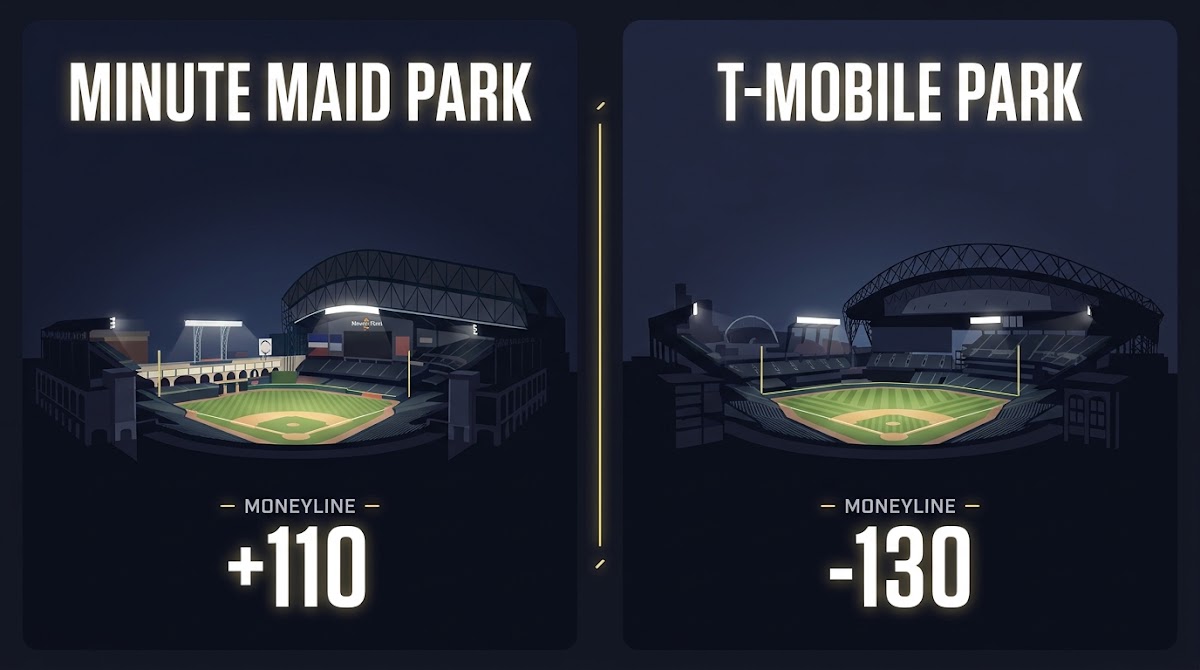
Quick answer: who is favored right now and why
A concise, evidence-based verdict
The immediate favorite in any Astros versus Mariners matchup depends on the current moneyline prices and their implied probabilities; convert the listed American odds to an implied win chance to see which side the market favors and by how much Implied Probability: Definition, Formula, and Examples.
Try a structured prediction challenge to practice the workflow
The fastest useful check is simple: confirm the starters, glance the injury report, and read the current moneyline on an odds screen before you decide.
When the answer changes: what to check next
Before you finalize a mariners astros prediction, verify four quick items: the confirmed starting pitchers, any late injury updates, where the gameday is being played, and the current aggregated moneyline; these four items typically explain most short-term price moves and let you judge whether the market moved for good reason MLB Injury Report: Latest news on injured players.
- Convert the posted moneyline into implied probability using the standard formula for American odds.
- Confirm both listed starters and check for late scratches or bullpen plans.
- Check the MLB Injury Report for lineup and bullpen status.
- Factor the venue if the game is in Seattle, where park tendencies can shift totals and side edges.
How to convert American odds to implied win probability
The formulas you need
To compare prices across books you need to translate American odds into an implied win probability; for negative odds use the formula implied probability = negative odds / (negative odds + 100), and for positive odds use implied probability = 100 / (positive odds + 100) as a quick method to make the market comparable Implied Probability: Definition, Formula, and Examples.
Examples: what a -140 or +120 price means
Worked example: a -140 moneyline implies roughly -140 / (-140 + 100) = 0.583 or about a 58.3 percent chance, while a +120 moneyline implies 100 / (120 + 100) = 0.454 or about a 45.4 percent chance; these implied probabilities make it easy to compare a -140 against a +120 price on the same scale Implied Probability: Definition, Formula, and Examples.

Keep in mind the bookmaker margin means the summed implied probabilities across both sides usually exceed 100 percent, so use the raw conversion to compare books but be aware of overround when estimating true market consensus.
Why confirmed starting pitchers change the forecast
Pitcher quality vs short-term variability
Starting pitchers drive single-game pricing more than any other roster element because they determine innings, matchup splits, and early-game leverage; when a listed starter changes the implied matchup quality the moneyline frequently shifts noticeably, so always check who is scheduled to start before locking a pick Expected Statistics (xBA, xSLG, xwOBA) Explained.
The market favorite depends on the posted moneyline after you confirm the listed starters and injury statuses; convert the moneyline to implied probability and factor park effects to decide which team the market favors.
How late scratches or bullpen-heavy plans shift prices
A late scratch or an announced bullpen start often moves the market because the expected innings, matchup advantage, and bullpen leverage change; check the official MLB Injury Report and team announcements close to first pitch to catch these changes and re-run the implied probability conversion if needed MLB Injury Report: Latest news on injured players.
In practice, a confirmed top-of-rotation starter versus a replacement-level arm will alter both the moneyline and totals expectations, so treat startup status as a primary driver when forming a mariners astros prediction.
Use expected statistics (xwOBA, xERA) to see past the noise
What x-stats measure and why they matter
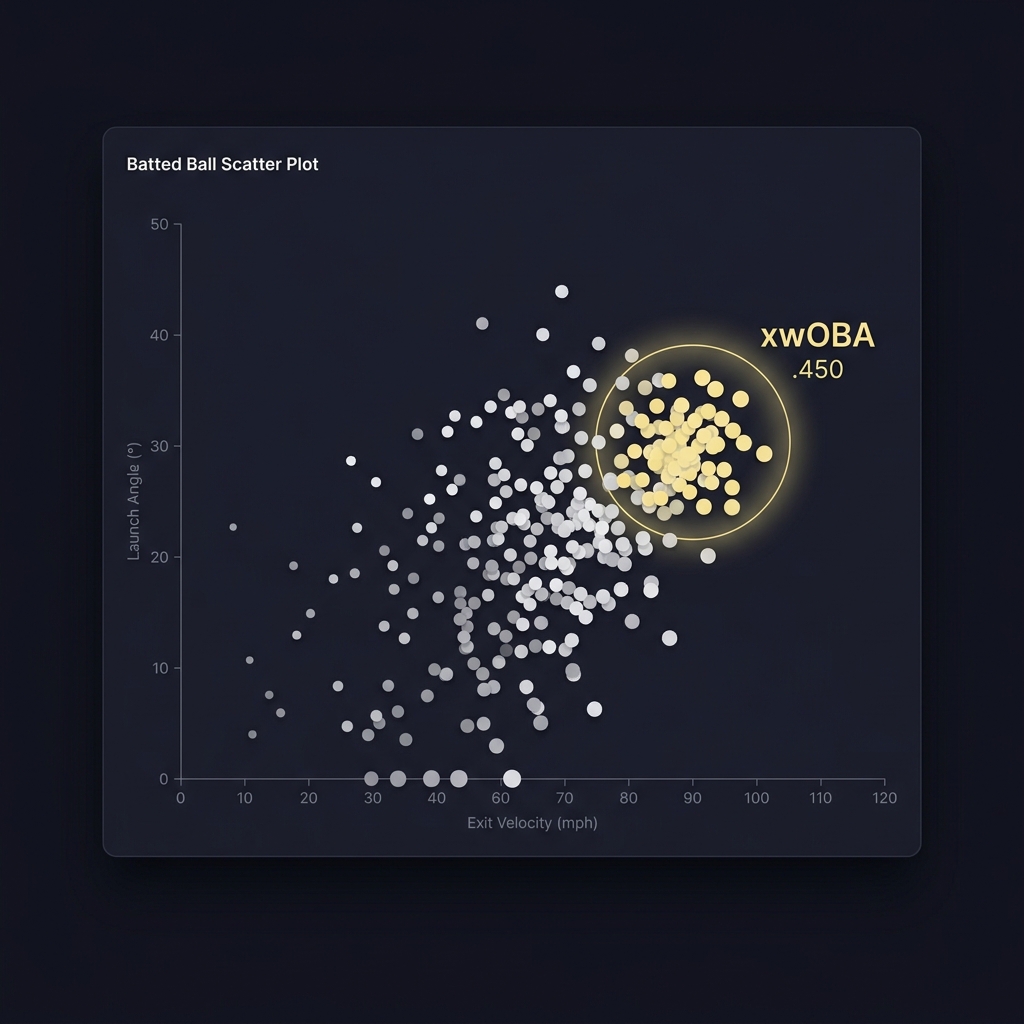
Expected stats like xwOBA and xERA model the quality of contact and underlying outcomes using batted-ball data and predictive adjustments, which helps separate lucky or unlucky results from true skill; Statcast explains how these expected measures are generated and why they can be more reliable than surface numbers in short samples Expected Statistics (xBA, xSLG, xwOBA) Explained.
When x-stats should overrule surface numbers
If a starter has an unusually low ERA but poor expected metrics, or a hitter has an elevated AVG on weak contact, the x-stats suggest caution; give extra weight to xwOBA and xERA when recent results look inconsistent with batted-ball indicators or when the sample size is small.
For an Astros versus Mariners game, use x-stats to evaluate whether the listed starter's apparent performance reflects sustainable skill or short-term variance before you adjust your mariners astros prediction.
How T-Mobile Park shifts the edge: park factor effects
Which outcomes the park affects most
T-Mobile Park has skewed more pitcher-friendly than neutral in recent seasons, which tends to suppress run scoring and nudge totals toward the under while slightly favoring pitching-heavy sides at home; incorporate park tendencies into your market view rather than treating home field as neutral Statcast Park Factors.

Adjusting picks for a pitcher-friendly home park
Practical rule: when the Mariners start a known control- or weak-contact starter at home, lean toward totals-under or a run-line favoring the Mariners' pitching if the implied market probability does not fully reflect the park effect.
Combine the park factor with matchup-level expected stats for both hitters and pitchers to decide whether the raw moneyline under- or overstates the true edge.
Comparing offenses with wRC+: neutralizing park and league effects
Why wRC+ is better than raw runs or AVG here
wRC+ is a park- and league-adjusted measure where 100 equals league average, so it is useful when comparing the Astros and Mariners lineups across different home environments and helps you see which lineup is truly above or below average wRC and wRC+.
Quick method: read the lineup through wRC+
A quick way to use wRC+ is to scan the projected lineup and weigh the top five hitters most heavily; if one club's top lineup has substantially higher wRC+ figures, that suggests a baseline offensive advantage that you can then offset for park factors and expected pitcher quality.
Remember wRC+ is only offensive, so pair it with expected-pitching metrics to form a balanced view for an astros vs mariners odds comparison.
Use odds screens and watch line movement to find informative shifts
What line movement tells you
Aggregated odds screens let you compare opening and current prices across multiple books, making it easier to spot where the market or sharp money has pushed a price; viewing opening versus live prices can reveal whether new information changed the market consensus MLB Odds - Live Moneylines, Totals and Movement.
aggregated opening vs live line comparison to detect movement
use this to timestamp moves
How to compare opening vs current prices
Convert both the opening and the current moneylines to implied probabilities and measure the delta to see how much the market moved; a material shift can indicate new information such as a scratch or heavy public or sharp interest, but beware illiquid lines that can bounce widely without meaningful signal Implied Probability: Definition, Formula, and Examples.
When a market moves early and stays, that often reflects a structural piece of information; when movement is last-minute, verify the starter and injury report before accepting the price as a signal.
Pregame injury checklist: verify status close to first pitch
Where to verify injury updates
Use the official MLB Injury Report as your primary, regularly updated source for player status, because it consolidates team updates and is updated close to game time for lineup and bullpen changes MLB Injury Report: Latest news on injured players.
Which injuries change the market most
Prioritize these roles when checking injuries: the scheduled starting pitchers, late-inning relievers who will cover high-leverage innings, and the top two or three lineup hitters; absences in these roles can meaningfully change both moneyline and total expectations.
Fold injury information into your implied-probability conversion by re-calculating the market implied chance after an injury update and comparing that to your internal estimate of win probability.
A step-by-step pregame checklist to form a mariners astros prediction
Order of checks that fit most workflows
Use a repeatable sequence to avoid rushed or emotional picks: first confirm starters and probable lineups, second capture the opening and current moneylines and convert both to implied probability, third check the MLB Injury Report for late updates, fourth compare expected stats and wRC+, fifth adjust for park factor if the game is in Seattle, and sixth review line movement for timing and volume signals Implied Probability: Definition, Formula, and Examples.
How to record your view and implied edge
Calculate a quick edge by estimating your own win probability for the matchup and subtracting the market implied probability; positive edges suggest a reasoned pick while negative edges suggest passing or waiting for better prices MLB Odds - Live Moneylines, Totals and Movement.

If the market is illiquid, record why you passed and save the timestamp and the reasoning for later review; disciplined record-keeping improves consistency and helps you learn from outcomes without relying on luck.
Common mistakes to avoid when forecasting Astros vs Mariners
Overreacting to single-game results
Avoid overweighting a single good or bad outing; single-game results can be driven by luck or small-sample variance, and expected stats often reveal when a result is unlikely to persist Expected Statistics (xBA, xSLG, xwOBA) Explained.
Ignoring park or bullpen context
Do not ignore T-Mobile Park effects or the structure of both bullpens; the park can depress run scoring and weak bullpens can amplify late-inning uncertainty, so include these contextual factors when choosing between moneyline, totals, or run line Statcast Park Factors.
Also avoid chasing small line moves without knowing the reason; a late shift can be justified by a scratch but harmful if you chase noise from a thin market MLB Odds - Live Moneylines, Totals and Movement.
Example walkthrough: form a reasoned pick without invented assumptions
From odds to implied probability
Generic example: imagine the opening market posts Astros -130 and Mariners +120; convert those to implied probabilities and compare to your internal estimate; if your model gives the Astros a 55 percent chance but the market implies 56.5 percent, you have a small negative edge and might pass or look for a better price Implied Probability: Definition, Formula, and Examples.
Weighing the listed starters and park factor
Walkthrough: if the Mariners are at home in T-Mobile Park and are starting a serviceable pitcher while the Astros face a short-rest or bullpen-coverage starter, adjust your internal probability to reflect the park advantage for pitching and the probable innings limit; always re-check the MLB Injury Report for last-minute changes that could flip your view MLB Injury Report: Latest news on injured players.
If your adjusted estimate now shows the Mariners with a 52 percent chance but the market still prices them at 48 percent implied, that difference is a reasoned edge if you trust your process.
How to use this process on a skill-based prediction platform
Differences between sportsbooks and skill-based challenge platforms
Skill-based funded challenge platforms use structured prediction formats and virtual bankrolls that reward consistency and disciplined decision-making rather than standard sportsbook lines; adapt the pregame checklist to the platform's interface and rules without assuming outcomes or guaranteed rewards.
Using a repeatable workflow to build consistent predictions
On challenge platforms, document each pick, the inferred edge, and the reasoning used; repeating the same evidence-based workflow increases your ability to identify strengths and weaknesses in your approach while staying within platform rules and the platform's evaluation structure.
FundedPlays is an example of a funded prediction environment where documenting process and discipline can help evaluate performance against challenge objectives.
When to prefer totals or run line versus the moneyline
Using park and pitching context to choose the market
Choose totals when both starting pitchers have strong expected metrics and the park suppresses run scoring, choose run line when one side is underpriced by several ticks due to public bias, and choose moneyline when you see a clear implied edge in the converted probabilities Statcast Park Factors.
Practical signs a totals play is preferable
Indicators for totals-under include two pitchers with strong xERA and a pitcher-friendly park; indicators for totals-over include weak expected pitching metrics, poor bullpen control, or favorable hitting matchups; always check liquidity because some totals markets are thin and can carry wide spreads Expected Statistics (xBA, xSLG, xwOBA) Explained.
Short conclusion: a checklist to close your pick
Final three checks before locking a prediction
Final checklist: confirm the listed starters, verify active injuries on the MLB Injury Report, and convert the final posted moneyline to an implied probability to see whether the market still offers an edge MLB Injury Report: Latest news on injured players.
Remember to factor T-Mobile Park when the game is in Seattle and to rely on expected stats over surface numbers when samples look noisy Statcast Park Factors.
Record your decision, the calculated edge, and the sources you used so you can review outcomes and refine your process over time.
Convert the current moneyline to implied probability, confirm the starters, and check the MLB Injury Report; these three checks usually identify the market favorite.
No, prefer expected stats like xwOBA and xERA for short samples because they better capture underlying quality of contact and are less affected by luck.
Yes, T-Mobile Park has recently leaned pitcher-friendly, so it can push totals toward the under and influence run-line and side decisions.