
What the Broncos "line" means today
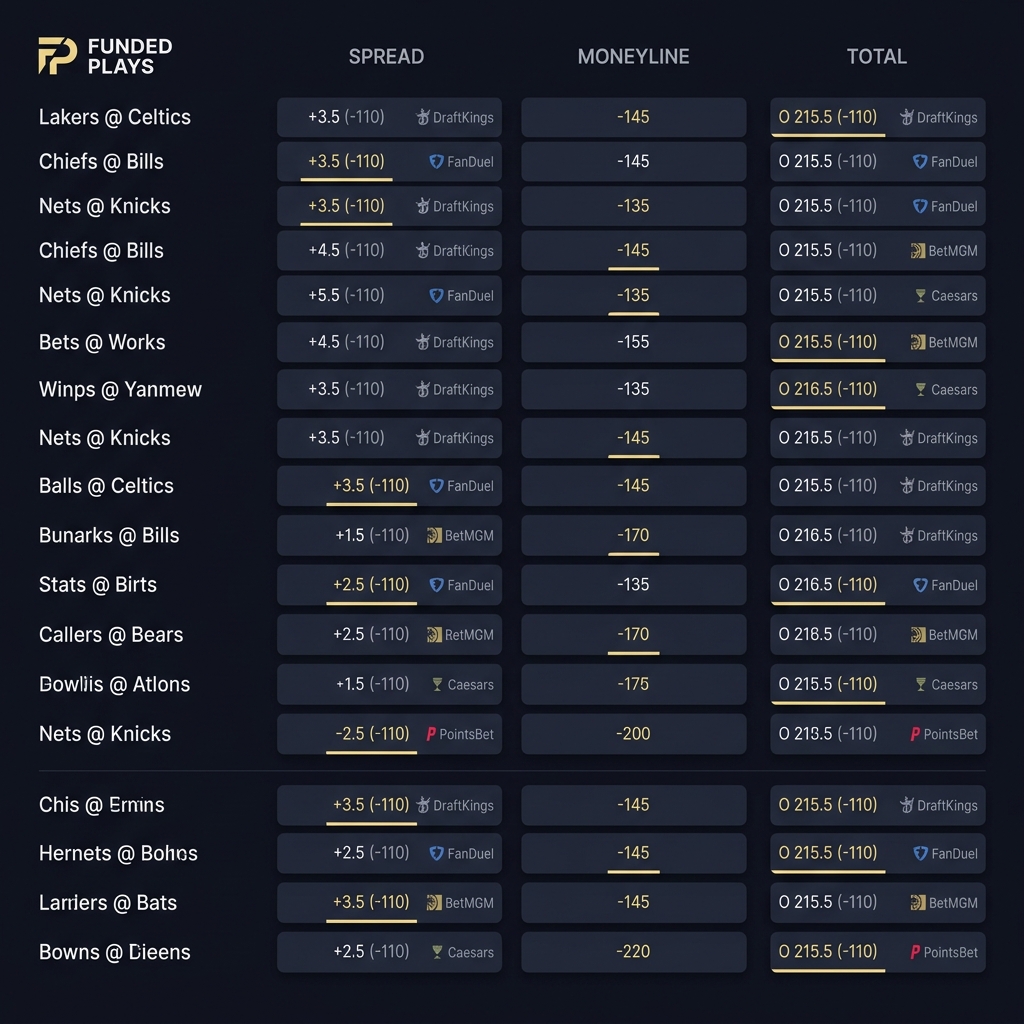
When someone asks for the line on nfl tonight, they usually mean three linked markets for the same matchup: the point spread, the moneyline and the total. Each market gives a different way to express who the sportsbook views as more likely to win and how the game itself is expected to play out; a clear primer helps you read live quotes without confusion. For basics on moneylines, spreads and market formats, consult the American Gaming Association sports betting guide American Gaming Association sports betting guide
Start with the moneyline, which is a straight-up wager on which team wins the game. Negative moneyline odds mark the favorite and positive odds mark the underdog, so the sign tells you who the market favors. A quick way to think about it is that the favorite requires a smaller stake to return a given profit than the underdog. That distinction matters most when you want a direct win-loss outcome rather than a margin-based result.
Use a team odds hub for context, an odds aggregator to see market consensus and movement, confirm the exact price on a book page, and always record the time and source before acting.
Next, the point spread is a handicap set by the sportsbook so that the two sides are easier to compare. The favorite must win by more than the spread to cover, while the underdog can lose by less than the spread or win outright to cover. A push happens when the final margin equals the spread, and push rules determine whether wagers are refunded. For a concise primer on how spreads work and why they matter, see Investopedia's point spread explanation Point Spread: What It Is and How It Works in Betting
Finally, the total or over/under is a wager on the combined points scored by both teams. Bettors choose whether the actual combined score will be over or under the sportsbook's posted number. If you want a clear definition and examples of totals in sports wagering, Investopedia's over under page offers a straightforward explanation Over/Under (O/U) Definition and Examples
Because U.S. markets quote odds in American format, you will typically see moneylines like -150 or +170 and spreads expressed as whole and half points, all using American odds presentation. Remember that any numeric line you quote should be timestamped and attributed to a source, since those numbers change through the day; consolidated Broncos market pages show live listings and are updated frequently, so always capture the time when you reference a price Denver Broncos odds market page
Where to check live Broncos lines right now
There are three practical places to check live Denver Broncos odds live: team and league odds hubs that copy schedules and live prices, odds aggregators that track market movement, and individual book pages that show current lines for that sportsbook. Each source has a role: team hubs give context on schedule and injury notes, aggregators show consensus and movement, and book pages show the price you would get at a specific account.

Team or league pages like ESPN's Broncos hub consolidate schedule, results and current odds for coming games and are a quick first stop to see how a particular matchup is being listed across the season Denver Broncos team page
Odds aggregators and market trackers collect and display spreads, moneylines and totals from multiple sources and often provide a view of how a number moved over the day. Aggregators make it easier to spot whether a change is widespread or limited to a single book, and they often include timestamped snapshots to show movement.
Quick lookup method for live Broncos odds
Use these in order to cross check live lines
For consolidated market movement and live tracking of Broncos lines, reference odds aggregators such as TheLines and Action Network which list spreads, moneylines and totals for the team and show movement across hours Denver Broncos odds: spreads, moneylines and totals Action Network Broncos odds
Individual sportsbook pages show the price you would receive at that bookmaker and are necessary if you plan to place a wager at a specific provider. Since prices vary across books and shift with news and action, checking at least two authoritative sources gives you a practical sense of the consensus level. For example, DraftKings lists team-specific odds on its sportsbook page DraftKings Broncos odds
How to read the spread, moneyline and total on game day
Reading American odds and converting them to implied probability is a useful skill for game day. A moneyline of -150 implies the market sees the favorite as the more likely winner and requires a larger wager to win a set amount. Conversely, a +150 moneyline means a smaller stake returns a larger profit if the underdog wins. For a baseline explanation and examples of American odds and implied probability, the American Gaming Association provides a helpful overview American Gaming Association sports betting guide

Interpreting the spread means asking what the market expects about margin. If the Broncos are listed as a three point favorite, the market expects a close game and the favorite must win by four or more to cover. If the final margin equals the posted spread, the result is a push and wager settlement depends on house rules. Investopedia's spread primer explains the covering and push concepts in simple terms Point Spread: What It Is and How It Works in Betting
Reading totals requires context. A high total suggests the market expects a faster, higher scoring game; a low total suggests a slower, defense-oriented game or poor weather conditions that suppress scoring. When you interpret totals, factor in team pace, recent scoring trends and game-day conditions rather than treating the number as a standalone forecast. For a formal definition of totals and example situations, see Investopedia's over under page Over/Under (O/U) Definition and Examples
On game day, also account for lineup, injury and weather notes that can materially change implied probabilities. A late scratch at a key position or a sudden forecast of heavy wind can make a previously set number outdated, so verify timestamps on any quote you use before acting.
Why lines move: injuries, market flow and news
Lines move for three broad reasons: event-driven news such as injuries or lineup changes, public betting that shifts exposure for a book, and sharp or professional action that signals a different assessment of value. Understanding these drivers helps you tell whether a shift is a superficial reaction or a meaningful market reprice. Market trackers show timestamps and movement data to help you see how quickly and how far the price changed NFL odds live hub
Practice reading live lines with structured challenges
Before relying on a live price, double check the quote source and time to confirm the number reflects current game day information.
Injury reports and official lineup announcements are common catalysts. A confirmed absence of a starting quarterback or a late change on the offensive line can alter both spread and total because it changes expected scoring and win probability. Watching verified team reports or league injury trackers is the fastest way to spot these triggers.
Market flow matters because sportsbooks balance exposure. Heavy public money on one side may cause a book to move the spread or adjust the price to attract action on the other side. Conversely, concentrated sharp money can lead to quicker, larger moves as books react to professional views. Aggregators and movement boards can show whether a change is being reflected across multiple books or isolated to a single provider Denver Broncos market movement
Late-breaking news that appears right before kickoff often produces intra-day swings; these are the moments when timestamping is essential. If you report a line without a time and source, your number may already be obsolete to other readers or to your own follow-up checks.
Common mistakes when checking today's Broncos line
One frequent error is quoting unstamped numbers. Because lines move, presenting a price without a time and source leaves readers or decision makers unable to verify whether that line still applied. Always record the time when you capture a price and name the hub or book that displayed it.
Another mistake is failing to shop lines across books. Small differences in spread or moneyline juice compound over time; line shopping is the simplest way to preserve value and to check for consensus. Aggregators and team hubs help with fast cross-checks so you are not relying on a single page.
Overreacting to early or small moves is a third common pitfall. Markets often move in small increments for liquidity or hedging reasons and then retrace. If you assume every early shift represents a durable change in expected outcome, you may misjudge your edge and make suboptimal decisions.
Practical examples: interpreting a sample Broncos line
Example 1, summary: small spread with heavy public money. Hypothetical setup: Broncos -3, total 44, moneyline -160. If public money is heavy on the favorite, the spread may have tightened from -2.5 to -3 even if new information did not materially change team strength. In that case, the move may reflect bet volume rather than a change in expected result. Use an aggregator to see whether the -3 is being posted widely or only at a few books.
Example 2, summary: high total and weather concerns. Hypothetical setup: Broncos +2, total 52, moneyline -110 for the other team. A late wind forecast or heavy rain could push the implied scoring lower and cause totals to drop. If totals move sharply after a weather update, check timestamps and the weather source before interpreting the new line as a permanent expectation.
Deciding whether a move is meaningful: compare the current quoted price against the consensus range from at least two sources and note the time. If the price sits within the consolidated market band and no substantive news has been announced, the move is likely liquidity-driven and less meaningful. If multiple hubs show a coordinated shift after an official roster update, treat the change as substantive.
Whenever you include a live price in writing, show the source and the time. For example, note: Denver Broncos -3, total 44, moneyline -160, quoted at 1:15 PM ET from an aggregator snapshot. That timestamping practice tells readers whether to trust the price or to re-check for a later move.

How to use lines for disciplined prediction and bankroll management
Treat lines as inputs to a discipline-first forecasting process. Use stake sizing rules tied to bankroll percentage rather than impulsive amounts, and track outcomes to see whether your model or view produces a long-term edge. The American Gaming Association offers foundational guidance on responsible wagering principles you can adapt to skill-based prediction routines American Gaming Association sports betting guide
Use line comparisons to estimate possible edge: if your model or analysis suggests a team has a 55 percent chance to win but the market prices the implied probability lower, that difference is a potential edge to test. Record simulated stakes and outcomes over many samples so you can measure whether the perceived edge holds up after variance.
Keep a running ledger of timestamps, sources and stakes so you can review decision logic and refine your approach. If you participate in skill-based challenge platforms, these records are useful for consistent performance tracking without relying on short-term luck.
Quick checklist before you place a bet on the Broncos tonight
1) Source and timestamp the line you plan to use. Note the page and local time, for example the Funded Plays homepage.
2) Confirm injuries, weather and starting lineup from verified team reports.
3) Compare at least two bookmakers or aggregators to see the market band and recent movement.
4) Apply your bankroll rule and stake size before placing a selection.
5) Avoid making decisions only on small intra-day shifts without checking the underlying trigger.
Closing: a responsible approach to following today's Broncos line
Lines are dynamic and reflect a snapshot of market opinion at the moment they are posted. When you rely on a live price for a decision or report, always include the time and source so others can verify whether that number remains current. For regular checks, bookmark a few reliable hubs to save time and to build a consistent practice for reading Denver Broncos odds. See the Funded Plays blog for related posts Funded Plays blog
Responsible participation and disciplined record keeping are the most reliable ways to use lines as a forecasting tool rather than a guess. No line guarantees an outcome, and systematic verification will keep your process measurable and repeatable.
The moneyline is a straight-up wager on the game winner; negative odds indicate the favorite and positive odds indicate the underdog.
Use a team odds hub for context and an odds aggregator for consolidated movement, then confirm prices on a specific book page before acting.
Always include the quoted price, the source or hub, and the exact time you captured the number so readers can verify it.
References
- https://www.americangaming.org/education/sports-betting/sports-betting-101/
- https://www.investopedia.com/terms/p/pointspread.asp
- https://www.investopedia.com/terms/o/overunder.asp
- https://www.thelines.com/odds/nfl/denver-broncos/
- https://www.espn.com/nfl/team/_/name/den/denver-broncos
- https://www.fundedplays.com/challenges
- https://www.vegasinsider.com/nfl/odds/
- https://sportsbook.draftkings.com/teams/football/nfl/denver-broncos--odds
- https://www.actionnetwork.com/nfl/odds/denver-broncos
- https://www.cbssports.com/nfl/news/bills-vs-broncos-odds-how-to-bet-afc-divisional-round-matchup-what-to-know-about-each-team/
- https://www.fundedplays.com
- https://www.fundedplays.com/blogs
- https://www.fundedplays.com/blogs/how-fundedplays-evaluations-work