
What a line move is and why it matters
Basic definition of line moves
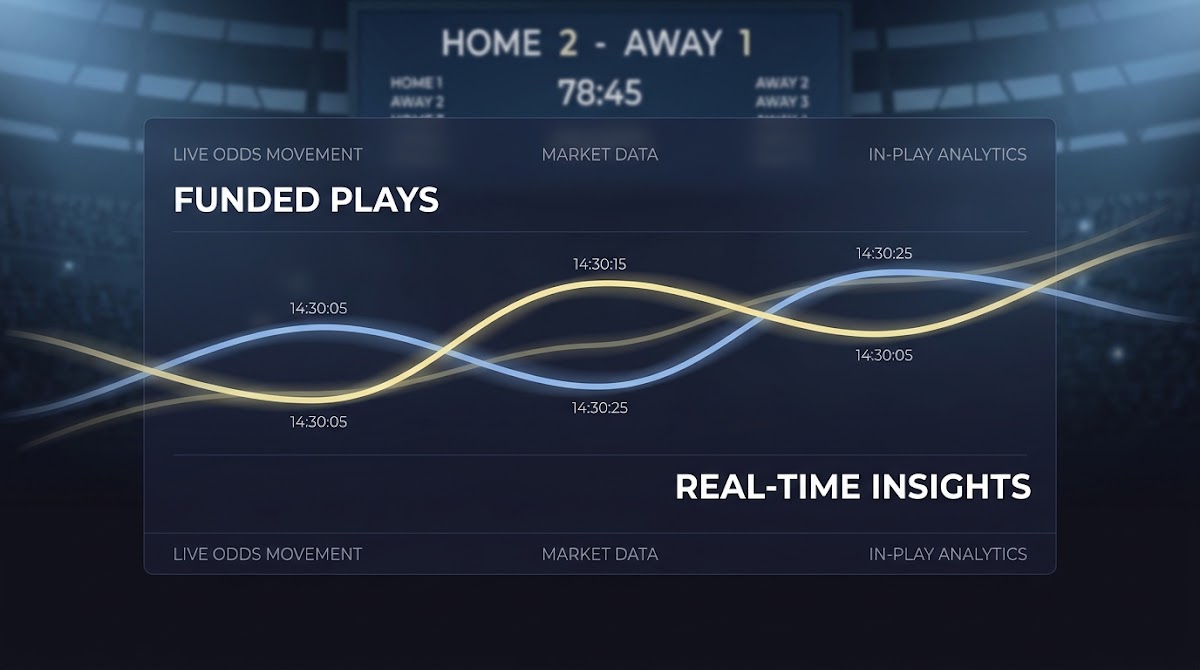
A line moves when a sportsbook's spread, total, or moneyline price changes from the opening number to the closing number as the market processes new information and betting demand; this change can reflect updated information, shifts in liability, or rebalancing of price and vig, and understanding it is the first step toward evaluating whether a market offers value Action Network explanation of line movement and Covers guide to line movement.
In practice, a move can be a point change on the spread or total, a shift in moneyline odds, or a change in the effective price after vig adjustments. Those differences matter because a point move and a pure price move are not always equivalent for expected value, and bettors who track both forms can better interpret what markets are signaling (see Funded Plays).
Markets show movement through timestamped odds feeds, which record the opener, intermediate ticks, and the closing number. Comparing the opening and closing numbers helps you see whether sharp action, news, or public money drove the final adjustment.

For a simple example, an opening spread that moves from -3 to -4 before kickoff suggests the market moved a point toward one side; a shift that keeps the point spread the same but widens the vig is a subtler price adjustment and can be evidence of routine rebalancing rather than new information.
Common drivers: what typically causes line moves
Information events: injuries, lineup and weather news
Most line moves come from new, verifiable information such as injury reports, late lineup changes, or weather updates that alter expected game conditions; these information-driven shifts are among the most common catalysts in modern markets Legal Sports Report guide to line setting and a related overview MyTopSportsBooks explanation.
Odds move because markets process new information and betting demand; act only when moves are backed by verified information or respected early action, and use closing line value tracking to evaluate whether following moves improves your long-term results.
Market-level events also cause movement. Early sharp action, where experienced bettors place meaningful stakes when limits are lower, frequently nudges the market; later in the pregame window, broader public money can move lines as sportsbooks rebalance exposure and manage liability Action Network explanation of line movement.
It is important to distinguish routine rebalancing from significant moves. Small shifts in price or vig without point changes often reflect margin adjustments, while large or rapid point moves usually correspond with important new information or respected market flow.
How sportsbooks set lines and manage risk
Opening the market: models and consensus
Sportsbooks typically generate opening numbers using internal models, compilers, and market consensus feeds; these openers represent an initial, model-based view that books expect to refine as bets arrive Legal Sports Report guide to line setting.
After an opening number is published, shops watch market odds feeds and early bets to decide whether to move a price. Books aim to balance liability rather than to predict the exact outcome, so adjustments often reflect where money is concentrated and how much exposure a book has on each side.
Track openers and closers with FundedPlays Challenges in mind
Make a simple habit of noting opening numbers and checking the closing price after the event; that one habit helps you learn whether you consistently improve your position versus the market without chasing short-term moves.
Limits and risk appetite shape how responsive a book will be to early sharp action. Lower limits in early markets mean a few respected accounts can move a line quickly, while higher limits later in the pregame window tend to absorb more public money before larger adjustments occur.
Reading moves: a practical framework for interpretation
Use a three-step framework to judge whether a move indicates real value or is likely noise: 1) check timing and source, 2) compare magnitude and speed, and 3) add contextual confirmation before acting Action Network explanation of line movement.
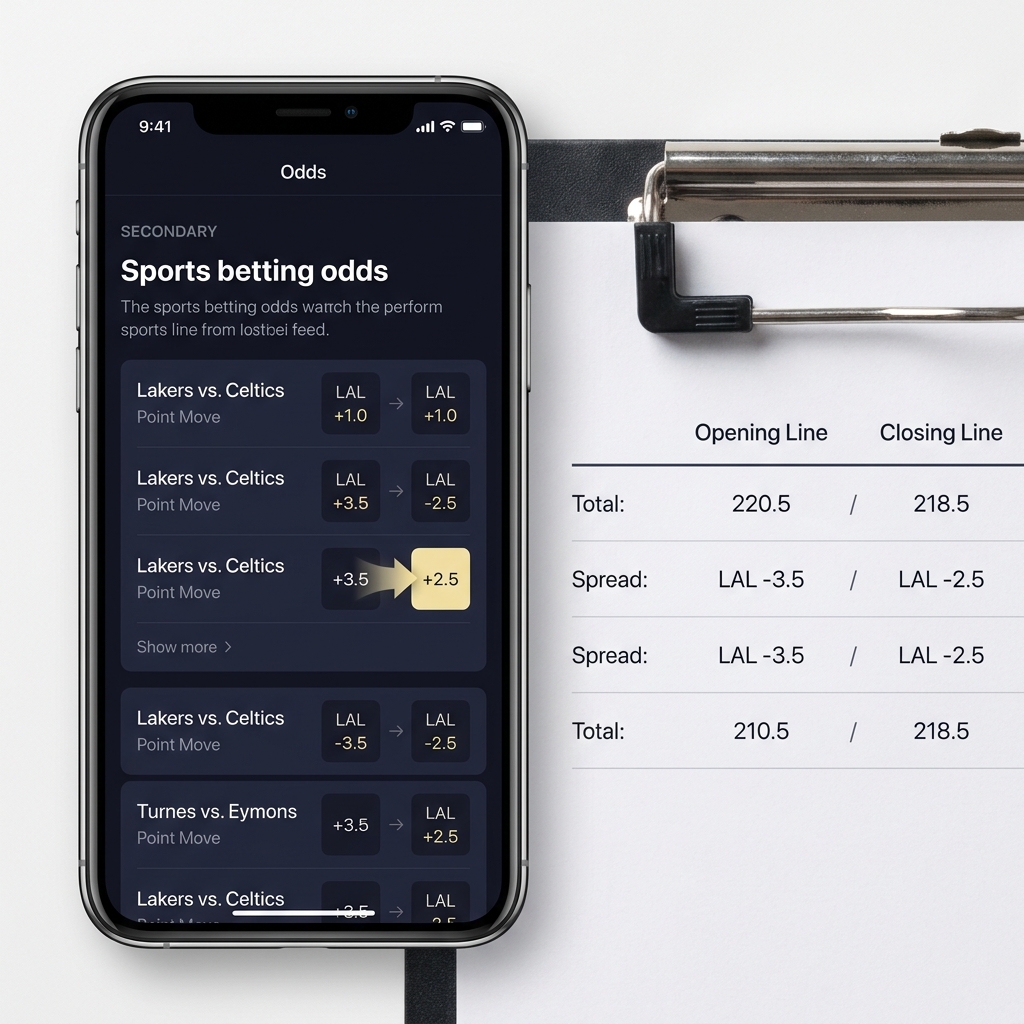
Step 1, timing and source, means asking when the move happened and what triggered it. Moves tied directly to a confirmed injury, official lineup change, or credible weather forecast carry much more weight than anonymous, unexplained ticks in the market.
Step 2, magnitude and speed, separates routine changes from meaningful ones. A few tenths of a price point or a minor vig shift is typically routine; a sudden one- or two-point swing, or a fast chain of price updates, is more likely to reflect significant information or respected early action.
Step 3, contextual confirmation, encourages you to corroborate a move with independent signals: roster sources, official injury tweets, weather feeds, or observable betting patterns. Practical actions you can take include timestamping the opening number, saving screenshots of the move, and avoiding chasing a move until you confirm its cause.
- Timestamp the opener and closing numbers for each selection.
- Note the exact magnitude of the move and how fast it occurred.
- Seek at least one corroborating source before changing a planned stake.
Closing line value, or CLV, is the difference between the price you obtained and the market's closing price; the closing line is generally regarded as the market's most efficient estimate in mature markets, so consistently obtaining better prices than the close is a signal that you may have an edge Pinnacle explanation of closing line value.

Evidence from market analysis shows that consistently positive CLV is associated with long-term skill rather than short-term luck, so tracking CLV over a meaningful sample is one of the strongest objective measures of betting performance Unabated analysis of CLV and profits.
Practically, keep a simple log with the opening price you saw, the price you bet at if different, and the closing number. Over time, compute your average CLV and review whether changes to your process cause sustainable improvement rather than noise-driven spikes. See the Funded Plays blog for related posts.
Decision rules: when to follow a move and when to wait
As a rule of thumb, prefer moves backed by verifiable information or early respected market action; be cautious with late, public-driven moves that lack clear corroboration, and rely on your CLV tracking before changing your overall approach Action Network explanation of line movement.
For late moves, ask whether the change improves your closing line value prospectively or simply reflects the public piling on. If a late move makes your stake price worse versus the expected close, it is usually better to wait or reduce the size of your exposure Pinnacle explanation of closing line value.

One practical decision rule is to set a pre-game checklist: confirm any injury or lineup change from an official source, check how much the market moved and when, and compare the new price to your expected closing price before increasing stake size. Keep bankroll rules fixed so single moves do not drive outsized decisions.
Common mistakes, integrity signals, and red flags
Common errors include chasing late steam without checking sources, ignoring shifts in vig that make prices worse, and failing to timestamp and document where you saw the opening number; these habits make it hard to learn and can mask whether you have positive CLV Action Network explanation of line movement.
Integrity monitoring organizations documented irregular betting alerts in 2024, showing that rapid, unexplained odds movements can sometimes coincide with information asymmetries; when you see a fast, unusual move with no public explanation, approach with caution and document what you observed IBIA Integrity Report 2024.
If you suspect suspicious movement, record the timestamps, save screenshots, and consult public integrity reports rather than acting on assumed advantage. Reporting unusual patterns to league or integrity bodies is the responsible approach when movement appears anomalous.
Scenario 1: early sharp move. An underdog line opens and moves quickly after respected accounts place early bets. In this case, the speed and source suggest the move is information-rich; note the timestamp, the amount of the shift, and whether the closing line validates the early movement Action Network explanation of line movement and a general primer SigmaPlay guide.
Scenario 2: injury-driven move. A starter is ruled out two hours before kickoff and the line shifts by a point. Because the move follows confirmed roster news, it is likely informative; check official injury reports and weather or lineup updates to confirm context Legal Sports Report guide.
Scenario 3: late public steam. Late betting causes a small, steady drift toward the public favorite without any clear breaking news. Treat these moves as suspect for value until you confirm whether the closing line will settle in a way that improves your CLV expectations Pinnacle explanation of closing line value.
Track opening and closing odds and short context for each pick
Keep entries immediate and brief
Quick checklist to copy: timestamp opener, record who or what caused the move, note magnitude and speed, check credible sources, and log the closing line for CLV. Review the log monthly and look for consistent CLV trends before altering sizing or selection rules. Read how FundedPlays evaluations work.
Remember that any single move is often noise; only after you see consistent patterns across many events should you change an established process. Maintain disciplined bankroll management so that isolated moves do not drive outsized risk.
A line move is any change in a sportsbook's spread, total, or odds price from the opening number to the closing number; it can reflect new information, betting flow, or routine margin adjustments.
No. Follow moves backed by verified information or respected early market action; be cautious with late, public-driven shifts and use your CLV log to guide long-term changes.
Log the opening price, the odds you took, and the closing number for each bet; calculate your average CLV over a meaningful sample to assess whether your pricing is improving versus the market.
References
- https://www.actionnetwork.com/education/line-movement
- https://www.covers.com/guides/what-line-moves-can-tell-us
- https://www.fundedplays.com
- https://www.legalsportsreport.com/education/how-sportsbooks-set-lines/
- https://www.mytopsportsbooks.com/guide/advanced-betting/why-betting-lines-move/
- https://www.pinnacle.com/en/betting-articles/educational/what-is-closing-line-value
- https://unabated.com/insights/does-clv-predict-profits-2024
- https://ibia.bet/wp-content/uploads/2025/02/IBIA-Integrity-Report-2024.pdf
- https://www.fundedplays.com/challenges
- https://sigma.world/us/play/blog/line-movement-in-sports-betting/
- https://www.fundedplays.com/blogs
- https://www.fundedplays.com/blogs/how-fundedplays-evaluations-work