
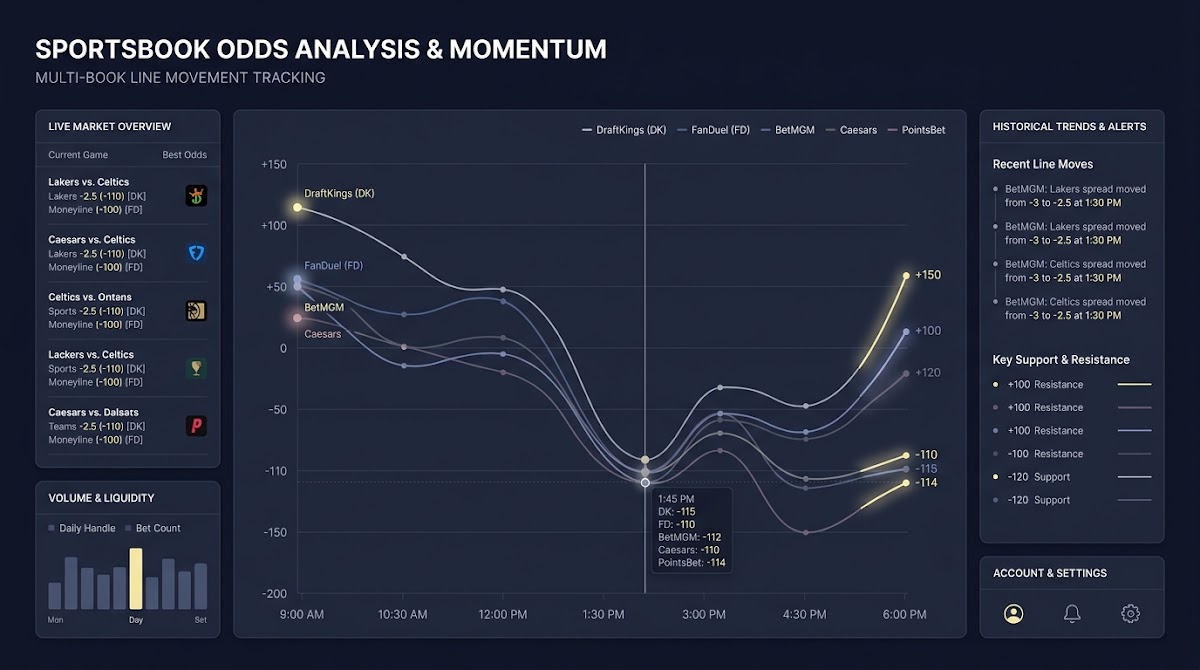
What line movement betting means and why it matters
Definition: opening, live, and closing lines
Line movement betting describes the change in odds or point spreads from the opening price through live adjustments to the closing line as sportsbooks respond to incoming information and betting action; the phrase captures the market process that links an initial quote to the final market consensus over the life of a market, including pregame and in-play updates Covers.
Opening lines are the first publicly posted prices, live lines change as events unfold, and the closing line is the last widely available price before betting is no longer accepted or before the event starts; the closing line often reflects the most aggregated market view because it integrates later news and broader money flows Action Network glossary.
Quick line-tracking spreadsheet template for open, live, and close prices
Use one row per selection
Why movement matters for bettors and market efficiency
Watching how a price moves from open to close matters because it helps bettors judge whether they secured value when they placed a wager, and one standard benchmark for that judgement is Closing Line Value, which compares a bet's entry price to the market close to measure relative success Pinnacle Betting Resources.
For bettors focused on long-term edge, consistent wins against the closing line are treated as a signal of positive expected value even when single-game outcomes do not, so tracking open-to-close differences is central to performance evaluation Pinnacle Betting Resources. (See our Funded Plays homepage for community resources.)
How sportsbooks and market makers produce line movement
Bookmaking basics: risk management and exposure
Sportsbooks are market-makers that quote prices and adjust them to manage exposure rather than to provide perfect predictions of outcomes; when a book becomes unbalanced on one side it moves prices to encourage offsetting action or limit liability, which creates observable line movement Legal Sports Report.
That operational behavior means some moves are corrective steps to limit risk, not new information about the event itself, so understanding the motive behind a change helps separate noise from signal Covers.
How early market-making moves differ from later adjustments
Market-making books may shift prices early when they receive large or informative bets; an early adjustment at a major market-maker can indicate access to sharper liquidity or fast news, and those early moves sometimes carry more informational weight than later shifts driven by broad public betting Legal Sports Report.
Later adjustments, especially close to kickoff, often reflect one-sided public money or reactionary limits rather than fresh, high-quality information, so timing and where a move originates are useful cues for interpretation Covers.
Practical cues include whether the price moved before official news broke, whether the first change came from a market-maker, and how many books followed; early, isolated moves at major makers typically deserve more attention than late, broad retail shifts Legal Sports Report.

Common drivers of line movement and how to recognize them
News-driven moves: injuries, lineups, weather
Concrete news items such as injury reports, official lineup confirmations, or weather updates commonly trigger immediate and sometimes large shifts in odds or point spreads because they change the expected balance of an event for sportsbooks and bettors Legal Sports Report.
When a move closely follows an authoritative announcement and appears first at several market-makers, it is more likely to be news-driven rather than purely money-driven; checking time stamps and which books moved first is a practical first check Covers.
Line movement means the change in odds or spreads from opening to closing as sportsbooks react to news and betting action; tracking these changes and aiming to beat the closing line helps bettors evaluate long-term entry quality.
Weight-of-money moves: public vs sharp action
Weight-of-money moves occur when heavy public action pushes a book to change a line, and those moves often build gradually or show up simultaneously across many retail books rather than as a discrete early change at a market-maker Covers.
By contrast, large early adjustments at a few market-making operators can signal sharp or syndicate bets that carry information content beyond simple public sentiment, so distinguishing where and how quickly a move appears helps classify it Legal Sports Report.
Timing and venue: where and when moves carry more weight
Practical cues include whether the price moved before official news broke, whether the first change came from a market-maker, and how many books followed; early, isolated moves at major makers typically deserve more attention than late, broad retail shifts Legal Sports Report.
Recording timestamps and the book that moved first lets a bettor reconstruct the likely cause of a shift and avoid mistaking public steam for sharp information Covers.
Closing Line Value (CLV): what it is and how to use it
CLV defined and why it matters for measuring skill
Closing Line Value is the difference between the price you obtained and the final market close; beating the closing line over time is treated as evidence of finding value and is a common skill benchmark because the closing price aggregates later information and wider market balance Pinnacle Betting Resources.
Because CLV isolates relative entry quality from the randomness of single outcomes, it is a preferred metric for assessing long-term edge, provided bettors use meaningful sample sizes to avoid over-interpreting short-term variance Pinnacle Betting Resources.
Simple ways to record and interpret CLV
A basic method to capture CLV is to log the opening price you received, the closing price, and compute the implied edge or change in probability between the two; for example, convert odds to implied probability, subtract the closing implied probability from the entry implied probability, and aggregate those differences across bets to see if you are consistently finding better lines than the market close Pinnacle Betting Resources.
Interpreting CLV requires patience: many bettors who beat the market close still lose individual bets because variance exists, but a persistent positive CLV across hundreds of bets is an accepted sign of skill rather than luck Pinnacle Betting Resources.
Integrity alerts and suspicious market moves to watch for
How integrity bodies respond and why markets sometimes suspend
Industry integrity services continue to detect suspicious betting patterns and may trigger responses including rapid odds changes, cross-market adjustments, or temporary suspension of markets while investigations proceed IBIA Q2 2025 Integrity Report.
Those integrity-driven moves are not the same as information-driven adjustments and can make a market unsafe to bet on until the situation is clarified, so exercising caution when a market is flagged or suspended is prudent Sportradar Integrity Services report.

Signals a move might be integrity-related rather than informational
Signs that a move could relate to integrity issues include unusually fast, large moves across unrelated books, coordinated cross-market anomalies, or sudden market suspension for a specific event, which differ from typical news-driven or money-driven shifts IBIA Q2 2025 Integrity Report.
When those signals appear, the conservative choice is to pause and wait for official clarification rather than placing stakes based on uncertain reasoning about the cause of the move Sportradar Integrity Services report.
How to track line movement: concrete tools and timing strategies
Which books and feeds to monitor and why
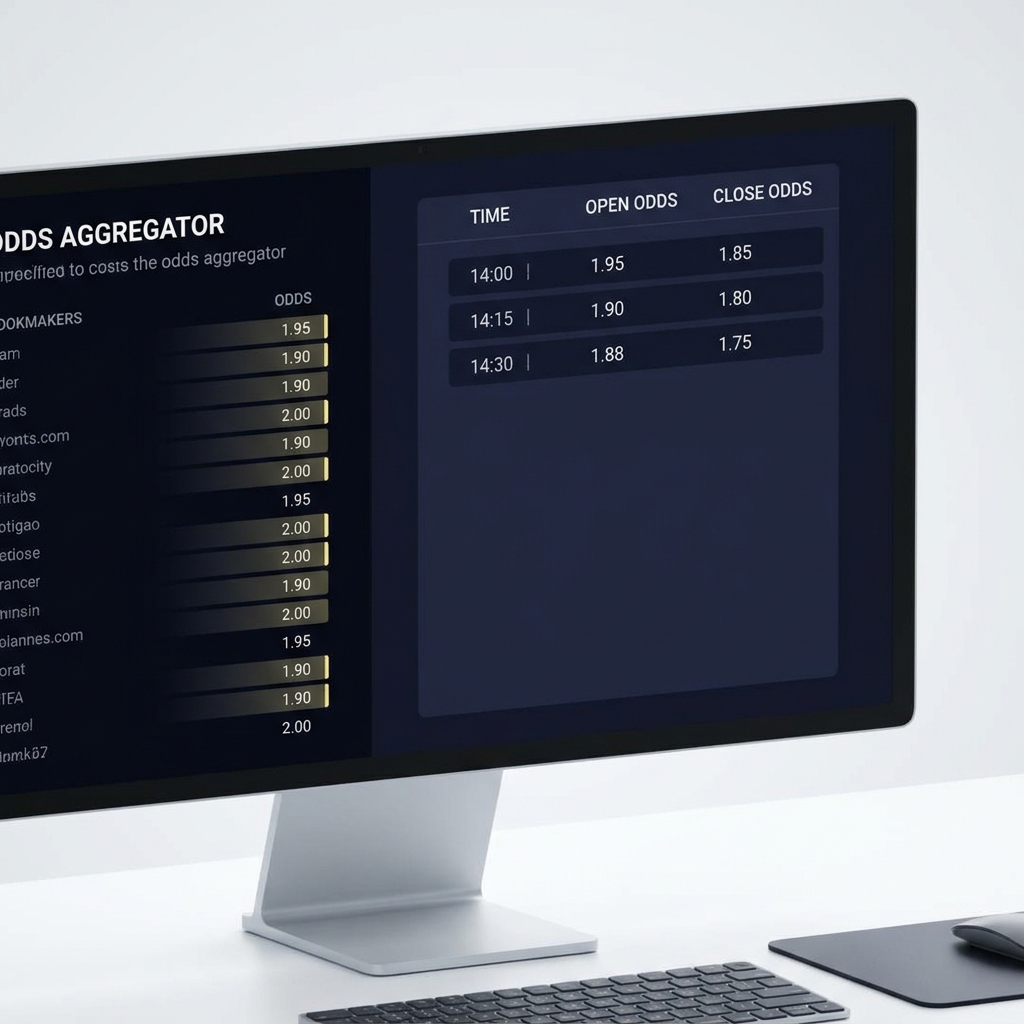
Track open, live, and close prices across multiple sportsbooks and odds aggregators to compare where a move started and how it propagated; aggregating quotes helps reveal whether a shift began at a market-maker or appeared broadly across retail books Legal Sports Report. For live comparisons and consolidated boards consider tools like OddsTrader or aggregated odds pages such as Covers' odds page, and keep a separate log (see the Funded Plays blog for note templates).
Practical tracking favors feeds that include timestamps and book identifiers so you can log where and when the first movement occurred and then follow how other books reacted over time Covers.
Timing entries: aligning bets with news cycles and CLV thinking
A timing strategy is to place bets when you can reasonably anticipate news catalysts or when early, informative moves occur at market-making books, then measure your result against the closing line to see if you consistently secure value Pinnacle Betting Resources.

Avoid chasing last-second public steam without corroborating news because those late moves can erode expected value; instead, log entries and closes and prioritize decisions that produce positive CLV over time Covers.
Watchlist and logging template
Use a simple watchlist with fields for event, book, entry price, time, book that first moved, closing price, and a short note on why the move occurred; keeping a compact log makes CLV calculations repeatable and reviewable Pinnacle Betting Resources. (See how we evaluate challenges in this post.)
Consistent records let you run basic statistics later, such as average CLV per market type or per time window, and that discipline is more informative than judging performance on a handful of outcomes Legal Sports Report.
Typical mistakes and how to avoid common line-movement traps
Chasing steam and emotional reactions
One common error is chasing steam, where a bettor reacts emotionally to a late price move and places a stake at worse odds than they could have obtained earlier; this behavior often converts apparent winners into long-term losers because late moves typically reduce value Covers.
Another frequent mistake is overtrading after a visible move without checking provenance; acting without confirming whether a shift is news-driven or public money-driven increases variance and harms CLV-focused results Legal Sports Report.
Practice disciplined tracking with a simple CLV log
Try a disciplined tracking routine: log open and close prices, note where the move originated, and pause when you lack corroborating news.
Misreading public money versus sharp action
Mislabeling a public-driven steam as sharp action leads to poor sizing and misplaced confidence; check whether multiple market-makers moved early and whether credible news preceded a change before assuming the move contains high-quality information Covers.
Simple rules to reduce error include verifying the news source, checking which book moved first, maintaining pre-set stake sizes, and recording CLV instead of focusing on immediate profit or loss Pinnacle Betting Resources.
Short scenarios and examples: reading moves in NFL, NBA, and soccer
Scenario 1: injury-driven NFL move and what to check
Imagine a starting quarterback is listed questionable early on game day and a major market-maker drops the line within minutes; this immediate, isolated move that aligns with an injury report suggests news-driven adjustment and is worth closer attention than a slow drift later in the market Covers.
In that scenario check the official source of the injury news, confirm the timing relative to the first market move, and log the opening and closing lines to evaluate CLV afterward Legal Sports Report.
Scenario 2: late NBA steam and public flow signals
In the NBA a late widespread move across retail books often reflects public sentiment; if numerous casual books move at the same time close to tip and no authoritative news is present, treat the change as public steam and resist increasing size without independent confirmation Covers.
Log the move, compare entry vs close, and use CLV over many such instances to decide whether reacting to late steam improved your expected value Pinnacle Betting Resources.
Scenario 3: soccer lineup news and early market-maker adjustments
Soccer often shows sharp early changes when a key starter is left off a confirmed lineup; an early downward or upward shift at select books that precedes retail movement typically signals information-led adjustment and merits consideration if you can confirm the lineup news Legal Sports Report.
Record the book that moved first, the time, and the closing line so you can evaluate later whether acting on that early move improved your CLV across similar events Covers.
Checklist, next steps and responsible participation
Pre-bet checklist for reading line movement
Before placing a bet, run this checklist: verify any claimed news with an authoritative source, check which book moved first, note the time of your entry, and log the closing line for future CLV comparison Pinnacle Betting Resources. (Try the community checklist at Funded Plays blog.)
Also keep stakes disciplined and avoid increasing size based purely on late retail steam; disciplined sizing and CLV tracking reduce the risk of chasing results and support long-term evaluation Covers.
How to evaluate performance over time and responsible participation reminders
Evaluate performance by aggregating CLV over a meaningful sample and resist judging a strategy on a small number of events; CLV provides a cleaner signal of entry quality than raw win-loss records in the short run Pinnacle Betting Resources.
Finally, remember that tracking market mechanics and CLV helps build disciplined decision making but does not guarantee profit; responsible participation and clear risk limits remain essential regardless of tracking systems or platforms used Legal Sports Report.
Closing Line Value is the difference between your entry price and the market close; tracking it over many bets shows whether you consistently obtain better prices than the market, which is a common indicator of skill.
Check timing and source: if a move follows an authoritative announcement and appears first at major market-makers it is likely news-driven, while slow, broad shifts across many retail books often reflect public money.
No, avoid betting on suspended markets until official clarification is available, since suspension or coordinated anomalies may indicate suspicious activity rather than reliable information.
References
- https://www.covers.com/betting/line-movement
- https://www.actionnetwork.com/glossary/sports-betting/line-movement
- https://www.pinnacle.com/en/betting-articles/educational/closing-line-value-the-key-to-success
- https://www.legalsportsreport.com/soccer-betting/
- https://ibia.bet/wp-content/uploads/2025/07/IBIA-Q2-2025-Integrity-Report.pdf
- https://sportradar.com/insights/reports/2024-betting-corruption-and-match-fixing-report/
- https://www.fundedplays.com/challenges
- https://www.oddstrader.com/
- https://www.covers.com/sport/odds
- https://www.actionnetwork.com/education/reverse-line-movement
- https://www.fundedplays.com
- https://www.fundedplays.com/blogs
- https://www.fundedplays.com/blogs/how-fundedplays-evaluations-work