
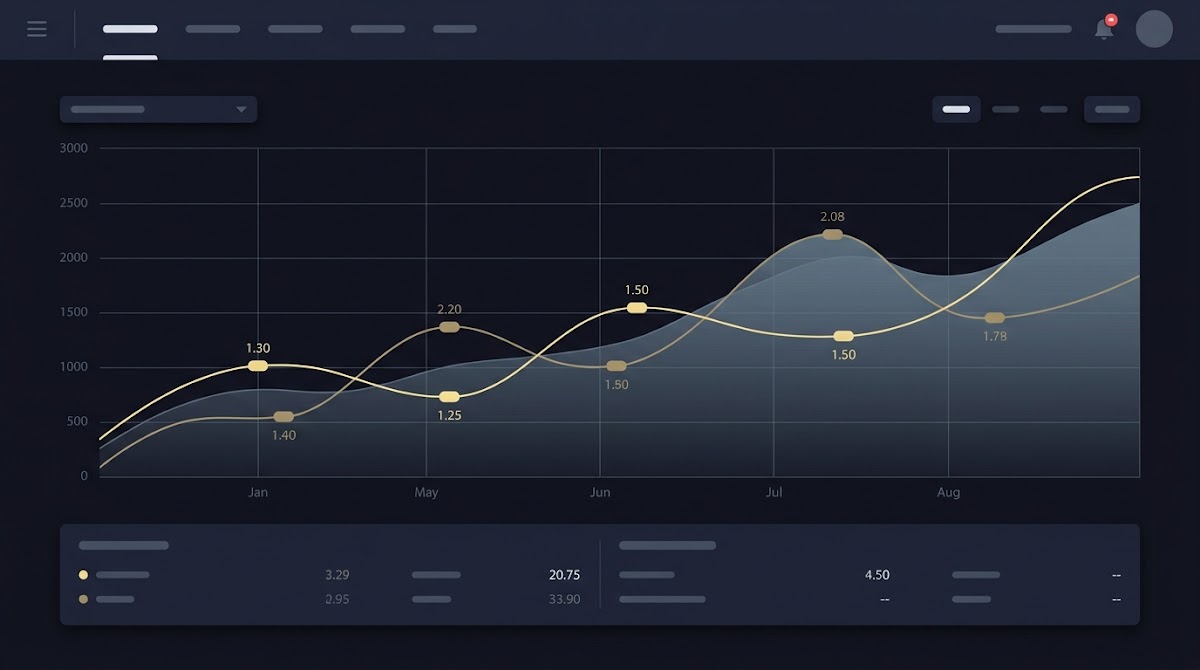
What line movement betting means and why it matters
Line movement betting refers to watching how prices or odds change between when a market opens and when bets are placed. The term covers pre-game and in-play shifts, and the practice is useful because those shifts reveal where money and information are flowing in the market.
Reverse line movement can be a useful signal when it appears with corroborating context, but it should not override independent analysis. Use verification, conservative sizing, and log-based testing to see if it helps your process.
For many bettors, recognizing line moves helps with timing decisions and with interpreting whether a market reflects new information, crowd behavior, or professional action. Paying attention to line movement betting is a way to add context to your own pre-game analysis rather than replacing it.
How line movement betting works: who moves lines and how
When an opening line is posted, sportsbooks set odds based on models, market checks, and risk appetite. Incoming bets, especially large or concentrated bets, change a book's exposure, so lines often adjust to balance liability or to reflect fresh information.
Books manage risk with limits and by moving lines to influence where future bets land. A move can be gradual as public money accumulates, or quick when sharp bettors act. Understanding that there are different actors, such as casual bettors and professional bettors, helps explain why similar volumes can lead to different kinds of movement.

Reverse line movement is the pattern where most visible betting activity appears to favor one side, but the line moves toward the opposite side. In plain terms, the public may be placing money on Team A, yet the line drifts toward Team B.
This pattern draws attention because it can indicate that a different set of forces, such as professional bettors adjusting exposure or books reacting to liability, are influencing the market. It is also a reason many bettors monitor line movement betting closely as a potential market signal.
Practice verifying line moves with a structured challenge
Explore Funded Plays ChallengesThat attention is sensible, but reverse line movement is an indicator, not a guarantee. It should prompt verification steps and a check of whether the move fits other contextual signals before changing stake size or strategy.
Common signals and indicators to spot reverse line movement
Fast, correlated moves across multiple books are often more meaningful than a single book drifting (see this guide: https://oddsindex.com/guides/reverse-line-movement-guide).
Watch for reduced liquidity on one side, or a sudden widening of limits, which can suggest large, targeted wagers or changes in how a book wants to balance liability. Also pay attention to whether moves are confined to niche lines or whether they affect the broader market consensus.
set up two independent line feeds and a verification habit
check feeds at a consistent cadence
Another practical sign is a divergence between the direction of public betting and the direction of the line. Consistent divergence, especially late in the market, often warrants closer investigation.
How to interpret reverse line movement for your betting approach
Start by treating reverse line movement as an adjustment to your confidence, not as proof of a winning pick. Combine observed moves with your own pre-game edge, model outputs, or scouting checks before modifying stake size.

Use a conservative decision rule: verify movement across independent sources, confirm the move fits plausible context, then consider a modest adjustment to size if your model still shows value. Avoid chasing thin lines or rapidly increasing stakes based on a single late move.
Decision criteria: when reverse line movement is a strong vs weak signal
Apply contextual filters. Strong signals typically show several features together: moves across multiple books, meaningful magnitude relative to the market spread, and timing that matches plausible information arrival, such as late reports or credible market bets.
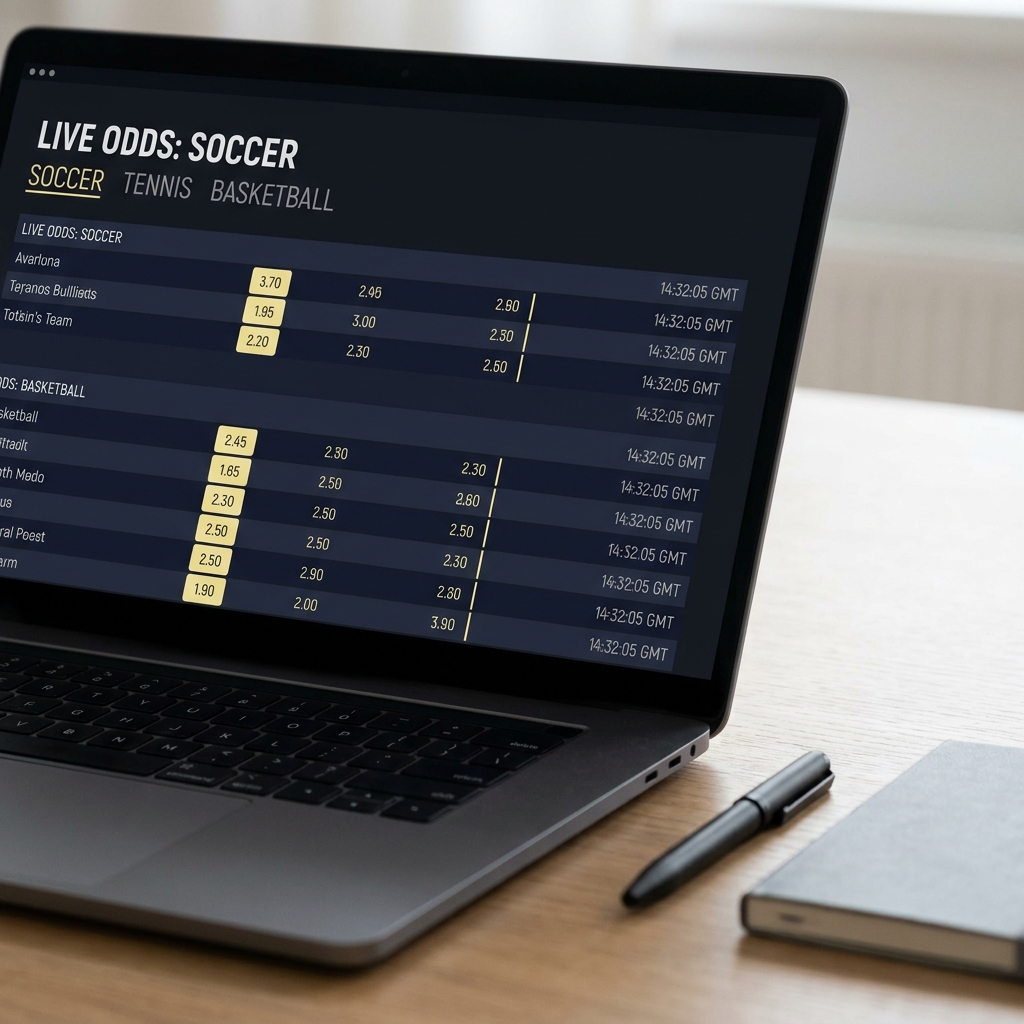
Weak signals appear in low-liquidity contexts, when only one feed moves, or when there is an obvious administrative reason for the change, such as manual limit adjustments or price corrections. Use simple quantitative checks, like the size of the move versus typical daily fluctuations, to avoid overreacting.
Typical mistakes and pitfalls with line movement betting
A common cognitive trap is to assume reverse movement always means follow the sharp. In reality, reverse movement can have multiple causes and is only one data point among many. Confirmation bias can make one overweight recent or vivid moves.
Operational errors also cost money. Failing to verify across books, ignoring liquidity and vig changes, or increasing stake size impulsively after seeing a move are frequent mistakes. Maintain a disciplined checklist to reduce these errors.
Practical examples and scenarios (how to read the signs)
In a pre-game scenario, an opening line may sit for hours while public money flows in on one side. If the line shifts late toward the other side, walk through verification: check at least two independent feeds, look for reported sharp activity, and review whether news or injury reports arrived.
For an in-play example, imagine a score change or injury leads to a quick market reaction. A reverse move might follow if professionals hedge or if books rebalance exposure. In such cases, confirm that the move is not just a temporary glitch and consider whether your in-play model still projects value before acting.
A step-by-step framework to integrate reverse line movement into your workflow
Build a simple monitoring routine: record opening lines, set alerts for moves beyond a threshold, and maintain a rapid verification checklist (see how our evaluations work: https://www.fundedplays.com/blogs/how-fundedplays-evaluations-work).
Execution rules should include explicit stake limits and procedures for laying off exposure if necessary. After each event, log the rationale, the verification steps taken, and the outcome. Regularly review these logs to refine your thresholds and improve pattern recognition.
Combining reverse line movement with bankroll management and analytics
When you act on a movement signal, make conservative stake adjustments. Many bettors use a fraction of their usual size for moves they are still testing, and expand only after tracking results over a meaningful sample. This keeps any single signal from overly moving the bankroll needle.
Set up a simple tracking spreadsheet to log each instance of reverse line movement you act on. Track entry conditions, verification checks, stake size, and outcome. Over time, compare the performance of bets taken after reverse movement to a baseline to see whether the signal adds value. For tools and resources see https://www.fundedplays.com.
When reverse line movement is likely to be unreliable
Reverse movement is often noisy in low-liquidity markets, niche prop markets, or during times when books make discretionary or promotional adjustments. In these environments, small moves can be the product of thin action or administrative edits rather than professional insight.
Promotional lines, bot-driven adjustments, and slow feeds can also create the impression of a meaningful move when the underlying volume is minimal. In such cases deprioritize reverse movement signals and place greater weight on independent verification.
A simple pre-bet checklist for using line movement betting signals
Verify the move across at least two independent feeds or books when possible. Confirm that the magnitude and timing fit a plausible explanation. Decide stake size relative to bankroll and record the rationale in a bet log before placing the wager (see related discussion: https://www.covers.com/guides/what-line-moves-can-tell-us).
When in doubt, reduce size or skip the wager. Keeping a short checklist on hand converts a reflexive reaction into a consistent process and helps avoid common errors like chasing a late move without verifying context.
Conclusion: practical next steps and learning resources
Reverse line movement can be a useful input when combined with verification and disciplined sizing. It is most valuable when it complements your pre-game model, clear verification steps, and a consistent logging habit.
To practice, set up monitoring, keep a case log, and run small-scale tests. For further reading see our blog index: https://www.fundedplays.com/blogs.
Reverse movement is often noisy in low-liquidity markets, niche prop markets, or during times when books make discretionary or promotional adjustments. In these environments, small moves can be the product of thin action or administrative edits rather than professional insight.

Promotional lines, bot-driven adjustments, and slow feeds can also create the impression of a meaningful move when the underlying volume is minimal. In such cases deprioritize reverse movement signals and place greater weight on independent verification.
Reverse line movement occurs when visible bets favor one side but the posted line moves toward the opposite side; it is an indicator to verify, not a guarantee.
No, treat it as a data point. Verify across feeds and combine it with your own edge and bankroll rules before adjusting stakes.
Log instances, record verification steps and outcomes, and compare performance over a sufficiently large sample before changing sizing rules.