
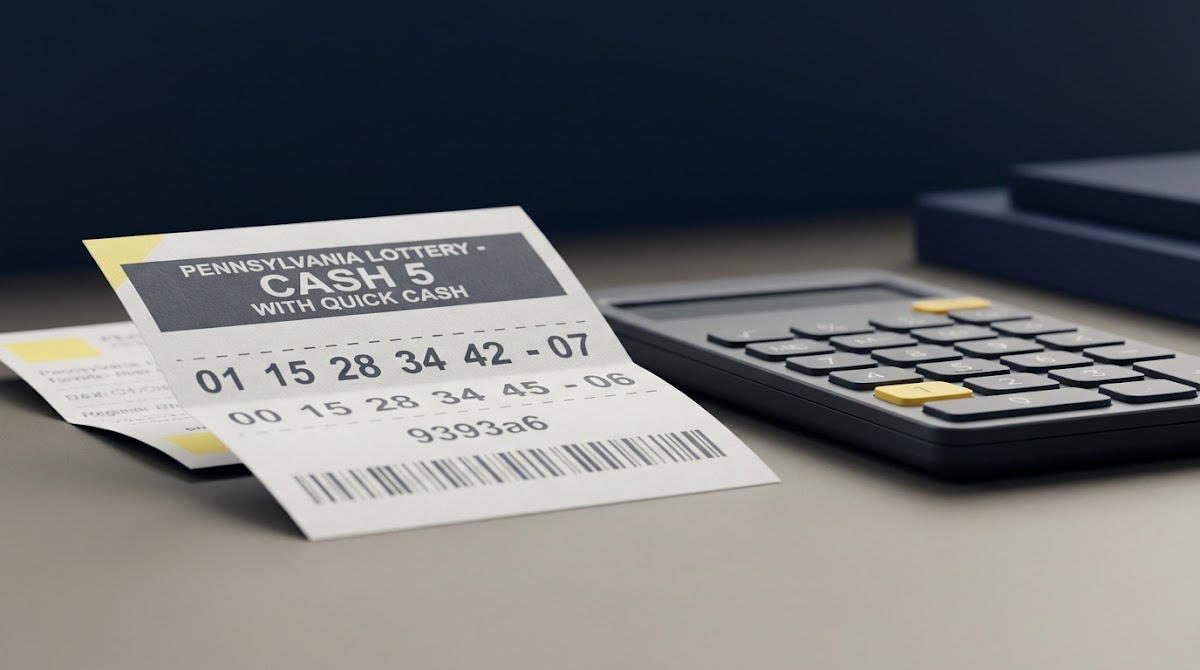
What counts as lottery income in Pennsylvania and why it matters for taxes
Definition of taxable gambling income
Lottery prizes are treated as taxable income for federal purposes and must be reported on your federal return as ordinary income, not under a special lower rate, so the $1,000 prize itself is income you need to include when you file your taxes IRS Publication 525.
Why lottery prizes are reported as ordinary income
That federal classification matters because the prize increases your taxable income for the year, which can affect the tax you owe once you combine it with other income sources; Pennsylvania follows its own rules for state tax on gambling and lottery proceeds that apply on top of federal reporting Pennsylvania Department of Revenue guidance. See the department's online guide Gambling and Lottery Winnings.
Small prizes can still be reportable, and whether you receive a Form W-2G depends on IRS thresholds and how the ticket purchase and prize amount relate to each other according to payer reporting rules IRS instructions for Forms W-2G and 5754.
How the IRS treats lottery winnings and reporting rules
Winnings as ordinary income
The IRS treats lottery prizes as ordinary income and not as a specially taxed category, so you include the full prize amount on your federal Form 1040 for the year you received it IRS Publication 525.
When Form W-2G is issued
The payer must issue Form W-2G when prizes meet certain thresholds, for example the common guideline of $600 or more combined with the 300 times the wager rule, which means a $1,000 prize may trigger reporting depending on the ticket cost and how the payer applies the rule Instructions for Forms W-2G and 5754.

Preserve your documents and check official forms
Keep your ticket, any payout receipt, and watch for a Form W-2G so you can match amounts when you prepare filings.
Even when a W-2G is not required or not issued, taxpayers are responsible for reporting all taxable winnings on their federal return and keeping supporting documentation IRS Topic No. 419.
Why federal withholding generally does not apply to a $1,000 PA lottery win
Federal mandatory withholding threshold
Federal mandatory withholding of 24 percent applies to lottery proceeds of $5,000 or more, so a $1,000 prize is typically paid without federal tax withheld at payout even though it remains taxable when you file Instructions for Forms W-2G and 5754.
What happens at payout
When the prize is under the withholding threshold, the payer usually pays the full prize amount to the winner without deducting federal tax, and the responsibility to pay any federal tax owed shifts to the recipient when they prepare their return IRS Publication 525.
A $1,000 Pennsylvania lottery prize is taxable federally and at the state level; you will owe Pennsylvania income tax equal to 3.07 percent of the prize, or $30.70, and federal tax is due when you file based on your marginal tax rate because mandatory federal withholding does not apply to prizes under $5,000.
Even with no withholding at payout, keep in mind that you must report the income and may owe tax when you file, depending on your overall tax situation IRS Topic No. 419.
Pennsylvania state tax: rate, withholding, and reporting for lottery winnings
Flat PA personal income tax rate for gambling income
Pennsylvania taxes gambling and lottery winnings at a flat personal income tax rate of 3.07 percent, which applies to the full prize amount when you file your PA return Pennsylvania Department of Revenue guidance.
Withholding policies for PA Lottery prizes
The Pennsylvania Lottery indicates that both the 24 percent federal withholding and the 3.07 percent Pennsylvania withholding are taken only on prizes exceeding $5,000, so smaller prizes such as $1,000 are generally paid without those automatic withholdings Tax information from the Pennsylvania Lottery.
Because Pennsylvania does not allow offsetting lottery winnings with gambling losses on the state return, the state tax applies to the prize without a corresponding state-level loss deduction Pennsylvania Department of Revenue guidance.
How to report a $1,000 PA lottery win on federal and state forms
What to do if you receive Form W-2G
If you receive a Form W-2G, use the prize amount shown to report the income on your federal Form 1040 for the year, and check the payer and taxpayer information on the W-2G to ensure it is correct before filing Instructions for Forms W-2G and 5754.
Where to report winnings on PA-40 and Schedule T
Pennsylvania residents report gambling and lottery winnings on PA-40 Schedule T and should include any Forms W-2G as supporting documents when filing their state return PA-40 Schedule T instructions. For related content see how Funded Plays evaluations work.

Keep documentation of ticket cost, prize amount, and any W-2G received; these records are the basis for what you report on the federal and state returns and for any later questions from tax authorities PA-40 Schedule T instructions.
Step-by-step calculation: how much tax you'd owe on a $1,000 PA lottery prize
Calculate Pennsylvania tax (simple example)
The Pennsylvania tax on a $1,000 prize is the flat 3.07 percent rate applied to the prize, which equals $30.70 due to Pennsylvania when you file, because 3.07 percent of 1,000 is 30.70 Pennsylvania Department of Revenue guidance.
Understanding federal tax impact and next steps
Federal tax owed on the $1,000 prize depends on your marginal tax rate and other income; because the prize is reported as ordinary income, a simple template to estimate federal tax is to multiply the taxable prize by your marginal rate and then reduce that estimate by any applicable deductions and credits when you prepare your return IRS Publication 525.
Estimate federal tax on a taxable prize using your marginal rate
Use your actual marginal rate for best estimate
As a practical example without assigning specific bracket numbers, if you expect to owe federal tax you can use the template and then decide whether to adjust withholding on other income or make estimated tax payments to avoid underpayment penalties Instructions for Forms W-2G and 5754.
What to do if you received a Form W-2G for a small prize
Verify the information on the form
Confirm that the W-2G lists the correct prize amount, date, and taxpayer details because errors on the form can affect your federal and state reporting and may be corrected by contacting the payer for an updated statement Instructions for Forms W-2G and 5754.
How to report if withholding appears
If you find that federal or Pennsylvania tax was withheld incorrectly for a $1,000 prize, keep the documentation and ask the payer to explain or correct the withholding, and then use the amounts shown on the W-2G when you complete your federal Form 1040 and PA-40 Schedule T PA-40 Schedule T instructions.
Common mistakes people make when reporting lottery winnings
Assuming no withholding means no tax
A common error is to assume that absence of withholding at payout means the prize is not taxable; in fact, lack of withholding does not remove the legal obligation to report the prize and pay any tax due when you file IRS Publication 525.
Mixing up ticket cost and prize amount
Another frequent mistake is confusing the cost of the ticket with the taxable prize; the amount you report is the prize itself, and on the Pennsylvania return you cannot offset that prize with losses at the state level even if you record losses for federal itemized deductions Pennsylvania Department of Revenue guidance.
Can you deduct gambling losses in Pennsylvania when you win?
Federal deduction rules in brief
For federal purposes, taxpayers may deduct gambling losses to the extent of gambling winnings if they itemize deductions, and good records are required to support those loss deductions IRS Topic No. 419.
Pennsylvania state limitation
Pennsylvania does not allow taxpayers to deduct gambling losses against lottery winnings on the state return, so the state tax is assessed on the prize without that offset Pennsylvania Department of Revenue guidance.
Practical scenarios: resident, part-year resident, and nonresident prize situations
Full-year Pennsylvania resident
A full-year Pennsylvania resident reports the entire $1,000 prize on PA-40 Schedule T and will owe the 3.07 percent state tax on that amount regardless of whether taxes were withheld at payout PA-40 Schedule T instructions.
Out-of-state winners claiming PA prizes
Nonresidents who win prizes in Pennsylvania may face different filing questions and should check the payer's documentation and Pennsylvania guidance or consult a tax professional to determine whether a state return is required in their circumstances Tax information from the Pennsylvania Lottery.
How a $1,000 win can affect your federal return: practical tips without guessing brackets
Estimating additional tax owed
Because the federal tax on the prize depends on your marginal rate and total taxable income, use the simple calculation template of taxable prize times your marginal rate to estimate additional federal tax, then adjust for any deductions or credits you expect to claim IRS Publication 525.
When to adjust withholding or make estimated payments
If your estimate suggests a meaningful tax liability from the prize, consider increasing withholding on wages or making an estimated tax payment to reduce the risk of underpayment penalties; these choices depend on your broader tax picture and timing of when the prize was received Instructions for Forms W-2G and 5754.
Recordkeeping, evidence to keep, and how long to save documents
Ticket, payout, and W-2G documentation
Keep the winning ticket, payout statements, any Form W-2G, and receipts showing the ticket purchase cost because these documents substantiate the prize and any federal loss claims you might make later Instructions for Forms W-2G and 5754.

If you plan to claim gambling losses on your federal return, retain contemporaneous records of wins and losses and any supporting receipts or statements; keep these records for the usual IRS recommended retention period and longer if your situation warrants it IRS Publication 525.
When to get professional tax help and what to bring to an appointment
Situations that merit professional advice
Consider professional help if you have complex residency questions, multiple gambling income sources, inconsistent payer reporting, or concerns about estimated tax or penalties because a preparer can apply IRS and Pennsylvania rules to your specific facts IRS Publication 525 and our blog discusses common scenarios Funded Plays blog.
Documents to bring
Bring the winning ticket, payout receipts, any Forms W-2G, prior-year returns, and records of gambling losses if applicable so your advisor can accurately calculate federal and state tax and advise on filing or payment options PA-40 Schedule T instructions.
Short summary and practical next steps after winning $1,000 in Pennsylvania
Quick takeaways
In short, a $1,000 Pennsylvania lottery win is taxable federally and at the state level; Pennsylvania tax on the prize is 3.07 percent while federal tax depends on your marginal rate and may be due when you file because no automatic federal withholding applies to prizes under $5,000 Pennsylvania Department of Revenue guidance.
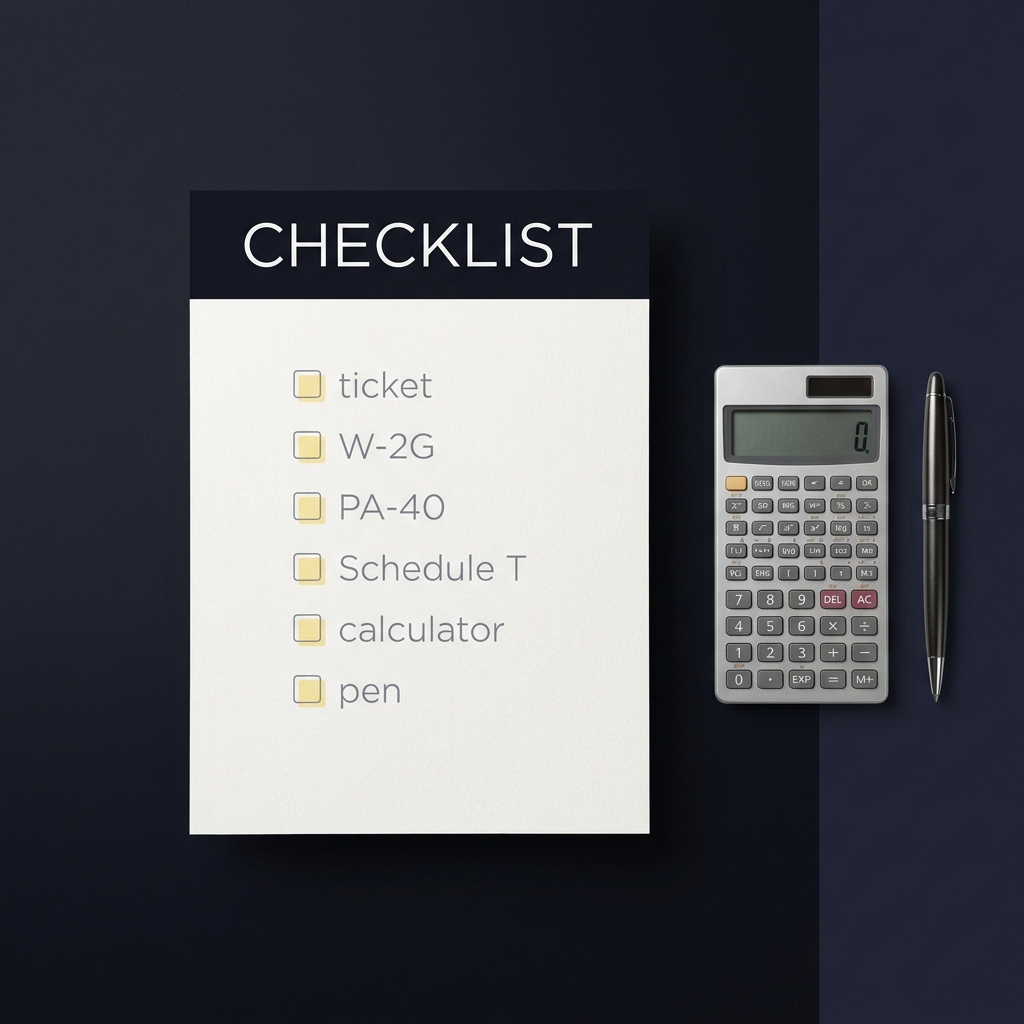
Checklist of immediate actions
Immediate steps are simple: preserve the ticket and payout proof, watch for Form W-2G, estimate federal tax using your marginal rate, and plan to report the prize on federal Form 1040 and on PA-40 Schedule T at tax time Instructions for Forms W-2G and 5754. Visit Funded Plays for more.
No. A $1,000 prize is typically paid without federal withholding because mandatory withholding starts at $5,000, but the prize remains taxable and must be reported on your federal return.
Pennsylvania applies a flat 3.07 percent personal income tax to gambling and lottery winnings, so a $1,000 prize results in $30.70 of state tax due at filing.
No. Pennsylvania does not allow taxpayers to deduct gambling losses against winnings on the state return, though losses may be deductible federally if you itemize and keep good records.
References
- https://www.irs.gov/publications/p525
- https://www.revenue.pa.gov/TaxLawPoliciesBulletins/TaxGuidance/Documents/pitguide/PITG_Chapter_12.pdf
- https://www.irs.gov/instructions/iw2g
- https://www.irs.gov/taxtopics/tc419
- https://www.palottery.state.pa.us/Claim-Prizes/Tax-Information.aspx
- https://www.revenue.pa.gov/FormsandPublications/FormsforIndividuals/PIT/Documents/2024/2024_pa-40_t_in.pdf
- https://www.fundedplays.com/challenges
- https://www.fundedplays.com
- https://www.fundedplays.com/blogs
- https://www.fundedplays.com/blogs/how-fundedplays-evaluations-work
- https://www.pa.gov/agencies/revenue/forms-and-publications/pa-personal-income-tax-guide/gambling-and-lottery-winnings
- https://www.palottery.pa.gov/about-pa-lottery/how-to-claim-your-prize.aspx