
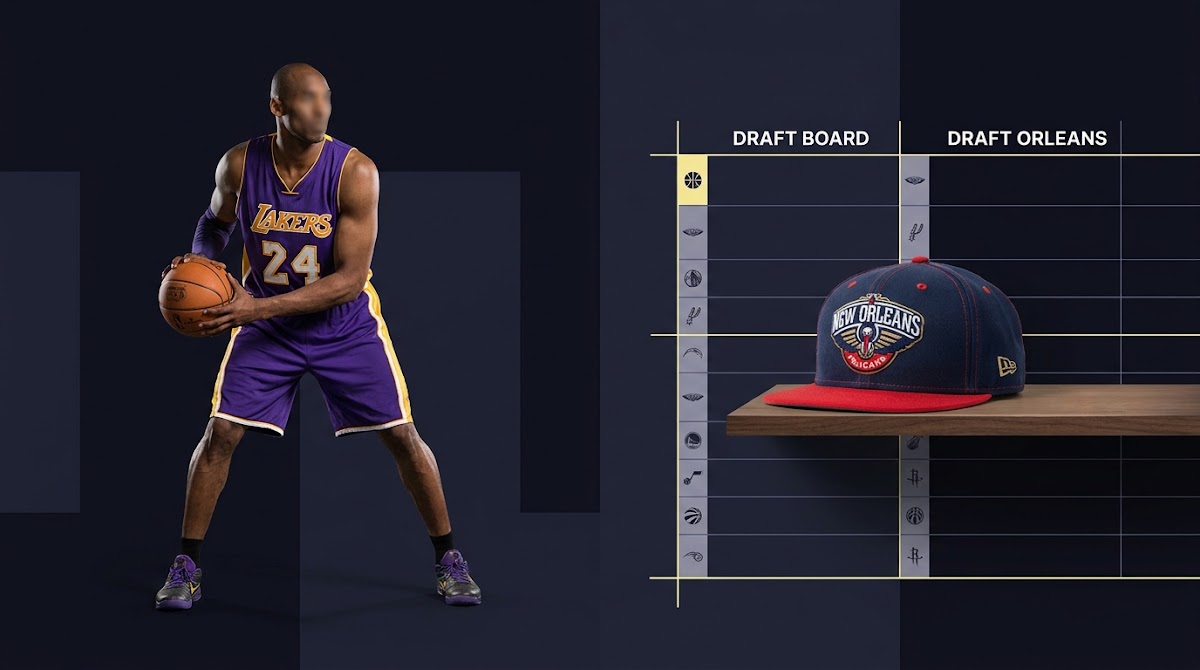
Quick answer and why this trade still matters
Short answer: in strictly short-term terms the Los Angeles Lakers were the clear winner because the trade led directly to the 2020 NBA championship; the longer-term accounting for New Orleans remains conditional and depends on how acquired assets and deferred picks are converted over time, which leaves room for the Pelicans to make up ground.
This piece uses a simple short-term versus long-term framework to explain that verdict, laying out the exact trade components, the immediate payoff for Los Angeles, Anthony Davis's sustained impact, how New Orleans actually used its assets, and the deferred pick detail that keeps the final winner question open.
Test your trade analysis skills with structured prediction challenges
For more evidence-driven trade breakdowns and frameworks you can follow our coverage and sign up to get structured trade analyses rather than hot takes.
The analysis that follows will use measurable outcomes where available, and flag where the ultimate value remains conditional rather than settled.
What exactly was exchanged in the 2019 trade
The central terms sent Anthony Davis to the Lakers while New Orleans received a package headlined by Brandon Ingram, Lonzo Ball, and Josh Hart, plus multiple first-round assets and pick swap or future first provisions, which together created both immediate roster pieces and future draft optionality for the Pelicans; the original trade terms are documented in reporting from the time.
Listing the main components in plain terms helps separate which parts of the return were ready-made NBA contributors and which were future-facing assets. The players sent to New Orleans were Brandon Ingram, Lonzo Ball, and Josh Hart, each with varying roles and timelines coming out of the deal.

Beyond the named players, the transaction included multiple first-round picks and pick-swap language that gave New Orleans optional access to additional selections in future drafts, provisions that increase a receiving team’s flexibility without guaranteeing specific outcomes.
Immediate outcomes: Lakers' 2020 title and roster impact
The most concrete immediate outcome was Los Angeles winning the 2020 NBA championship after acquiring Anthony Davis, a definitive team-level result that weighs heavily when calling short-term winners in blockbuster trades, as documented in the official recap of that season.
Short-term: the Lakers, because the trade produced the 2020 championship and multi-year elite production from Anthony Davis; Long-term: unresolved, dependent on draft conversions and player development
Anthony Davis played a primary role alongside LeBron James during that title run, helping solidify the Lakers as a championship team in the window opened by the trade, which is a clear one-year payoff metric for franchise decision making.
Anthony Davis after the trade: sustained elite performance
Anthony Davis continued to deliver high-level two-way production in the seasons after the trade, earning league recognitions that signal durable star value rather than a single-season spike; his 2023-24 All-NBA Second Team selection is part of that documented record.
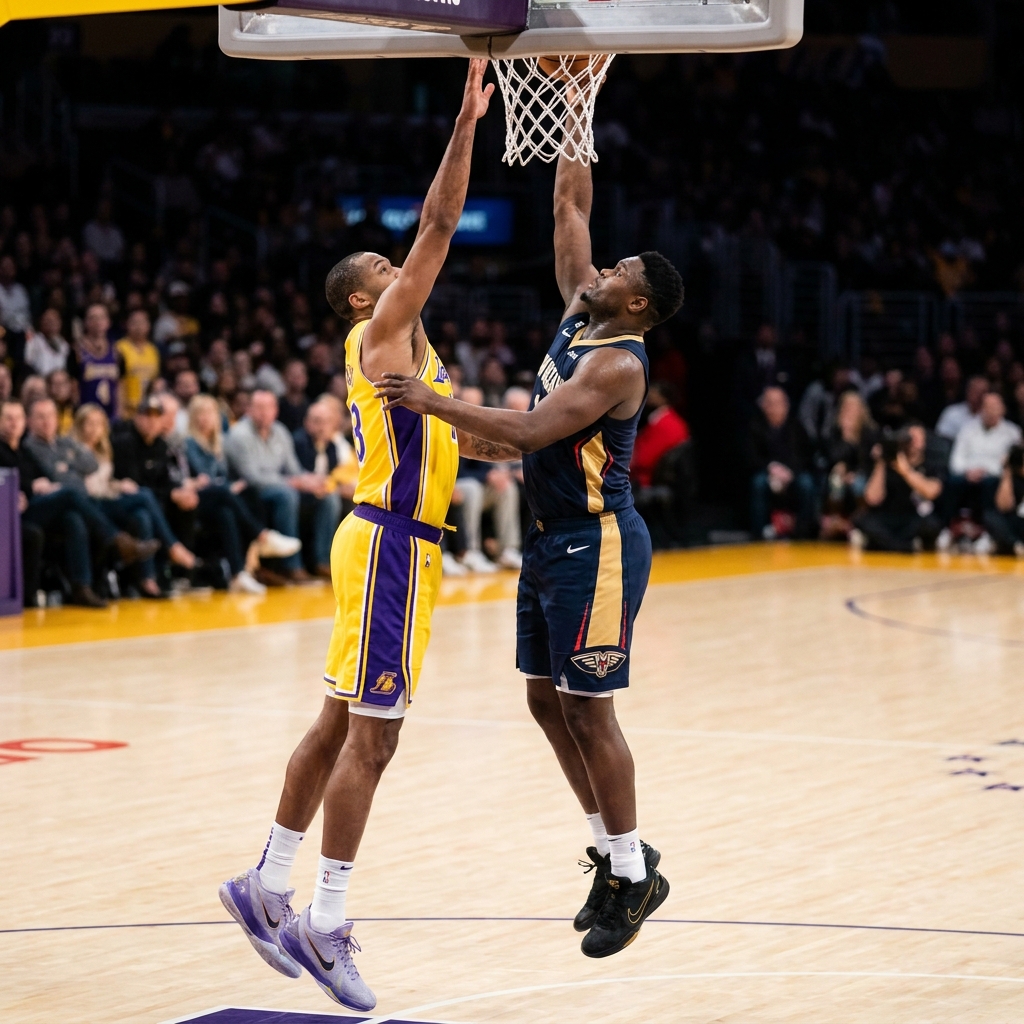
In addition to offensive recognition, Davis's defensive honors in 2023-24 provide supporting evidence that his acquisition produced multi-year on-court value beyond the title window, which shifts the trade evaluation from a one-off championship purchase to a longer stretch of elite production.
How New Orleans converted assets: draft picks and development
Part of New Orleans's return was realized through draft activity: the Pelicans used the 2022 pick-swap outcome to select Dyson Daniels at No. 8, a concrete conversion of one of the trade-linked draft opportunities into a young roster piece.

Draft picks translate into long-term roster value only when development and fit align, so the Pelicans' path to a long-term win rests on whether pieces like the No. 8 pick and other role players become consistent starters or tradeable assets.
The deferred 2025 pick: why timing matters for long-term value
One important structural detail is that New Orleans deferred the Lakers' owed 2024 first-round pick to 2025, a step that postpones when the asset will be realized and thus affects the timeline for judging the trade's full value. Official reporting on the deferral provides the transaction detail.
Deferring a pick to a later draft can preserve upside because draft depth and team situations change year to year, but it also shifts the uncertainty window farther into the future, leaving the ultimate payoff dependent on later front-office decisions and draft outcomes. See reporting that explains the Pelicans' rationale for deferring some picks for potential upside: analysis of the deferral.
watchlist for tracking pick and draft outcomes
update quarterly
Because the deferred selection did not arrive immediately, New Orleans maintained optionality into the 2025 draft cycle; how that optionality is used will determine whether the Pelicans ultimately tilt the balance back toward a long-term win. See contemporaneous reporting on the timing of the deferred selection: report.
Short-term winner vs long-term verdict: a balanced assessment
The clearest evidence-based short-term conclusion is that the Lakers were the winner in immediate terms owing to the franchise title produced after acquiring Davis; a championship is a discrete, observable outcome that heavily influences winner calls in blockbuster trades, making Los Angeles the short-term victor.
At the same time, the Pelicans' package contained multiple paths to future value through drafted players and deferred picks; those elements create a conditional long-term case that remains unresolved until development and draft conversion are observed over multiple seasons.
A clean framework to judge any blockbuster trade
To evaluate any major trade systematically, separate outcomes by time horizon: immediate (season to season), medium (two to four years), and long (five-plus years). This time-horizon split clarifies whether a trade bought a current championship window or stocked future optionality (see our blog).
Next, weight components by certainty. Proven star production and established starters are high-certainty assets, while draft picks and swap rights are lower-certainty, higher-upside assets that depend on scouting, development, and roster context. Finally, apply a simple checklist to any trade to make a repeatable call.
- List concrete, measurable wins such as championships or All-NBA honors.
- Inventory future-facing assets like draft picks and deferred provisions.
- Map development timelines for young players and set review windows at one, three, and five years.
Decision criteria for fans and front-office watchers
When deciding if a trade remains a win over time, track measurable criteria: championships and playoff results, repeated All-NBA or All-Defensive honors for acquired stars, the draft positions and real playing outcomes of picks, and how role players fit into long-term rotations. For details on how our evaluations work, see how our evaluations work.
Use fixed tracking windows such as 1-year checks for immediate payoffs, 3-year reviews to assess development of drafted players, and 5-year summaries for final accounting of deferred picks and roster construction effects.
Common mistakes when declaring trade winners
A common error is placing disproportionate weight on immediate outcomes like a single championship without accounting for the deferred assets that have not yet converted to wins or productive players. That recency bias can flip if future drafts or development produce significant contributors.
Another typical pitfall is interpreting early statistical upticks as definitive evidence a trade will be a long-term success; small sample sizes and changing roles can mislead, so use multi-season tracking windows before calling a long-term winner.
Practical scenarios: how different outcomes would flip the verdict
Scenario one: if the deferred 2025 pick becomes a top selection used on a franchise cornerstone, the Pelicans could reverse the long-term ledger and make the trade a balanced or Pelicans-favoring result. The key point is that a high draft return plugged into a coherent development plan can outweigh an earlier championship in final accounting.
Scenario two: if New Orleans's acquired players from the trade develop into consistent starters who are core contributors or valuable trade pieces, those outcomes would increase the Pelicans' realized value from the original package and could narrow or invert the long-term comparison.
How this trade changes how we think about star-for-assets deals
Three practical lessons emerge. First, win-now acquisitions can be justified if they convert to championships, because a title is an objective outcome that validates short-term strategy. The Lakers captured that outcome in 2020, which is central to labeling them the short-term winner.
Second, teams receiving packages of younger players and picks must prioritize development plans and clear asset-conversion strategies; deferred picks and swaps extend optionality but require disciplined scouting and timing to deliver equivalent long-term value.
Third, evaluating such deals should never be a single-signal exercise: combine team results, individual honors, and realized draft outcomes over defined windows before issuing a final verdict on winners and losers.
Conclusion: concise takeaway and what to watch next
Bottom line: based on the available, documented outcomes, the Lakers clearly won in the short term because the trade produced the 2020 championship and Davis continued to perform at an elite level, while New Orleans retains conditional long-term upside tied to development and the deferred pick. Learn more at Funded Plays.
Three specific milestones to watch that will decide the final accounting are the realized outcome of the deferred 2025 pick, the development trajectory and role of Dyson Daniels and other young pieces acquired via the trade, and whether Anthony Davis adds further All-NBA or All-Defensive recognitions that extend Los Angeles's value window.
Revisit the verdict after those milestones have produced measurable outcomes; until then the most defensible call is a short-term Lakers win with an open long-term case.
Yes. The Lakers won the short-term outcome because the trade helped deliver the 2020 championship.
Potentially. New Orleans retains draft assets and development paths that could shift the long-term balance if converted into core contributors.
The realized result of the deferred 2025 pick is the single milestone most likely to change the long-term assessment.
References
- https://www.fundedplays.com/challenges
- https://www.nba.com/pelicans/news/pelicans-defer-rights-to-lakers-first-round-pick-to-2025
- https://www.cbssports.com/nba/news/why-pelicans-are-deferring-the-final-lakers-first-round-pick-from-anthony-davis-trade-until-2025/
- https://www.espn.com/nba/story/_/id/40252151/sources-pels-defer-lakers-first-round-draft-pick-ad-trade-25
- https://www.fundedplays.com/blogs
- https://www.fundedplays.com/blogs/how-fundedplays-evaluations-work
- https://www.fundedplays.com