
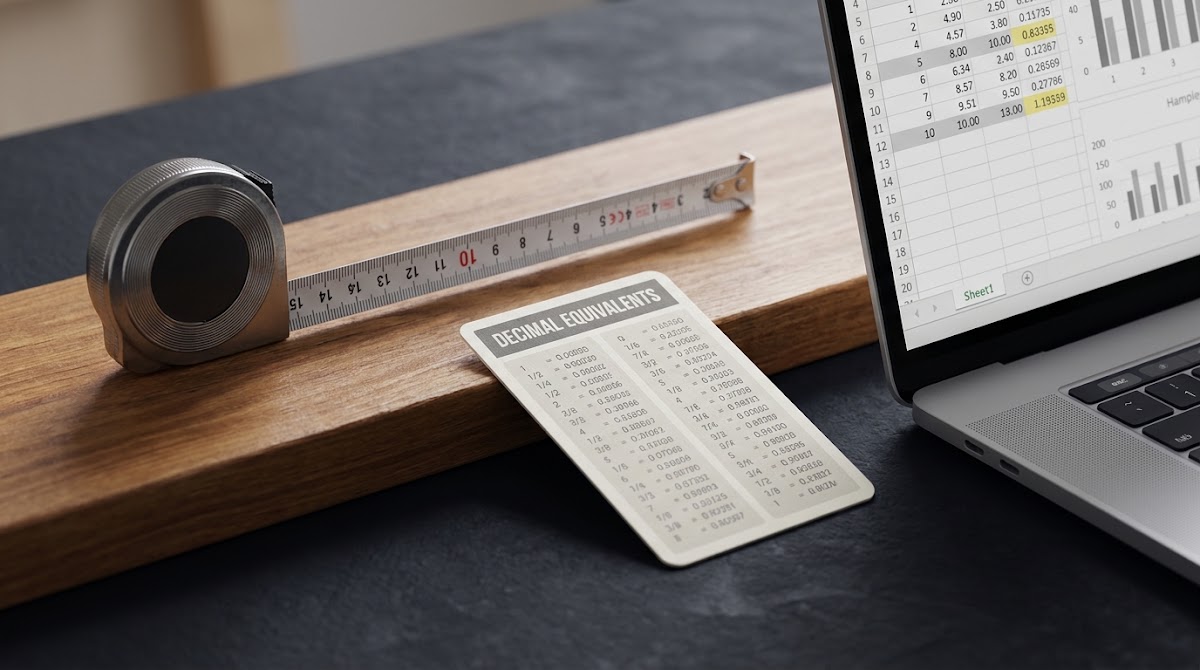
What the foot and inch mean today: definitions and context
The modern foot and inch have exact values tied to the international system of units, which makes conversions predictable and repeatable. The international foot is defined exactly as 0.3048 meter, so using it removes ambiguity in everyday work and professional measurement alike NIST notice on the survey foot.
The inch is defined exactly as 2.54 centimeters, and with 12 inches per foot this fixes 1 ft as exactly 0.3048 meter by definition, so 1 ft = 12 in = 0.3048 m exactly NIST reference on units outside the SI.
Because both units are fixed in SI terms, modern conversions have no unit-definition uncertainty; differences in results arise from rounding and the precision you choose, not from the units themselves BIPM SI Brochure.

Historically the U.S. used a separate survey foot for geodetic work, but that measurement has been retired and the international foot is the relevant standard for most projects today NOAA National Geodetic Survey notice. See also NIST announcement and the Federal Register notice on deprecation.
Quick, reliable formulas: convert ft and inches to decimal feet and back
Two very small formulas let you switch between mixed feet and inches and decimal feet quickly. To convert a mixed feet-inches value into decimal feet, use decimal feet = feet + inches / 12. To convert decimal feet back into feet and inches, take the whole feet and multiply the fractional feet by 12 to obtain inches NIST reference on units outside the SI.
Convert fractional inches to decimal inches, divide the total inches by 12 to get the fractional feet, and add that to the whole feet; document rounding for repeatability.
When you work by hand, follow these short steps: 1) convert fractional inches to a decimal inch if needed, 2) add inches/12 to the feet amount, 3) record the result with the precision you need. These steps keep the arithmetic clear and avoid common fraction mistakes NIST reference on units outside the SI.
Example, step by step: convert 5 ft 7 3/8 in to decimal feet. Start by turning 3/8 in into decimal inches: 3/8 = 0.375 in. Add that to 7 in to get 7.375 in. Now divide inches by 12: 7.375 / 12 = 0.614583333. Add to feet: 5 + 0.614583333 = 5.614583333 decimal feet, then round to the required number of decimal places for reporting NIST reference on units outside the SI.
Why exact unit definitions matter for accuracy and repeatability
Exact unit definitions remove uncertainty about what a foot or inch means, so the only remaining source of variation is how you round or truncate results. That makes a documentation step essential: record the precision you used whenever measurements are shared or used in procurement BIPM SI Brochure.
In practice, conversion tools and charts rely on the fixed definitions, so differences between sources usually stem from rounded display values rather than any core disagreement about unit size. For authoritative conversion aids and consistent presentation of results, reference official guidance from measurement authorities NIST metric conversion tools.
Where precision matters, the choice of rounding rule affects repeatability. Fabrication and surveying commonly require tighter tolerances than rough estimates, so document rounding to keep results defensible under review or during handoffs to other teams NIST conversion tools.
Using the kelly pipe calculator and decimal-equivalents chart
What the Kelly Pipe chart provides and kelly pipe calculator
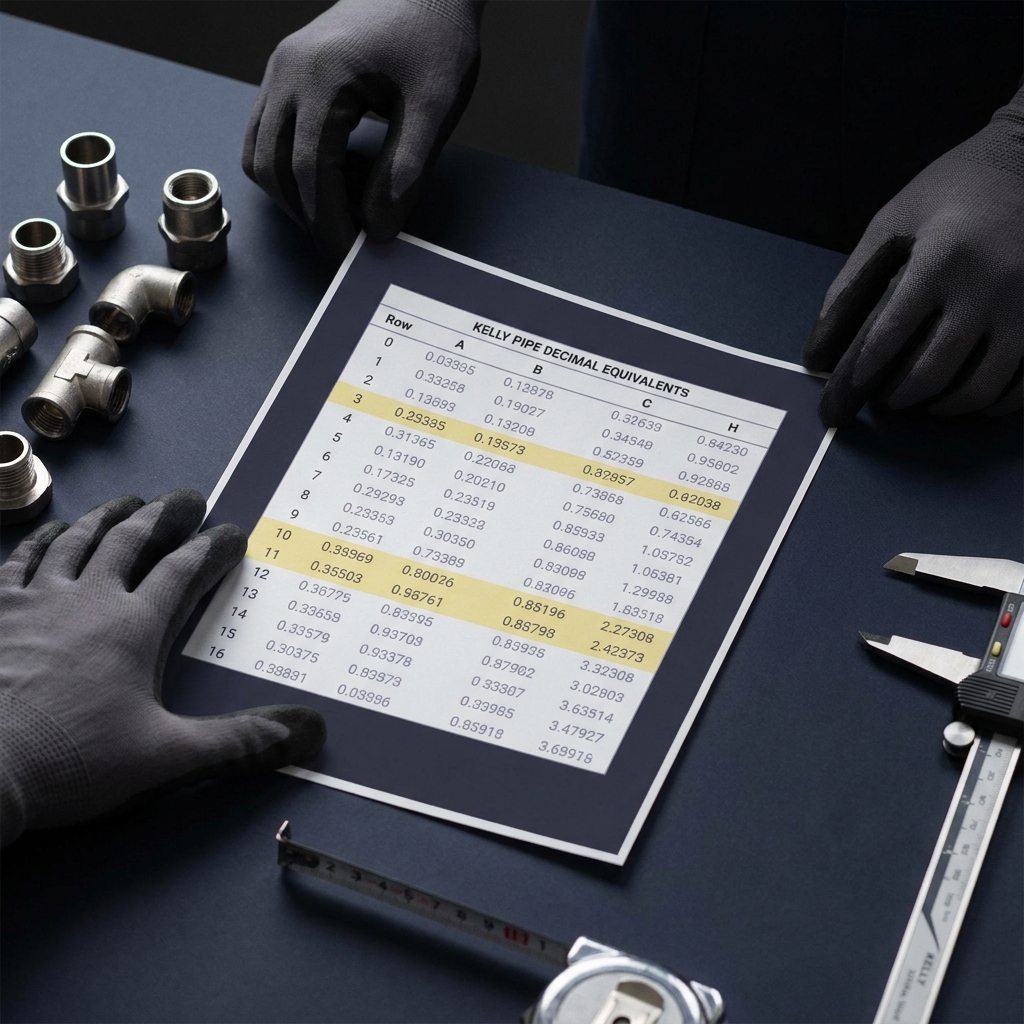
Kelly Pipe publishes a decimal equivalents chart that lists common fractional inch values alongside their decimal inch and millimeter equivalents, which is handy when converting fractional-inch shop dimensions into decimal inches or metric values for fabrication and pipework Kelly Pipe decimal equivalents chart.
How to use a chart in a simple ft-in workflow: 1) look up the fractional inch and read its decimal-inch value, 2) divide that decimal inch by 12 to get the fractional contribution in decimal feet, 3) add to the whole feet. Using a verified chart reduces entry errors from manual fraction arithmetic and speeds up repetitive lookups Kelly Pipe decimal equivalents chart.
Micro-example: convert 2 ft 4 5/16 in using a decimal equivalents chart. Look up 5/16 in = 0.3125 in, add 4 in to get 4.3125 in, divide by 12 to get 0.359375 ft, then add to 2 ft to report 2.359375 decimal feet. Round as required for your application Kelly Pipe decimal equivalents chart.
Quick fractional-inch lookups
For quick fractional-inch lookups during pipework or fabrication, a decimal-equivalents chart accelerates the process and reduces manual fraction errors.
Charts are especially useful on the shop floor or when preparing BOMs where many repeated fractional sizes appear. They reduce transcription errors that come from recalculating the same fraction many times and serve as a common table for teams to use when documenting parts Kelly Pipe decimal equivalents chart. See how Funded Plays evaluations work for related process notes.
Choose the right precision and rounding rules for your project
Common rounding granularities in construction and fabrication include nearest 1/8 in, 1/16 in, and 1/32 in. Each step tighter increases accuracy and may be required when parts must fit closely or tolerances are tight NIST metric conversion tools.
How to pick one: use nearest 1/8 in for early layout and quick estimates, 1/16 in for general carpentry and light fabrication, and 1/32 in for precision parts and finish work. Choose the granularity that keeps measurements compatible with the tools and cutting tolerances you will use NIST metric conversion tools.
Example of rounding application: starting from 5.614583333 decimal feet (from the earlier worked example), convert back to inches and then round to the nearest 1/16. Multiply fractional feet part 0.614583333 by 12 = 7.375 in. Round 7.375 in to the nearest 1/16 in = 7 3/8 in. Then present final value as 5 ft 7 3/8 in and document the rounding rule used NIST reference on units outside the SI.
Typical mistakes and how to avoid them
One common source of error is mixing legacy references to the U.S. survey foot with the international foot. Because the survey foot has been retired, using the international foot consistently avoids systematic mismatches between documents NIST notice on the survey foot. The NOAA story also outlines the transition on the NOAA site.
Another frequent arithmetic mistake is treating a fractional-inch value as if it were inches expressed in feet. For example, do not record 7 1/8 in as 7.125 ft; instead convert 7 1/8 in to decimal inches (7.125 in) and then divide by 12 to get the decimal-foot contribution NIST reference on units outside the SI.
Workflow checks that help catch such errors include always labeling measurements with units, converting fractions to decimal inches before dividing by 12, and verifying a sample of conversions with a chart or a trusted tool Kelly Pipe decimal equivalents chart.

Final verification checklist items: re-check conversions for a few random measurements, confirm that metric conversions use the international definitions, and annotate drawings or bills of materials with the rounding rule used so others can reproduce your results NIST metric conversion tools. See Funded Plays for the site homepage.
Worked examples and common scenarios
Example 1, full steps: Convert 5 ft 7 3/8 in to decimal feet and meters. Step 1, convert fractional inch: 3/8 in = 0.375 in. Step 2, total inches = 7 + 0.375 = 7.375 in. Step 3, decimal feet contribution = 7.375 / 12 = 0.614583333 ft. Step 4, decimal feet = 5 + 0.614583333 = 5.614583333 ft. Step 5, to convert to meters multiply by 0.3048 to get 1.711 m when rounded to three decimal places. These steps are deterministic because the inch and foot are defined exactly in SI terms NIST reference on units outside the SI.
When choosing how many decimal places to show, match the precision to the task. For rough material estimates two or three significant digits in decimal feet may be fine, while final fabrication instructions should use the granular rounding you selected earlier and note it on the drawing NIST metric conversion tools.
Example 2, batch convert a list for materials takeoff: set columns in a spreadsheet for feet, inches, fractional numerator, fractional denominator, and a computed decimal feet column. Use a formula that converts the fraction to decimal inches, adds whole inches, divides by 12, and adds the feet. This consistent approach keeps a long list auditable and reproducible NIST reference on units outside the SI.
Spreadsheet sample formula that you can adapt: if column A contains feet, B contains whole inches, C contains fractional numerator, and D contains fractional denominator, one approach is =A + (B + IF(D=0,0,C/D))/12. That expression converts the fractional inch safely and adds the whole inches before dividing by 12 to form decimal feet NIST reference on units outside the SI.
A practical conversion checklist for pipework and fabrication
Before you start, confirm the units in all drawings and specs are the international foot and inch, and pick a rounding granularity that matches cutting tolerances and part fit. Record that choice on the cover sheet or BOM so downstream teams use the same rules NIST metric conversion tools.
During conversion, use a decimal-equivalents chart for repeated fractional sizes or a spreadsheet formula for batch conversions. When in doubt, convert a sample value both ways and compare results before committing to cuts or orders Kelly Pipe decimal equivalents chart.
ensure repeatable conversions for pipework and fabrication
Use the chart for repeated fractional sizes
Final verification steps before ordering or cutting include re-checking a selection of converted dimensions, ensuring metric conversions use the exact 0.3048 m per foot factor, and printing or exporting the conversion column so the shop has a single source of truth NIST metric conversion tools.
Calculator walkthroughs and recommended workflows
Spreadsheet formula example for automation: if feet are in A2, whole inches in B2, and fractional inches as numerator and denominator in C2 and D2, use =A2 + (B2 + IF(D2=0,0,C2/D2))/12 to create a decimal feet column you can multiply by 0.3048 to get meters; document the cell formatting and rounding so results are reproducible NIST reference on units outside the SI.

Handheld calculator keystrokes for a single conversion, example 5 ft 7 3/8 in: enter 7, plus 3 divided by 8 to get 7.375, divide by 12 to get 0.614583333, add 5 to get 5.614583333. Multiply by 0.3048 for meters if needed. Work left to right with parentheses on scientific calculators for clarity NIST reference on units outside the SI.
Use a decimal-equivalents chart instead of manual fraction entry when many identical fractional sizes appear or when shop staff prefer lookup tables. Charts reduce keystroke errors and provide a common reference that teams can cross-check quickly Kelly Pipe decimal equivalents chart.
Conclusion and reliable next steps
Key takeaways: the inch and foot are exact in SI terms, conversions use very simple formulas, and rounding choices determine the reported precision. When accuracy matters, record your rounding and use verified tools or charts for fractional-inch values NIST reference on units outside the SI.
For authoritative definitions and conversion aids, consult the BIPM SI Brochure and NIST resources, and use a trusted decimal-equivalents chart for repeated fractional-inch lookups in fabrication and pipework Kelly Pipe decimal equivalents chart. For more practical workflows, see our blog.
Convert fractional inches to decimal inches, divide total inches by 12 and add to whole feet; document the rounding used for repeatability.
The U.S. survey foot was retired; using the international foot avoids mismatches because it is defined exactly as 0.3048 meter.
Use a chart for repeated fractional-inch sizes or shop-floor lookups to reduce manual entry errors and speed conversions.
References
- https://www.nist.gov/pml/us-survey-foot
- https://physics.nist.gov/cuu/Units/outside.html
- https://www.bipm.org/en/publications/si-brochure
- https://geodesy.noaa.gov/INFO/US_Survey_Foot.shtml
- https://www.nist.gov/news-events/news/2023/01/new-years-eve-2023-marked-retirement-us-survey-foot
- https://www.federalregister.gov/documents/2019/10/17/2019-22414/deprecation-of-the-united-states-us-survey-foot
- https://www.nist.gov/pml/weights-and-measures/metric-conversion-tools
- https://www.kellypipe.com/decimal-equivalents/
- https://www.noaa.gov/stories/thinking-on-our-feet-december-31-marks-end-of-us-survey-foot
- https://www.fundedplays.com/challenges
- https://www.fundedplays.com
- https://www.fundedplays.com/blogs
- https://www.fundedplays.com/blogs/how-fundedplays-evaluations-work