

Quick verdict: Is Kawhi Leonard a reliable fantasy option right now?
Kawhi Leonard can be a top fantasy contributor when active, but kawhi leonard props are best approached with caution because right knee management and game-by-game minutes are the dominant risk levers; managers should treat him as high-upside, conditional on confirmed minutes and late status.
His recent history includes a playoff absence caused by right knee inflammation, which underlines the need to track availability rather than assume full workloads in season-long and DFS lineups. NBA.com injury update
Kawhi Leonard can be highly valuable when active, but his right knee and related load management introduce meaningful minute uncertainty; verify late status and size exposure accordingly.
Follow-up quick points: Leonard withdrew from the USA roster in 2024 to protect his knee, the NBA Player Participation Policy creates predictable rest windows, and his per-game production when healthy supports strong fantasy value due to efficient scoring and two-way impact.
Bottom line, view Kawhi as a starter-level asset when you have confirmed minutes; otherwise, scale exposure and keep a ready replacement.
How health, load management, and the NBA policy shape prop lines and DFS targets
Right knee history and ongoing load management are the first filters to build around; an April 2024 absence at the start of a playoff series from right knee inflammation shows that even elite players are subject to conservative handling when a joint issue recurs, and that history informs market pricing for props and DFS entries.
Leonard’s decision to step away from Team USA in July 2024 is further evidence teams and players may prioritize longevity over full-minute nights, which leads to planned minutes caps and occasional maintenance scratches rather than unpredictable long-term absences. USA Basketball announcement
The NBA Player Participation Policy, in force since 2023-24, formalizes how teams disclose planned rests and governs availability in back-to-backs and national TV windows, which directly affects whether props tied to minutes or usage should be counted on as reliable. NBA Player Participation Policy
Game-day signals that move markets include the official status (probable, questionable, out), coach language about a minutes cap, and whether the game sits inside a back-to-back or a marquee broadcast window; each of these commonly appears in the final morning update and shapes how books and DFS projections shift.
Practical example: if Leonard is listed probable but coaches mention a maintenance plan or an expected minutes cap, scoring props and high-usage projections should be downgraded; conversely, a confirmed full practice and no minutes conversation typically restores baseline projections for scoring and counting stats.

Reading prop markets: which player props on Leonard tend to be most reliable
Scoring props are the most obvious target because Leonard’s ceiling comes from efficient scoring and a defined offensive role, but scoring lines are directly tied to minutes and usage and therefore rise and fall with minute certainty; use game logs and recent usage to estimate how a minutes cap would lower a point total.
Two-way counting stats, like steals and blocks, can provide underpriced upside when minutes are full because Leonard’s defensive activity contributes incremental fantasy value, but they are inconsistent when minutes are limited, so treat these as low-floor, medium-ceiling plays rather than core bets. Basketball-Reference player page
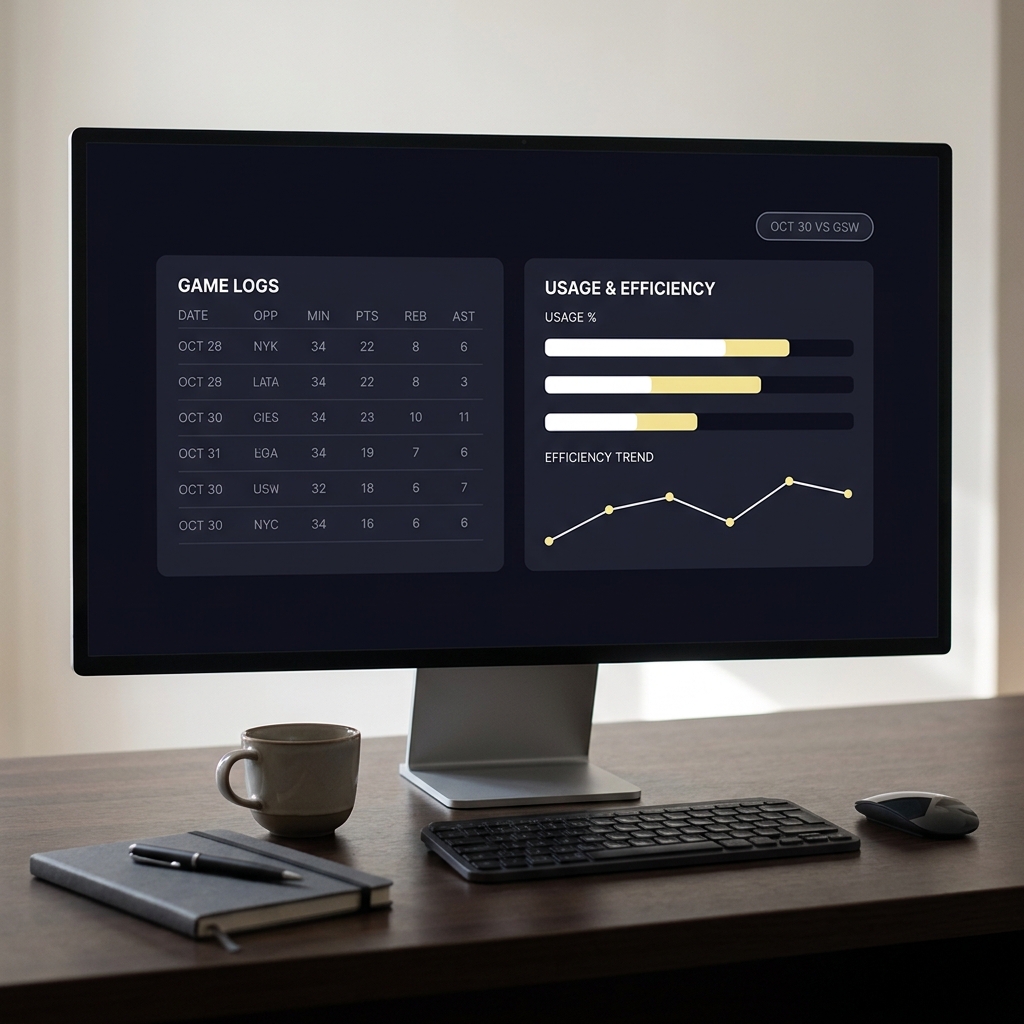
Usage and shot attempt indicators on game logs and splits are the technical inputs that move probability estimates; monitor season and recent splits for minutes-to-points conversion and look for stable usage rates that support a specific scoring prop.
Before locking any prop, confirm status and projected minutes; late-swing scratches or cap announcements will often force a pivot, and props are more sensitive to these shifts than many season-long decisions. NBA.com player profile
Practice conditional lineup and prop pivots with challenge-style simulations
Check game-day status 60 minutes before lock and set conditional bets or DFS pivots if Leonard’s status or minutes projection changes.
Action step: if you want a practical order, prioritize scoring props only after minutes look secure, use defensive counting stats as upside plays in confirmed full-minute slots, and avoid large single-prop exposure when any load-management language appears.
A simple start/sit framework for season-long leagues
Checklist for starting Leonard: start him if he is listed probable or probable with no reported minutes cap and the matchup does not present back-to-back rest risk; confirmed practice reports and no load-management language are strong positive signals.
Bench triggers include an official out, a maintenance scratch in the morning, explicit minutes caps reported by coaches, or if the game is a back-to-back and league disclosure hints at rest under the Player Participation Policy. NBA Player Participation Policy
Example decision: you have Leonard and a strong streaming option on the wire; if Leonard is probable but the coach mentions a 20-25 minute cap, bench him in favor of secure 30-35 minute players to protect weekly floor and category coverage.
Lineup insurance: keep one high-floor wing or forward with multi-category production on your bench as a handcuff for Leonard, and prioritize players who cover scoring and defensive counting stats if Leonard’s minutes are uncertain.
Remember: projections depend on final minutes; nothing is guaranteed. If your league locks earlier than tip, plan conditional swaps and communicate with your league manager to handle late scratches cleanly.
When minutes are uncertain, cap single-event exposure and favor smaller, more flexible positions in multi-entry tournaments; limit core exposure to sizes you can accept losing without harming your bankroll or weekly roster construction because late-minute changes are the primary source of outsized losses.
Contract stability, such as Leonard’s multi-year extension in January 2024, supports a predictable role when healthy but does not remove minute risk, so use role confidence to size exposure while reserving a buffer for game-day minute management. Clippers contract announcement
Suggested approach templates: for single-game prop risk, allocate a modest percentage of your prop bankroll to Leonard if minutes are uncertain; increase to a larger share only after confirmation. For DFS, prefer smaller lineups or single-entry plays in slates where rest risk is higher and multi-entry exposure where you can hedge across pivots.
Product resources can help with conditional lineup management and challenge-style simulation for risk sizing when you want to practice pivoting under late news.

Conservative rules: assume a baseline minutes floor and size as if Leonard could be cut by 20-30 percent of projected minutes on short notice, then increase allocation if final reports remove any caps.
Common mistakes managers make with Kawhi-related props
Chasing a single big game is a frequent error; a high-scoring night can be an outlier driven by matchup or overtime, and relying on one sample to inflate future lines ignores recent usage and minutes context. Basketball-Reference game logs
Ignoring minute risk or maintenance scratches is another top mistake; failing to check the final hour status has caused significant lineup damage in both season and DFS play because Leonard’s minutes are often the deciding factor for whether a prop hits the needed threshold.
Using stale season averages without checking splits and game logs is risky; averages smooth over capped nights and maintenance rests, so validate any projection against recent trends and usage indicators before committing to a prop or lineup move.

Quick checks to avoid mistakes: verify official status, look for coach comments on minutes, and keep a clear alternate plan for each locked slot so you can pivot instantly if news arrives.
Sample scenarios: what to do with props and lineups in three common game-day cases
Case 1: Probable start with a minutes cap. If Leonard is probable but the team signals a minutes cap of, say, 20-25 minutes, downgrade scoring props aggressively and favor lower-line counting stats or bench Leonard in season lineups if you have a secure alternative; in DFS, shift to a smaller exposure or a single contrarian entry that assumes lower minutes.
Case 2: Confirmed full minutes. If the team confirms no cap, practices are normal, and there are no back-to-back concerns, treat Leonard as a high-upside core play and favor scoring props and usage-tied props; increase DFS exposure and consider stacking correlated teammates when it helps fill categories.
Case 3: Questionable or out. If status is questionable with a morning update leaning toward out, pivot entirely: remove Leonard from season lineups and use your handcuff or a streaming target, and in DFS switch to an alternate core or a lower-cost pivot to preserve upside while removing minute risk.
Quick game-day monitoring steps for Leonard
Check reports 60 and 10 minutes before lock
Step-by-step example: you have a prop on Leonard for over 20 points. At T-minus 120 minutes he is listed probable. At T-minus 60 minutes, the coach mentions a 22-26 minute plan. Move to a reduced exposure or cancel the prop; in season play, bench for a safe 30-minute player to protect floor.
Use the checklist as an operational habit: confirm status at 60 minutes, re-check at 15 minutes, and finalize pivots within five minutes of lock unless you have conditional tools that allow late changes.
Using public stats and game logs to set realistic prop expectations
Which stats matter: per-36 numbers normalize for minutes and help convert a projected minutes plan into expected counting outputs, while usage rate and true shooting give context on scoring efficiency that shapes realistic point props.
Interpreting game logs and splits: look for consistent ranges rather than single peaks; a sequence of similar minutes and usage over several games creates a more reliable baseline than an isolated 30-plus minute night that might be an exception. Basketball-Reference game logs and splits
Official sources for injury updates and status include NBA.com and team communications; cross-referencing these with trusted local beat reports reduces surprises since some disclosures appear first in beat articles before formal league updates. NBA.com player profile and news
How to convert: take a projected minutes number, apply a per-minute points expectation from recent games, and adjust for matchup difficulty; when minutes drop below your threshold, shift to lower-line props or avoid single-large bets.
DFS specifics: correlation, stacking, and ownership strategy for Kawhi situations
When to stack teammates: if Leonard is projected for full minutes and a teammate benefits from his presence via secondary creation or spacing, stacking can amplify upside; avoid stacking when Leonard’s minutes are uncertain because teammate usage may not compensate for his absence.
Ownership is driven by minutes certainty; uncertain minutes often lower ownership projections, creating contrarian opportunities if you have conviction on an underpriced minutes outcome, but this is higher variance and should be sized accordingly. NBA.com injury context
Contest choice: in slates where rest risk is elevated, single-entry and small-field contests reduce the damage from sudden scratches, while multi-entry allows you to hedge across different minute scenarios by diversifying pivots and correlated stacks.
Tip: if you expect a late confirmation of full minutes, build a core that is easy to trim for a late pivot and set aside funds to take advantage of favorable ownership shifts after news breaks.
Game-day monitoring checklist: 30-minute and 5-minute rules
30-minute rule: verify the official status with the league and team report and watch for coach comments about minutes; if any load-management language appears, treat props and DFS exposure as tentative until the 5-minute check.
5-minute rule: final confirmation matters; if Leonard is downgraded or removed within five minutes of lock, pivot immediately and move to pre-planned replacements rather than chasing last-second upside.
Reliable sources to watch in the final hour include the official league injury feed, team accounts, and verified beat reporters who cover the Clippers; the Player Participation Policy can require late public disclosures that change how you should size exposure in the final minutes. NBA Player Participation Policy
When handling last-minute scratches, communicate with your league manager if necessary and use an organized set of replacements to avoid rushed poor decisions.
Long-term season value: projecting Leonard across the rest of a season
Contract context: Leonard’s January 2024 multi-year extension establishes role stability when healthy and supports a baseline valuation in redraft and keeper leagues, but it does not remove the operational need to monitor minutes and health on a week-to-week basis. Contract announcement
Expected usage when healthy is based on career production and recent-season profiles that show efficient scoring combined with defensive contributions, which together form the upside case for season totals even if some games are reduced by load management. Career and recent stats
Season risk factors to watch include right knee maintenance plans, cumulative minutes in heavy stretches, and how the team handles return-to-play after any minor flare-ups; these elements determine whether projections should be trimmed for totals and trade value.
Trade guidance: buy low only when you have a high-confidence replacement plan or roster depth to cover probable rest nights; sell high when league schedules create sustained rest windows or when the owner lacks bench depth to absorb scratches.
If Leonard is out or limited: replacement and roster strategies
When Leonard is out, prioritize replacements who supply the same categories you lose most: reliable scoring plus defensive counting stats.
Streaming targets should be chosen by matchup and projected minutes; a player with a stable 30-35 minute projection on a favorable matchup is better than a high-upside wing with uncertain playing time.
Trade considerations: if you need weekly scoring stability, trade for a player with confirmed minutes and multi-category production; if you can tolerate variance, target upside wings that benefit from increased usage when matchups or rotations shift.
Closing summary and practical checklist for props and season lineups
Key takeaways: monitor Leonard’s right knee status, respect the NBA Player Participation Policy when evaluating back-to-backs and marquee windows, verify projected minutes before locking props, and size exposure conservatively when uncertainty exists. NBA.com player page
Printable top 5 checklist: 1) Check official status at 60 and 15 minutes before lock. 2) Watch for coach language about minutes caps. 3) Convert projected minutes to per-minute expectations using recent game logs. 4) Size exposure based on minutes certainty. 5) Keep a clear replacement plan ready.
Final note: Leonard is high-upside when active, but outcomes depend on health decisions and league policies; treat him as a conditional core asset and plan accordingly.
Sources and further reading
Main references used include the April 2024 injury update about right knee inflammation, USA Basketball’s announcement of the withdrawal, the NBA Player Participation Policy, and player stat pages for game logs and splits from Basketball-Reference and NBA.com. April 2024 injury update
Treat him as a starter-level fantasy asset when confirmed for full minutes; otherwise size exposure conservatively and have a ready replacement.
Avoid props if the team mentions a minutes cap, Leonard is listed questionable with vague status, or the game is part of a back-to-back and rest is likely.
Contract extensions support role stability when healthy, but they do not eliminate game-by-game minute or injury risk.
References
- https://www.nba.com/news/kawhi-leonard-knee-inflammation-clippers-mavericks-game-1
- https://www.usab.com/news/2024/07/kawhi-leonard-withdraws-from-usa-mens-national-team
- https://official.nba.com/player-participation-policy/
- https://www.basketball-reference.com/players/l/leonaka01.html
- https://www.nba.com/player/202695/kawhi-leonard
- https://www.nba.com/news/clippers-sign-kawhi-leonard-to-multi-year-contract-extension
- https://www.fundedplays.com/challenges
- https://www.fundedplays.com
- https://www.fundedplays.com/blogs
- https://www.fundedplays.com/blogs/how-fundedplays-evaluations-work
- https://basketnews.com/news-243327-final-kawhi-leonard-injury-status-announced-by-clippers-vs-pelicans.html
- https://www.rotowire.com/basketball/player/kawhi-leonard-3195
- https://www.cbssports.com/fantasy/basketball/news/clippers-kawhi-leonard-off-injury-report-529341/