
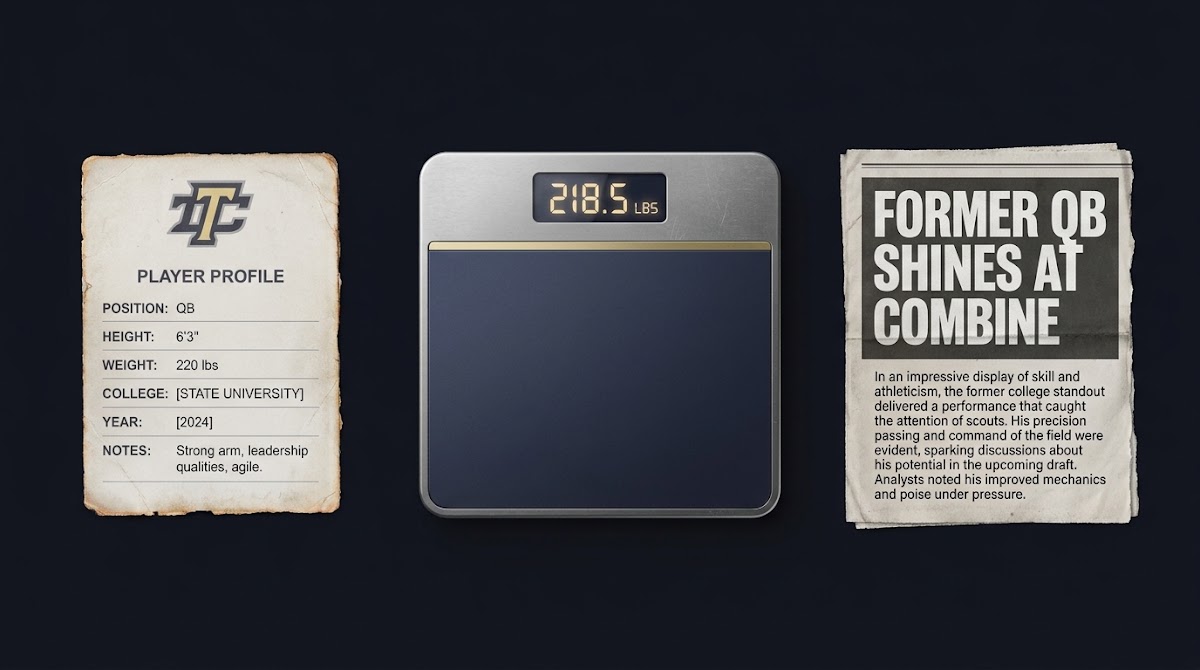
Short answer: who was the heaviest QB ever? (and why some searches such as "iowa nebraska point spread" return different results)
The most consistently documented heaviest quarterback to play in the NFL is Jared Lorenzen, with mainstream coverage reporting a playing weight of about 285 pounds during his pro career, and recent summaries reiterate that figure The New York Times obituary.
Explore structured challenges and improve verification skills
FundedPlays covers sports analysis and verification best practices but does not endorse wagering; use dated sources and official rosters to verify player data before using it in research or forecasts.
Contemporary media obituaries and team bios are the basis for this claim because undated roster snapshots can reflect different moments in a career and produce mixed results for queries such as iowa nebraska point spread when search engines prioritize different data sources.
That said, readers searching casual queries like iowa nebraska point spread may see inconsistent results because search engines mix live betting-related content with historical player data pages that are not always timestamped, while this article focuses on dated reporting and official listings to identify peak playing weights. For additional context on Lorenzen's weight and coverage, see the ESPN feature Ex-NFL QB Jared Lorenzen's lifelong battle with weight.
Why verifying a quarterback's listed weight matters
How weights are recorded over a career
Roster-listed weights can change from season to season, and a player's listed number on a team page might reflect a single roster snapshot rather than a peak playing season; for historical verification we therefore prefer dated reporting and official athletic releases when available ESPN obituary.
Why season and source matter
Combine or pro day measurements are ideal since they are measured events with timestamps, but not every quarterback has a combine record that corresponds to their peak pro-season weight; this means that season-level reporting, team bios and contemporaneous media coverage are often required to establish the most relevant playing weight.
Using dated sources prevents conflation of offseason anecdotes with documented playing weights and helps explain why different web queries sometimes yield different apparent answers.
How weights are recorded: roster entries, combine data and media reports
Roster entries and online databases
Team rosters and historical databases such as Pro-Football-Reference and Sports-Reference collect player weights from official sources, but many pages do not show when an entry was last updated, so treat undated snapshots with caution Pro-Football-Reference JaMarcus Russell page.
Combine and pro day measurements
Combine data are recorded at a single event and therefore provide a reliable timestamped measurement for prospects, but combine weight does not always match the listed in-season weight for a veteran player, so both sources can be useful for different verification questions.
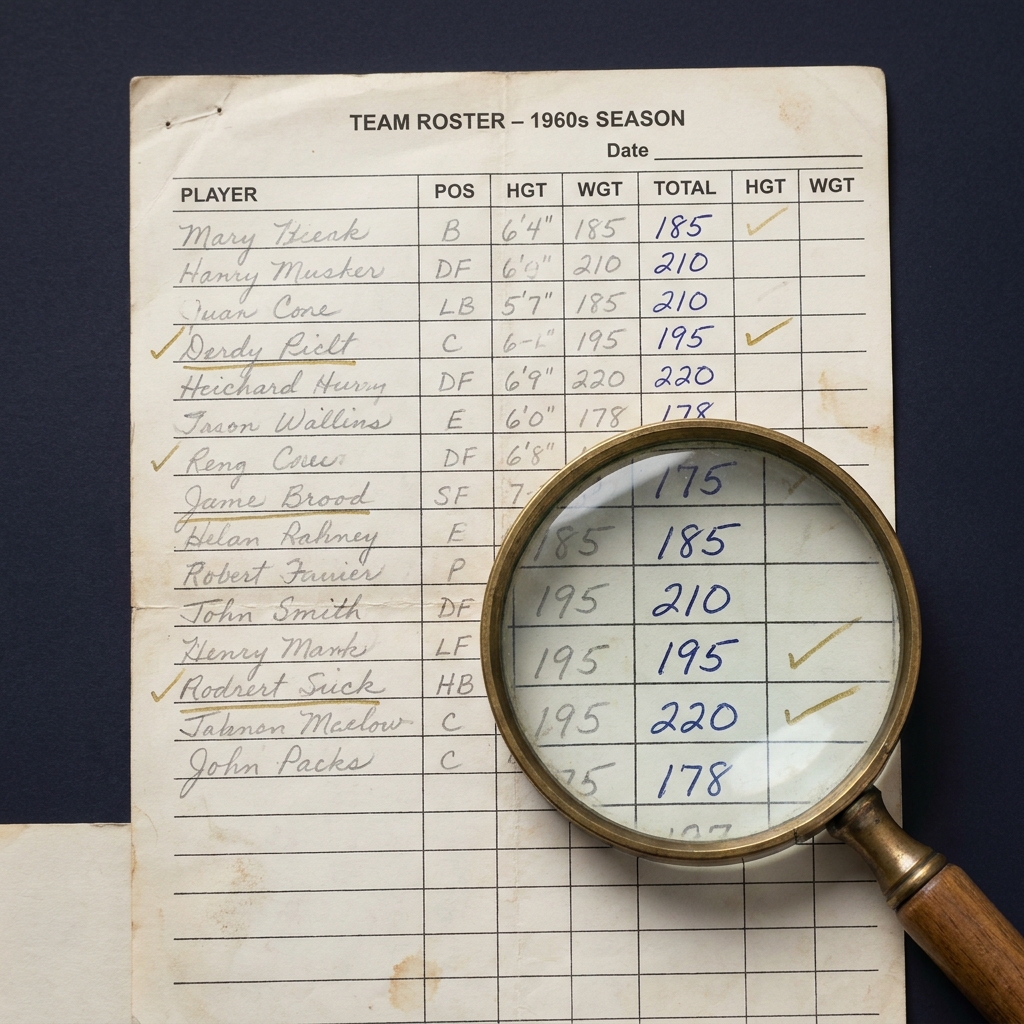
Media obituaries and contemporaneous national media reports often summarize a player's career and include commonly reported playing weights; for Jared Lorenzen this type of reporting is the primary reason he is frequently cited as the heaviest NFL quarterback in modern records The New York Times obituary.
When databases, team pages and news stories disagree, the dated national reporting and official team releases tend to carry more weight for historical claims about peak playing weight.
Method explained: how this article determined the ranking
Inclusion criteria
The inclusion rule for this piece prioritizes documented peak playing weight reported during a player's active seasons in dated sources, rather than anecdotal offseason numbers or undated roster snapshots; this minimizes errors when naming the heaviest quarterback in recorded NFL play ESPN obituary.
Source selection and dating rules
Sources used here are contemporaneous national media items, official college or team releases when available, and reputable historical databases that include citation dates; if a claim lacks a dated primary source it is excluded from the top verified list or noted as uncertain. See the Funded Plays blog for related methodology and explanation: Funded Plays blog.
How we treat conflicting listings
When sources conflict, this article favors the dated primary source and documents why an alternate number was not used; unexplained or late-added roster weights without a clear date are treated as lower-confidence evidence.
Top verified heaviest NFL quarterbacks
This section lists players for whom dated, contemporary reporting or official bios supply a playing-weight figure suitable for ranking.
Based on dated contemporary reporting and official bios, Jared Lorenzen is the most consistently documented heaviest quarterback in modern NFL play, commonly reported near 285 pounds.
1. Jared Lorenzen
Jared Lorenzen is the clearest, best-documented example often listed at about 285 pounds during his NFL career, and multiple mainstream pieces citing his playing weight support placing him at the top of the verified list The New York Times obituary. See his Pro-Football-Reference entry for the playing-weight listing: Jared Lorenzen stats.
2. JaMarcus Russell
JaMarcus Russell is commonly listed at around 265 pounds during his NFL years and appears among the heaviest modern-era quarterbacks on player data pages that reflect his listed playing weight Pro-Football-Reference JaMarcus Russell page.
3. Daunte Culpepper
Daunte Culpepper is another quarterback widely reported near 265 pounds during his NFL career, and historical player pages show that figure as his listed playing weight in multiple seasons Pro-Football-Reference Daunte Culpepper page.
Quick notes on other contenders: several large quarterbacks are often cited in the 240 to 255 pound range, and those listings appear across historical databases and team bios with varying timestamps.
Other notably heavy QBs and typical weight ranges
240 to 255 pound range examples
Quarterbacks frequently listed between 240 and 255 pounds include Byron Leftwich, Cam Newton, Logan Thomas and Ben Roethlisberger; these are roster-listed values found on historical data pages and team bios, though exact season peaks vary by source Pro-Football-Reference Byron Leftwich page.
How positional size has changed over eras
Over recent decades the physical profile of quarterbacks has expanded in some cases, with more examples of heavier mobil quarterbacks appearing in both college and pro play; however, the documented peak playing weights still cluster within the ranges noted above rather than far beyond them.
Confidence in these listings is lower than for the top verified names because many entries rely on undated roster snapshots or database values that are not accompanied by contemporaneous reporting.
College records: Jared Lorenzen and the FBS context
In college, Jared Lorenzen was frequently listed between about 275 and 290 pounds, and college-statistics and historical pages record him among the heaviest FBS starting quarterbacks of his era Sports-Reference college page for Jared Lorenzen.


FBS archives and national reporting tend to be better preserved than lower-division records, which means that claims about non-FBS heaviest quarterbacks often lack the dated documentation needed to include them in a verified ranking. For discussion of how we evaluate sources, see Funded Plays: Funded Plays.
For this article, college and professional listings are treated separately to avoid conflating a college-era peak with an NFL playing-weight claim unless a clear dated source ties them together.
Which weight should count: peak playing weight versus offseason numbers
When ranking heaviest quarterbacks, the preferred snapshot is the documented peak playing weight during an active season because it reflects the weight carried in competitive play rather than anecdotal offseason reports.
Verification checklist for peak playing weight
Record the source date
Offseason numbers are often anecdotal and can be exaggerated or out of date; prioritize season-era documentation and note the type of source when publishing a peak weight claim.
This approach reduces the chance of counting later or earlier weight snapshots that do not correspond to the player's active competition period.
Common mistakes when comparing QB weights
Undated database snapshots
A common error is to rely on an undated database page as the definitive measurement; always check for a publication or update date and prefer sources that timestamp their entries The New York Times obituary.
Mixing college and pro listings
Another mistake is mixing college-era weights with pro-season weights without clarification; the two measure different competitive contexts and should be treated independently when ranking historical size.
Relying on hearsay
Hearsay, unverifiable quotes or social media posts without a dated primary source should not be used to assert a player was the heaviest; when uncertainty remains, publish the uncertainty rather than an unsourced superlative.
Step-by-step: how to verify a historical player's peak playing weight
Step 1: Search for dated contemporary reporting such as national news pieces, obituaries or team releases that specify a playing weight and include the date of publication. For Jared Lorenzen, national obituaries serve as clear dated sources that report his playing weight ESPN obituary.
Step 2: Check official athletic department releases, team rosters and combine or pro day records for timestamped measurements; these can confirm or qualify the media numbers you find.
Step 3: Corroborate with reputable databases like Sports-Reference or Pro-Football-Reference while noting the date of each database snapshot and whether it cites a primary source.

Document the date and type of each source used so readers can follow the trail from claim to evidence and understand any remaining uncertainty.
Practical scenarios: what to do when sources conflict
When one source is dated and another is not, prioritize the dated primary source for the peak playing weight and explain why the undated source was not selected; transparent reasoning helps readers evaluate the decision.
For disputed or anecdotal claims without a dated, reliable source, treat the figure as unverified and avoid presenting it as definitive; instead, present the range and cite the most credible dated item available.
Quick reference: reliable sources to check for player weights
High-priority sources include national media items and official team or college releases; for Lorenzen the New York Times and ESPN obituaries are good starting points because they provide dated summaries of his career The New York Times obituary.
Reputable databases such as Sports-Reference and Pro-Football-Reference are useful for cross checking, but always note timestamps and prefer primary dated items when establishing a peak playing weight Sports-Reference college page for Jared Lorenzen.
Conclusion: the verified verdict and takeaways
Based on dated contemporary reporting and official bios, Jared Lorenzen is the most consistently documented heaviest quarterback to play in the NFL, commonly reported near 285 pounds in mainstream coverage The New York Times obituary. Use the verification checklist when checking other players, prefer dated primary sources and record the date and type of each source to avoid repeating unverified claims.
Use the verification checklist in this article when checking other players, prefer dated primary sources and record the date and type of each source to avoid repeating unverified claims.
Multiple dated mainstream reports and obituaries list Jared Lorenzen at about 285 pounds during his playing career, which is the most consistently documented figure for an NFL quarterback.
Use combine or pro day measurements when available for timestamped accuracy, but prefer season-era roster listings and dated media reports for peak playing-weight claims.
Only if a dated source explicitly ties a college-era weight to the player's competitive season; otherwise treat college and professional weights separately.
References
- https://www.nytimes.com/2019/07/03/sports/football/jared-lorenzen-dead.html
- https://www.espn.com/espn/feature/story/_/id/11382220/ex-nfl-qb-jared-lorenzen-lifelong-battle-weight
- https://www.espn.com/nfl/story/_/id/27003533/former-kentucky-qb-jared-lorenzen-dies-38
- https://www.pro-football-reference.com/players/R/RussJa00.htm
- https://www.pro-football-reference.com/players/L/LoreJa00.htm
- https://www.pro-football-reference.com/players/C/CulpDa00.htm
- https://www.pro-football-reference.com/players/L/LeftBy00.htm
- https://www.sports-reference.com/cfb/players/jared-lorenzen-1.html
- https://www.fundedplays.com/challenges
- https://www.fundedplays.com
- https://www.fundedplays.com/blogs
- https://www.fundedplays.com/blogs/how-fundedplays-evaluations-work