

What the moneyline means - definition and quick example
Basic definition, in sports betting what is the money line
A moneyline bet is a straight wager on which team or competitor will win an event outright. Unlike a point spread or totals market that adjusts the scoreline to balance action, a moneyline simply pays if the selected side wins and usually pushes or loses on ties depending on the market rules.
The payout on a moneyline converts directly from the posted odds, so favourites return a smaller profit per dollar staked while underdogs pay more if they win. This payout structure makes the concept easy to grasp but creates practical tradeoffs for bettors when evaluating expected value and risk.
Moneyline disadvantages include low payouts on favourites that raise break-even rates, bookmaker margin that lowers expected value, tie grading differences across markets, and higher variance from underdogs and parlays which increases drawdown risk.
For example, bettors often ask how implied probability maps to moneyline odds and what that means for required win rates. The next sections unpack that conversion and show why low payouts for favourites increase the break-even win rate.
How moneyline odds are priced - implied probability and break-even
Converting odds to implied probability
American moneyline odds encode an implied probability for each outcome. Converting the odds to that probability gives a transparent way to see what the market is pricing as the chance of a win and what a bettor needs to achieve to break even. When you view odds this way you can compare whether a perceived edge is large enough to overcome the bookmaker margin.
One common example used to illustrate break-even is a -200 favourite, which implies a required win rate of about 66.7 percent to break even on the stake, because the smaller payout demands a high success rate for profitability; this example is widely explained in industry resources Investopedia moneyline guide. Another accessible primer is available at Investopedia.
Understanding that conversion matters because the break-even threshold rises as the payout shrinks. That means even a modest bookmaker margin can push a favoured-moneyline strategy from plausible to difficult unless a bettor has a demonstrable, consistent edge.
Bookmaker margin and overround - why sportsbooks keep a structural edge
What the overround is
Bookmakers set odds to include a margin, commonly called overround or vigorish, which ensures the house expects a positive hold over time. The embedded margin reduces the expected value of any single wager compared with the raw implied probabilities implied by the odds. For more on sportsbook profit margins see SportsInsights.
Check margin and market choice before committing to a strategy
When comparing markets, check the implied overround and prefer markets where the margin is clearer; this helps you weigh whether the moneyline is the right market for a given idea.
For a practical reference, a symmetric two-outcome market priced at -110/-110 implies roughly a 4.54 percent total margin, which directly affects long-term expected value and why gamblers encounter an uphill aggregate return against sportsbooks Pinnacle article on overround.
Moneyline boards can be unevenly priced across outcomes, which can hide additional margin compared with symmetrical -110 markets; that hidden cost matters when you place many bets because the cumulative effect of the hold compounds across wagers.
Two-way versus three-way moneylines - rules and tie outcomes
Two-way markets and pushes
Moneyline formats differ by sport and market. In many two-way markets ties are treated as pushes, returning the stake, while in three-way markets such as standard soccer moneylines the draw is an explicit outcome and non-draw selections lose if the match is level. Always check grading rules before staking money on a market.
Soccer sportsbook rules provide a clear example where three-way grading changes both risk and expected outcomes for a bettor, so failing to note that distinction can lead to unexpected losses on otherwise straightforward selections FanDuel soccer rules.
The way ties are handled changes the effective probabilities you face. A bet that would push in a two-way format becomes an outright loss in a three-way market, which increases variance and alters how you should size stakes for the same perceived edge.
Why favourites often pay too little - break-even and expected value effects
Low nominal returns on favourites
Big favourites often return a small nominal profit per dollar staked, which raises the required win percentage to break even. For example, a -200 favourite pays a fifty cent profit on a one dollar stake and therefore needs a roughly 66.7 percent win rate to reach break-even by payout mechanics Investopedia moneyline guide.
Because bookmaker margin sits on top of that low payout, the effective hurdle for a bettor becomes even higher. Compared with markets like point spreads where pricing concentrates near even odds and the margin is visible, backing heavy favourites on the moneyline can be a less cost-efficient way to express a moderate edge.

That is not to say favourites can never be the right choice. If a bettor has a clear, repeatable edge and accounts for vig and variance in sizing, favourites can be part of a disciplined plan, but the structural cost of low payouts makes sustained profit more difficult for most recreational bettors.
How vigorish and industry hold reduce long-term bettor ROI
Industry-level sportsbook hold evidence
At the industry level, sportsbook revenue and regulatory reports show that operators retain a positive hold on wagers, which reflects the built-in vigorish and market dynamics. This industry-level advantage means that aggregate bettor returns are constrained unless bettors can consistently find inefficiencies American Gaming Association Commercial Gaming Revenue Tracker. Further reading on statistical decision-making is available at statistical theory of optimal decision-making.
Monthly regulatory reports from long-running markets also demonstrate persistent sportsbook win rates, which supports the point that the hold is not only theoretical but observable in reported revenue data Nevada Gaming Revenue Reports.
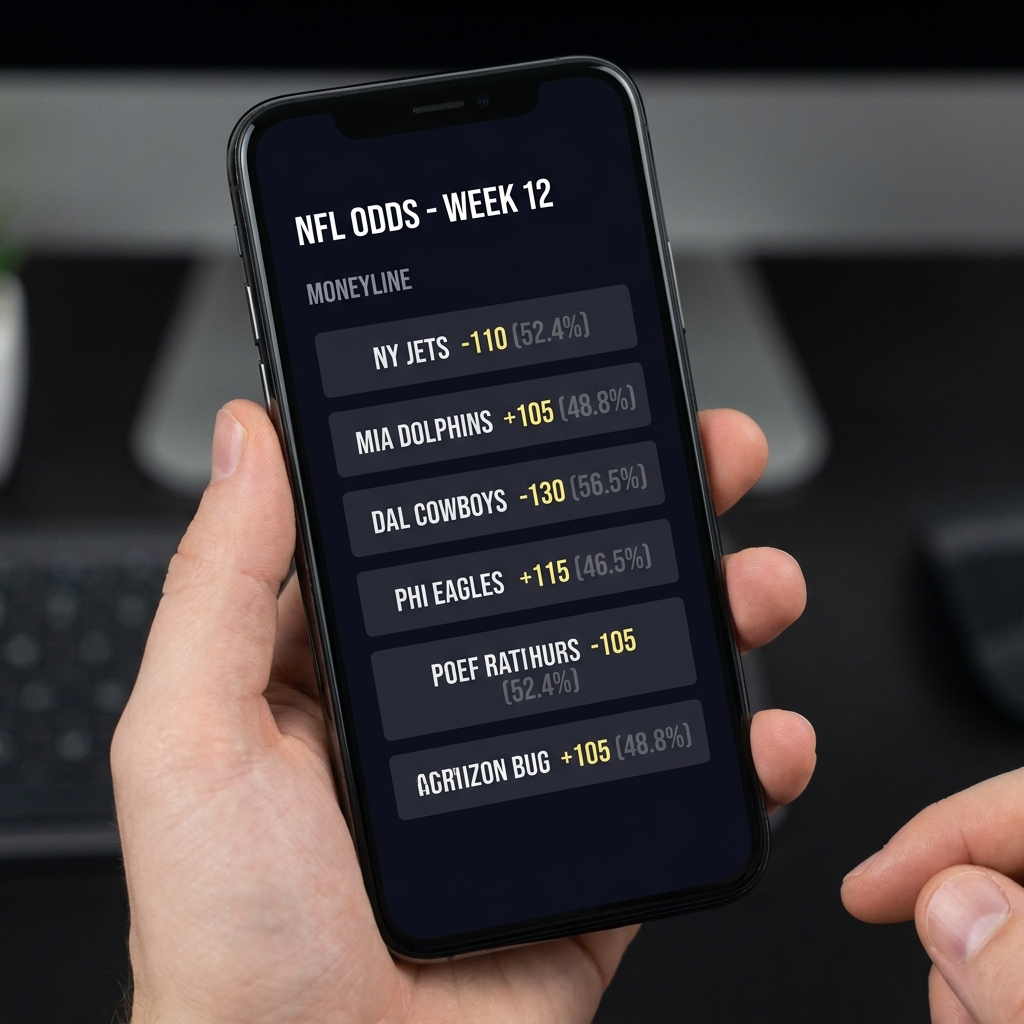
These observations are industry-level and do not preclude skilled individuals or disciplined systems from generating positive returns, but they do show the structural headwind most bettors face when relying heavily on moneyline markets without a systematic edge.
Variance, underdogs, parlays and bankroll drawdown risk
Variance basics for moneyline bets
Underdog moneylines pay more when they win but win less often, which increases variance and the likelihood of extended losing streaks if bet sizes are not adjusted. Higher variance demands more conservative sizing for sustainable bankroll preservation.
quick bankroll volatility checklist
use to compare strategies
Parlays multiply both payout and the bookmaker margin because each leg contributes its own implied overround, so a parlay that looks attractive in headline payout terms often carries a substantially higher cumulative hold than the equivalent singles, amplifying both upside and downside risk Pinnacle variance article.
Practical bankroll rules should reflect this. If you pursue underdog or parlay strategies, reduce unit size relative to your estimated edge and accept that drawdowns will likely be larger and more frequent than with lower-variance approaches.
When moneylines are comparatively efficient - and when to prefer other markets
Situations where moneylines offer value
Moneylines can be efficient when you identify a true mismatch with a clear edge, when liquidity is thin and you find mispriced underdogs, or in small markets where spreads are not offered. In those situations the outright bet simplifies the decision and can capture value that other markets do not show.
However spreads and totals often concentrate pricing near even odds, making the per-market margin easier to interpret and compare, which is one reason experienced bettors sometimes prefer those markets when the edge is marginal Pinnacle article on overround.
Use a short checklist when choosing markets: compare payout efficiency, check tie and grading rules, estimate the overround, and match bet size to variance. That process helps you decide whether the moneyline or an alternate market is the cleaner way to express a view. See our blog for related posts.
Market-by-market differences and timing - open questions and what data matters
Why sport and timing change moneyline margin
Margins vary by sport and market structure. Multi-outcome markets like soccer three-way moneylines typically imply a higher combined margin than two-outcome events, so the sport and market format should be part of any value assessment Pinnacle article on overround.
Timing matters too. Early lines may reflect limited liquidity and sharper books may adjust as sharp money arrives, so the same moneyline can look more or less efficient depending on when you compare it and which operator you use. Checking hold statistics and line movement helps identify when a market is mispriced relative to later consensus.
Because these factors vary, good practice is to gather sport-specific hold data, confirm grading rules for the operator, and compare markets over time rather than assuming uniform margins across sports or events.
Common mistakes bettors make with moneylines
Ignoring tie rules and grading
One frequent error is not checking whether a market is two-way or three-way and misunderstanding how ties are graded. That oversight can turn an otherwise small loss into a lost stake when a pushed result would have returned funds in a different market format FanDuel soccer rules.
Another common mistake is underestimating the cumulative effect of vig when repeatedly backing favourites or combining multiple moneylines. The margin that seems small on one bet compounds across many bets and can erode returns much faster than bettors expect.
Lastly, over-using favourites or parlays without adjusting staking to variance and edge is a behavioral pitfall. Strategies that ignore volatility will typically face larger drawdowns than expected unless sizing is conservative and evidence-based Pinnacle variance article.
Practical scenarios and worked examples (conceptual)
Comparing a favourite single moneyline vs spread
Consider a conceptual scenario where a favourite is available at a heavy moneyline price with a modest perceived edge. The moneyline pays little per dollar, which raises the required win-rate and makes the same edge less profitable than expressing it through a spread or alternate market priced near even odds. The mechanics of implied probability and payout explain why this occurs, and they are described in standard moneyline resources Investopedia moneyline guide.
When you stack several such moneyline bets, the bookmaker margin across legs increases the cumulative overround compared with taking individual spread bets at near-even pricing, which is why parlays and multiple moneylines can be a stealthy profitability trap.

These are conceptual comparisons rather than empirical claims. They are useful to guide decision making about market choice and stake sizing in realistic betting workflows; see how Funded Plays evaluations work.
Adjusting bet sizing and risk management for moneyline strategies
Sizing rules relative to edge and variance
When using moneylines, align stake size to your estimate of edge and to the higher variance of underdogs or parlay approaches. Practical approaches favor small fraction-of-bankroll sizing for high-variance bets and conservative scaling when margin is substantial.
Because bookmaker margin increases the required edge for profitability, it is prudent to reduce exposure unless you have reliable, repeatable evidence for an advantage. This is a risk-management measure, not a statement about impossibility of profit.
Conservative rules might include fixed unit caps, maximum drawdown limits, and reassessment triggers after streaks, all intended to preserve capital while testing information edges in a controlled way Pinnacle variance article.
Key takeaways and how to apply them when choosing markets
Summary of main disadvantages
Moneyline disadvantages include low nominal returns on favourites that raise break-even rates, embedded bookmaker margin that reduces expected value, differing tie-grading rules that change loss profiles, and higher variance from underdogs and parlays that increase drawdown risk. These points follow from the payout mechanics and industry-level evidence on bookmaker hold Investopedia moneyline guide.
Quick decision checklist: compare payout efficiency, check tie and grading rules, measure the implied overround, and match stake size to variance. Treat moneylines as one tool among markets and use clear criteria before choosing them for a strategy.
For readers who want to practice disciplined prediction without wagering real funds, platforms that use simulated funded accounts and structured evaluation challenges can be a way to test how these disadvantages play out in a controlled setting. Try the Funded Plays platform to practice this approach.

A moneyline is a straight bet on who wins, while a point spread adjusts the score to balance betting and typically prices near even odds; spreads can make margin easier to compare.
Not always; margins reduce expected value at the industry level, but skilled bettors or those who find consistent edges can still be profitable while accounting for the vig.
Parlays amplify bookmaker margin because each leg adds overround, which often makes them less efficient than well-chosen single bets unless you have a large verified edge.