
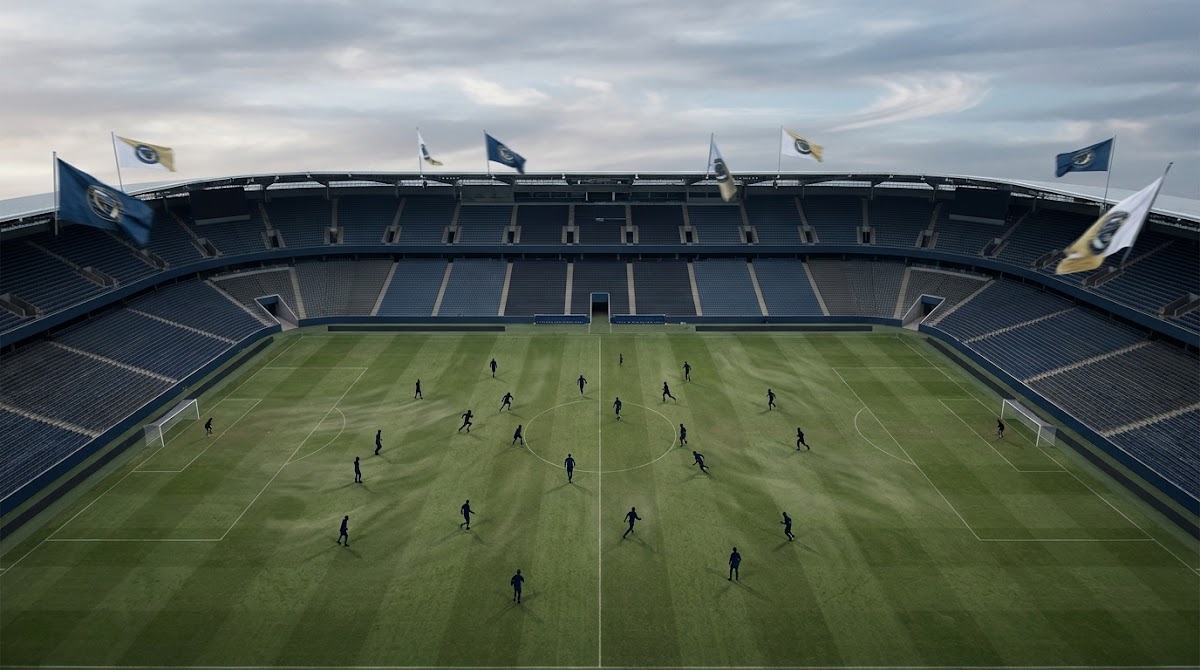
Defining weather effects for individual performance markets
Key terms and scope
How Weather Influences Individual Performance Markets
When people talk about weather and sports they often mean team outcomes. This article focuses instead on effects tied to a single participant, such as a quarterback's passing yards or a pitcher's strikeouts. An individual performance market is any wager or prop that settles on a single player's or participant's discrete outcome during a game.
For clarity, we use the phrase player-level outcomes to mean measurable events a single participant produces in a single contest. Game-time weather refers to short-term environmental conditions at or near the venue at the time play occurs. Our scope is practical and tactical: how those conditions can nudge expectations for discrete outcomes, not season-long conditioning or training effects.
Individual prop markets include examples such as a kicker making field goals, a wide receiver gaining receiving yards, or a tennis player winning a set.
Where team-level dynamics matter, we note them briefly, but the emphasis remains on measurable, player-specific changes that are meaningful for prediction markets and short-term forecasting. This approach keeps adjustments transparent and easy to document when tracking forecasts later.
A simple pregame monitoring checklist to capture key weather signals and their immediate implications
Keep entries brief and time-stamped
Why individual markets differ from team-level markets
Individual markets usually respond to weather through exposure and role sensitivity. A player's expected involvement and the nature of the actions they perform determine how much weather matters. For example, an outdoor kicker faces direct mechanical impacts from wind, while an offensive lineman sees less direct variance from a light rain.
Compared with team outcomes, player-level effects are typically smaller in absolute expectation but can change variance and settlement risk in ways that matter to disciplined participants. The goal in this section is to frame those differences so adjustments are proportional to the plausible impact.
Core weather variables that commonly matter
Temperature and its possible effects

Temperature affects player comfort, equipment performance, and sometimes ball dynamics. Cold conditions can stiffen muscles and reduce grip on balls, while extreme heat can increase fatigue and slow tempo for high-intensity actions. Adjustments for temperature should consider the sport, duration of play, and the specific action being forecasted.
For example, a football quarterback operating in near-freezing conditions may see a marginal decline in deep passing frequency due to reduced ball feel. The same temperature change indoors has no effect, which makes venue an essential cross-check before penalizing a projection.
Wind, precipitation and visibility factors
Wind is one of the most directly observable variables for single-player outcomes. It can influence trajectory for kicks, long passes, or high-arcing shots, and it can affect timing on throws and pitches. In many sports, wind both alters expected results and increases variance.
Precipitation and reduced visibility change handling and traction. Rain or wet surfaces can decrease yards after contact for receivers and make ball handling more error-prone for quarterbacks or pitchers. Fog or heavy spray that limits sightlines will typically reduce long-range attempts and favor safer play choices.
How weather interacts with player roles and play types
Skill types most sensitive to conditions
Actions that rely on clean ball contact, long trajectories, or precise timing are usually most sensitive to weather. Kicking, long passing, fly balls, and pitching are good examples. These skill types have mechanical elements that weather can change in predictable directions.
Conversely, short, contact-heavy plays that depend on positioning and improvisation are often less sensitive to modest weather shifts. That said, heavy precipitation or extremes can change game plans and raise the relevance of otherwise low-sensitivity roles.
Examples by role or position
Quarterbacks, kickers, pitchers, and wide receivers are frequently discussed because their actions map cleanly to discrete props. A kicker's field-goal attempts and accuracy can be affected by wind and rain. A pitcher who relies on a breaking ball may find grip and spin altered in damp conditions.
Indoor or controlled environments remove weather as a factor, which simplifies forecasting. When a venue is domed or climate-controlled, put the weather adjustment back in the box and focus on other matchup variables instead.
Practice weather-adjusted forecasting with FundedPlays Challenges
Try a short, disciplined weather-adjusted checklist that notes wind, precipitation, and lineup exposure before placing or adjusting a player prop.
A practical framework for adjusting forecasts
Step-by-step adjustment workflow
Start with a checklist: confirm venue type, review the latest short-term forecast, note any lineup or situational exposure, and identify which actions on the player card are weather-sensitive. This structured start keeps adjustments consistent and reproducible.
Next, assess exposure by estimating what share of the player's expected production depends on the weather-sensitive actions. Multiply that share by a directional factor to produce a tentative adjustment. Record the rationale and the confidence level and then decide whether to change the projection or leave it alone.
Use a structured checklist to check venue and short-term forecasts, assess player exposure to weather-sensitive actions, apply proportional directional adjustments, widen confidence bands when variance rises, and document every decision for later review.
When to change a projection versus when to hold
Use decision rules rather than gut reactions. Small weather signals that affect a minor share of production usually do not justify changing a projection. Reserve adjustments for large or high-confidence signals such as strong sustained wind or confirmed heavy precipitation at kickoff.
Document the threshold used to change a projection, then treat adjustments as hypotheses to be tested. Over time this discipline helps separate useful rules from noise and prevents overreacting to single forecasts.
Data sources and practical tools to monitor conditions
Reliable weather feeds and when to use them
At game time you want short-range forecasts and nowcasts rather than long-range models. Look for minute-by-minute or hourly updates for wind speed, precipitation probability, and visibility. Combine a national feed with local airport or venue observations when available to reduce latency.
Beware of automated feeds that aggregate data without noting time stamps. For last-mile decisions the freshest observation often beats a smoothed long-term model. Always confirm the observation time and any relevant local notes such as planned stadium covers or field heating.
Simple data signals to pull into a prediction workflow
Useful signals include sustained wind speed and gusts, precipitation intensity, and any official delay or postponement notices. These signals map directly to likely adjustments for trajectory-sensitive actions and handling-dependent plays.

Quantifying uncertainty and adjusting confidence
Expressing margin of error
When weather increases uncertainty add a wider confidence band to your projection. Think in relative terms: if a usual margin is plus or minus five percent, increase that band proportionally to the expected variance introduced by the weather signal.
Keep the banding qualitative at first and refine it as you track outcomes. The goal is not to invent precise numbers on day one but to recognise when uncertainty has meaningfully increased and to behave accordingly.
How to size position or stake based on uncertainty
When variance rises, reduce stake or exposure rather than chase the exact adjustment. Use simple heuristics such as scaling exposure down by a fraction of the increased uncertainty, and document the rule for later calibration.
Conservative sizing helps preserve capital for clearer opportunities and makes your learning record more interpretable when you later test whether the weather adjustments improved performance.
Common mistakes and cognitive traps
Over-reacting to single measurements
One-off observations are tempting to act on. Resist the urge to change a projection because of a single gust or an early drizzle unless the event is sustained or confirmed as likely through to game time. Predefine what counts as sustained to avoid ad hoc decisions.
Confirmation bias is another trap: noticing only the weather-hit cases that match your intuition and ignoring the times adjustments did not help. Keep objective records so that outcomes can be evaluated without hindsight distortion.
Ignoring venue and schedule effects
Venue characteristics such as orientation, nearby structures, and field covers can mitigate or amplify weather effects. Similarly, schedule matters; late afternoon storms may change more of a game's context than a short, early window of light rain.
Avoid mixing signals that belong in different time scales. If the venue history suggests a local microclimate, weight that more heavily than a generic regional forecast when making close calls.
Case studies and illustrative scenarios
Three short scenarios across different sports
Scenario 1 - Outdoor football: Gusty winds above 20 mph are predicted at kickoff. A kicker facing a long field-goal attempt has increased miss risk and potentially fewer attempts on long drives. The adjustment is directional and reduces a high-end field-goal expectation while noting added variance.
Scenario 2 - Baseball: Light but steady rain is expected with a damp infield. A pitcher reliant on spin for strikeouts may lose a small share of swing-and-miss ability, so a modest reduction in strikeout expectation and a wider confidence band are reasonable.
Scenario 3 - Tennis: Sudden high humidity and slow courts can blunt serving speed. For a player who gains much of their value from aces, reduce the expected ace count and track the result against the adjustment rule to recalibrate next time.
Across these scenarios the workflow is consistent: identify the sensitive action, quantify exposure, apply a directional adjustment, and widen the confidence interval. The before-and-after difference often looks like a small shift in expectation with a noticeable increase in variance rather than a wholesale reversal.
Document what additional information would change the outcome, such as a sudden lineup change or a last-minute venue update. These conditional notes make post-game learning smoother.
How to test and validate weather adjustments over time
Simple tracking templates
Use a compact log that records date, player market, baseline projection, weather snapshot at lock, adjustment made, and final outcome. Keep entries terse and consistent so you can aggregate results quickly.
Over weeks this tracking provides the sample you need to judge whether weather adjustments improved directional accuracy and whether the size of adjustments was appropriate.
Basic metrics to measure success
Track directional hit rate, calibration of confidence bands, and average error before and after adjustments. These simple metrics let you see whether adjustments yield practical gains without complex modeling.
Be patient with sample sizes. Weather-sensitive props can be uncommon for any single player, so combine similar action types when necessary to reach meaningful counts before changing rules.
Regulatory and platform considerations for prediction challenges
How platform rules can affect actionable adjustments
Challenge platforms and sweepstakes may have rules about when markets lock, how delays are handled, and how cancellations are settled. Those rules affect whether an adjustment makes sense; if a platform locks early or applies a particular settlement policy, the weather signal might be irrelevant for execution.
Before changing a stake check the platform's timing and settlement rules. Responsible participants align their decision process with the mechanics of the marketplace they use.
Disclosure and responsible participation
Always avoid implying guaranteed outcomes. Weather-informed adjustments are about refining probability, not eliminating risk. Maintain clear records and accept that variance remains in play despite careful preparation.
If you participate on a funded challenge or sweepstakes platform, ensure your adjustments and position sizing adhere to the platform rules and your own risk limits.
Practical checklist to use in the hour before kickoff
Five quick checks
1. Confirm venue and whether it is open or covered. 2. Check the latest wind speed and gusts for the specific start time. 3. Verify precipitation intensity and timing. 4. Note any last-minute lineup or role exposure changes. 5. Reassess play-calling tendencies for weather-sensitive actions.
One-sentence rule: adjust only if a sustained weather signal affects a meaningful share of the player's expected production. Record your decision rationale immediately so you can review it after the event.
Final thoughts and where to go next
Summary of practical takeaways
Weather adjustments for individual performance markets are best when they are small, documented, and consistent. Focus on exposure, mechanical sensitivity, and venue specifics rather than headline forecasts.
Keep testing adjustments with a lightweight tracking template and be patient about drawing conclusions. Responsible, documented experimentation is the quickest path to reliable improvement.

Act only when a sustained or confirmed weather signal meaningfully affects the player actions you track. Short blips or isolated gusts usually do not justify changes.
Wind, precipitation, visibility, and extreme temperatures are the primary variables to watch. Their relevance depends on the player's role and the venue.
No. Weather adjustments reduce certain risks and express uncertainty more clearly, but they do not guarantee outcomes and should be validated over time.
References
- https://pmc.ncbi.nlm.nih.gov/articles/PMC7053966/
- https://www.sciencedirect.com/science/article/abs/pii/S0959652624015282
- https://journals.ametsoc.org/view/journals/wcas/15/3/WCAS-D-22-0107.1.xml
- https://www.fundedplays.com/blogs
- https://www.fundedplays.com/blogs/how-fundedplays-evaluations-work
- https://www.fundedplays.com/
- https://www.fundedplays.com/challenges