

Quick overview: why weather matters for baseball scoring
What this article covers: How Weather Influences Baseball Scoring
Weather affects baseball because it changes the density of the air the ball flies through, and that density directly alters aerodynamic drag and lift on batted balls; understanding this link is the fastest way to see why warm, low pressure days often lead to more carry and slightly higher scoring, while cold, dense air does the opposite Pilot's Handbook of Aeronautical Knowledge, density altitude section.
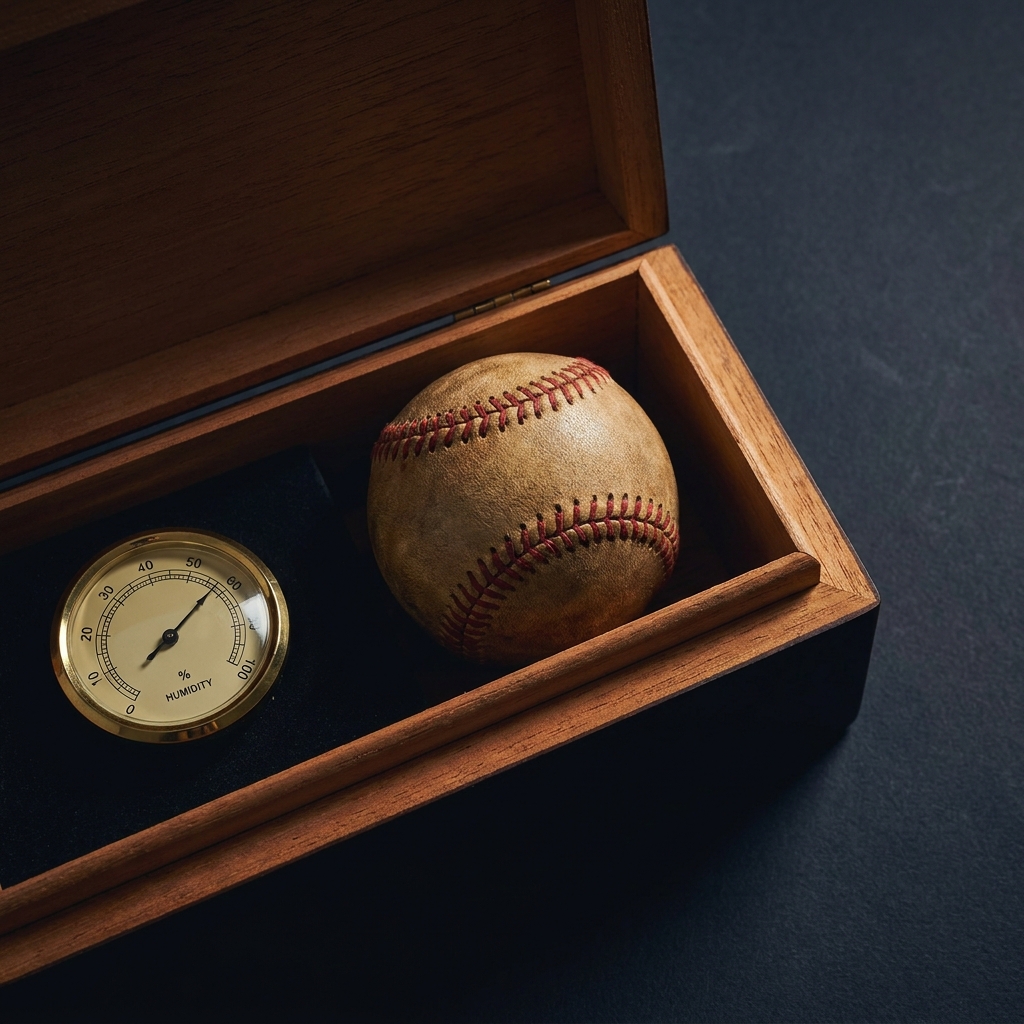
MLB has also taken operational steps that change how weather interacts with the ball: since 2022 most parks store balls in humidors to reduce extreme differences in moisture and bounciness, a change that moderates but does not eliminate temperature and wind effects on run outcomes MLB.com article on humidors in all 30 ballparks.
Try strategy testing with FundedPlays Challenges
Keep reading for a practical pre-game checklist you can use before first pitch to turn weather into a clearer run expectation.
How to use the guide before a game
Use the short checklist later in this article to combine temperature, barometric pressure, humidity, and wind into a simple read on whether conditions favor more or fewer runs. Start by checking a trusted weather source for those inputs, then consult a density-altitude reference for a single number that captures the combined effect on air density NWS JetStream density altitude explanation.
This guide is written for fans, analysts, and sports prediction participants who want practical, evidence based rules rather than absolute guarantees. The examples use typical MLB conditions and note where humidors and stadium geometry change expectations.
The physics of ball flight: temperature, drag, and carry
Air density and aerodynamic drag
Air exerts a retarding force on a flying baseball that scales with air density and the square of velocity; lower air density means less drag and therefore less deceleration of the ball in flight. Framing the air as "thinner" or "denser" helps: on a warm, low pressure day the air is thinner and a well struck ball loses speed more slowly, which typically increases carry and the chance of extra base hits or home runs Communications Earth amp Environment study on temperature and home run frequency.
The drag experienced by a baseball also depends on the drag coefficient and the ball's speed and spin, but the dominant environmental lever is air density, which itself is driven by temperature, pressure, and humidity; pilots and flight planners use density altitude to combine those factors into one operational number for aircraft performance, and the same concept translates to expected ball carry Pilot's Handbook of Aeronautical Knowledge, density altitude section.
How temperature shifts carry distances
Warmer air lowers air density and so reduces aerodynamic drag on batted balls; empirical analyses of MLB games find a measurable association between higher temperatures and increased home run frequency, which aligns with these flight physics principles Communications Earth amp Environment study on temperature and home run frequency.
In practical terms, a five to ten degree rise in temperature on an otherwise similar day will often mean more carry for well struck balls, especially for fly balls and deep line drives. That effect is most visible when other factors like wind and humidors are stable, and it compounds when paired with downwind conditions.
How humidors and ball moisture change bounce and carry
What a humidor does and why MLB adopted it
Humidors store baseballs at a controlled humidity to limit extreme variation in ball leather and core behavior between parks; MLB's move to install humidors across all 30 parks in 2022 was intended to reduce wildly different outcomes that formerly came from very dry or very moist storage conditions MLB.com article on humidors in all 30 ballparks.
Combine temperature, pressure, humidity, and wind into a density altitude read, adjust for wind direction relative to field orientation and local stadium effects, and moderate the final call for humidor and operational context; treat the result as a probabilistic modifier rather than a certainty.
Coefficient of restitution and exit speeds
Laboratory experiments show that ball moisture affects the coefficient of restitution, meaning wetter or drier balls can change exit speeds and therefore carry; those controlled tests provide a physical explanation for why storage conditions matter for offensive outcomes American Journal of Physics paper on baseball storage humidity and coefficient of restitution.
Humidors therefore act to moderate extreme park to park differences, but they do not negate the core aerodynamic effects of temperature and wind on a batted ball. Even with standardized storage, warm low density conditions and favorable wind can still increase run scoring relative to cold dense conditions.
Density altitude: a single metric that summarizes temperature, pressure, and humidity
How density altitude is calculated in practice
Density altitude converts temperature, barometric pressure, and humidity into a single metric that expresses how the air will behave compared to standard conditions; aviators use it to predict aircraft performance and it is a compact way for analysts to translate weather into expected ball carry NWS JetStream density altitude explanation.
In practical use you do not need to run the full physics each time; many weather sources report density altitude or a related air density number, and small mobile or web calculators do the conversion from temperature, pressure, and dew point to density altitude for you, making it easy to incorporate into pre-game checks.
Using density altitude as a rule of thumb for carry
Higher density altitude means effectively thinner air and generally more carry on fly balls, so when a forecast or calculator shows density altitude well above local standard expect an upwards influence on distance and home run likelihood Pilot's Handbook of Aeronautical Knowledge, density altitude section.
Use density altitude together with wind direction and stadium factors: a high density altitude day with downfield winds will usually be noticeably friendlier to hitters than a low density altitude day with wind blowing in.
Wind, stadium design, and local microclimates
How wind direction and speed change fly-ball outcomes
Wind can be the single largest game to game weather effect: an outfield wind blowing out increases carry and home runs while an in blowing wind suppresses them, and documented historical analyses from open air parks show wind can dominate local scoring swings SABR analysis of wind effects at Wrigley Field.
Wind speed matters, but direction matters more; a moderate wind blowing directly out can have a larger scoring impact than a much stronger cross wind. For this reason, look at both speed and bearing relative to the field orientation when estimating likely impacts on play.
Why open-air parks show larger swings
Stadium orientation, seating, and local terrain create microclimates that alter how wind and temperature express themselves inside a ballpark, and open-air venues without large enclosing walls allow ambient winds to accelerate or funnel into playing areas in ways that are hard to predict from a single instrument reading.

Because stadium geometry can amplify or mute environmental effects, historical park data remains useful but must be interpreted with current operational context such as humidors and any recent changes to stadium structure or park maintenance.
A practical pre-game checklist and decision framework
Quick checks to run before first pitch
Checklist, quick version: temperature, barometric pressure, humidity or dew point, wind direction and speed, and a note about whether the park uses a humidor; combine these inputs into a density altitude read and flag the game as more or less friendly to carry based on whether density altitude is above or below normal NWS JetStream density altitude explanation.
Extra quick tips: if density altitude is high and wind is blowing out, weight your expectation toward increased extra base hits and home runs; if density altitude is low and wind is blowing in, expect suppressed carry and fewer homers.
A simple decision framework is: start with density altitude, then adjust for wind direction and stadium microclimate, then moderate the call for humidor effects; treat the result as probabilistic and give a confidence band rather than a binary yes or no. This method keeps your read systematic and repeatable.

For many analysts, converting the combined read into a numeric modifier that adjusts long term park run rates is useful; keep the modifier small to reflect the probabilistic nature of the effect and avoid overfitting to single day weather noise.
Common mistakes and pitfalls when using weather to forecast scoring
Overweighting a single variable
A common error is attributing changes in scoring to temperature alone; pressure, humidity, and wind can offset or amplify temperature effects so relying on one variable can produce misleading conclusions Communications Earth amp Environment study linking temperature to home runs.
Another pitfall is reading a single forecast model and treating it as certain; weather forecasts have error, and small shifts in wind direction or temperature can change expected carry for borderline conditions.
Ignoring operational factors like humidors and ball handling
Failing to account for humidors and how balls are handled at a stadium leads analysts to overstate historical park effects. MLB's humidor adoption was explicitly intended to reduce storage driven extremes, so comparisons across eras or parks that ignore this can be misleading MLB.com article on humidors in all 30 ballparks.
Also be mindful that small sample noise, tweaks in ball construction, and differences in player approach can confound simple weather based expectations; use weather as one input among several rather than the sole driver of decisions.
Real-world scenarios: reading conditions and expected effects
Calm warm afternoon at a moderate-altitude park
Scenario: afternoon game, temperature well above seasonal average, barometric pressure low for the region, light winds blowing out to center. Interpreting those inputs through density altitude and the flight physics suggests increased carry for fly balls and an uptick in home run probability compared to a typical day Communications Earth amp Environment study on temperature and home run frequency.
Because humidors moderate exit speed differences from storage humidity, the expected increase is driven mainly by thinner air and favorable wind rather than changes to the ball itself. Analysts should weight this scenario as higher run expectation but not a certainty.
Windy evening at an open-air stadium
Scenario: evening game with cool temperatures but a strong outfield breeze at an open-air park oriented such that the wind funnels down the field. Even if the density altitude is moderate or low, a sustained out wind can still materially raise home run likelihood because of the direct push on fly balls SABR analysis of wind effects at Wrigley Field.
In these cases, stadium microclimate and wind beats a simple temperature read; combine a wind assessment with local park behavior and historical tendencies to reach a calibrated expectation rather than relying solely on air density.
What we still do not know and final takeaways
Open research questions
Open questions remain about how evolving ball construction, subtle park geometry changes, and finer scale microclimate measurements interact with weather to influence scoring, and future work that pairs fine time series of meteorology with batted ball data will refine current rules of thumb Communications Earth amp Environment discussion on warming and home runs.
Practical takeaway: warm, low pressure conditions and downwind align to favor more carry, while cool, high pressure conditions and headwinds suppress it; humidors moderate but do not remove these effects, so use density altitude plus wind as your primary pre-game signal MLB.com article on humidors in all 30 ballparks.
Apply weather inputs systematically, avoid overfitting to single days, and treat weather driven adjustments as probabilistic modifiers to your core forecasting models.

Temperature affects air density and therefore carry; studies show a measurable association between higher temperatures and more home runs, but the effect depends on wind and stadium factors.
Humidors reduce extreme differences from ball storage moisture but do not eliminate the effects of temperature, pressure, or wind on ball flight.
Check density altitude first, then wind direction and speed, and note any local stadium quirks and humidor usage.
References
- https://www.faa.gov/regulations_policies/handbooks_manuals/aviation/phak
- https://www.mlb.com/news/humidors-added-to-all-30-mlb-ballparks
- https://www.weather.gov/jetstream/density
- https://www.nature.com/articles/s43247-023-00967-2
- https://aapt.scitation.org/doi/10.1119/1.3549208
- https://sabr.org/journal/article/the-wind-at-wrigley-field/
- https://www.fundedplays.com/challenges
- https://www.fundedplays.com
- https://www.fundedplays.com/blogs
- https://www.fundedplays.com/blogs/how-fundedplays-evaluations-work
- https://baseball.physics.illinois.edu/Denver.html
- https://www.colorado.edu/today/2021/07/07/its-outta-here-physics-baseball-mile-high
- https://sabr.org/journal/article/high-altitude-offense-an-empirical-examination-of-the-relationship-between-runs-scored-and-stadium-elevation/