
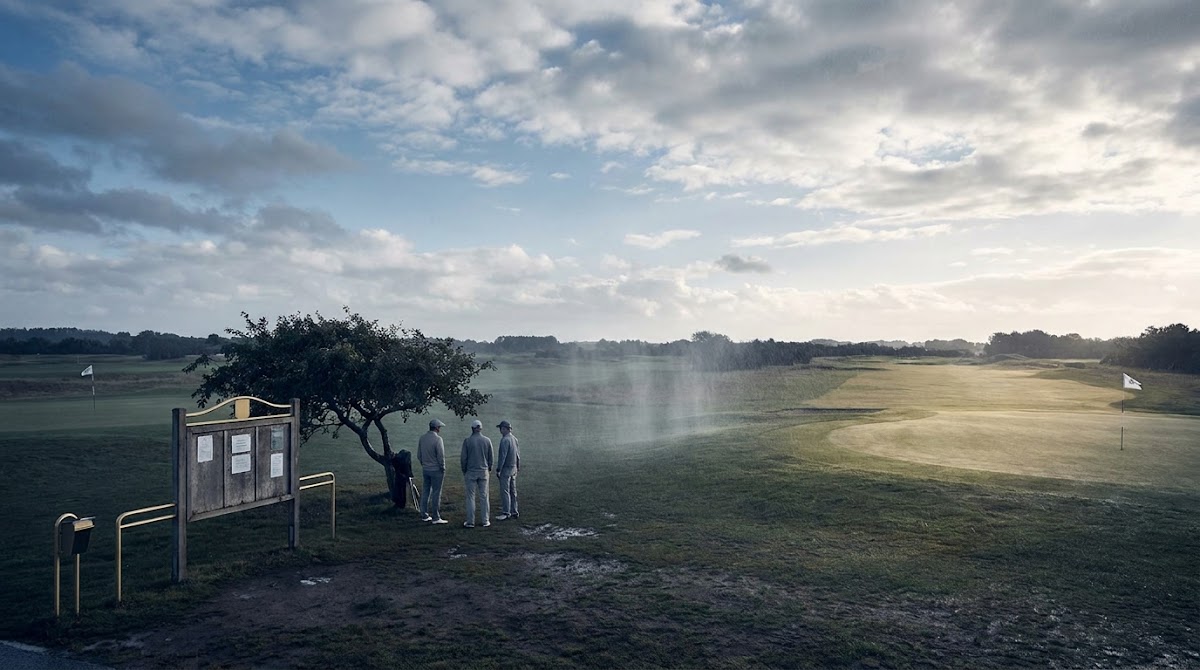
How Weather Draws Affect Golf Tournaments: definition and quick overview
In tournament golf, a "weather draw" refers to schedule and grouping changes triggered by weather and safety decisions, including delayed starts, split waves and re-pairings that alter who plays when. Those adjustments are not informal conveniences; they rest on committee authority to suspend, resume and reorganize play under the Rules of Golf, and on Committee Procedures that allow alternate starting structures to recover time. The Rules of Golf explain committee suspension and resumption powers Weather Options and The Rules @ The Players
What we mean by a 'weather draw' in tournaments
A weather draw can be as small as a delayed tee time for a single group or as large as a two-tee restart that sends players from both nines off simultaneously. The common thread is that an official, usually the competition committee or referee, authorizes changes for safety and fairness. These changes may also include grouping alterations such as threesomes or re-pairing after a partial round. Organizers follow formal procedures rather than ad hoc decisions, so predictions and planning should assume that committees have a set of options to keep the event moving.
High-level effects on scheduling, safety and scoring
Operational responses to weather range from short suspensions to full schedule reshapes. Typical tools are delayed starts, two-tee starts, threesomes and re-pairings, all intended to preserve competitive order while maximizing the chance of completing rounds on time. Committee procedures explicitly outline these options as part of time-recovery planning and are used when conditions threaten playability or safety. Committee Procedures describe starting-structure adjustments
Track official starter notices and forecast updates when draws change
Check the starter first
Why weather matters for draws, tee waves and competitive balance
Weather produces systematic scoring swings across tee waves, and that variance creates a fairness challenge when players in different waves face different conditions. Wind in particular tends to change scoring distributions across a day, so a morning wave that plays in lighter wind can finish with markedly different scores than an afternoon wave that meets a sustained breeze. Analytics and tournament accounts consistently point to wind as a major driver of wave-to-wave differences in scoring, and understanding that effect helps explain why organizers take steps to rebalance opportunities. DataGolf analysis highlights wind-driven scoring shifts

How shifting conditions create morning-versus-afternoon advantages
When wind, temperature or precipitation shifts during play, holes can play longer, shorter or differently than forecast, and that alters the relative difficulty faced by each wave. For example, a wind surge in the afternoon can turn reachable par 5s into much harder holes and change hole-by-hole strategy for every player in that wave. Predictors and players who treat conditions as static risk systematic error in their assessments.
Why organizers care about fairness and completing rounds
Committees must balance two aims: finish the competition within the scheduled window when possible, and preserve orderly competition so no player gains an avoidable advantage from timing. That balancing act is why committees use the rule framework to permit different starting structures or grouping changes. The goal is not to equalize luck but to limit unfair disparities that arise purely from timing and weather.
Rules and committee powers that determine weather-driven draw changes
Rule 5.7 gives committees the authority to suspend play for dangerous conditions and to set the terms for resuming play; this rule is the legal basis for most weather-driven stoppages and orderly restarts. Committees rely on that rule when they clear the course and later arrange how play restarts, including grouping and restart sequence decisions. Rule 5.7 outlines suspension and resumption for dangerous conditions PDGA competition manual on suspension
Rule 5.7: suspension and resumption for dangerous conditions
Rule 5.7 covers dangerous conditions and grants committees discretion to suspend or discontinue play. That discretion allows for safety-first pauses for events such as lightning and for operational choices about how play resumes, including controlling when groups return to the course. These are formal powers rather than informal requests, and they shape how draws are modified when threats appear.
Committee Procedures on starting structures and time recovery
Committee Procedures provide the practical mechanics committees can use to recover lost time, including two-tee starts, threesomes and re-pairing after partial rounds. Those procedures let organizers increase throughput or rebalance groupings so the competition can proceed to a result with as much fairness as feasible. Committee Procedures describe time-recovery options

Operational tools: two-tee starts, threesomes and re-pairing explained
Two-tee starts move half the field to the back nine and send players off both nines simultaneously to compress the schedule and increase the number of holes played per hour. This option is commonly used when earlier delays make a single-tee restart impractical but daylight or broadcast windows still allow same-day completion. Committees decide on two-tee starts to balance pace and fairness while minimizing the chance of extending the event. Committee Procedures cover two-tee starts and similar options
When and why organizers use two-tee starts
Two-tee starts are typically called when a multi-hour delay removes the margin for a normal single-tee restart. By sending groups off both nines, tournaments can preserve a same-day finish when the course and daylight allow it. Two-tee starts alter the rhythm of play and change which holes players see early versus late, so they can affect scoring patterns and strategy.
How threesomes and re-pairing accelerate completion
Threesomes increase the number of players on course without changing tee geometry and are used when organizers need to boost throughput carefully, often late in a play day. Re-pairing, the practice of reorganizing groups after a partial round or delay, helps ensure that leaders or relevant groups face comparable conditions when play resumes. Those reassignments are not arbitrary; committees follow procedures that try to maintain competitive order while finishing the competition.
Lightning and other immediate safety protocols that force stop-start draws
Lightning is the single most acute weather risk for outdoor golf and it triggers immediate suspension of play for player safety. Sports safety guidance requires clearing the course and waiting a prescribed interval after the last observed lightning or thunder before resumption, and that waiting period shapes the typical length of storm-driven stops. National Weather Service guidance covers lightning safety for sports
Why lightning is the single biggest disruptor
Unlike wind or rain, lightning presents a direct threat to personal safety and leaves no practical option other than immediate evacuation from the course. That urgency produces abrupt stop-start patterns; play halts as soon as lightning risk is assessed and only resumes after officials confirm an all-clear according to safety protocols. Because the priority is protecting players and staff, committees accept schedule disruption as necessary when lightning appears.
Standard wait times and resumption rules used by tournaments
Standard sport safety practice is to wait at least 30 minutes after the last observed lightning or thunder before resuming outdoor activity. This guidance shapes how long suspensions last and explains why storm delays often consume large portions of a day, producing next-day finishes or compressed restarts. Organizers combine these safety timings with committee procedures to plan orderly restarts and any necessary grouping changes. NCAA lightning guidelines describe the 30 minute all-clear practice USGA evacuation guidance
Practice weather-aware prediction in structured challenges
Follow official starter notices and tournament communications for safety updates, and sign up for alerts when you rely on tee times in changing weather.
Wind, temperature and measurable scoring effects on draw advantage
Wind is often the driver of round-to-round and wave-to-wave scoring variance, because it alters both club selection and the likelihood of scoring events, and analytic work has documented measurable shifts when wind patterns change during a day. Predictors who adjust scoring expectations by wave instead of treating all waves equally gain a clearer edge in forecasting outcomes. DataGolf analysis discusses wind and scoring adjustments
What analytics say about wind-driven scoring shifts
Analytics show that sustained wind increases scoring dispersion and changes expected strokes gained at many holes. That effect is probabilistic: wind alters the distribution of likely scores rather than determining a single outcome. As a result, predictive models should shift variance and mean estimates for waves that are forecast to face different wind conditions.
How temperature and precipitation change shot selection and scoring
Temperature affects ball flight and distance, while rain changes course firmness and roll. Cooler air and wet turf typically reduce distance and increase approach difficulty, influencing tee choices and club selection. Predictors and players should adjust expectations when forecasted temperature and precipitation differ between waves, because those differences shift the scoring baseline for affected players.
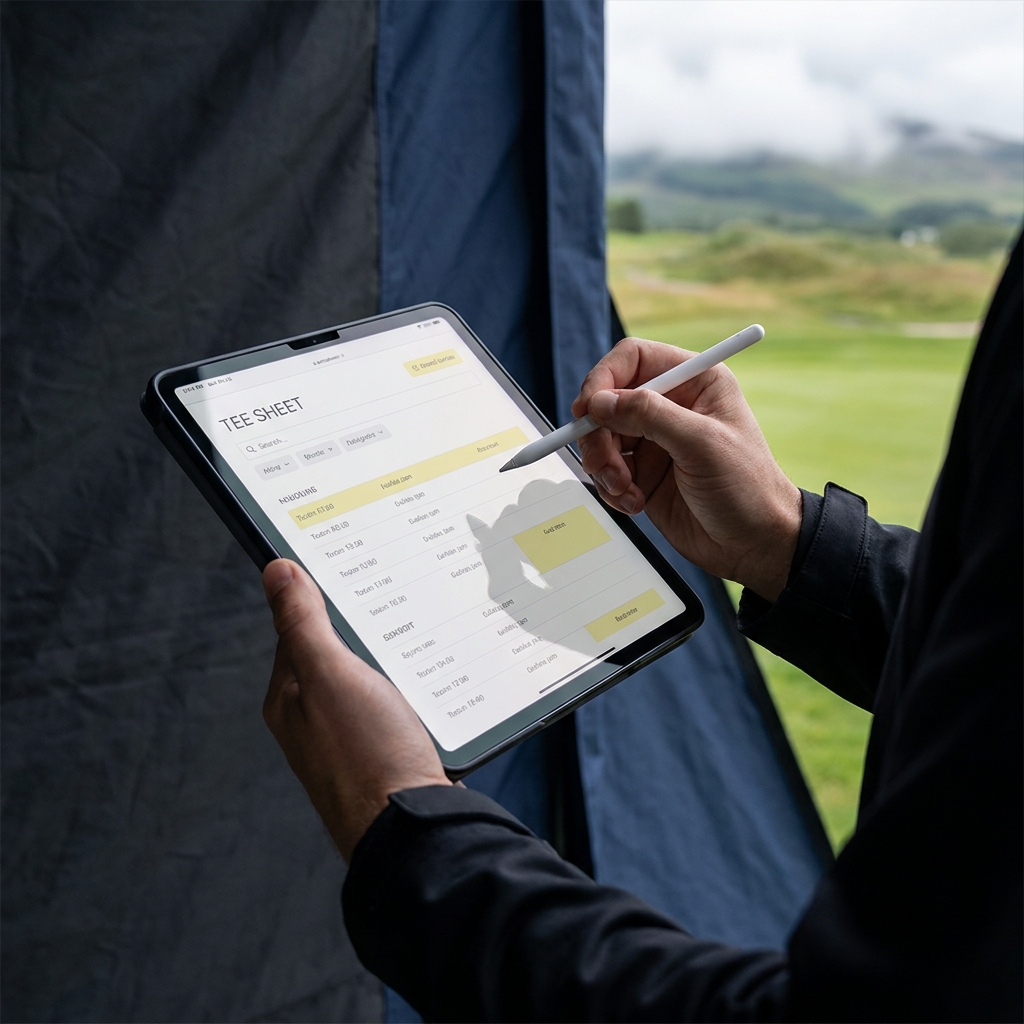
Players and modelers must translate schedule changes into adjustments for scoring distributions and exposure. When forecasts indicate a wind spike for afternoon waves, for example, players may adopt more conservative play and models should widen variance estimates for those waves. Adjusting lineups and picks based on timing and forecasted conditions is a practical response to draw changes. DataGolf findings support adjusting models for wind effects
Adjusting lineups and picks when tee waves shift
Before the round, limit exposure to players whose games rely on favorable conditions if they are scheduled into a wave likely to face adverse weather. Learn more about roster evaluations at https://www.fundedplays.com/blogs/how-fundedplays-evaluations-work. Postpone overconfident roster moves when forecasts show a small but meaningful chance of a wind surge or storm. Use wave-specific scoring baselines to set expectations rather than a single field-level projection.
Increase variance and raise expected strokes for affected waves, shift mean scoring upward for holes exposed to wind, and reduce exposure to players who rely on calm conditions.
In-play strategy changes for players and live predictors
When play restarts with altered conditions, in-play predictors should update live models to reflect the new wind, temperature and pairing contexts. Players may change aggressiveness, club selection or hole-level strategy in response to a modified draw. Treat restarts as fresh conditions rather than continuations of pre-delay play, because the resumed environment often differs in measurable ways.
Decision criteria committees use when choosing a recovery plan
Committees weigh several practical factors when they choose how to recover lost time: immediate safety concerns, available daylight, broadcast windows and the impact on fairness. These factors are balanced against each other to select options such as a two-tee start, threesomes or a next-day finish. The Rules of Golf and Committee Procedures frame these choices so decisions are accountable and predictable in scope. Rule 5.7 gives committees the foundational authority for these decisions
Factors: safety, daylight, broadcast windows and fairness
Safety is the primary constraint; when that is satisfied, committees estimate whether remaining daylight and broadcast obligations allow same-day completion. If not, a split-day or next-day finish may be the only fair and realistic option. Committees also consider the competitive impact of moving players to different starting holes or forming threesomes and aim to minimize avoidable advantage shifts.
How committees balance completing play versus preserving competitive order
Preserving the integrity of pairings and the tournament order often competes with the desire to finish on schedule. Committees choose the least disruptive plan that meets safety and logistics. Clear communication about what will happen and why helps players and stakeholders adapt, so transparency is a key part of the decision calculus.
Typical mistakes predictors and fans make when accounting for weather and draws
A common error is overreacting to short-term forecasts and assuming a single-hour change will define an entire round. Weather forecasts can show rapid changes, and committee interventions can also alter tee times and groupings, so static assumptions often fail. Relying on a single forecast snapshot risks poor decisions. Analytics caution that wind and weather create probabilistic, not certain, effects
Overreacting to short-term forecasts
Short-term model updates are useful, but avoid treating a one-hour forecast spike as a guaranteed condition for all groups. Instead, translate forecast probability into adjusted scoring distributions and manage exposure accordingly. That measured approach reduces the chance of large forecast-driven mistakes.
Ignoring operational adjustments and restart rules
Some fans forget that committees can reconfigure starters and groupings, which changes who faces which conditions. Ignoring two-tee starts, threesomes or re-pairing leads to incorrect exposure calculations and missed signals about likely finishing times or who will play together after a delay.
Scenarios illustrate how draws change and what predictors should do. First, a morning wind surge can flip advantage to early waves if the afternoon strengthens; second, a thunderstorm can cause a sudden suspension followed by a stop-start recovery; third, sustained rain can force split-day or next-day finishes; and fourth, extreme heat can prompt earlier start windows to reduce exposure. Each scenario requires different committee actions and different prediction responses. Tournament accounts describe how wind and rain reshaped scheduling in major events
Morning wind surge: how draws and scoring can flip
Timeline: forecast shows light morning wind and rising afternoon gusts. If the afternoon proves windier than expected, afternoon waves typically see scoring decline. Committee response may be minimal if daylight allows, but predictors should widen expected score variance for afternoon waves and reduce exposure to players dependent on calm conditions.
Thunderstorm pause and same-day recovery
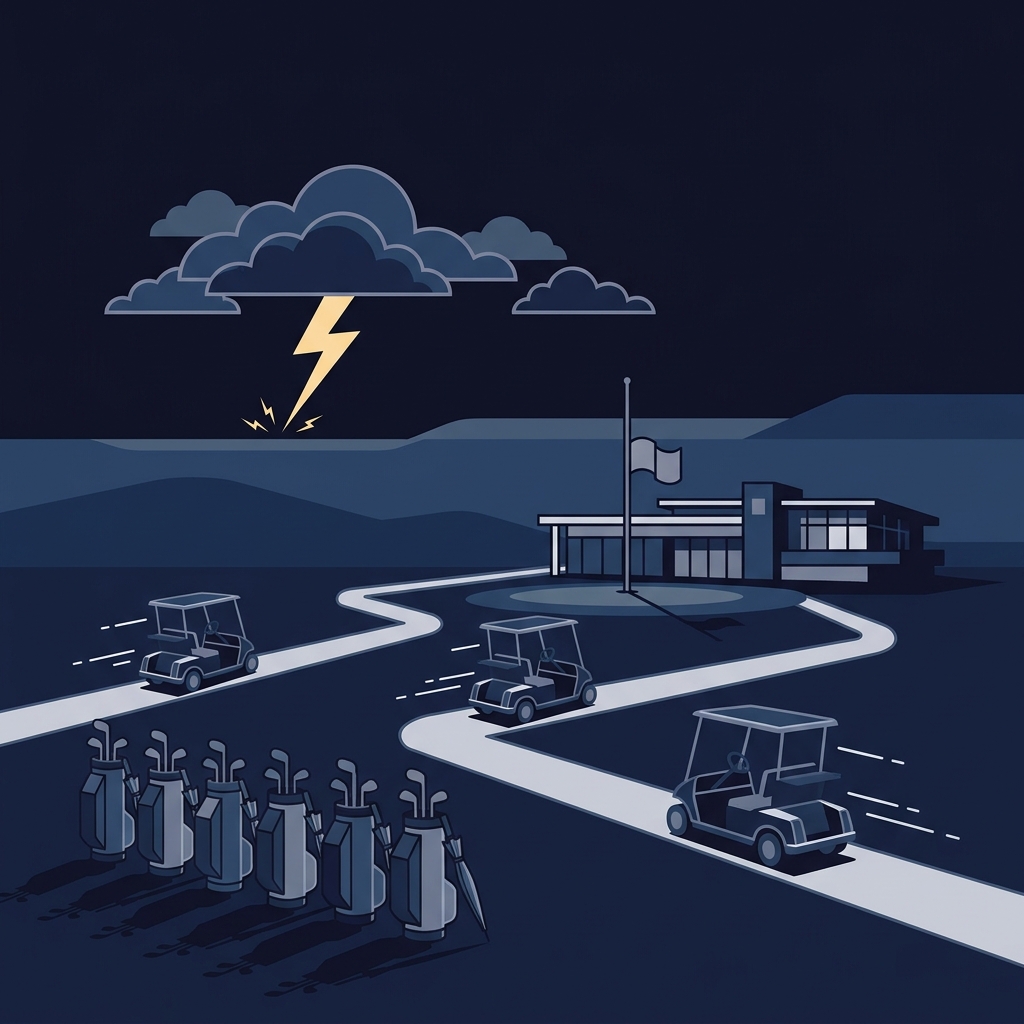
Timeline: a thunderstorm sweeps through mid-afternoon, officials suspend play and clear the course. After the storm passes, the standard wait time is observed before restarting. Committees then decide whether to resume single-tee, switch to a two-tee start or form threesomes to finish the day. Predictors should watch official starter notices closely for the chosen restart plan.
Sustained rain causing split-day finishes
Timeline: persistent rain reduces course playability and makes same-day completion unlikely. In that case, committees may declare a split-day or move unfinished holes to the next scheduled playing day. Predictors should account for evolving course firmness and altered hole characteristics when play resumes.
Heat and humidity prompting earlier start windows
Timeline: forecasted extreme heat leads committees to consider earlier or split start windows to reduce heat exposure. Players may alter pacing and hydration strategies, and predictors should note that earlier start changes who faces which wind and temperature profiles during the round.
How organizers announce draw changes and the signals predictors should monitor
Organizers use a small set of official channels for draw changes: tournament websites, starter and scorer announcements, and official social feeds. These channels convey authoritative information about suspensions, restart formats and planned re-pairings, and they should be the primary sources predictors monitor rather than informal commentary. Rule guidance emphasizes official notices for suspension and resumption See https://www.fundedplays.com for practical updates.
Official communications channels and what each means
Tournament websites typically post starter bulletins and official statements, starters and scorers provide on-course instructions and expected restart times, and social feeds often summarize official notices quickly. Treat the starter as the most immediate authority for restart timing and the website as the formal record of decisions.
Key timestamps and signs that a restart or re-pairing is coming
Common signals include an official suspension announcement, a named expected restart window, and an updated tee sheet showing two-tee or threesome assignments. When those items appear, adjust models and exposure plans immediately to match the announced structure rather than speculative reconstructions.
A compact checklist for predictors: pre-tournament and day-of actions
Pre-tournament: check recent weather patterns at the venue, understand typical wind tendencies for the course and build wave-specific baselines into models. See the Funded Plays blog at https://www.fundedplays.com/blogs. Day-of: monitor official starter announcements, update wave expectations with current forecasts and prepare to adjust live picks if re-pairing or a two-tee start is announced. DataGolf suggests treating wind as a core model input
Pre-tournament: model and roster prep
Build multiple scenarios for likely wind and rain outcomes, maintain roster flexibility and set exposure limits that account for possible stop-start outcomes. Consider players who historically perform well across variable conditions when building resilient lineups.
Day-of: forecasts, communications and in-play adjustments
Monitor official notices first, update forecasts frequently, and apply live adjustments when starters release new pairings or a restart format. Keep exposure modest when uncertainty is high and avoid committing heavily to a single predictive outcome until the restart format is confirmed.
Conclusion: main takeaways for readers following or predicting tournaments
Committees have clear rule authority to suspend, resume and reconfigure draws, and they use a set of operational tools to balance safety, fairness and logistics when weather intervenes. Wind and lightning are two of the most consequential factors that change scoring expectations and scheduling, and predictors should plan for probabilistic changes rather than single-point forecasts. Analytics reinforce wind as a key factor in scoring variance
Recap of the rules, common operational fixes and tactical responses
Understand Rule 5.7 and Committee Procedures as the backbone of weather decisions, watch official communications for restart plans, and prepare models that incorporate wave-specific conditions and adjusted scoring distributions. Use conservative exposure limits during high uncertainty and treat restarts as fresh conditions for strategy.
Final note on responsible, evidence-based forecasting
Weather-driven draws demand disciplined, evidence-based adjustments rather than guesswork. Follow official notices, update models with live conditions and prioritize safety and fairness when interpreting what a draw change means for outcomes.
Committees suspend play when conditions are dangerous, such as when lightning is present, and follow rules that specify how and when play resumes.
A two-tee start sends groups off both nines simultaneously to increase throughput and help complete rounds after delays.
Standard safety practice is to wait at least 30 minutes after the last observed lightning or thunder before resuming outdoor play.
References
- https://www.randa.org/rog/2023/rules/rules-of-golf/rule-5
- https://www.randa.org/rog/2023/committee-procedures/section-6c-starting-structure-and-tee-times
- https://www.randa.org/en/articles/weather-options-and-the-rules-the-players
- https://datagolf.com/weather-adjustments
- https://www.fundedplays.com/challenges
- https://www.weather.gov/safety/lightning-sports
- https://www.ncaa.org/sports/2014/7/17/lightning-safety.aspx
- https://www.usga.org/rules-hub/2019-rules-notebook--amateur-championships/evacuation-suspending-resuming-play.html
- https://www.pdga.com/rules/competition-manual/107
- https://www.theopen.com/latest/how-weather-shapes-the-open
- https://www.fundedplays.com
- https://www.fundedplays.com/blogs
- https://www.fundedplays.com/blogs/how-fundedplays-evaluations-work