
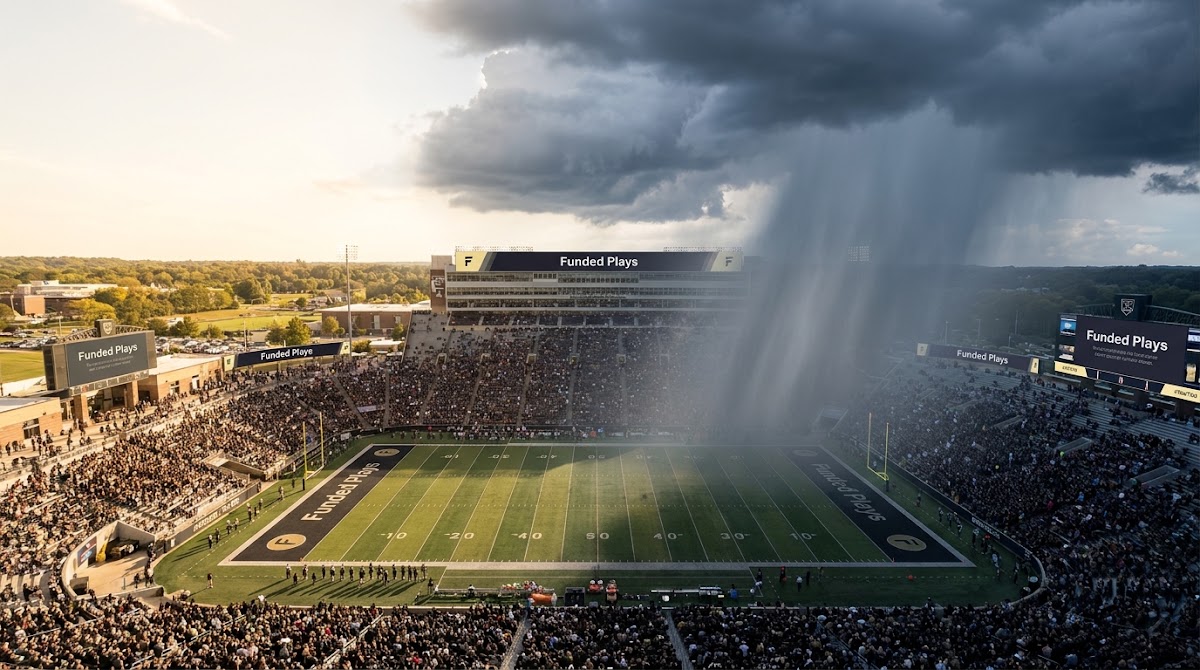
How Weather Changes College Football Totals: A clear overview
How Weather Changes College Football Totals is a phrase that captures a common question for anyone working with over/under lines or competing in prediction challenges. Totals, often called over/under lines, express market expectations for the combined score of both teams. This section defines the idea in plain language, sets realistic boundaries for what weather analysis can deliver, and explains why distinguishing correlation from causation matters when you move from observation to model adjustments.
Totals are central to many decision processes because they condense multiple game dynamics into one number: expected scoring. For readers participating in skill-based sports prediction challenges, totals are a common market to test because they reward an understanding of pace, possessions, and situational scoring. For further reading, see our blog.
Why totals matter for bettors and challenge players
For anyone estimating outcomes, the totals line translates team tendencies and matchup context into a single forecast. Challenge players often use totals to evaluate consistency in prediction skills because a good totals model requires integrating team style, tempo, situational scoring, and-when relevant-environmental factors. The practical result is that totals can be a focused test of predictive discipline, but they demand a clear method for handling uncertain inputs like weather and last-minute roster changes.
High-level ways weather interacts with scoring
Weather affects scoring indirectly through play selection, execution quality, and special teams. For example, heavy wind can make long passing and long field goal attempts riskier, while steady rain can increase ball-handling miscues and push teams toward shorter, higher-percentage plays. Those are plausible mechanisms rather than absolute rules, and they vary by teams, stadium, and game script.
What this article will and will not claim
This article describes mechanisms, suggested checks, and modeling precautions. It will not promise exact point impacts, guaranteed outcomes, or suggest that weather is the dominant factor in every game. Forecast products vary in quality and timing, and public information about surface drainage or microclimates can be incomplete. Treat the points here as a practical framework to inform decisions, not as definitive predictive formulas.
Explore FundedPlays Challenges for strategy testing and structured prediction practice
View ChallengesWhat we mean by totals and how lines are set
Basic construction of a totals line
Bookmakers and markets set a totals line as a consensus expectation for combined scoring, then adjust it for liability and public demand. That process begins with expected scoring from team models, then adds market considerations such as how much action is expected on either side. Understanding that basic construction shows where weather information can feed in: initially through expected scoring, later via adjustments when weather forecasts change.
Market and bookmaker inputs that influence lines
Inputs to a totals line typically include team pace, red-zone efficiency, special teams touchdown likelihood, injury reports, and travel or location considerations. Public betting and sharp money both influence the market signal; if a large amount of money comes in after a forecast update, the line may move before kickoff. Awareness of these inputs helps you see whether a weather-driven line move is market consensus or response to a small set of bets.
Why early weather moves can differ from late adjustments
Early weather information often comes from broad, longer-range forecasts. As the event nears, short-term forecasts and radar offer higher resolution, which can produce late movement in the totals line. That timing difference explains why some totals see modest early shifts and larger adjustments inside 24 hours or inside a few hours before kickoff. Recognize the timing and treat early signals as lower-confidence information relative to last-mile updates.

Key weather factors that affect scoring
Wind, precipitation, temperature, and humidity
When assessing weather, focus on a small set of variables that plausibly change play outcomes: wind, precipitation, temperature, and humidity. Each can influence certain phases of play. Wind alters ball flight and kicking reliability. Precipitation affects ball handling and footing. Temperature and humidity influence player comfort and, over a full game, may affect endurance or kicking feel. For research on atmospheric effects and scoring, see this study.
Field surface and drainage
Surface type and field drainage determine how a forecast translates into actual on-field conditions. A well-drained artificial surface will behave differently from older natural grass that soaks up water or freezes. Stadium design, including open bowls or partial coverings, also changes exposure to wind and precipitation. Checking surface history and local reports helps contextualize raw forecast numbers.
Forecast uncertainty and microclimates

Forecasts can vary across short distances and times because of microclimates and local geography. Small changes in storm track or wind direction can matter for whether a stadium experiences heavy rain or a light shower. Treat forecast outputs probabilistically; when uncertainty is high, reflect that in stake sizing or by requiring stronger model edges before placing a play.
How wind influences passing, kicking, and punts
Effects on deep passing and timing routes
Wind changes the effective range and timing of passes. Strong headwinds reduce deep ball carry and can throw off timing on long routes, while tailwinds can exaggerate air distance and alter how quarterbacks judge lead passes. Crosswinds introduce lateral movement that can complicate sideline and sideline-to-sideline passing concepts. Teams that rely heavily on vertical passing will be more exposed to those effects, often leading to play-calling shifts toward shorter progressions in windy conditions.
Kicking game: field goals and kickoffs
Wind affects the kicking game by changing expected make probabilities on long attempts and by altering kickoff carry and direction. Coaches may avoid long field goal attempts into a substantial headwind and adjust kickoff placement to limit return risk. Those tactical choices rarely show up as a single predictable point decrement, but they can reduce scoring opportunities from special teams and limit long-range scoring events.
Return game and punting accuracy
For punts and returns, wind can create unpredictability in hang time and placement, which increases return chance variability or forces fair catches. Punting strategy may shift toward directional kicks or more conservative hang time targets. When wind is a factor, special teams contribute more to variance in a game, and that variance can influence totals more than marginal changes in offensive yards. Recent reporting on wind and temperature effects in pro football illustrates similar mechanisms in play at high levels of the sport: see this analysis.
Rain and snow: effects on ball handling and play-calling
Ball security, catches, and turnovers
Precipitation raises the likelihood of handling errors because a wet or snow-covered ball is harder to grasp and control. That makes contested catches and quick exchanges riskier and often leads coaches to prioritize ball security over high-variance plays. The practical effect for totals is a shift toward play selection that minimizes turnover risk, which can reduce explosive scoring but may also create more sustained drives and clock management decisions.
Run-versus-pass play-calling shifts
Wet or snowy conditions commonly push play-calling toward shorter, higher-percentage plays, and toward running between the tackles when footing allows. Teams may shorten the passing tree, favor screen plays or quick outs, and run more to control the clock. Those adjustments influence tempo and possessions, which are core drivers of the totals line.

Equipment and visibility issues
Operational details matter in precipitation: helmet visors, cleat selection, and sideline drying protocols can affect execution. Reduced visibility complicates timing on routes and can slow the pace of play as officials and coaches manage clock and safety. These practical factors combine with play-calling shifts to change scoring expectations in ways that are best handled as conditional adjustments in a model rather than fixed reductions.
Temperature and air density: subtle scoring influences
Cold weather impacts on kicking and passing
Cold temperatures change ball feel and can stiffen kicking and passing mechanics. Very cold balls may not compress the same way, which can affect kicking distance and the ease of deep passes. Coaches may respond by limiting long attempts and relying more on conservative scoring strategies. These effects are typically gradual and interact with wind and elevation, so treat them as modifiers rather than primary drivers.
Heat and player fatigue considerations
Hot conditions increase the importance of rotation and hydration management. Over the course of a game, heat can influence fourth-quarter performance and increase fatigue-driven errors, which may change late-game scoring dynamics. When the temperature is a clear outlier for a region, it is reasonable to check substitution patterns and conditioning notes that can alter end-of-game scoring expectations.
How air density can change ball travel
Air density, influenced by temperature and elevation, affects ball carry in subtle ways. Lower density at higher elevation tends to increase carry distance for passes and kicks, while dense cold air may slightly reduce range. These are marginal effects relative to wind and precipitation, but they can add up when combined with other factors and should be noted for extreme venue conditions. For more on meteorological influences on football technical performance, see this review.
Field conditions and surface: speed, footing, and player safety
Natural grass versus artificial turf differences
Surface type changes traction and how the ball bounces. Natural grass often provides different grip patterns than artificial turf, and older fields can develop muddy areas or frozen patches that change play design. Coaches take those differences into account when choosing personnel and play concepts, which in turn shifts scoring expectations.
Muddy or frozen surfaces and play design
When a field is muddy or frozen, teams commonly favor simpler, shorter routes and power runs to reduce the risk of slips, missed blocks, and errant throws. These play-calling patterns reduce the frequency of explosive plays and can lengthen drives, which tends to alter the distribution of scoring opportunities without a single predictable point change.
Use weather to flag games for additional checks, apply conservative model adjustments only when validated, and reduce stakes when forecast uncertainty is high; treat weather as one component among team, venue, and market signals.
Injury risk and substitution patterns
Poor surface conditions can increase the likelihood of soft-tissue injuries or more conservative substitution patterns for vulnerable players. Coaches may limit snaps for less sure-footed personnel, shift to more rotation, or adjust tempo to reduce injury risk. Those decisions can change late-game scoring profiles, especially if a key offensive contributor is managed more cautiously.
Mechanisms: how weather changes pace, possessions, and scoring opportunities
Possession time and drive length
Weather-driven play-calling often changes average drive length. Conservatively run-heavy game plans tend to increase time of possession and reduce the total number of possessions in a game, which usually reduces scoring opportunities. Conversely, conditions that create more turnovers can shorten drives and sometimes produce quick scores. Understanding how these opposing mechanisms interact is central to predicting totals.
Turnover likelihood and short-field scores
Adverse conditions increase the chance of turnovers from fumbles or tipped passes, which can produce short-field scoring for the opponent. That dynamic makes bad-weather games more variable: you can see lower-scoring, grind-it-out affairs or a small number of sudden short-field scores that push totals up. Modelers should therefore account for increased variance rather than only a directional change in expected points.
Special teams as a scoring lever
Special teams often produce outsized scoring variance in poor weather because mis-kicks, returns, or blocked attempts are more likely. Those events are relatively rare but can swing totals significantly when they occur. Including a higher variance parameter for special teams outcomes in bad-weather games can improve risk estimates for totals decisions.
Adjusting models and handicaps: what to test and why
Start with low-friction checks: flag games with extreme wind forecasts, heavy precipitation probability above a chosen threshold, or poor-field reports. Apply conservative directional adjustments in those flagged games and track outcomes. That approach keeps the initial model simple and reduces the chance of overfitting to noise in small samples.
How to validate changes with out-of-sample checks
Validation is critical. Reserve a holdout sample or use backtesting on seasons not used to tune parameters. Compare flagged-game performance to unflagged controls and look for consistent, repeatable differences before baking adjustments into a live prediction process. Sensitivity checks help ensure that your weather signals are robust to reasonable variation in thresholds or timing.
When to avoid overfitting weather adjustments
Weather is noisy and context dependent, so avoid adding many small parameters that respond to single-game anecdotes. If an adjustment only helps in a tiny subset of historical games, it may be capturing chance. Favor fewer, well-justified flags and track whether they continue to work over new data before increasing their weight in betting or challenge decisions.
Common mistakes when using weather to predict totals
Overreacting to one source or single forecast update
A frequent error is treating a single forecast update as dispositive. Forecasts change, and a late radar update that narrows a storm track can reverse earlier assumptions. Maintain a process for confirming updates across multiple short-term forecast products and align your action windows with clear decision rules.
Confusing correlation with causation
Weather-related correlations with scoring do not always imply a causal effect you can exploit. For instance, some teams schedule more late-season games in regions with colder weather, and those games might exhibit different scoring patterns for non-weather reasons. When possible, use methods that control for team, venue, and seasonal effects before attributing differences to weather alone.
Ignoring team-specific adaptability
Teams vary in how well they adapt to adverse conditions. Some programs emphasize short passing concepts that handily translate to wet fields, while others struggle to adjust. Ignoring those differences can lead to incorrect universal rules. Incorporate team-specific adaptability checks when testing weather adjustments to avoid oversimplifying your model.
Practical scenarios: four game-day examples and decision checks
High wind at a midweek away game
Scenario signals: forecasted sustained winds, stadium open to the elements, and a passer-dependent offense. Likely coach responses include favoring shorter throws and avoiding long field-goal attempts. Decision checkpoints: verify stadium exposure, confirm wind direction relative to the field, and watch for late updates that could change expected carry.
Heavy rain in a major rivalry late in the season
Scenario signals: high precipitation probability, poor surface drainage history, and a rivalry that often features physical play. Likely responses include conservative game plans and increased turnover risk. Decision checkpoints: check recent field condition reports, equipment notes from teams, and market movement for totals inside 24 hours.
Cold, dry conditions at high elevation
Scenario signals: low temperatures and elevation-driven low air density. Likely responses include slight increases in kicking and passing carry but potential cold-related ball feel issues. Decision checkpoints: consider elevation effects on range and verify whether kicking conditions favor long attempts rather than assuming a cold-induced reduction in scoring.
Unexpected heavy snow in an otherwise calm forecast
Scenario signals: sudden radar-confirmed snowfall near kickoff and limited field heating. Likely coach responses include simplified playbooks and more running. Decision checkpoints: confirm visibility reports, watch special teams adjustments, and consider reducing stake size or avoiding plays until final onsite reports arrive.
Monitoring forecasts: tools, timing, and market signals
Reliable forecast sources and what to watch
Use a combination of short-term radar, wind model outputs, and precipitation probability products to get a full picture. Pay attention to intensity, timing relative to kickoff, and wind direction as much as raw speed. Cross-check multiple products and local stadium reports when possible to reduce single-source error. For further context on how weather variables affect offense, see reporting from established outlets like the New York Times analysis.
Timing your updates and when to act
Most useful forecast refinements arrive inside 24 hours and again in the final few hours before kickoff. Establish decision windows tied to your risk tolerance: some players choose to act on early edges, while others wait for final radar confirmation. Align those choices with stake management rules to avoid being overexposed to last-minute forecast noise.
Interpreting market movement as additional information
Line movement can reflect both weather information and market betting dynamics. When a totals line moves after a weather update, determine whether the move reflects sharper weather intelligence, large liability shifts, or public sentiment. Treat market movement as an input to interpretation rather than a substitute for your own forecast checks.
Conclusion: a practical checklist before entering a total

Five quick checks to run before lock
Before locking a totals pick, run these checks: confirm stadium exposure and surface type, review short-term radar and wind direction, verify team-specific adaptability to adverse conditions, compare market movement for confirmation, and decide stake size based on forecast confidence. Those five checks capture the most actionable steps from this guide. Learn more about how Funded Plays evaluates participants in our explanation of evaluations.
When to reduce stake or avoid a play
Reduce stake or pass when forecast uncertainty is high inside critical decision windows, when stadium surface reports are contradictory, or when the expected edge is small. Weather increases variance and can change the distribution of outcomes, so treat increased uncertainty as a reason to temper position size.
Final advice on responsible participation
Weather is a meaningful input but not a guarantee. Use model-aware checks, validate adjustments out of sample, and avoid overconfidence in single-game anecdotes. For players using skill-based challenge platforms, treat weather adjustments as one part of disciplined decision making, and always follow platform rules and responsible participation practices. Visit Funded Plays for platform details.
Weather should influence totals as a conditional modifier: use it to flag games for extra checks and to adjust stake size when forecast certainty is low, rather than as a standalone trigger.
Wind, precipitation, temperature, and surface conditions are the primary factors to monitor, with wind and precipitation often producing the largest day-to-day variation in scoring dynamics.
Consider avoiding a bet when forecast uncertainty is high inside your decision window, surface reports are unclear, or market movement creates ambiguity about whether the forecast signal is already priced.