
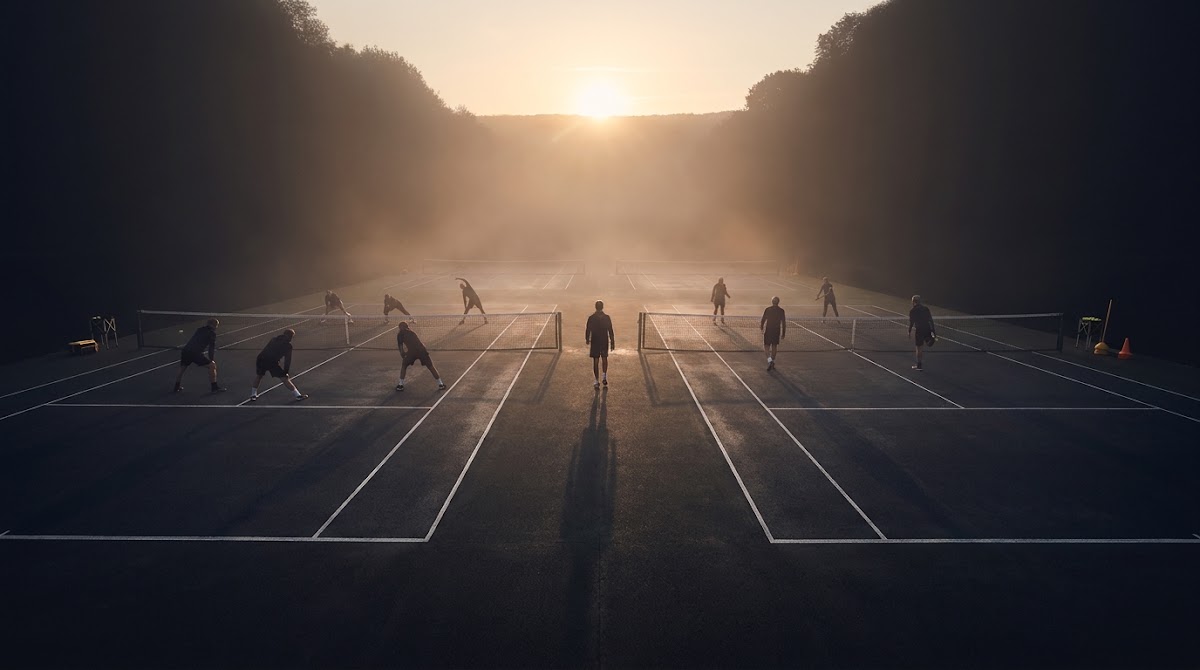
How Weather Affects Outdoor Tennis
Quick summary: what players should expect
Weather changes both ball behavior and human performance in ways that matter for match plans, safety and fairness; major events use formal thresholds to guide decisions about cooling breaks and play modification, and similar principles can help club and recreational players understand changes on court. Australian Open Heat Stress Scale
Common answers include heat, wind, glare or rain; effective adaptation combines simple pre-match routines, conservative in-match choices and clear stop-resume rules to protect players and keep play fair.
Expect four main groups of effects: heat and humidity that change how players feel and perform, ball temperature and air density that alter bounce and flight, wind and visual factors that demand tactical changes, and rain or wet courts that create clear safety hazards and change ball behavior. This article walks through practical tactics, a compact decision framework, and drills to rehearse common scenarios.
Clear rules and on-court checks help keep players safe and preserve fair competition because weather can change effort tolerances, reaction speed and the physical behaviour of the ball during a match. Tournament-scale policies illustrate how organizers reduce risk while keeping play consistent.

Heat and humidity: player physiology and tournament practice
How heat increases physiological strain
High environmental heat raises physiological strain, increasing heart rate, perceived effort and the likelihood of heat-related symptoms, which can impair movement and decision-making unless mitigated; practical player steps focus on cooling, hydration and monitoring symptoms. Competitive tennis in the heat: implications for performance and recommendations
Players may notice slower footwork, delayed reactions and poorer shot judgment as core temperature and cardiovascular strain rise; these are not failures of technique but predictable physiological responses that respond to prevention and timely intervention.
Tournament heat-stress scales and practical player rules
Major tournaments apply formal heat-stress scales that link measured conditions to prescribed actions such as additional breaks, extended medical timeouts or suspension of play, and these scales provide a practical template clubs can adapt for local matches. Australian Open Heat Stress Scale
For players and organizers, the useful takeaways are procedural: monitor ambient temperature and humidity, have cooling protocols ready, and empower officials or captains to pause or modify play when signs of heat strain appear rather than waiting for collapse.
Practical mitigation measures include planned hydration schedules, using electrolyte solutions rather than plain water in long sessions, pre-cooling methods such as cold towels or short immersion prior to play, and ensuring shaded rest areas between sets. These steps reduce immediate strain and help maintain decision quality during long points and matches. Competitive tennis in the heat: implications for performance and recommendations
Ball temperature, air density and the physics of bounce and flight
Why a warm ball bounces higher
Tennis ball temperature changes internal pressure and material response, so warmer balls typically rebound higher and feel livelier on impact; that basic physics explains why players often warm balls before play on cool days and why a ball left baking in the sun behaves differently later in a match. The bounce of a ball (AAPT paper)
In practice, surface type and ball wear usually dominate how a ball feels, but temperature remains a reliable modifier: warming increases internal pressure and elastic response, producing a higher rebound for the same surface impact than a colder ball. NPL temperature-bounce guidance
How air temperature and humidity change ball flight
Warmer and more humid air is slightly less dense, which reduces aerodynamic drag on a flying ball and can modestly increase flight speed and carry for a given stroke, though this effect is typically small compared with changes from ball temperature or spin. What is air density?
Put simply, on hot, muggy days the ball may travel a touch farther on the same swing; players rarely see huge differences, but experienced players notice adjustments in depth and timing when conditions change between indoor and outdoor courts or across different days. Community discussion
Prepare your practice for any weather
Sign up for weather-ready training tips that focus on adapting warm-up, ball handling and point construction for heat and humidity.
Practical significance: what players will notice on court
Expect warmer balls to feel bouncier and slightly faster off the strings, and expect shots to sail a little longer in low-density air, requiring small aim adjustments rather than wholesale technique changes; the combined perceptual differences usually call for conservative margins and a few practice points to re-establish feel.
When conditions shift during a match, communicate with your opponent or coach about ball changes, and use extra time on service games to check timing until your strokes feel right again.
Wind, sun glare and visual factors
How wind changes shot selection and court positioning

Wind alters trajectories, can increase the effect of topspin or slice, and often forces players to choose safer margins; in gusty conditions prioritize lower-risk serves, aim for larger targets and prepare to adjust footwork to counter unexpected drift. What is air density?
On windy days shorten points with serve-and-approach patterns or use first-strike opportunities; practicing low-margin rallies and slice placement helps build confidence under shifting gusts.
Sun glare effects and simple visual aids
Direct sun and glare can impair ball tracking and reduce contrast, making high-speed judgment harder; wearing sports sunglasses or using hat brims and visors improves contrast and provides UV protection while supporting better tracking during routine play. Sports Sunglasses: The Best Protection for Your Eyes
Choose glasses that offer full UV protection and a lens tint suited to local light levels, and practice with them in training so they feel natural under match stress rather than becoming a distraction.
When to change tactics for visibility or wind
Simple in-match tactics include moving the target area for serves away from gusts, choosing a safer hitting zone on groundstrokes, and shortening patterns to avoid long baseline exchanges if wind or glare is causing repeated errors. These tactics help preserve energy and reduce frustration when environmental forces are working against clean timing.
Rain, wet courts and safety: when to stop and how conditions change the ball
Why wet courts are unsafe
Wet courts increase slipping risk for players, create uneven footing and can hide shallow puddles, so safety protocols advise suspending play until courts are suitably dry to reduce injury risk. Why you shouldn’t play on a wet court
Slipping incidents also tend to interrupt matches and can cause acute injuries that affect both short-term playability and long-term availability, so err on the side of caution when surface sheen or standing water is present.
Pre-match weather and court-safety check
Use local judgment if thresholds are borderline
How water affects ball bounce and speed
When balls pick up moisture their outer felt and inner pressure interactions change, producing lower bounce and reduced speed; waterlogged balls also wear faster and provide inconsistent rebounds that affect shot timing and fairness. Why you shouldn’t play on a wet court
For consistent play, officials and captains often remove wet balls from circulation and replace them once drying is complete, because even small amounts of surface water alter ball-surface contact dynamics.
Drying strategies and safety checks
Basic drying steps include removing standing water, using squeegees or mops along lines and in service boxes, and letting the surface settle before players resume; check footwear grip and test a few practice bounces before starting full points. Why you shouldn’t play on a wet court
If uncertainty remains about localized damp patches, postpone match resumption until a shared inspection confirms surface safety and consistent ball behavior.
Decision framework: when to pause, modify or continue play
A simple flowchart for player and organizer decisions
Use a checklist approach: evaluate environmental measures first, observe player signs second and inspect the playing surface third; if any single item exceeds agreed thresholds, apply mitigation steps or pause play until conditions improve or safety is restored. Australian Open Heat Stress Scale
Thresholds are context dependent, so keep rules simple and conservative: measured heat-stress triggers cooling breaks, visible distress triggers immediate stoppage and unreliable court surfaces trigger suspension until repaired.
Key indicators to watch on-match: temperature, humidity, court condition, player signs
Practical indicators include measured ambient temperature and humidity, the feel of balls and surfaces, abnormal fatigue or confusion in players, and repeated movement errors that suggest heat strain or impaired visibility; watching these cues lets captains and officials act before problems escalate. Competitive tennis in the heat: implications for performance and recommendations
Mitigation steps slot into the framework as short-term fixes: timeout for cooling and fluids, scheduled ball changes if equipment is wet, and temporary modifications such as reducing set length or allowing extra medical breaks when appropriate.
Practical preparations and drills by condition
Pre-match routines for hot and humid days
Before a hot match, plan hydration and electrolyte timing, run a slightly longer dynamic warm-up that includes cooling steps, and rehearse mild pre-cooling such as cold towels on the neck between points; these practices reduce early-session strain and help preserve decision clarity. Competitive tennis in the heat: implications for performance and recommendations (see Funded Plays evaluation notes)
Clothing choices matter: light, breathable fabrics and removable layers that allow quick temperature control aid comfort, and positioning shaded rest spots near the court helps maintain recovery during longer sessions.
Practice drills to rehearse wind and wet-court adjustments
For wind, run short-point drills focusing on serve placement and return construction with the explicit instruction to accept conservative margins; for damp conditions, rehearse lower-bounce rallies and short-court exchanges that train timing for reduced rebound and less predictable ball trajectory. The bounce of a ball
Include visual-tracking drills under bright sun by practicing with a hat or visor and using contrast-rich targets so players learn to rely on early ball pickup and predictable footwork patterns when glare is present. Sports Sunglasses: The Best Protection for Your Eyes

Equipment and kit list for weather-ready players
Essential items include spare dry balls, absorbent towels, a small cooler with electrolytes, appropriate sunglasses or visor, lightweight clothing and a basic first-aid kit for blisters and strains; keeping a small weather kit near the court speeds responses when conditions change. Funded Plays
Also include a simple plan for rotating balls if moisture accumulates, and a checklist for captains to confirm that shade, hydration and drying tools are available before scheduled start times. Funded Plays blog
Common mistakes, myths and how to avoid them
Overstating air density effects
Air density changes are real but modest, and they are often overstated relative to ball temperature and court surface effects; treat density as a subtle modifier rather than a primary cause of performance change. What is air density?
When players assume air alone explains large differences in ball behavior, they risk missing the larger influence of ball temperature, felt condition and surface interactions, so check those first when sensations change.
Ignoring heat signals until too late
A common and risky error is delaying hydration, cooling or match postponement until visible collapse occurs; early, conservative responses preserve performance and reduce medical risk. Competitive tennis in the heat: implications for performance and recommendations
Simple rules such as scheduled electrolyte intake, team-lookouts for confusion or vomiting and a low threshold for extra breaks reduce the chance of heat-related emergencies.
Poor equipment choices and improper ball handling
Reusing waterlogged balls or keeping cold balls in direct sun without monitoring can produce unexpected bounce changes; rotate balls intentionally, keep spares dry and avoid relying on a single feel-based judgment to decide match continuation. Why you shouldn’t play on a wet court
When in doubt, test a few practice serves and groundstrokes with replacement balls to confirm timing before resuming competitive points.
Examples and match scenarios
Club match case: humid, warm evening
Scenario: A club doubles match on a humid evening where players report rising fatigue and serves start landing long. Action steps: pause between sets for a short cooling routine, provide electrolyte drinks, replace overly warm balls if bounce becomes inconsistent, and reduce set length if fatigue persists. Competitive tennis in the heat: implications for performance and recommendations
Rationale: Cooling and electrolyte replacement reduce physiological strain, and shorter sets lower cumulative exposure so players can complete play safely.
Tournament case: heat-stress threshold reached mid-match
Scenario: Tournament officials measure conditions at predefined intervals and a heat-stress threshold is reached mid-match. Action steps: implement formal cooling breaks, allow medical access for assessment, consider temporary suspension if symptoms do not abate, and follow event policy for match resumption. Australian Open Heat Stress Scale
Rationale: Using an established scale ensures consistent decisions across matches and protects player health while maintaining competitive equity.
Practice case: windy training session with visual drills
Scenario: A windy afternoon disrupts long-rally practice. Action steps: shift to short-point serving and return drills, increase use of slice and low-margin targets, rehearse visual tracking with sunglasses or visors and shorten practice bouts to maintain intensity without chasing long rallies. What is air density?
Rationale: Tactical rehearsal under constraint strengthens execution in match conditions and reduces wasted energy from chasing high-variance shots.
Final checklist and further reading
Day-of checklist for players and organizers
Checklist highlights: confirm hydration and electrolyte supplies, bring spare dry balls and towels, have shade or cooling options, inspect court surface before play and assign a safety observer for signs of heat strain or slipping hazards. Australian Open Heat Stress Scale
Where to look for official guidance: consult tournament heat-stress frameworks and national court-safety guidance for detailed protocols, and adapt those recommendations to local play while prioritizing player safety. Funded Plays blog
Plan scheduled fluid and electrolyte intake before and during long sessions, use cold towels or short pre-cooling, and watch for early signs of heat strain rather than waiting to feel overly fatigued.
If balls pick up moisture and bounce or speed changes noticeably, pause play and replace wet balls once courts are safe, because waterlogged balls alter timing and may be unsafe for fair play.
Yes, sports sunglasses or visors that provide full UV protection and appropriate tint improve contrast and reduce glare, but practice with them to ensure they do not distract during a match.