
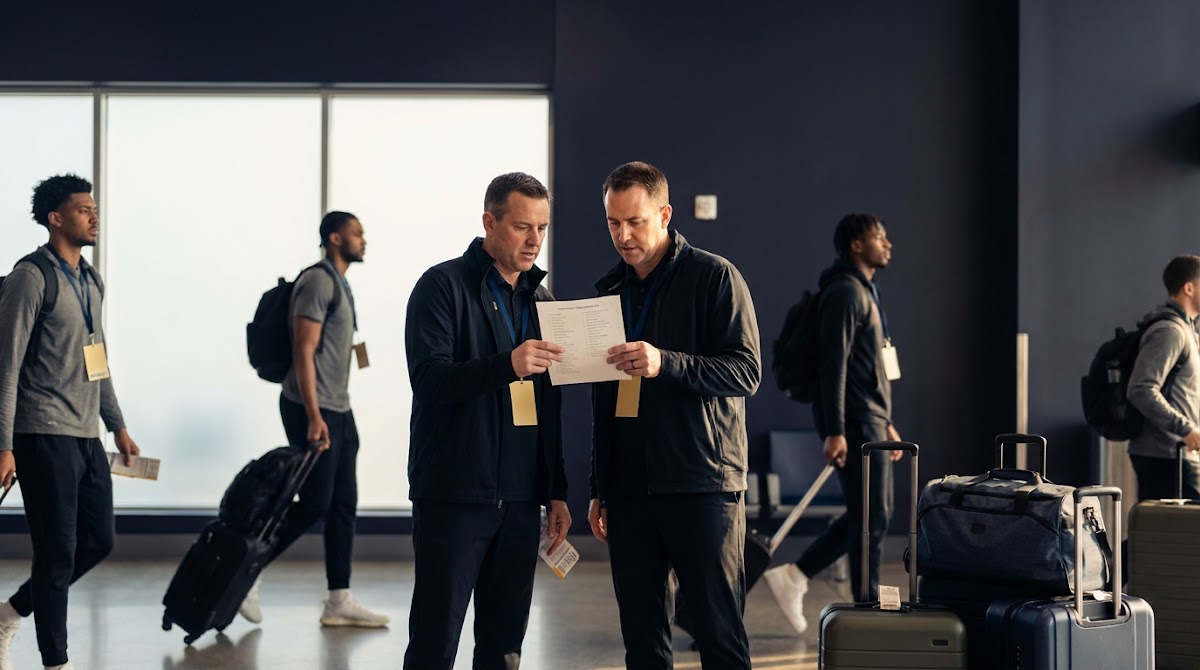
What we mean by travel effects: definition and context
Definition: travel, time zones and circadian disruption
When we talk about travel effects we mean the chain of disturbances that starts with crossing time zones or changing sleep schedules and ends with poorer sleep, daytime sleepiness and reduced cognitive sharpness. The phrase covers circadian disruption, sleep loss and related fatigue, together with downstream impacts on attention, reaction time and decision making. This practical definition is grounded in clinical guidance that crossing time zones commonly produces jet lag symptoms in the first one to three days after arrival, and those symptoms include reduced alertness and impaired performance CDC guidance on jet lag.
The focus here is college basketball, where short travel windows, class schedules and variable charter or bus options change the risk calculus. Coaches and athletic staff need concise, operational descriptions so they can decide when to add arrival buffers or when to emphasize sleep banking. How Travel Affects College Basketball Teams is the working phrase we will use throughout to tie the physiology to practical travel plans.
Printable travel checklist and planning resources
Download or print the condensed travel checklist inside this article to use before your next road trip; it is designed for quick reference by coaches and staff.
Why this matters for college basketball (games, academics, logistics)
College teams operate inside academic calendars and compliance windows that restrict when trips can start and end. Those constraints often force shorter arrival times and compressed schedules, which magnify the consequences of circadian disruption and sleep loss for players. The result can be smaller margins for error on close game nights and higher perceived exertion in late game periods, outcomes that matter when rosters are shallow and substitution options are limited Australian Institute of Sport travel guidance.
Three practical consequences follow: prioritize which games merit arrival buffers, standardize travel checklists so small mistakes do not accumulate, and track simple readiness metrics so decisions about minutes and rotations are evidence informed. These actions convert the concept of travel effects into operational changes that fit academic and budgetary limits.
How travel disrupts physiology and performance
Circadian rhythm basics and the sleep performance link
Circadian rhythms are the internal daily cycles that regulate sleep and alertness, driven by a central clock in the brain called the suprachiasmatic nucleus. When local clock time and the internal clock diverge because of travel, sleep timing shifts, sleep latency changes and total sleep time often falls, which reduces next day alertness and cognitive function. This mechanism explains why short term disruptions after travel typically affect mood, attention and reaction time AASM overview on jet lag.

Because the suprachiasmatic nucleus responds strongly to light and to scheduled sleep, the timing of exposure to bright light or darkness can speed or slow adaptation. That link is central to practical countermeasures discussed later, since aligning light and sleep timing to destination time supports phase shifting and improved sleep opportunity.
Acute effects on alertness, decision making and perceived exertion
In the first 24 to 72 hours after crossing time zones, athletes commonly report increased sleepiness, slower reaction times and higher perceived exertion for the same workload. These acute effects create on court risks such as slower defensive rotations, delayed split second reads and more frequent late game mental errors. The timing window of greatest risk is well documented in travel guidance and clinical summaries CDC guidance on jet lag.
For coaching staff, the practical takeaway is that even small drops in decision speed or attention can change substitutions or play calls. Simple readiness checks and conservative minute allocations in the first day after long travel help manage that risk without drastic lineup changes.
Direction and timing: why eastbound trips are usually harder
East versus west: phase advance versus phase delay
Travel direction matters because the internal clock adapts differently to phase advance and phase delay. Eastward travel requires the clock to move earlier, a phase advance that is harder physiologically than the phase delay needed for westward travel. This directionality is supported by recent analyses of eastward jet lag eastward jet lag study. Sport medicine guidance recommends more proactive phase advance strategies for eastbound trips, such as morning light exposure and earlier sleep timing AASM overview on jet lag.
In practice, that means the same trip length can require very different preparation depending on whether the team is flying east or west. Coaches should plan so that travel direction shapes the sleep and light plan rather than treating all trips identically.
Weigh game importance, number of time zones crossed and roster depth; document tradeoffs and use readiness metrics to guide minute management and schedule negotiations.
Interaction with game tipoff times and circadian phase
Tipoff time interacts with direction because a game at an unusual local hour may fall at a low point in players wakefulness if adaptation is incomplete. Morning and early afternoon tipoffs are often more affected by residual jet lag after eastward travel, while late evening games may align better with delayed schedules after westward trips. Aligning practices or shootarounds to destination time helps bridge this gap and improves readiness for the scheduled tipoff Australian Institute of Sport travel guidance.
When planning, consider both travel direction and game hour; treating them as separate factors underestimates the combined impact on on court sharpness and stamina.
Itinerary design: arrival buffers, travel sequencing and scheduling
Arrival buffer rules of thumb
A practical rule is to aim for an arrival buffer of roughly 24 to 48 hours per time zone crossed for high importance games when feasible. This buffer gives time to realign sleep and light schedules and to recover from travel fatigue before competition. The recommendation to allow this kind of buffer appears across applied sports travel frameworks and institute guidance Australian Institute of Sport travel guidance.
When budgets or class schedules prevent full buffers, prioritize arrival time for the most important contests and accept compressed mitigation measures for lower importance games. Explicitly documenting those tradeoffs makes follow up review easier after the trip.
Avoiding travel plus late finish plus early departure traps
One frequent scheduling error is combining late finishes, curtailed sleep, and early departures which erodes recovery rapidly. Avoiding overnight games followed by early morning departures, or ensuring an additional overnight in the destination after a late finish, reduces the cumulative sleep debt that impairs decision making and increases injury risk Sports Medicine review on travel fatigue.
If you cannot avoid such traps, use targeted actions like sleep banking before the trip, assigning lower minutes to players most affected, and shifting the practice schedule so players can rest before travel. These steps reduce the likelihood of acute performance slips that follow tightly sequenced travel.
Sleep, light and pharmacology: practical countermeasures
Sleep scheduling and sleep banking
A multimodal approach is superior to relying on any single intervention. Teams should combine sleep timing adjustments, scheduled light exposure, cautious melatonin use and caffeine timing rather than searching for a single cure. Reviews of athlete travel strategies emphasize that no single countermeasure eliminates jet lag but combined plans reduce symptoms and improve readiness Sports Medicine review on managing travel fatigue.
Sleep banking, which means adding extra sleep in the days before a trip, can reduce the size of the sleep debt that accumulates. In addition, shifting bedtime and wake time gradually toward the destination schedule before departure helps shorten the adaptation window if logistically possible. These pre travel steps are low cost and often feasible within team routines.
Timed light exposure and melatonin, plus caffeine timing
Timing light exposure to destination morning or evening enhances phase shifting. After eastward travel, morning bright light supports phase advance. After westward travel, evening light favors phase delay. This targeted light timing is practical and widely recommended in athlete guidance Australian Institute of Sport travel guidance.
Melatonin can be useful when carefully timed and dosed to support phase shifts, typically under medical oversight. Caffeine remains a useful short term alerting tool when used strategically before important periods of performance and avoided close to sleep opportunity. Because evidence quality varies, involve medical staff in dosing decisions and do not substitute supplements for basic sleep and light planning AASM overview on jet lag.

Nutrition, hydration and in flight recovery strategies
Hydration and meal timing relative to destination time
Aligning meal timing to destination time supports phase shifting and reduces metabolic confusion. Smaller, well timed meals and attention to hydration during travel help preserve sleep quality and limit daytime fatigue. Practically, plan team meal windows that track the destination schedule as soon as feasible after boarding to support adaptation Sports Medicine review on travel fatigue.
Avoid heavy or alcohol laden meals close to scheduled sleep at the destination because those choices worsen sleep latency and fragmentation. Encourage light, balanced meals and clear hydration targets during travel days.
In transit mobility and light exposure tactics
During flights and long bus rides, brief mobility, calf exercises and scheduled standing reduce stiffness and support circulation while offering brief windows for planned light exposure. When possible, use seat selection or cabin lighting to get appropriate bright light at destination aligned times or use short outdoor exposure after landing to speed phase shifting Australian Institute of Sport travel guidance.
Simple in flight protocols such as periodic mobility breaks, compression socks for long flights, and sleep hygiene strategies on board reduce cumulative discomfort and improve the chance of quality sleep after arrival.
Team operations and logistics: checklists, roles and communication
Standardized travel checklist for college programs
Standardization reduces variability. A concise travel checklist should include a sleep plan, light plan, nutrition and hydration schedule, active recovery steps and documented contingency buffers so everyone knows the intended approach and fallback options. Using the same checklist across trips builds institutional knowledge and makes audits straightforward Australian Institute of Sport travel guidance.
A printable travel worksheet for game week
Use before departure
Roles: coach, trainer, logistics lead and athlete responsibilities
Assign clear roles: the logistics lead manages bookings and arrival times, the athletic trainer oversees sleep and recovery protocols, coaches set practice timing and minute management, and players follow individualized sleep and nutrition tasks. Clear assignment of responsibility improves compliance and makes post trip reviews actionable BMJ Open Sport and Exercise Medicine overview.
Document decisions and the reasons for tradeoffs so athletic directors and academic staff can understand the performance cost and justify exceptions to class schedules when needed. This documentation is also useful when evaluating whether a particular travel mitigation was effective.
Recovery modalities and short term readiness checks
Active recovery, naps and sleep hygiene on game day
Planned naps, light aerobic activity to promote blood flow and strict sleep hygiene protect sleep opportunity in the 24 to 48 hours around a game. Short, strategic naps of 20 to 30 minutes before evening games can boost alertness without disrupting nighttime sleep. Prioritizing consistent pre game routines reduces variability in readiness Sports Medicine review on travel fatigue.
Protect the last sleep window before competition by limiting late evening team activity and by advising players on bedtime routines that include low light and reduced screen time.
Simple readiness metrics coaches can track
Low burden metrics such as subjective wellness scores, nightly sleep duration tracking and short reaction time or attention tests provide actionable information in travel heavy stretches. These measures are easy to implement and correlate with short term readiness, letting coaches tweak minutes or substitution patterns based on current state rather than assumption BMJ Open Sport and Exercise Medicine overview.
Use these checks to make small tactical changes, for example reducing minutes for players who report poor sleep and increasing rotation depth to preserve key players for late game situations.
What the competition data tells us and its limits
Cross sport professional evidence for travel costs
Analyses of professional leagues show a consistent signal of small but measurable performance penalties after time zone travel and during congested schedules. While the magnitude varies by sport and level, the directional result supports the idea that travel imposes a cost that teams should manage Scientific Reports analysis of time zone travel costs.
These competitive studies help set expectations but should not be used to predict exact outcomes for college teams. They are best treated as directional evidence that motivates careful itinerary and recovery planning.
Limitations of applying pro league data to NCAA basketball
College teams differ from professional squads in roster depth, travel budgets, academic obligations and frequency of back to back travel. These differences mean that effect sizes seen in pro data may not replicate exactly in NCAA contexts. The physiological mechanism of circadian disruption is shared, which makes the professional findings directionally useful, but local measurement within each program remains essential to refine plans BMJ Open Sport and Exercise Medicine overview.
Programs should therefore treat pro level evidence as a starting point and collect their own readiness and outcome data to make NCAA specific adjustments.
College constraints and cost benefit tradeoffs
Academic calendars, budgets and charter variability
Common constraints include class schedules that restrict departure times, limited budgets that force bus travel or single day returns, and variability in charter availability. These constraints shift the decision from ideal mitigation to acceptable compromise. Documenting the tradeoffs and linking them to readiness outcomes helps administrators evaluate the real benefit of extra arrival time Australian Institute of Sport travel guidance.
When budgets force bus travel, plan additional recovery time and use mobility and sleep strategies during transit to reduce harm. When budgets allow charters, prioritize arrival buffers for high importance contests.
When to accept a travel risk and when to push for schedule change
Use a decision framework that weighs game importance, number of time zones crossed, and available recovery resources. For low importance conference games, accept some travel risk; for tournament games or rivals with playoff implications, push for arrival buffers and additional recovery resources. Record the rationale so that future schedule negotiations are based on documented costs and benefits Sports Medicine review on managing travel fatigue.
Transparency with academic staff about why specific exceptions to class schedules are requested increases the likelihood of approval and reduces friction when making tradeoffs for player welfare and competitive readiness.
Common mistakes and pitfalls teams make
Overreliance on a single countermeasure
A frequent error is expecting a single fix to solve travel fatigue, such as thinking caffeine or a supplement will replace a coherent sleep and light plan. Evidence reviews indicate that multimodal plans are necessary because no single intervention eliminates jet lag Sports Medicine review on travel fatigue.
Practical fix: implement checklists that combine sleep banking, timed light and hydration, and review outcomes after each trip so the team learns which elements matter most locally.
Ignoring game tipoff timing in the plan
Not tailoring the plan to the actual tipoff time is another common mistake. A late evening game after eastward travel is a different physiological problem than an early afternoon game after the same trip. Match sleep and light timing to the scheduled game hour and practice slot to reduce surprises Australian Institute of Sport travel guidance.
Make tipoff time a required field on every trip worksheet so the staff builds tailored plans rather than one size fits none.

Practical scenarios: sample itineraries and templates
Short westbound trip (1 time zone)
Sample itinerary for a one time zone westward trip: depart late afternoon, arrive early evening, follow destination dinner aligned to local time, schedule a 20 to 30 minute nap the next afternoon if needed, and hold a shootaround aligned to local tipoff time. Westward trips typically require less pre travel shifting and benefit from later light exposure in the evening to favor phase delay Australian Institute of Sport travel guidance.
In this scenario keep hydration and light meals to support sleep and limit caffeine after mid afternoon on arrival day to protect the first night sleep opportunity.
Long eastbound trip (3 plus time zones) and tournament swing
For a three or more time zone eastward trip, use an arrival buffer of 24 to 48 hours per time zone crossed when possible, begin sleep shifts several days before departure if schedules allow, and prioritize morning light exposure after arrival to speed phase advance. These principles appear across institute recommendations and review literature Sports Medicine review on travel fatigue and in clinical case reports illustrating long haul effects.
For tournament swings that include mixed bus and flight legs, sequence longer flights earlier in the swing to maximize recovery time before elimination games, and use readiness checks to adjust minutes through the swing so players with poor sleep scores get managed minutes.
Tournament swing example showing bus and flight sequencing
Example sequence: bus to regional airport, short flight to hub, overnight buffer in hub then final flight to tournament city. Where possible add an extra overnight in the tournament city before the first elimination game and use the second day for light aligned walkouts and a brief shootaround. Monitor wellness scores daily and adjust rotation depth as needed to protect key players.
Document the itinerary and the rationale for each buffer so post tournament review can quantify the benefit of each mitigation element.
Quick checklist and short playbook for game week travel
Pre travel: seven day prep
Seven day prep should include: start a gradual sleep shift toward destination time, increase nightly sleep opportunity where possible, reduce late night team activities, set meal windows based on target time zone and plan hydration targets. These steps reduce sleep debt and shorten adaptation time after arrival CDC guidance on jet lag.
Include a short briefing for players that explains the individual tasks and why they matter to compliance. Clear explanation increases buy in and reduces inconsistent application across the roster.
Game day and post game items
Game day actions: schedule a short nap if sleep was limited, use light exposure to match game hour, keep pre game meals light and timed to destination schedule, and run a brief readiness check before tipoff. Post game: prioritize recovery sleep, light aerobic cooldown, and record sleep and wellness data for post trip review Sports Medicine review on travel fatigue.
These items form a compact playbook that teams can print and use as a two page checklist for most trips.
Conclusion: balancing evidence, constraints and continuous improvement
Key takeaways
Travel disrupts circadian rhythms and sleep and that disruption commonly produces jet lag symptoms most pronounced in the first one to three days after crossing time zones. Multimodal mitigation that combines itinerary planning, sleep and light timing, nutrition and hydration reduces symptom burden but does not completely eliminate travel risk CDC guidance on jet lag.
Programs should adopt standardized checklists, collect simple readiness metrics and iterate on plans using local data, because large scale NCAA specific causal estimates remain limited and local measurement improves decision making Scientific Reports evidence on travel costs.
Jet lag symptoms are typically most pronounced in the first one to three days after crossing time zones, though individual recovery varies.
Use a multimodal plan that combines sleep banking, timed light exposure, aligned meal timing, hydration and cautious caffeine use while involving medical staff for supplements.
Push for arrival buffers when the game is high importance, multiple time zones are crossed or roster depth is limited and resources permit extra travel time.
References
- https://wwwnc.cdc.gov/travel/page/jet-lag
- https://www.ais.gov.au/recovery/travel
- https://sleepeducation.org/sleep-disorders/jet-lag/
- https://link.springer.com/article/10.1007/s40279-020-01204-0
- https://bmjopensem.bmj.com/
- https://www.nature.com/articles/s41598-017-17928-9
- https://www.fundedplays.com/challenges
- https://pmc.ncbi.nlm.nih.gov/articles/PMC9245584/
- https://www.frontiersin.org/journals/sports-and-active-living/articles/10.3389/fspor.2026.1745296/full
- https://www.fundedplays.com/blogs
- https://www.fundedplays.com/blogs/how-fundedplays-evaluations-work
- https://www.fundedplays.com