

Why track rule violations and near misses? Definition and context
What counts as a rule violation and a near miss
Organizations track rule violations and near misses to turn isolated events into learning opportunities and to prevent future harm. A rule violation typically means an action or omission that departs from a written procedure or a clearly stated requirement, while a near miss is an incident that could have caused harm but did not, either by chance or timely intervention. Structured documentation of both kinds of events is central to building a learning safety system and supports follow-up actions that reduce recurrence, consistent with incident-investigation guidance.
When teams capture both violations and near misses they widen the signal set available for prevention. Near misses often appear earlier and more frequently than injuries, so they act as leading indicators of latent system weaknesses. Recording these events in a standard format makes it possible to spot patterns before they produce harm.
Regulatory and standards context, How to Track Rule Violations and Near Misses
Different jurisdictions and standards treat near misses and violations differently; where a legal duty exists it must drive your triage and reporting rules. For example, regulatory guidance describes structured incident documentation and root-cause analysis as core elements of an investigation program OSHA incident investigation guidance.
In some countries certain near-miss events are legally reportable, so tracking them is not just a prevention exercise but a compliance requirement. The UK regulations list specific dangerous occurrences that are reportable, showing that near-miss signals can have direct regulatory implications RIDDOR dangerous occurrences guidance.
Beyond regulation, international standards like ISO 45001 expect organizations to document incidents, perform root-cause analysis, and record corrective actions as part of a continuous improvement cycle, which aligns reporting with management-system goals ISO 45001 overview.
Copy a starter incident checklist and begin consistent tracking with the FundedPlays Challenges approach
Use a single, consistent incident template from the start so teams know what to record and can copy a starter checklist into their reporting tool.
Core workflow: capture, triage, analyze, act, review
Step 1: Capture with a consistent template
Start with a fixed capture template that enforces the same fields for every report and reduces missing data. Insist on date/time, location, short description, immediate controls taken, and who reported the event. A consistent template makes it possible to aggregate and compare events across teams and time, which is essential for meaningful trend analysis.
Where available, use established common formats as a baseline for field lists so classifications are consistent. Standardized taxonomies reduce ambiguity and support later analysis AHRQ Common Formats overview (see AHRQ PSO overview).
Step 2: Triage by severity and regulatory duty
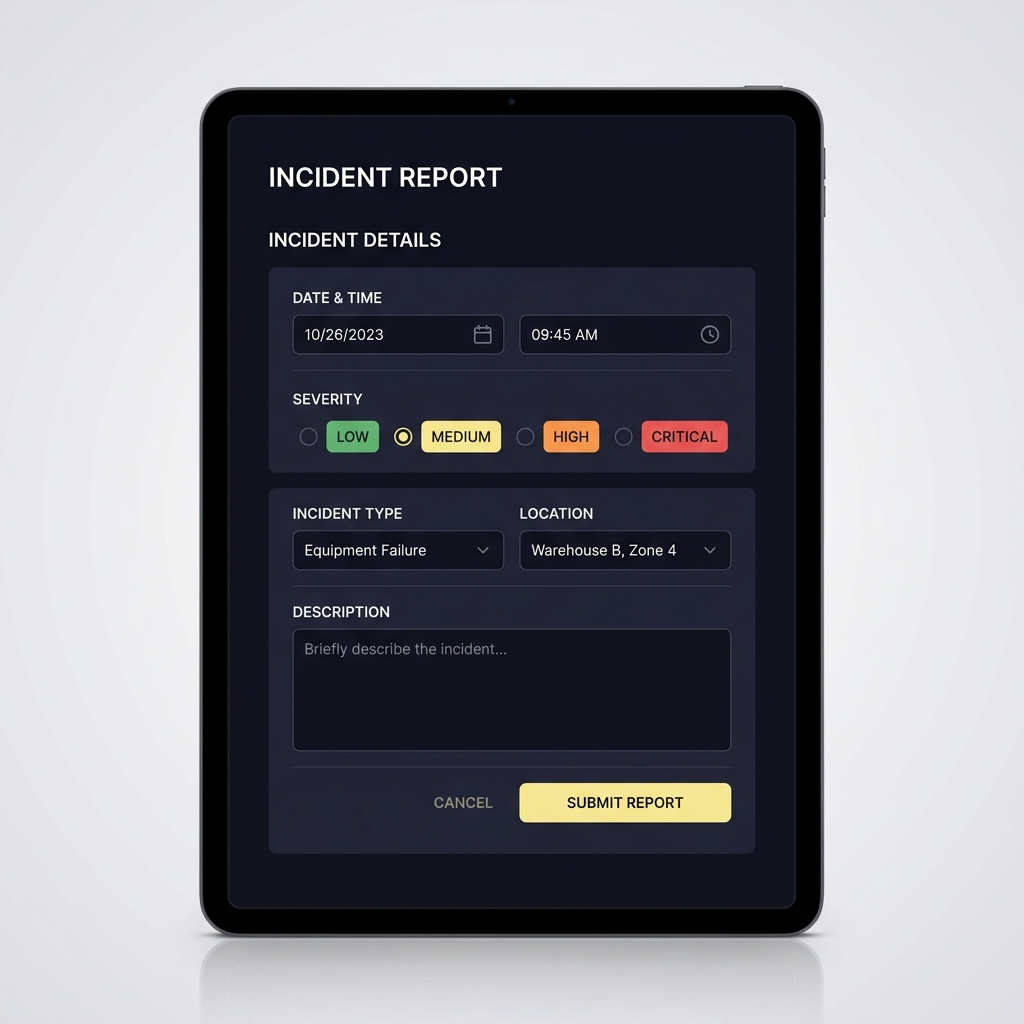
Apply a simple triage rubric on receipt: immediate hazard present, potential for serious harm, need for regulatory reporting, and scope for quick corrective action. Triage should be fast, documented, and visible so that higher-risk items are escalated without delay. Make regulatory mapping part of triage so reportable events are identified early and not missed.
Document which jurisdictional duties might apply during triage and include a field that flags events for potential external reporting when they meet local thresholds.
Step 3: Root-cause analysis
When triage indicates a full investigation is needed, use structured root-cause methods such as the 5 Whys or a fishbone diagram to move the team from symptoms to systems and process causes. These techniques align with incident-investigation practices recommended in safety guidance and help convert a report into actionable fixes OSHA incident investigation guidance.
Keep RCA outputs focused: a clear problem statement, mapped timeline, causal factors, and a prioritized list of corrective actions with assigned owners and deadlines.
Step 4: Implement and track corrective actions
Record corrective actions in the same system as the original report and require an owner, due date, and verification step. Tracking completion and the effectiveness of actions closes the learning loop and prevents recurring issues. A single source of truth for both reports and actions reduces the risk that fixes fall through organizational cracks.
Short status updates should be visible to the reporter and relevant supervisors so the program shows results and builds trust in the process.
Step 5: Periodic review and learning loop
Convene a regular review-monthly for operational teams and quarterly for governance-to look at trends, repeated contributors, and the status of corrective actions. Reviews should translate patterns into prevention plans and training priorities rather than focusing solely on blame.
Make the review agenda consistent and use standardized dashboards and reports so stakeholders can compare performance over time and assess whether controls are improving.
Designing your reporting form and taxonomy
Required data elements drawn from common formats
Design forms using a core set of fields that align with common formats: date/time, location or unit, brief event narrative, immediate harm or potential severity, people involved or exposed, controls in place, and immediate corrective steps taken. These fields provide the minimum needed for classification and initial analysis.
Using a standard set of fields makes later aggregation and trend detection reliable, and it reduces the need for rework when an event moves from triage to full investigation AHRQ Common Formats overview.
For each field, define acceptable values or picklists where feasible. For example, use a short list of locations, a severity picklist, and a controlled list of contributing factors to avoid free-text drift.
Use a five-stage workflow: capture with a consistent template, triage by severity and regulatory duty, perform root-cause analysis when needed, implement and track corrective actions, and review KPIs regularly to guide prevention.
Anonymization fields are useful where confidentiality encourages reporting: include an option to mark a report as anonymous and a separate field for contact information if the reporter is willing to be contacted. Decide in policy when identifying data is required, for example when regulatory reporting is likely or a follow-up interview is essential.
Classifying severity, outcome and contributing factors
Classify events by potential severity and actual outcome. Have separate fields for immediate outcome (injury, property damage, none) and potential severity (low, medium, high) so that near misses with high potential severity are clearly visible for investigation.
Capture contributing factors with a controlled taxonomy so recurring causal themes emerge in trend reports rather than being buried in open text AHRQ Common Formats overview.
Anonymization and confidentiality fields
Include a confidentiality flag and a short explanation of how you will protect reporter identity. Confidential submission options and a clear non-punitive statement increase reporting rates and improve the candor of reports, which supports better learning EASA annual safety review.
Prioritization and decision criteria for triage
Severity scoring and thresholds
Use a simple severity-scoring table that combines potential harm and likelihood of recurrence to give a numeric triage score. Scores above a defined threshold trigger an investigation; lower scores may only need local corrective action and monitoring. Keep scoring rules explicit and documented so decisions are repeatable across reviewers.
Include recurrence potential as a factor so repeated low-severity violations that indicate systemic issues can be escalated even if each event seems minor.
Regulatory mapping and escalation
Map common event types to local reporting duties. For jurisdictions with detailed recordkeeping rules, follow those definitions when computing lagging metrics and deciding whether to report externally. For example, U.S. recordkeeping rules provide the definitions used to compute standard injury and illness metrics 29 CFR 1904 definitions (see OSHA recordkeeping guidance).
For regimes like the UK, include RIDDOR mapping for dangerous occurrences in the triage checklist so reportable near misses are escalated to legal reporting promptly RIDDOR dangerous occurrences guidance.
When to open a full investigation
Open a full RCA when an event exceeds the severity threshold, when the event is novel or recurrent, or when regulatory reporting requires documentation. Define timelines for initiating investigations and for reporting interim findings so evidence is preserved and stakeholders are informed.
Document the decision rationale for whether a full investigation was opened and retain the triage record with the original report for auditability.
KPIs and dashboards: pairing leading and lagging indicators
Core lagging metrics and how to compute them
Use lagging indicators computed from official definitions where applicable. If you operate in jurisdictions that follow OSHA-style recordkeeping, compute standard incident rates according to those definitions to maintain comparability and legal compliance 29 CFR 1904 definitions.
Lagging metrics remain important as historical performance markers, but they should not be the only basis for deciding prevention priorities.
Leading indicators to include on a safety scorecard
Pair lagging metrics with leading KPIs such as near-miss reporting rate per 100 employees, median time-to-triage, percentage of corrective actions closed on time, and repeat-event frequency. Leading indicators show whether controls are improving before harmful events occur and help prioritize prevention work.

Visualize KPIs with simple charts: a trend line for near-miss reporting rate, a stacked bar for action-closure status, and a table of top contributing factors. Keep dashboards concise for operational teams and provide a summarized executive dashboard for governance reviews. For examples, see our blog.
How to interpret trends and avoid misreading data
Be careful: an increase in near-miss reports can mean either that risk has increased or that reporting has improved. Use contextual metrics such as a reporter participation rate and anonymous submission counts to distinguish between those causes.
Combine metrics into a balanced scorecard that includes data quality signals, process-speed indicators, and outcome measures so leaders are guided toward prevention efforts instead of blame.
Building a confidential, non-punitive reporting culture
Policies that support confidentiality and non-punitive responses
Adopt an explicit non-punitive policy and communicate it clearly in the reporting form. Consider using OSHA's near-miss reporting policy template to shape local wording Near Miss Reporting Policy. Emphasize learning and systems fixes rather than individual blame, and reserve disciplinary steps for cases of willful misconduct defined in policy. A visible protection statement on forms and a confidential submission option make it safer for people to report issues.
Confidential, non-punitive reporting consistently increases participation and data quality, which strengthens the program’s ability to detect meaningful signals and learn from them EASA annual safety review.
Communications and training to increase participation
Train teams on what to report and how to use the form. Regular communications that highlight closed actions and examples of learning create positive reinforcement and normalize reporting as part of daily work.
Measure training impact by tracking reporting frequency before and after campaigns and by surveying staff confidence in the reporting process.
Feedback loops and visible learning actions
Close the loop quickly: acknowledge every report, provide progress updates, and publish short summaries of corrective actions taken. Visible feedback demonstrates that reports lead to change and motivates ongoing participation.
Make feedback accessible to front-line teams and supervisors, and include examples in periodic reviews so the lessons are reinforced across the organization.
Common mistakes and how to avoid them
Underreporting and reporting bias
Underreporting masks real risks and skews priorities. Encourage reporting by offering anonymous options and by communicating quick wins from past reports so people see the value. Monitor reporter participation rates to identify teams that may need more encouragement or training.
Relying only on lagging metrics is another common error; add leading indicators and participation signals to get a fuller picture of safety performance 29 CFR 1904 definitions.
Inconsistent classification across units
Inconsistent taxonomy makes trend detection unreliable. Enforce picklists, provide short coding guides, and run periodic coding audits so different units classify similar events the same way. Use the Common Formats approach to align fields and values across teams AHRQ Common Formats overview.
Severity scoring rubric for triage
Use for initial triage decisions
Failing to close corrective actions is a practical failure mode. Assign owners, deadlines, and a verification step to every action. Dashboard those items so missed closures are visible to managers and governance reviewers.
Failing to close corrective actions
Track overdue actions and escalate after defined timelines. Simple rules-owner assignment, a specific due date, and a verification checkbox-reduce the chance that corrective work stalls.
Document the verification evidence and link it to the original report so reviewers can see both the problem and the proof of the fix.
Practical scenarios and templates you can use today
Scenario A: single near miss with high potential severity
Scenario: A worker slips on a wet floor but is caught by a handrail; no injury occurred. Triage flags high potential severity because a fall could lead to serious harm. Immediate control: cordon area and add temporary signage. Investigation: short RCA with 5 Whys to identify why the floor was wet and why no warning was present.
Action plan: assign a corrective action to fix drainage, schedule a housekeeping review, and add a recurring inspection task. Record each action with an owner and due date so closure can be tracked.
Scenario B: repeated low-severity rule violations indicating a systemic issue
Scenario: Several operators bypass a lockout procedure to speed a setup, producing multiple low-severity reports. Triage scores are low individually but recurrence potential is high. Investigation: open a focused RCA to explore root causes such as process complexity or time pressure.
Action plan: simplify the procedure, provide targeted training, and monitor the repeat-event frequency to verify the fix. Use the taxonomy to tag these as the same contributing factor so trend reports reflect the pattern.
Scenario C: cross-unit trend detected by taxonomy
Scenario: Taxonomy analysis shows a rising count of near misses linked to equipment maintenance across three units. Use a cross-unit review to examine shared maintenance practices, tooling, and vendor schedules.
Action plan: create a joint corrective action, assign a cross-unit owner, and set measurable verification steps. Capture the review notes in the system so future audits show the coordinated response and its outcome AHRQ Common Formats overview.

Mini template to copy into a reporting tool: Date/Time, Location, Reporter (optional), Brief description, Immediate controls, Potential severity (low/medium/high), Contributing factors (picklist), Immediate actions assigned (owner/date), Regulatory flag (yes/no), Investigation opened (yes/no), Corrective actions (owner/due/verification).
Wrap-up: governance, continuous improvement, and next steps
Setting governance and roles
Assign clear governance roles: a program owner who sets policy and dashboards, investigators who run RCAs, local managers who own corrective actions, and an executive sponsor who reviews key metrics. Clear role definitions keep work flowing and ensure accountability for closures.
Document decision rights for triage, investigation thresholds, and regulatory escalation so decisions are defensible and repeatable across the organization.
Periodic program review and revision
Review the program periodically: validate taxonomy, adjust thresholds if needed, and examine whether anonymization rules remain fit for purpose. Revisit prioritization logic as data accumulates so the program continues to focus scarce resources on high-risk trends ISO 45001 overview.
Quick start checklist
Quick start steps for the first 90 days: adopt a standard form, define triage thresholds, set up basic dashboards with leading and lagging KPIs, run an initial communication and training wave, and begin monthly reviews to close the first set of corrective actions. For more resources visit Funded Plays.
Record local choices-such as when to require identifying information or how to score severity-and revisit those decisions after three to six months when more data is available. Read about how our evaluations work here.
Be careful: an increase in near-miss reports can mean either that risk has increased or that reporting has improved. Use contextual metrics such as a reporter participation rate and anonymous submission counts to distinguish between those causes.

A rule violation departs from a written procedure or requirement, while a near miss is an event that did not result in harm but had the potential to do so.
No. Use triage to prioritize full investigations for events with high potential severity, recurrence risk, or regulatory implications; others can receive local corrective actions and monitoring.
Offer confidential or anonymous reporting options, state a non-punitive policy, provide quick feedback on actions taken, and train staff on what and how to report.