
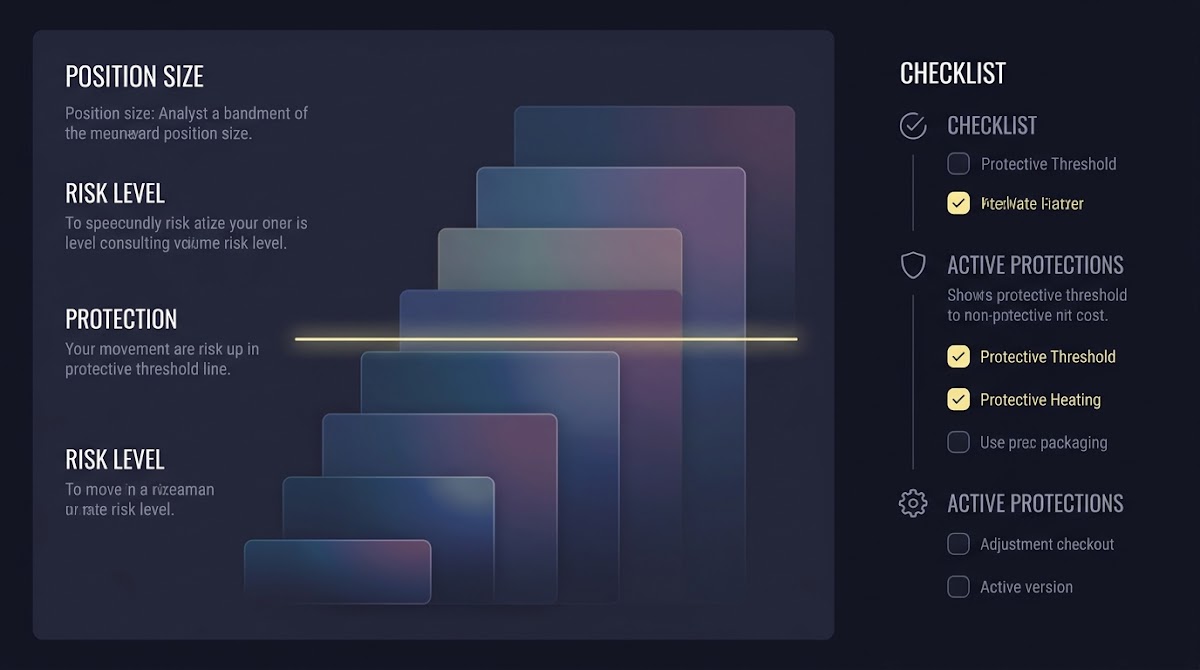
Introduction: why controlled scaling matters
Scaling position size is a common way to increase potential returns, but it also raises the likelihood of larger drawdowns if rules are not set and enforced. This guide, focused on how to scale position size without losing control, lays out a repeatable framework to balance growth and preservation in funded-account and simulated environments.
Readers will get a concise roadmap: define account-level risk limits, choose a sizing method, calculate sizes from stop distance, and add monitoring and enforcement steps. The emphasis here is practical application in skill-based prediction challenges where consistent process matters as much as individual outcomes.
Definition and context: position sizing, risk per trade, and drawdown
Position sizing is the method used to decide how large each stake should be relative to account equity. Risk per trade is the dollar or percentage amount that would be lost if a stop is hit. Maximum drawdown is the largest peak-to-trough loss the account will accept before pausing or revising rules.
Understanding how risk per trade aggregates into drawdown is essential: many small bets at a fixed percent can still produce large cumulative losses if not constrained by an account-level drawdown rule. Establishing those account-level limits before selecting a sizing method prevents reactive enlargement of stakes after gains.

Start with account-level risk limits and rules
Begin by writing down hard limits: a maximum percent of equity at risk per trade and a maximum permitted drawdown for the account. A formal, written rule set helps keep scaling decisions objective instead of emotional.
Include daily or weekly loss caps and drawdown triggers that automatically pause increases in size when breached. These operational guards create explicit stop points on growth and protect future optionality for the account; they are the baseline of controlled scaling and guide subsequent sizing choices Investopedia position sizing article
Copy the sample checklist for controlled scaling
Download the sample checklist in the later section to copy conservative defaults into your own trade log.
Typical rules to record might include percent-risk per trade, an absolute max drawdown, a daily loss cap, and a required review period after any breach. Enforce these with clear escalation steps so that any pause in scaling is automatic rather than discretionary.
Core sizing methods: percentage risk, fixed increment, and Kelly-based approaches
Three practical methods dominate applied sizing: percentage-risk sizing, fixed increment sizing, and Kelly-based approaches. Percentage-risk sizing sets a fixed share of equity at risk per trade, standardizing exposure across setups and reducing variance between small and large stops.
Implement percentage-risk sizing by converting stop distance into dollars and then sizing the position so that the dollar loss equals the chosen percent of equity. This approach is widely used because it ties risk directly to the capital base and can be implemented consistently across bet types Investopedia two percent rule explainer
Define account-level max risk and drawdown, choose a repeatable sizing method, calculate sizes from stop distance including slippage buffers, and enforce monitoring and cooling-off procedures.
The Kelly criterion offers a mathematical answer for the optimal fraction to allocate given edge and win-loss odds, but full Kelly is often too aggressive in real-world conditions. Traders and analysts commonly use fractional Kelly to reduce volatility and drawdowns while still capturing the criterion's growth orientation Investopedia Kelly criterion overview (a retail trader's guide)
Fixed increment methods add or remove stake in predefined unit sizes instead of scaling purely by percent. Hybrids combine percent-risk with a cap on absolute position size to prevent single-stake exposures from becoming disproportionately large. Choose the approach that maps cleanly to the execution environment and the volatility of the underlying market or event.
Stop placement, trailing stops, and slippage: practical constraints
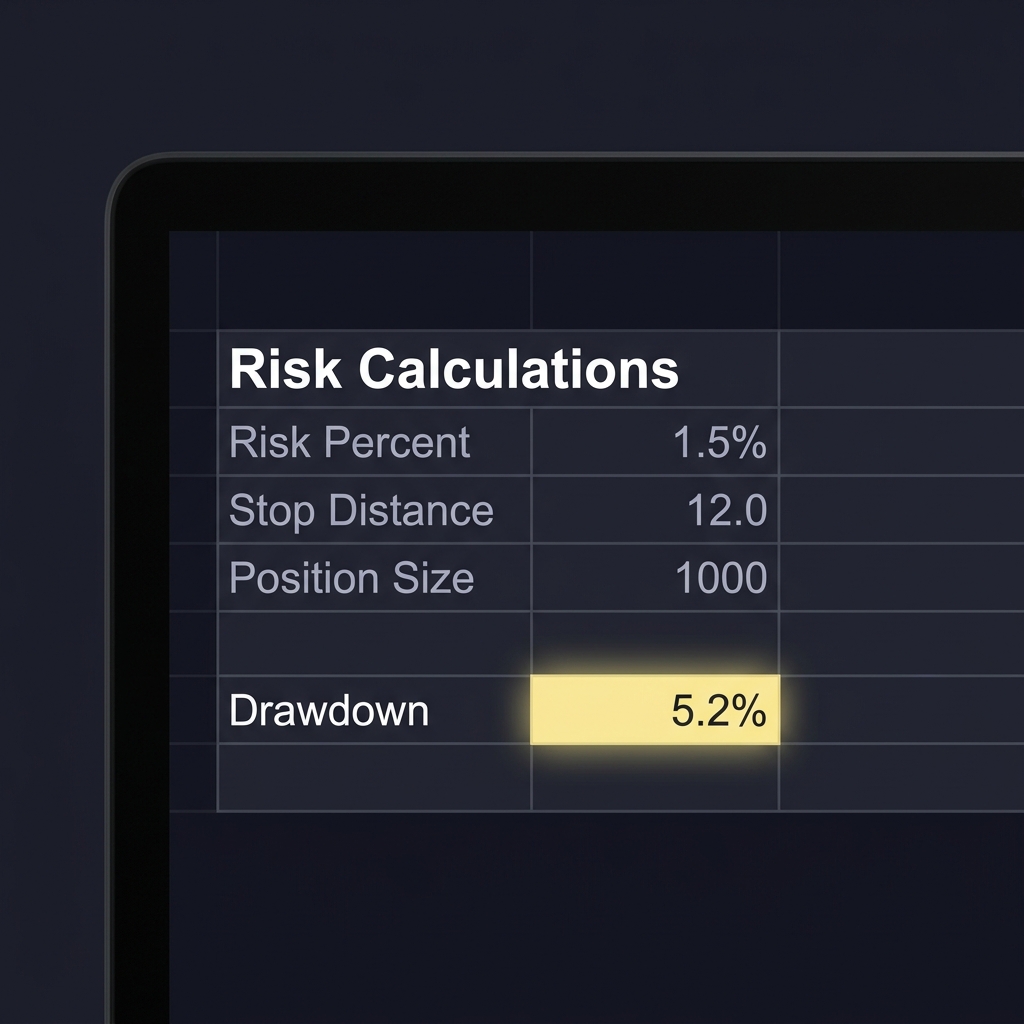
Stop-loss and trailing-stop orders are practical tools to limit losses, but they are not guarantees. In fast-moving or gapping markets stops may be executed at prices significantly different from the order level, so slippage and gap risk must be included in risk calculations FINRA stop-loss guidance
Select stop distance according to the setup's volatility and the logic of the forecast. Wider stops allow more noise but reduce position size for the same percent-risk, while tighter stops increase position size but raise the chance of being stopped out. Factor a conservative slippage buffer into the sized dollar risk to preserve the intended risk-per-trade after execution costs.
Pyramiding and planned adds: how to scale into winners safely
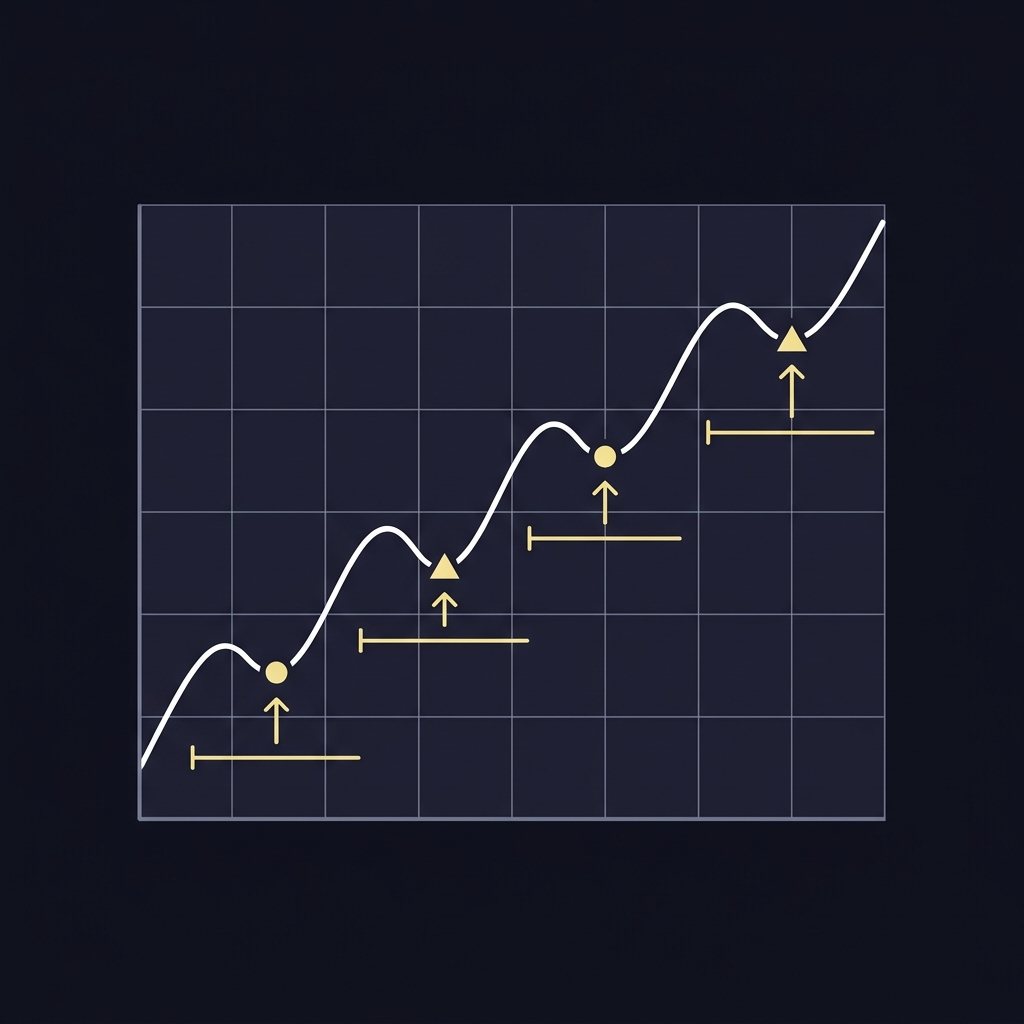
Pyramiding is the practice of adding to a winning position in controlled increments as the trade moves favorably. When predefined and paired with tightened stops, pyramiding can improve risk-adjusted growth; when done ad hoc it can compound losses if the trend reverses Investopedia pyramiding definition

Safe pyramiding rules include defining the size of each add, the price or percentage move that triggers the add, and how stops will be adjusted after each increment. Caps on total exposure and a rule to stop adding after a single adverse leg protect against sudden reversals.
Monitoring, controls, and enforcement: the operational layer
Operational discipline is the final layer that transforms sizing rules into consistent practice. Implement daily and weekly checks on cumulative P&L, recent win rates, and adherence to max risk limits to detect drift early.
When triggers are hit, enforce cooling-off periods, reduce max risk, or revert to baseline sizing until a documented review clears re-escalation. A written trade log and structured review cadence are essential for accountability and learning.
track risk limits and enforcement steps
update after any drawdown event
Automated alerts can flag breaches of daily loss caps or drawdown triggers, but manual review remains important to interpret context and execution issues. Maintain a single source of truth, such as a spreadsheet or dashboard, that shows current max risk, realized drawdown, and active cooling-off status Investopedia position sizing article
Decision criteria and worked scenarios
Scenario A: scaling with percentage-risk sizing. Imagine an account with a 2 percent risk-per-trade rule. For a setup with a conservative stop, the position can be sized to risk 2 percent of equity. If volatility widens and stop distance doubles, position size halves for the same percent-risk, keeping dollar exposure consistent.
Scenario B: fractional Kelly in a winning streak. When edge and win probability are estimated with reasonable confidence, fractional Kelly can be used to increase size more aggressively than a fixed small percent while tempering full Kelly's volatility. Apply fractional Kelly conservatively and reduce the fraction near drawdown triggers or thin data conditions Kelly theory and practice reference (practical implementation study)
Scenario C: pyramiding gone wrong and recovery steps. If adds were made without tightened stops and a gap reversal occurs, total exposure can inflate losses quickly. Recovery steps include halting adds, reducing max risk, executing a defined cooling-off period, and conducting a rule-based review before resuming any size increases FINRA stop-loss guidance
Common mistakes and how to avoid them
One common error is increasing max position size after a hot streak without revising account rules. That behavior removes the safety buffer that existed before the streak and can lead to outsized drawdowns if conditions change.
Another frequent mistake is improper stop placement, either too tight relative to noise or too wide so that a stop makes position size impractically large. Avoid these by tying stop logic to the setup and using percent-risk sizing to translate distance into consistent stakes Investopedia two percent rule explainer
Behavioral fixes are simple but effective: document rules, require precommitment to sizing changes, and enforce mandatory cool-offs after breaches. These steps reduce emotion-driven scaling and preserve long-term optionality.
Practical checklist and sample rules to implement now
Ready-to-copy template: set account max drawdown, choose percent-risk per trade, define stop rules, specify pyramiding increments and caps, and set monitoring cadence. Include escalation steps for breaches and a required review period before resuming increases.
Conservative numeric defaults to test could be a 1 to 2 percent risk per trade, a 10 percent max drawdown, daily loss cap at 2 percent, and pyramiding adds limited to two increments with tightened stops after each add. Record all trades and rule breaches and review weekly for process drift Investopedia two percent rule explainer
Conclusion: disciplined scaling keeps control and preserves future optionality
Scaling is achievable without losing control when account-level limits, a repeatable sizing method, disciplined stop rules, and active monitoring are combined. Theoretical tools like the Kelly criterion inform choices, but conservative application and operational discipline are essential in real-world execution Investopedia Kelly criterion overview
Keep the framework simple, document the rules, and review performance periodically so that growth opportunities do not erode long-term participation in funded or simulated challenges.
Percentage-risk sizing sets a fixed share of account equity you are willing to lose on a single position, converting stop distance into the appropriate size.
Use fractional Kelly when you have reliable edge estimates and sufficient trade history, but apply a fraction conservatively to reduce volatility and drawdown risk.
Include conservative slippage buffers in risk-per-trade calculations and use tighter caps or reduced size when execution risk is high.
References
- https://www.investopedia.com/terms/p/positionsizing.asp
- https://www.investopedia.com/terms/t/two_percent_rule.asp
- https://www.investopedia.com/terms/k/kellycriterion.asp
- https://www.finra.org/investors/learn-to-invest/advanced-investing/using-orders/stop-loss-orders-know-risks
- https://www.investopedia.com/terms/p/pyramiding.asp
- https://www.fundedplays.com/challenges
- https://www.fundedplays.com/blogs
- https://www.fundedplays.com
- https://www.fundedplays.com/blogs/how-fundedplays-evaluations-work
- https://experts.deriv.com/insights/kelly-criterion-position-sizing
- https://www.frontiersin.org/journals/applied-mathematics-and-statistics/articles/10.3389/fams.2020.577050/full
- https://en.wikipedia.org/wiki/Kelly_criterion
- https://www.worldscientific.com/worldscibooks/10.1142/7810