

What we mean by harmful competition: definition and context
Competition versus harmful rivalry, How to Recognize When Competition Becomes Harmful
How to Recognize When Competition Becomes Harmful starts with a clear operational definition: harmful competition is a set of behaviours and pressures that move beyond healthy rivalry and into patterns that damage wellbeing, performance and fair treatment.
In practical terms this includes repeated exclusion, bullying, harassment and excessive pressure that make it harder for people to perform safely and consistently. Framing these behaviours as psychosocial risks helps managers treat them as part of the organisation safety and wellbeing agenda rather than only interpersonal disputes, and it points to systematic prevention and control measures ISO 45003 guidance.
Get the immediate action checklist
Download the checklist in the conclusion and involve your HR or safety lead when you spot any pattern of exclusion, hostility, or rising absence; early coordination makes any next steps fairer and more effective.
Harmful competition differs from healthy rivalry in purpose and process. Healthy competition raises motivation, encourages learning and rewards consistent achievement. Harmful rivalry substitutes cooperation with secrecy or blame, raises chronic stress, and often rewards short term wins that undermine longer term performance.
Using psychosocial risk language is useful because it directs attention to measurable exposures and organisational controls rather than treating problems as isolated personality clashes.
Why organizations use competition and when it helps
Positive roles of competition
Organizations create competition to raise performance, accelerate skill development, and drive innovation. When rules are clear and incentives align with sustainable behaviours, rivalry can sharpen focus and increase throughput without harming people.
Conditions that make competition productive
Competition tends to be productive when targets are realistic, performance rules are transparent, oversight is fair and psychological safety allows people to ask for help. These conditions reduce the chance that people will cut corners or hide problems to win.

Contrast those conditions with poorly designed incentives or unrealistic targets, which increase psychosocial risk by amplifying workload and pushing people into risky behaviours.
Look for observable behaviours: repeated exclusion from team activities, hostile or blaming language, covert sabotage or withholding of information, and increased incivility. These behaviours are not just personality issues, they are cultural signals that competition has shifted into a harmful mode and that cooperation is being eroded CIPD Good Work Index.
Practical examples help you spot the pattern: a peer recognition scheme that routinely sidelines certain groups, or a sales leaderboard that discourages knowledge sharing, both create exclusion and resentment.
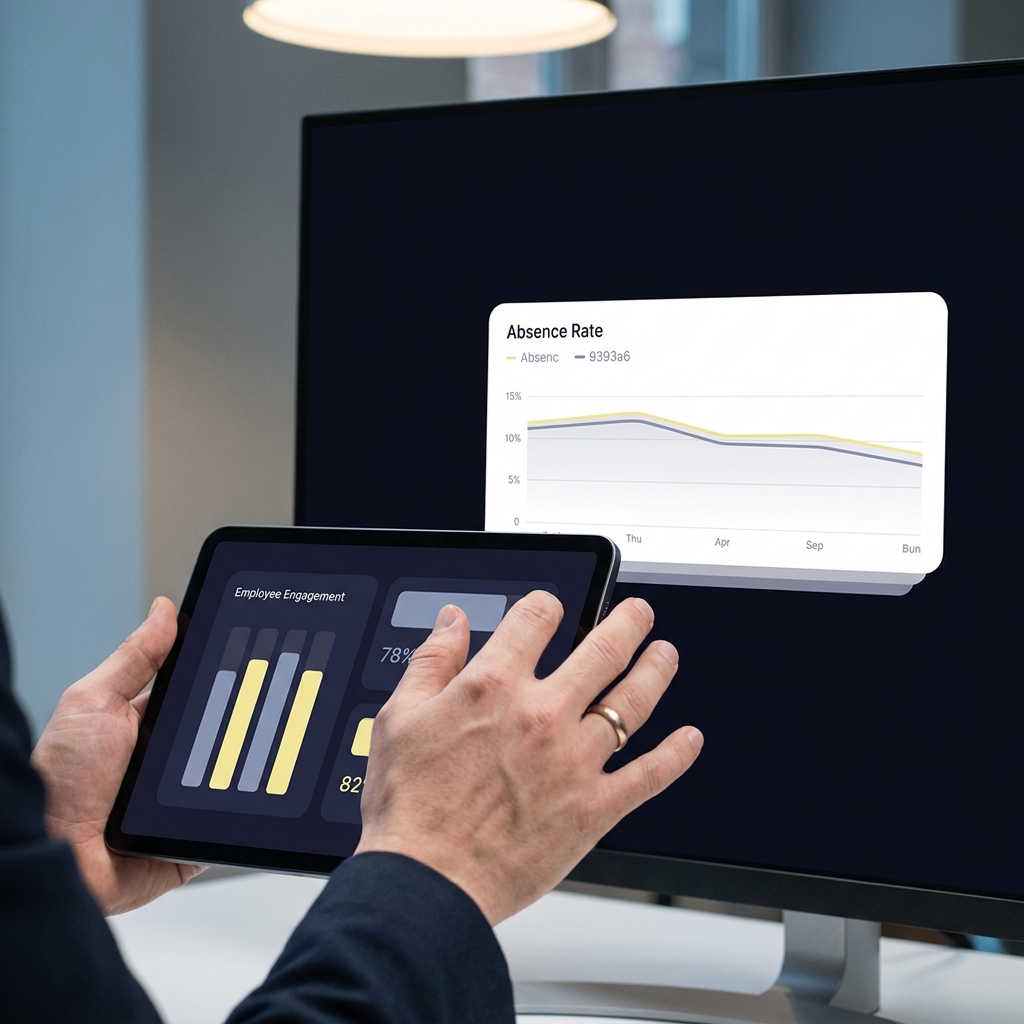
Compare behavioural signs such as exclusion and incivility with measurable KPIs like stress related absence and engagement; rising stress plus falling engagement indicates rivalry may be harmful and warrants a psychosocial risk review.
Pair behavioural observations with wellbeing data. Rising daily stress reports alongside falling engagement should be treated as a combined warning sign that rivalry is harming people and performance Gallup State of the Global Workplace 2024.
Employee voice channels are important at this stage. Encourage confidential reporting and use focus groups to test whether reported conflict is isolated or widespread.
Using the psychosocial risk framework: ISO 45003 in practice
Core steps: identify, assess, control, monitor
ISO 45003 describes a stepwise approach to psychosocial risk that adapts well to competition issues: identify exposures, assess likelihood and severity, select controls, implement changes and monitor outcomes. Treat the process as part of your OH S management system rather than a one off intervention ISO 45003 guidance. See DNV's ISO 45003 services https://www.dnv.com/services/iso-45003-psychological-health-and-safety-at-work-204058/.
Identification examples include reviewing incentive rules, surveying teams about workload and pressure points, and mapping where competition is most intense. Use these inputs to prioritise where controls are needed. See an implementation overview at Risk Training Professionals https://risktrainingprofessionals.com/blog/2025/03/06/introduction-to-iso-45003-managing-psychosocial-risk-in-the-workplace/.
How ISO 45003 translates to workplace competition issues
Controls can be organisational, managerial or individual. Examples include redesigning incentive rules to reward sustained performance, clarifying behavioural expectations, and providing coaching for managers to reduce excessive pressure. Each control should include monitoring so you can show whether change reduces harmful behaviours over time.
Remember that ISO 45003 expects continuous review. Controls that work in one quarter may need adjustment as roles, markets or incentives change.
Measurable indicators and KPIs to watch
Absence and sick leave patterns
Rising stress related absence and working days lost are concrete, measurable signals that competition may have become harmful. Sustained increases in stress related absence should trigger a deeper psychosocial risk review rather than being treated as isolated sickness events HSE work related stress statistics.
Look for changes in short notice absence, clustering in particular teams, or sudden increases in long term sickness that follow periods of high internal rivalry.
Engagement, turnover and incident reporting
Combine absence with engagement and turnover signals. Falling engagement with rising turnover or a spike in incident and grievance reports gives a clearer picture than any single metric alone Gallup State of the Global Workplace 2024.
Make sure your dashboards allow cross filtering so you can see the intersection between engagement, absence and incident reports by team and by incentive program.

How incentive schemes and targets can create harm
Design features that raise risk
Certain design elements increase psychosocial risk: winner takes all rewards, overly tight performance gates, or schemes that reward behaviour that is visible but not sustainable. These features can push people to prioritise short term wins over team outcomes and wellbeing.
The CIPD links workload and management approach to stress and presenteeism, so incentive schemes that intensify workload or rely on punitive monitoring are red flags that should prompt review CIPD Health and Wellbeing at Work 2024.
Quick tests to evaluate an incentive
Run quick checks before launching or renewing a scheme: does the incentive encourage rule bending? Does it create secrecy or individual blame for failures? Will it punish reasonable risk taking? If you answer yes to any of these, rework the design.
Also test whether the scheme allows recovery after poor performance. Reward structures that leave no safe path to recover will elevate pressure and presenteeism.
Leadership and culture interventions to reduce harm
Manager training and behaviour change
Leaders play a decisive role. Training that focuses on fair processes, consistent enforcement and coaching reduces the chances that competition turns toxic. Teach managers to recognise subtle exclusion, to call out incivility calmly, and to frame targets as team objectives rather than personal survival tests.
Practical scripts help. For example a manager can say, I want to understand what made this target feel unachievable for you, rather than assigning blame in public. This encourages problem solving and protects psychological safety.
a short manager diagnostic to identify harmful competition signals
Use weekly for a trial month
Building psychological safety and fair processes
Psychological safety reduces secrecy and encourages early reporting of problems. Create clear reporting routes, protect whistleblowers and ensure fair appeal processes so employees trust that raising concerns will lead to constructive action APA Work in America Survey.
Leadership modelling is essential. When leaders visibly accept setbacks and reward collaborative problem solving, you reduce incentives for hiding mistakes and for aggressive tactics that harm colleagues.
Step-by-step: running a psychosocial risk assessment for competition
Planning and stakeholder engagement
Start by scoping the assessment. Map which teams, roles and incentive schemes involve high competition, and identify stakeholders including HR, safety leads, legal and representative groups.
Agree objectives and timelines, and ensure confidentiality assurances are clear if you will run focus groups or interviews with staff.
Data collection, analysis and control selection
Use multiple data sources: staff surveys that include stress and workload questions, absence and sickness records, incident and grievance logs, exit interviews and focused team discussions. Triangulate the data to avoid relying on single anecdotes ISO 45003 guidance. See an overview guide at Sonder https://sonder.io/resources/guides/iso-45003-overview-guide/.
Prioritise risks by combining likelihood and impact, then select proportionate controls. Controls should be practical, time bound and include monitoring metrics so you can tell if the intervention reduces harmful behaviours.

Decision criteria: when to intervene and how urgently
Triage rules for managers
Use simple triage rules that combine behavioural severity, recurrence and measurable impact. Single low severity incidents can be handled with coaching, repeated behaviours or actions that drive absence need faster escalation.
Document decisions and keep the affected parties informed. Transparent processes reduce perceptions of unfairness and limit escalation.
Escalation to HR or safety leads
Escalate to HR or OH S when there is repeated harm, when measurable KPIs show sustained negative trends, or when incidents suggest systemic incentive problems. Formal psychosocial risk responses should include a plan, timeline and named owners HSE work related stress statistics.
When escalation occurs, maintain confidentiality and ensure fair procedure, including appeals and documentation of remedial actions.
Common mistakes when diagnosing or responding to harmful competition
Errors in assessment
A common error is attributing problems solely to individual personalities rather than investigating system drivers such as poorly designed incentives or unrealistic workload. Relying on anecdote alone risks missing wider patterns and unfairly sanctioning staff CIPD Good Work Index.
Another mistake is assuming that removing an incentive solves the problem. If management style or workload are root causes, simply removing a scheme can push pressure elsewhere.
Pitfalls in intervention
Quick fixes without monitoring often fail. For example a one off training session without follow up does not change daily behaviours or norms. Interventions need ownership, timelines and repeat measurement.
Keep employee voice central to any intervention so you can adjust before problems worsen.
Practical scenarios: short case vignettes and what to do next
Sales team with rising sick leave
Scenario: a sales team shows a steady rise in short term sickness and long term absence after a new individual leaderboard was introduced. Start by reviewing absence patterns by role and timing, and interview a sample of staff confidentially to test whether the leaderboard increased pressure or rule bending. Use absence and incident logs to triangulate the problem HSE work related stress statistics.
Immediate steps: pause the leaderboard if evidence points to harm, run manager coaching to change messaging, and run a short staff survey focused on workload and perceived fairness. Track changes for a defined period and report results to HR and safety leads.
Peer recognition scheme triggering exclusion
Scenario: a peer nominated reward begins to consistently exclude certain groups, creating a culture where nomination feels political rather than merit based. Collect nomination data, interview representative staff, and check whether the nomination rules enable cliques.
Immediate steps: revise nomination criteria to be transparent, introduce rotation rules or pooled recognition, and communicate changes with clear behavioural expectations. Monitor nominations and staff feedback over the next two cycles to ensure improvement.
Designing healthier competition: policies, alternatives and monitoring
Policy elements to include
Write clear policy lines: expected behaviours, reporting routes, fair appeal processes and review cadences for incentive programs. Make policies accessible and reinforce them in manager briefings so expectations are consistent across teams.
Include clauses that require a pre launch risk check for any new incentive program and a post launch review to confirm it is not producing negative wellbeing signals.
Alternative incentive designs
Consider tiered rewards that recognise sustained performance, team based goals that preserve cooperation, and balanced scorecards that include wellbeing and quality metrics alongside output. These designs reduce singular focus on short term wins and help maintain psychological safety CIPD Health and Wellbeing at Work 2024.
Monitor any alternative with the same KPIs: engagement, absence, turnover and incident reports, and be ready to iterate based on employee voice.
Conclusion and a short checklist for immediate action
Quick wins in the next 30 days
Checklist: review recent absence and engagement trends, run a quick manager survey on perceived pressure, audit any high stakes incentives, and open a confidential channel for staff to report exclusion or incivility.
If you find sustained signals, plan a psychosocial risk assessment and brief HR and safety leads to ensure a coordinated response (see our blog) https://www.fundedplays.com/blogs. See additional implementation resources at Risk Training Professionals https://risktrainingprofessionals.com/blog/2025/03/06/introduction-to-iso-45003-managing-psychosocial-risk-in-the-workplace/.
Where to get help inside your organisation
Start with your HR partner and safety lead for coordinated diagnostics and support. Visit your safety lead page https://www.fundedplays.com or use representative groups or staff networks to test whether issues are widespread before taking formal action.
Remember that addressing harmful competition is a management system task. Short term fixes help, but the goal is to embed controls that keep competition healthy and sustainable.
Harmful competition occurs when rivalry leads to exclusion, bullying, excessive pressure or behaviours that damage wellbeing and performance, rather than healthy motivation.
Start with rising stress related absence, falling engagement, spikes in incident or grievance reports, and repeated exclusion or incivility in team interactions.
Escalate when harmful behaviours recur, when KPIs show sustained negative trends, or when immediate harm to wellbeing or safety is evident.
References
- https://www.iso.org/standard/64283.html
- https://www.cipd.org/uk/knowledge/reports/good-work-index/
- https://www.gallup.com/workplace/508306/state-of-the-global-workplace-2024.aspx
- https://www.hse.gov.uk/statistics/causdis/stress.pdf
- https://www.cipd.org/uk/knowledge/reports/health-wellbeing-work/
- https://www.apa.org/pubs/reports/work-in-america/2024-workplace-well-being
- https://www.fundedplays.com/challenges
- https://www.fundedplays.com/blogs
- https://www.fundedplays.com
- https://www.fundedplays.com/blogs/how-fundedplays-evaluations-work
- https://www.dnv.com/services/iso-45003-psychological-health-and-safety-at-work-204058/
- https://sonder.io/resources/guides/iso-45003-overview-guide/
- https://risktrainingprofessionals.com/blog/2025/03/06/introduction-to-iso-45003-managing-psychosocial-risk-in-the-workplace/