

What a fixed profit target evaluation is and when to use it
Definition and scope
A fixed profit target evaluation is a time‑bounded test where a participant aims to reach a specified profit level using a predefined bankroll and set of rules, rather than running an open‑ended strategy trial. Framing the test this way makes success measurable and allows rules to be written up front so the outcome can be judged objectively.
Defining objectives before you begin aligns the test with recognized risk‑management practice that calls for explicit risk criteria and controls to be in place before execution, which helps keep the evaluation accountable and repeatable. For formal guidance on aligning criteria and controls with objectives, see ISO 31000 guidelines on risk management ISO 31000:2018 Risk management - Guidelines.

When a profit target is the right evaluation objective
You might choose a fixed profit target when you want a clear pass/fail signal that tests both consistency and risk management under simulated funded‑account conditions. This format emphasizes achieving a concrete performance milestone under constraints rather than optimizing for indefinite long‑term growth.
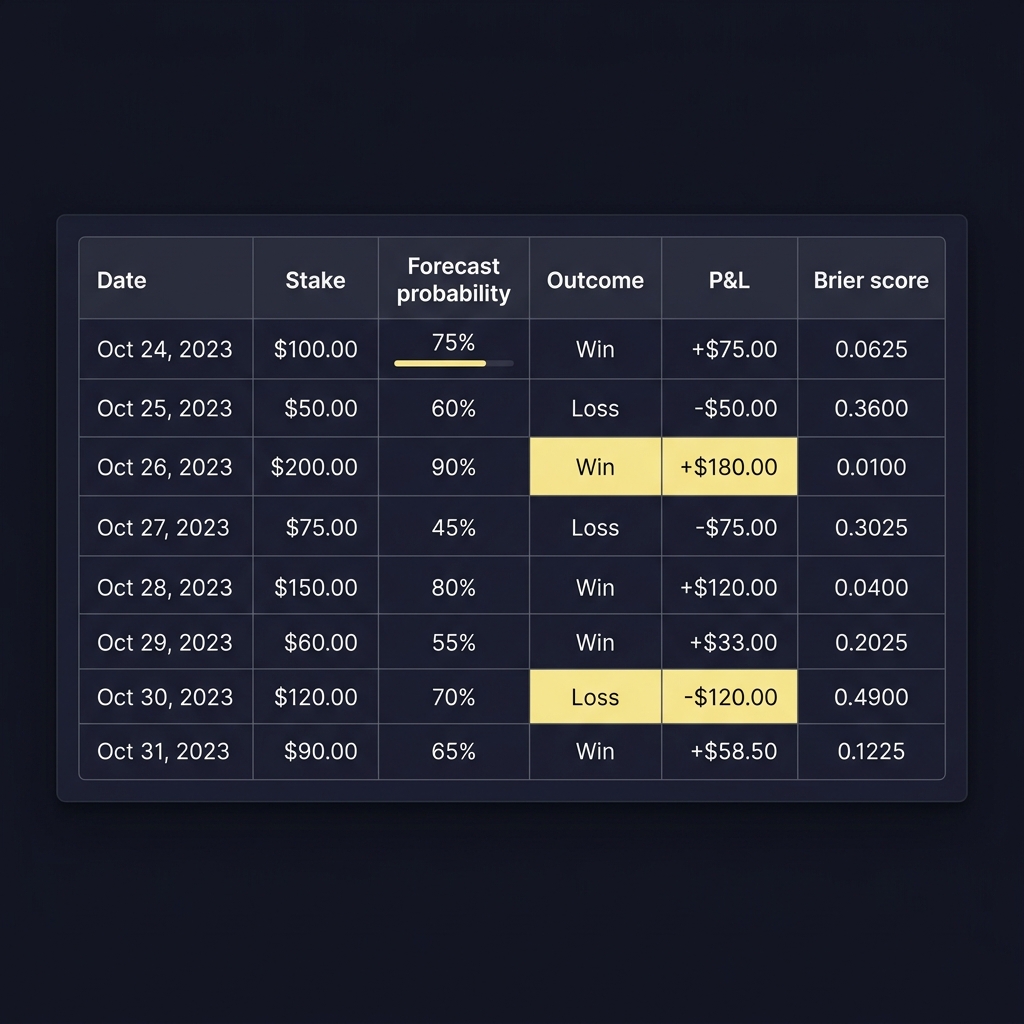
Use cases include structured skill tests where rules enforce bankroll limits and drawdown controls, educational challenges where learners must demonstrate process discipline, and staged qualification tracks for funded‑account style programs where clear progression criteria are needed (how Funded Plays evaluations work).
How to Plan an Evaluation Around a Fixed Profit Target
When you ask how to plan an evaluation around a fixed profit target, start by writing the objective in a single sentence that states the profit goal, the starting bankroll, and the allowed time and loss limits. That single sentence becomes the north star for every decision in the plan and avoids ambiguity when reviewing results later.
Set objectives, risk appetite, and explicit constraints
Translating strategic goals into measurable criteria
Step 1: Write the measurable objective. State the fixed profit target, the starting bankroll, and the window of time the evaluation covers. Treat this as the primary pass condition and keep it visible whenever you check progress.
Step 2: Translate broader goals into risk criteria. Decide what level of drawdown you will accept while pursuing the profit target, and what constitutes a disqualifying breach. Establish daily loss caps, maximum drawdown thresholds, and any behavioural limits that matter to you.
ISO 31000 emphasizes setting explicit risk criteria and aligning controls with objectives before executing a plan, which supports defining profit targets alongside loss and drawdown limits ISO 31000:2018 Risk management - Guidelines.
Defining loss limits, timeframes, and acceptable drawdown
Numbered steps help keep this practical. 1) Set a hard daily loss cap to stop activity after a poor run. 2) Set a maximum drawdown relative to the peak bankroll to avoid chasing losses. 3) Set an overall time limit after which the test ends regardless of progress. Put these limits in writing and save an immutable copy before you start.
Regulatory safer‑play guidance supports using pre‑set money and time limits, and that recommendation is relevant when designing evaluation rules that protect participants and preserve the integrity of a skill test UK Gambling Commission guidance on money and time limits.
Position sizing: translating edge into stake rules
Kelly criterion and why fractional Kelly is common
Begin with a conceptual definition: the Kelly criterion converts an estimated edge into a growth‑optimal fraction of bankroll under ideal assumptions, but its full application often produces high variance and larger drawdowns than many practitioners accept. Using a fraction of the Kelly stake reduces variance and limits drawdown while retaining some long‑run growth properties (see Pinnacle's article on fractional Kelly).
Theoretical and practical treatments of the Kelly criterion explain its growth‑optimal claims and why fractional Kelly is widely used to temper variance in real settings The Kelly Capital Growth Investment Criterion.

Practical stake rules and limits to temper variance
Operationalize sizing with simple rules: apply your chosen fraction to the Kelly suggestion, cap the maximum stake at a defined percent of bankroll, and specify minimum stake sizes if needed for practical constraints. Document these rules and lock them in before the evaluation starts.
When you translate edge estimates into stakes, treat the estimated edge as uncertain and bias sizing conservatively to reflect that uncertainty. Academic and practical guidance notes the trade‑off between full Kelly growth and fractional Kelly stability when edge estimates are noisy The Kelly Capital Growth Investment Criterion (Kelly vs level staking).
Measuring forecast quality: scoring rules and success metrics
Proper scoring rules: Brier and log score
Success is not just profit. Track probabilistic forecast quality because forecasts that are well calibrated and discriminating are more likely to be repeatable over time. Proper scoring rules like the Brier score and logarithmic score reward honest probability estimates and help detect chronic overconfidence.
For an accessible treatment of proper scoring rules and why they matter for forecast evaluation, see the standard review of strictly proper scoring rules and forecasting practice Strictly Proper Scoring Rules, Prediction, and Estimation.
Balancing calibration, discrimination, and raw profit measures
Combine metrics rather than relying on a single number. Use a probabilistic score to assess calibration, a discrimination metric to check whether higher probabilities correspond to better outcomes, and profit‑based checks to verify that your stake rules convert forecasting skill into positive results.
Practical forecasting guides recommend tracking multiple complementary metrics and using structured logs to keep the evaluation objective and reviewable Forecasting: Principles and Practice.
Hard risk controls: daily limits, drawdown rules, and reset policies
Why hard caps reduce risk of ruin
Hard caps enforce discipline by stopping activity when losses exceed predefined thresholds, which reduces the risk of ruin and prevents emotional decisions from compounding mistakes. Daily loss caps and peak‑to‑trough drawdown limits are straightforward controls that preserve the test from runaway losses.
Instituting maximum daily loss and maximum drawdown thresholds functions as practical risk constraints to control risk of ruin and enforce discipline within an evaluation plan ISO 31000:2018 Risk management - Guidelines.
Create your limit sheet before you start
Draft a clear limit sheet before you start: list your profit target, daily loss cap, maximum drawdown, time limit, and stake rules so you can refer to them without second‑guessing during the test.
Designing resets, pause rules, and escalation procedures
Decide in advance how to handle breaches. A reset might return the test to a defined checkpoint, while a pause could suspend activity for review. Escalation procedures assign who reviews breaches and what documentation is required to resume.
Regulator guidance endorses pre‑commitment controls such as money and time limits, which supports having clear reset and pause rules that are applied consistently rather than ad hoc UK Gambling Commission guidance on money and time limits.
Operational checklist and monitoring cadence
What to track daily, weekly, and at the end of the evaluation
Use a concise monitoring checklist. Daily items: starting bankroll, ending bankroll, stakes taken, outcomes, daily P&L, and any limit breaches. Weekly items: aggregate forecast scores, variance of stakes, and adherence to position‑sizing rules. End‑of‑test items: final profit, maximum drawdown, and probabilistic metrics to judge skill.
Routine monitoring with predefined timeframes, position‑sizing rules, and evaluation metrics aligns with established forecasting practice and supports accountable iterative improvement Forecasting: Principles and Practice.
Automating reports and breach alerts
Automate simple checks in a spreadsheet or script: flag when a daily loss cap is reached, calculate rolling drawdown automatically, and compute scoring rules after each event. Automation reduces manual errors and ensures timely review when limits are close to being breached.
Keep a short audit trail that records decisions made during the test so reviewers can see why a particular choice was taken if a reset or dispute arises. That record improves governance and supports learning after the test concludes.

Decision rules and exit logic: when to stop, pause, or retest
Forced exits and soft pauses
Define forceful stop conditions that automatically end the test and soft pause conditions that require a review before resuming. Forced exits might include hitting the maximum drawdown or running out of budget; soft pauses might trigger after a string of small breaches that suggest operational drift.
Predefining these decision triggers reduces ambiguity and helps maintain fairness when judging whether the evaluation passed or failed, because the same rules apply to everyone taking the test.
When to accept failure versus iterate on the plan
If the evaluation ends without reaching the profit target and limits were observed, treat the result as informative rather than punitive. Decide whether to retest with new parameters, to adjust stake sizing because of better calibration of edge estimates, or to pause and study why the forecasts did not translate into profit.
Regulatory guidance and risk frameworks support clean end points and clear retest rules so participants and administrators can apply lessons without confusion about whether an outcome represents skill failure or an unlucky sequence.
Practical scenarios: how an evaluation plan looks in practice
Conservative test plan template
A conservative approach emphasizes preserving capital and proving consistent edges over time. It uses smaller stake fractions, tighter daily loss caps, and scoring rules that prioritize calibration. This template suits those who prefer fewer swings and clearer evidence of repeatable forecasting quality.
Conservative templates rely more on scoring rules and lower stake limits to separate skill from variance rather than pushing for quick profit milestones.
Define a measurable profit objective, set conservative stake rules (such as fractional Kelly), enforce hard loss and drawdown caps, track probabilistic scoring metrics, and monitor with an automated checklist to ensure discipline and clear decision points.
Balanced and growth-oriented plan considerations
A balanced plan trades between growth and variance by choosing a moderate fractional Kelly and reasonable caps on maximum stake sizes. It still uses scoring rules to check calibration but accepts a wider drawdown band in return for faster progress toward the profit target.
Growth‑oriented plans use larger fractions of suggested sizing, accept wider drawdowns, and prioritize speed to the target, but they should include strict reset policies to prevent catastrophic loss if the edge estimate proves overly optimistic The Kelly Capital Growth Investment Criterion.
Questions to help choose a scenario
Key questions: How uncertain are your edge estimates? How much drawdown can you stomach emotionally and operationally? Do you value a clean pass/fail signal quickly, or do you prefer slower, more defensible evidence of skill?
Answering these helps you decide whether a conservative, balanced, or growth‑oriented template matches your objectives and tolerance for short‑term losses.
Common mistakes and how to avoid them
Overbetting and misusing Kelly
One common error is applying full Kelly without adjusting for estimation error; this can magnify variance and lead to large drawdowns that invalidate the spirit of a controlled evaluation. Prefer fractional Kelly and caps on per‑selection stakes to keep the test meaningful.
Practitioners often misapply Kelly by failing to account for noisy edge estimates, which is why conservative fractions and explicit maximum stake limits are widely recommended The Kelly Capital Growth Investment Criterion (Staking in Sports Betting Under Unknown Probabilities).
Using hit rate alone and ignoring calibration
Another error is judging success by raw win rate alone. Hit rate can be misleading because it ignores probability sizing and the size of stakes; probabilistic scoring rules reveal calibration problems and overconfidence that a simple win/loss tally misses.
Use scoring metrics alongside profit outcomes and keep a clean record of each forecast probability and outcome to detect whether you are well calibrated or habitually overconfident Strictly Proper Scoring Rules, Prediction, and Estimation.
Summary, next steps, and resources for deeper reading
Recap of the framework
In short, plan a fixed profit target evaluation by: writing a concise objective, setting risk limits and timeframes, choosing a conservative position‑sizing rule (often fractional Kelly), tracking probabilistic forecast scores, and enforcing hard caps with a monitoring cadence. (See Funded Plays for related programs.)
That framework blends objective pass criteria with controls designed to protect the test from ruin and to reveal genuine skill rather than lucky sequences, in line with established risk standards and forecasting practice ISO 31000:2018 Risk management - Guidelines.
Action list and further reading
Draft your objective, write the limit sheet, choose a stake fraction and caps, set up scoring in a spreadsheet, and schedule reviews. Consult the referenced standards and texts for deeper technical detail when you need it. See our blog for related posts.
For a practical grounding in monitoring and forecasting mechanics, the forecasting guide and scoring literature are good starting points Forecasting: Principles and Practice.
Choose a daily loss cap that you can accept emotionally and operationally, set it in writing before the test, and ensure it is conservative relative to your bankroll so it prevents chase behavior.
Full Kelly is growth‑optimal under ideal assumptions but often produces too much variance in practice; fractional Kelly is commonly preferred to reduce drawdown risk.
Use a proper scoring rule such as the Brier score or logarithmic score to measure calibration and complement profit‑based checks.
References
- https://www.iso.org/standard/65694.html
- https://www.fundedplays.com/challenges
- https://www.fundedplays.com/blogs/how-fundedplays-evaluations-work
- https://www.fundedplays.com
- https://www.fundedplays.com/blogs
- https://www.gamblingcommission.gov.uk/consumer/safer-gambling/money-and-time-limits
- https://link.springer.com/book/10.1007/978-3-642-04351-8
- https://www.pinnacle.com/betting-resources/en/betting-strategy/revisiting-the-kelly-criterion-part-2-fractional-kelly/gbd27z9nljvgflgg
- https://tradeonsports.co.uk/kelly-criterion-vs-level-staking-in-sports-betting-and-trading/
- https://www.stat.washington.edu/raftery/Research/PDF/GneitingRaftery2007.pdf
- https://otexts.com/fpp3/
- https://journals.sagepub.com/doi/10.1177/1527002520921227