
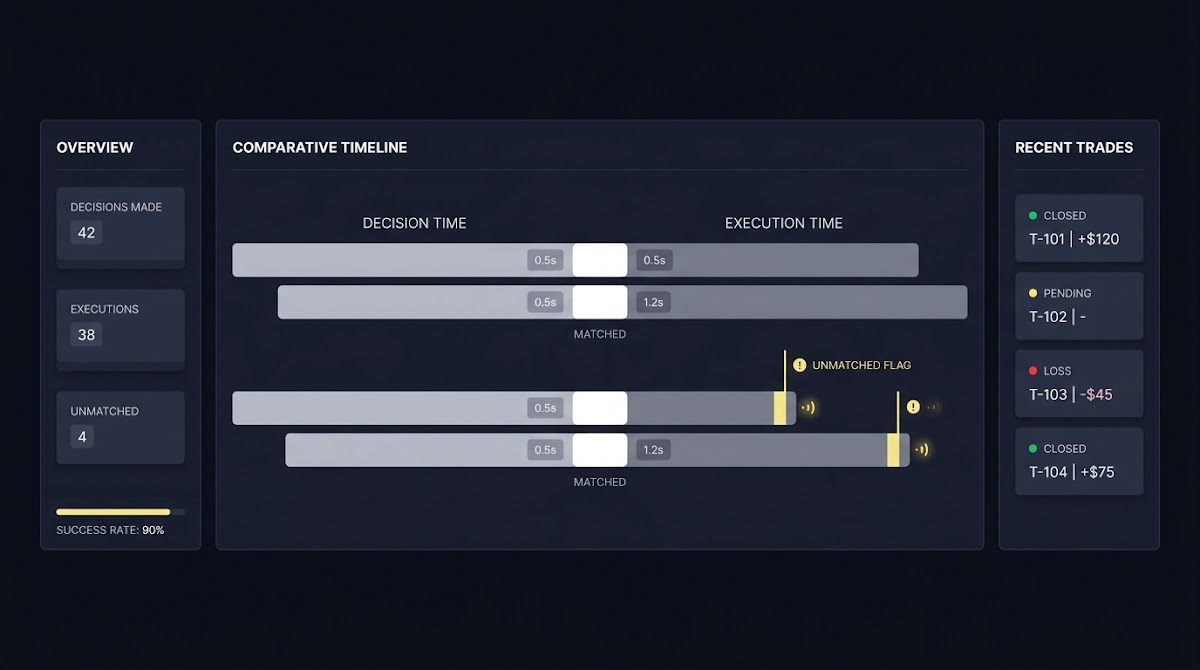
What planned versus actual execution means: definitions and context
Key terms defined: planned order, fill, slippage, implementation shortfall, How to Compare Planned Trades with Actual Execution
Start with a clear definition: a planned order is the set of intended parameters a decision maker records before sending an instruction to the market, typically including intended price, time in force, venue, and size. A fill is the record of execution that shows how much of that instruction actually traded and at what price and time.
The canonical way to quantify the gap between intention and result is implementation shortfall, which measures the difference between the decision price and the realized execution outcome and captures slippage and opportunity cost; this concept remains central to post trade review and audit work, as described in a classic treatment of implementation shortfall The Journal of Portfolio Management article on implementation shortfall.
Comparing planned parameters with executed fills supports both best-execution oversight and operational control without implying any guarantee of improved outcomes. That comparison is the foundation of any repeatable trade execution comparison and helps teams spot routing issues, timing mismatches, and price variance that require remediation.
Match planned orders to fills for audit reproducibility
Use consistent UTC timestamps
Regulatory and best-practice drivers for reconciliation
U.S. disclosures and benchmarks introduced by SEC Rule 605 updates
The U.S. regulatory landscape has been updated to require more consistent disclosure of order execution information, which gives firms standardized benchmarks they can use when auditing internal execution outcomes; the SEC modernized its order execution disclosure framework in 2024 to expand metrics and coverage, creating a clearer set of comparators for internal reports SEC final rule on order execution disclosures. For additional context from the SEC, see the official statement on order execution quality here.
FINRA obligations and periodic review expectations
Alongside disclosure rules, FINRA continues to require firms to perform regular and rigorous reviews of execution quality as part of best execution oversight; these obligations support a structured reconciliation process that maps intended order parameters to fills and flags material deviations FINRA Rule 5310.
EU guidance under MiFID II and ESMA Q and A
In the EU, regulators emphasize ongoing monitoring and periodic assessments of execution arrangements; ESMA guidance frames this as continuous oversight and supports using TCA and systematic post trade comparisons as part of governance ESMA Q A on investor protection and best execution.
To map executed fills back to planned orders reliably, capture key FIX Execution Report fields for each fill and retain the raw execution reports. Important fields to record include ClOrdID and OrderID to link instructions and fills, ExecType and LastPx to show execution status and price, CumQty and LeavesQty for quantity reconciliation, and TransactTime to anchor timing in the order lifecycle; the FIX specification lists these fields and their roles for reproducible message mapping FIX Execution Report documentation.
Exchange and venue outputs such as spread measures, price improvement counts, and fill statistics are useful external comparators; ingesting venue methodology outputs helps you interpret whether a fill represents price improvement or aligns with expected spread behavior.

Keep both the planned order record and the raw Execution Reports in the same archive so you can reproduce any reconciliation step, audit the mapping logic, and show an unbroken chain from decision to execution during compliance reviews.
A step-by-step reconciliation workflow teams can run
Pre trade capture and tagging
Begin every workflow by capturing the planned order parameters at the moment of decision: decision timestamp, intended price or benchmark, order size, time in force, and any routing intent or venue preference. Tag the instruction with a stable identifier such as ClOrdID that will travel through the order lifecycle and appear in fills for straightforward matching.
Post trade match, enrichment, and TCA calculation
After execution, match fills to planned orders using identifiers like ClOrdID and OrderID, and reconcile quantities using CumQty and LeavesQty to confirm how much of the original instruction was completed. Enrich each matched pair with venue metadata, the broker or route used, and the final TransactTime to enable time sensitive metrics.
Calculate implementation shortfall for each matched trade by comparing the decision price or benchmark to the execution price and including realized slippage and opportunity cost in the metric; use this metric to quantify per trade variance and to aggregate results for TCA reports. For reproducibility, retain the raw messages used to compute every TCA value and record the exact algorithm version and vendor methodology applied when you compare results to external benchmarks SEC final rule on order execution disclosures.
Reporting, sampling, and escalation
Produce regular reports that show matched and unmatched counts, distributions of implementation shortfall, fill rates, and price improvement tallies. Use sampling for manual review: select trades with large shortfalls, unexpected venue behavior, or timestamp anomalies for deeper investigation.
Define escalation rules that trigger an operational inquiry or compliance review when exceptions exceed your materiality thresholds. Maintain an exception log that records the cause, remediation steps taken, and any changes to routing or matching logic required by the investigation.
Decision criteria and KPIs for evaluating execution quality
Which metrics to track continuously versus periodically
Choose KPIs that align with oversight needs and operational capacity. Core KPIs include implementation shortfall for periodic, in depth TCA; fill rate and time to fill for near real time monitoring; and percent price improvement for venue performance reviews.
Implementation shortfall remains the fundamental KPI for periodic measurement of slippage and opportunity cost in detailed post trade analysis Journal article on implementation shortfall.
Capture stable identifiers and decision timestamps, retain raw execution reports, match fills using FIX fields, compute implementation shortfall and other KPIs, and keep a reproducible audit trail with documented rules for exceptions and escalation.
After defining KPIs, set thresholds and prioritization rules that combine statistical baselines with business materiality so teams can focus on the issues that matter most to clients or internal stakeholders.
Use continuous alerts for short lived operational metrics like fill rate degradation or sudden time to fill spikes, and reserve full TCA runs for scheduled reviews where implementation shortfall distributions and venue spread comparisons are examined.
Common pitfalls and how to avoid them
Data quality and matching errors
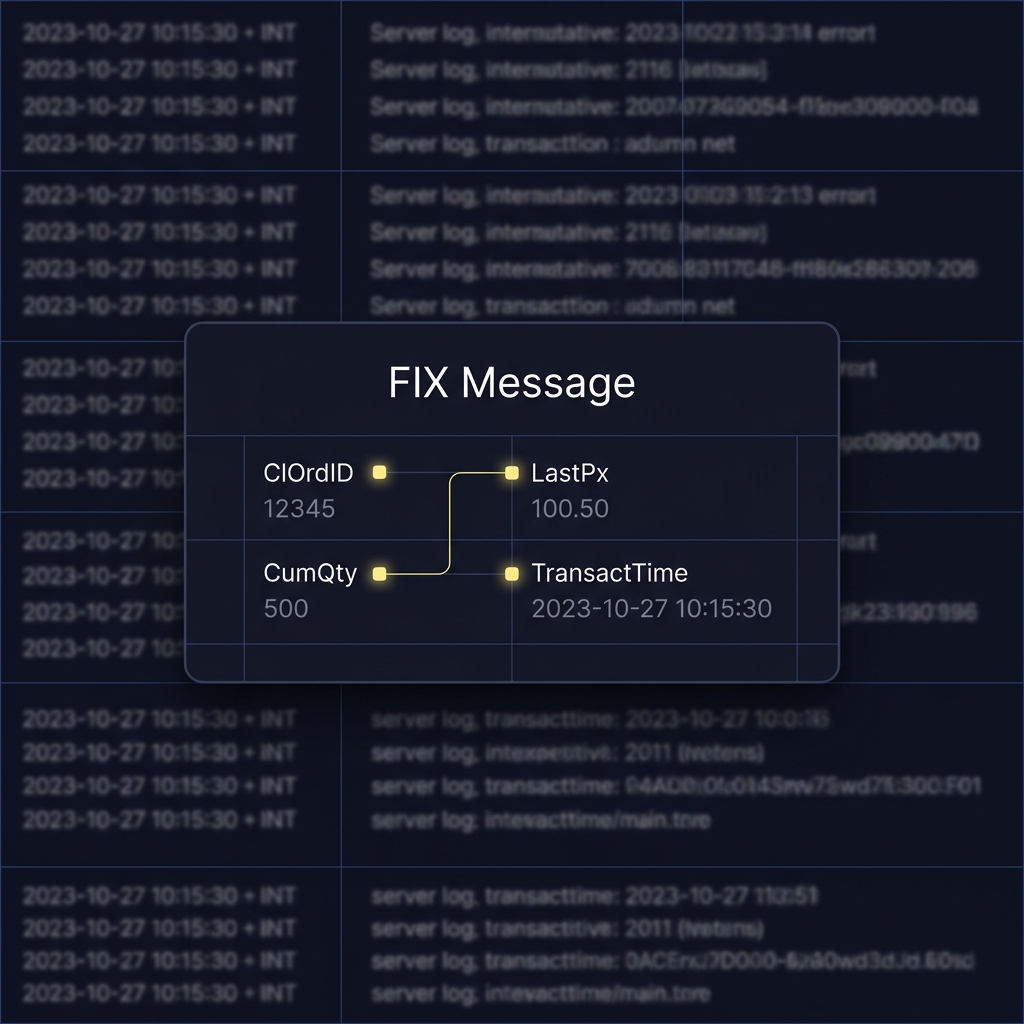
Typical reconciliation failures stem from missing or mismatched identifiers, clock drift between systems, and truncated execution reports that omit critical fields. Standardize identifier formats, insist on UTC timestamps across the stack, and implement ingestion checks that reject incomplete execution records.
Misinterpreting venue stats or double counting
Be cautious when taking venue statistics at face value: methodology differences can change whether a fill is labeled as price improvement or not. Map the venue methodology back to your internal definitions before using those figures for remediation or vendor escalation, and avoid double counting when combining internal crosses and external venue fills FIX Execution Report documentation.
Controls to reduce errors include timestamp synchronization checks, identifier normalization procedures, and a documented reconciliation rulebook that specifies how to treat partial fills, cancels, and internal matches.
Practical scenarios and example checks (walkthroughs)
Scenario A: partially filled order and how to attribute slippage
Imagine a planned limit order that only partially fills. Match the fill record to the planned instruction using ClOrdID, reconcile the filled quantity with CumQty and LeavesQty, and compute the implementation shortfall using the decision price and the weighted average execution price of the fills. If fills occurred across multiple venues or time slices, note the routing path and the aggregate elapsed time between decision and final fill.
See how FundedPlays explains challenge evaluation and progression
Run a short reconciliation checklist after replicating this scenario to confirm identifiers matched, timestamps aligned, and implementation shortfall was computed with the agreed benchmark.
Scenario B: routed order with venue price improvement
For a routed order that reports price improvement, compare the fill price to venue-provided spread and price improvement metrics to understand whether the outcome reflects true improvement or an artifact of routing and matching. Check the venue methodology to ensure your internal definition of price improvement aligns with the venue's published approach Cboe execution quality methodology.
If the comparison surfaces a material discrepancy, record the exception, capture the routing path and timestamps, and trigger an inquiry with the executing broker or venue so the routing behavior can be validated.
Building repeatable reports, governance, and automation
Report templates and cadence
Standardize report elements: matched versus unmatched counts, KPI time series for implementation shortfall, fill rate, price improvement tallies, and an exception log with remediation status. Schedule regular cadences for automated summaries and deeper periodic TCA reviews that sample trades for manual validation SEC final rule on order execution disclosures. For vendor or industry commentary on execution quality reporting, see this perspective from a market structure provider here.
Automation, sampling, and retention policies
Automate the matching and initial enrichment to reduce manual effort, but keep a governance gate where exceptions and sampled trades receive human review and sign off. Retain raw execution reports, planned order records, and the reconciliation outputs in a searchable audit trail so any reconciliation can be reproduced on demand, consistent with regulator expectations for reproducible reviews FINRA Rule 5310.
Next steps and closing checklist

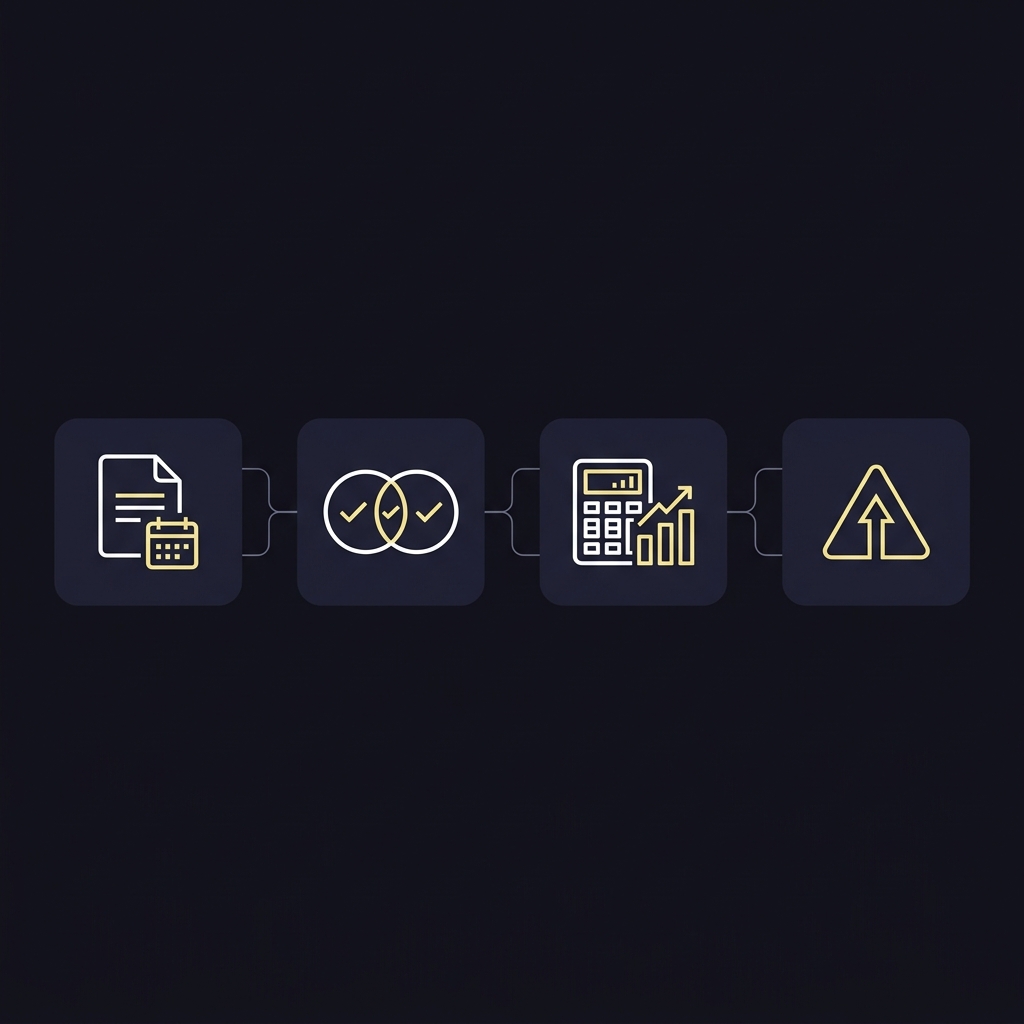
Quick checklist to begin: ensure pre trade capture of decision timestamps and intended parameters, collect raw execution reports, match using stable identifiers, run TCA to compute implementation shortfall, and review exceptions in an organized log.
Align thresholds to regulatory benchmarks and revalidate matching rules periodically. Keep your reports reproducible by preserving raw messages and documenting the methodology versions used in every analysis.
Keep both the planned order record and the raw Execution Reports in the same archive so you can reproduce any reconciliation step, audit the mapping logic, and show an unbroken chain from decision to execution during compliance reviews.
Run basic matching and fill rate checks near real time for operational monitoring, and perform full TCA runs on a scheduled basis for deeper analysis and reporting.
Use a stable client order identifier such as ClOrdID carried through the order lifecycle and recorded in raw execution reports to enable reliable matching.
No, map venue methodology to your internal definitions before using the statistics to avoid misinterpretation or double counting.