

how to bet trifecta: what a trifecta is and why bet sizing matters
When you ask how to bet trifecta you are asking two linked questions. First, what is a trifecta in horse racing and second, how should you size your stake so the bet fits your plan. A trifecta requires you to pick the first three finishers in exact order. That requirement makes trifectas high variance and high combination cost compared with simpler bets.
Because a trifecta depends on the exact order, your chance of winning a single ticket is smaller than on bets that only require a winner or a top two. That difference drives two practical realities: you will place more combinations to cover outcomes and your short-term results will swing more. Bet sizing becomes central to controlling those swings and keeping your bankroll intact.
Decide a dedicated bankroll, set a consistent unit size, count the number of combinations for your ticket structure, and scale the unit so your total race exposure matches your pre-set risk allowance.
Sizing also affects affordability. Each unique order you play is one unit of risk. If you play a box or a wheel you multiply that number of units. That multiplication changes how affordable a given strategy is and whether it fits your bankroll rule. Remember, payouts are not guaranteed and depend entirely on which horses actually run and how the market prices them on race day.
Key trifecta bet types and how they change ticket cost
There are a few standard trifecta structures to know (see TwinSpires wager types). A straight trifecta is one exact order, for example, horse A then B then C. A trifecta box lets you play a group of horses in every possible order for the top three. A key trifecta locks one horse into a specific placing while the other two spots are filled from a list. A wheel places one horse in a fixed position and allows multiple choices in the other spots in a specific order.
The math behind ticket cost is permutation based. For a straight trifecta you place one unit and that is one permutation. For a boxed trifecta with n horses you are effectively covering P(n,3) orders that include those horses in any top three order. A simple numeric example clarifies this: a three-horse box covers 6 permutations because there are six ways to order three horses for the top three places. Each permutation equals one unit stake, so the number of permutations times your unit stake equals the total ticket cost.
Understanding the permutations helps you compare choices. Boxes and wheels multiply the ticket count quickly as you add horses. A key reduces combinations relative to a full box by fixing a position. The core point is simple: the ticket format controls how many individual bets you place and therefore how much you risk in total.
A simple bankroll framework for deciding how to bet trifecta
Keeping a dedicated bankroll for trifectas and other exotics is essential. Treat it separately from money you need for daily expenses. A separate bankroll helps you set fixed unit sizes and prevents emotional oversizing when you have a losing streak. Decide on an amount you can afford to lose for a defined period rather than chasing short-term recovery. Visit the Funded Plays homepage for more on the platform.
Unit sizing means you stake a fixed percentage or fixed amount per permutation. Use a small, consistent unit so a few losing tickets do not devastate your fund. Smaller units reduce variance and make performance easier to evaluate. Larger units increase possible wins but also magnify drawdowns and raise the chance of ruin if luck turns against you.
There is no single correct percent. Instead compare tradeoffs: a conservative player might use a very small percent per unit and focus on fewer combinations. A more aggressive player can accept larger units but should reduce the number of combinations per race. The key is consistency: pick a rule and stick with it long enough to judge whether it works for your skill level and goals.
How to calculate ticket cost and adjust stake per ticket
Start by counting combinations for the ticket type you plan to play (use a trifecta calculator such as Bet Types' tool). For a straight trifecta the count is one. For a box or wheel you must calculate the number of unique permutations that result from your selections. Use the permutation logic P(n,3) when you are considering all possible orders of n distinct horses for the top three.
Once you know the number of combinations, multiply by your unit stake to get the ticket cost. If you want to risk a fixed amount per race, divide that planned risk by the number of combinations to find the unit stake per permutation. That keeps your total exposure predictable even when you vary ticket structure across races.
quick permutations and ticket cost calculator
Use for straight trifecta checks
Here is a worked example of the method without claiming any payout. Suppose you plan to risk 10 units on a race and you want to play a five-horse box. Count the combinations implied by that box, then divide 10 units by that number to find the unit stake you will place on each permutation. That process makes your total exposure equal to the 10 units you planned before the race begins.
Scaling works the same if you play multiple tickets. Decide on a total race risk, allocate portions to each ticket, and compute unit stakes for each ticket based on its own number of permutations. This disciplined step prevents accidental over-betting when you like several different ticket structures in the same race.
When to reduce stakes: race factors that should change how to bet trifecta
Field size is one of the clearest triggers to reduce units. Larger fields increase possible combinations and therefore raise variance. When the number of horses grows, either reduce the unit stake or limit the number of combinations you play so the total race exposure stays reasonable.
Odds distribution and market shape are also relevant. If the race has a few heavily favored horses and many long shots, your edge on any individual long shot is lower. In such cases a smaller unit helps protect your bankroll because the expected return per unit is more uncertain. Likewise, if scratches change the card late you may want to reduce units because the probabilities you estimated before scratches are no longer valid.
Other triggers include poor track form, late movement in the betting pool that degrades value, or weather that suddenly creates high variance. If your information edge is small or unknown, the prudent move is to lower stakes. Lowering units under uncertain conditions keeps you in the game and preserves capital for races where you have stronger conviction.
Decision criteria: how to choose between straight, box, key, and wheel tickets
Choose your ticket format by matching confidence to cost. Use a straight ticket when you have high confidence in a precise order. Use a box when you want to cover multiple possible orders among a small group. Use keys or partial wheels when you have a clear favorite for one position but want to cover different possibilities in the remaining spots (see Covers on box, key and spread strategies).
Apply a simple cost-benefit checklist before you commit. Check confidence, estimate the combinations cost, compare that cost to your unit rule, and consider how much a loss would affect your session. If the ticket cost exceeds your comfort threshold relative to confidence, reconfigure the ticket or reduce the unit.
Try FundedPlays Challenges to practice disciplined sizing and test process-driven decisions
Try the cost-benefit checklist on paper before you place tickets this week and track the results to see if the sizing rule holds across several races.
Avoid overexposure by limiting the number of different ticket types you play in the same race. Playing many separate tickets multiplies the total number of permutations and can quickly blow past your planned race risk. When in doubt, reduce the number of tickets rather than inflate unit size.
how to bet trifecta with limited bankroll: conservative approaches
When your bankroll is small, shrink units and reduce combination counts. One practical method is to cut unit size in half compared with your standard rule and play fewer combinations. Prioritize clarity: pick two or three horses you trust and use keys or a partial wheel to limit the number of permutations.
Partial wheels and keyed tickets let you focus risk on a few high-confidence outcomes. For example, fix one horse in a position and allow only two or three choices for the remaining slots. This approach reduces ticket cost while preserving the chance to win on a high-confidence idea. Keep records so you can see whether selective plays outperform broader boxes over time.

Using a structured, skill-focused environment can also help you practice sizing rules without risking non-designated funds. Track results carefully and grow units only when consistent success and drawdown control are clearly visible in your log. See how evaluations work for additional context.
Common mistakes people make when sizing trifecta bets
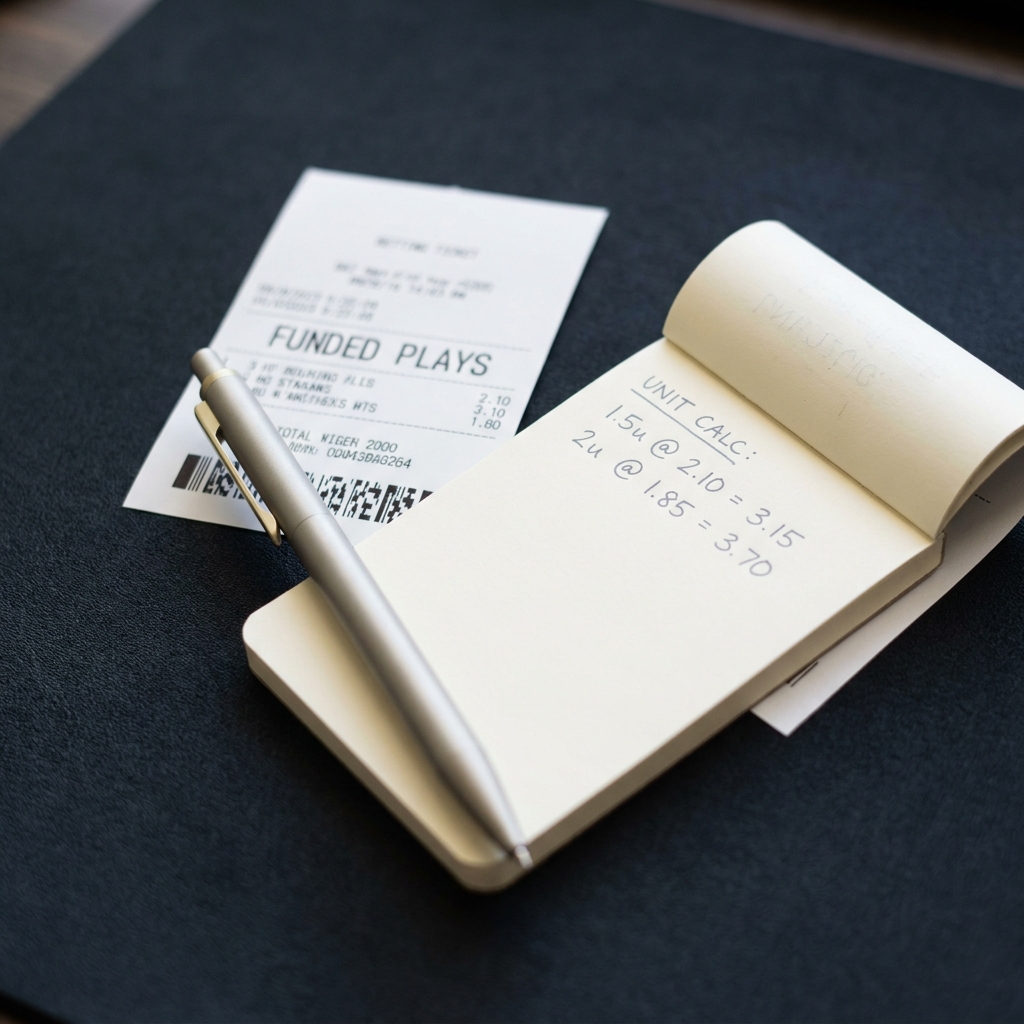
Over-betting on long shots is a frequent error. Long shots can offer attractive headline payouts but they also have low probability. Overweighting them with large units or many combinations will produce long-term negative variance unless you have a reliable, proven edge on those outcomes.
Another mistake is ignoring total ticket cost. Betting several small tickets without summing the total stake is a fast route to overexposure. Always compute the sum of units across all tickets to confirm the total stays within your predefined per-race limit.
Chasing losses is a behavioral trap. When a losing streak arrives, many bettors increase units to recover losses. That behavior increases both volatility and risk of ruin. Predefine stop rules and session limits so you have a disciplined response when results go against you.
Practical scenarios: three sample approaches without specific payout claims
Scenario A, small bankroll and conservative: play a single keyed ticket or a small partial wheel with low unit size. Limit yourself to one or two tickets per race and keep the unit stake small so a few losses are tolerable. The goal is to protect capital while you learn which patterns you read well.
Scenario B, medium bankroll and mixed approach: allocate a modest share of your race risk to a larger box on races where you have moderate confidence and to straight tickets when you have high confidence. Use mid-range unit sizing and limit total race exposure by a fixed cap. This gives room for occasional larger plays without risking the bankroll.
Scenario C, higher bankroll and diversified tickets: you can play more tickets across multiple races and include some larger boxes or wheels, but maintain proportional unit rules. Diversify across races and avoid loading too much capital into any single high-variance card. Even with more bankroll you should keep clear stop rules and a plan for rebalancing after drawdowns.
Record-keeping and evaluating long-term performance
Track a simple log for every ticket. Key fields to record are date, race, stake, ticket type, horses used, number of combinations, result, and net P&L. Keep entries short and consistent so reviewing data is quick. Good records let you see whether specific ticket types or conditions are profitable for you.
Evaluate metrics like return per unit and maximum drawdown over defined review windows. Return per unit gives a normalized view of performance across varying unit sizes. Drawdown tracking shows whether your sizing rule produces unacceptable temporary losses. Use this data to tweak unit size, ticket choice, or the races you target.

Set review intervals such as weekly for session checks and monthly for deeper analysis. Make incremental adjustments rather than wholesale changes when the log shows a consistent pattern. Discipline and steady record-keeping are more valuable than chasing a single big correction.
How to integrate trifecta sizing into a broader betting plan
Allocate a fixed share of your bankroll to exotic bets like trifectas and hold that allocation steady. For example, define a percentage of total bankroll dedicated to exotics for a session. That allocation prevents exotics from crowding out simpler bets or vice versa.
Balance simpler bets and exotics by view of variance and frequency. Simpler bets often have less variance and allow more frequent but smaller stakes. Use part of your session risk for those and the rest for higher-variance trifecta attempts. This approach smooths expected swings and often extends the life of your bankroll.
Adopt session-level loss limits. Decide ahead of time how many units you will lose in a session before stopping. That rule stops emotional escalation and preserves capital for another day. Allocate risk across races rather than concentrating too much on a single event.
When not to play trifectas: red flags and exit rules
Skip or reduce units when information is weak. Red flags include sudden scratches, poor program notes, last-minute jockey changes, or unclear form patterns. If you cannot reasonably estimate probabilities, do not force a trifecta ticket because its high variance will punish guesses.
Poor market liquidity or extreme track variance also suggest lowering exposure. When pools are small and a few large bets can swing payouts unpredictably, a smaller unit will protect your bankroll. Severe weather or inconsistent track conditions are other reasons to lower units or skip the card entirely.
Make exit rules simple and stick to them. If multiple red flags appear, skip the race. If a session loss limit is reached, stop for the day. Practicing these rules consistently will keep your performance evaluable and reduce the chance of catastrophic drawdowns.
Closing checklist: quick rules to apply next time you wonder how to bet trifecta
Pre-race checklist: confirm your unit size, calculate total ticket cost, check field size and scratches, assess confidence on each horse, and review weather and track notes. Use a simple written checklist to avoid last-minute emotion-driven changes. Also consult the Funded Plays blog for related posts.
Post-race review prompts: update your log with results, note whether the decision matched the information you had, and adjust unit size if drawdown thresholds were hit. Review a small sample of races regularly to see if your sizing rule needs refining.
Final reminder: no method guarantees success. The best outcome is a repeatable process that protects your bankroll while letting you test and learn. Consistent sizing and careful record-keeping are the practical foundation for improving over time.
There is no universal answer. Use a fixed unit based on a dedicated bankroll and risk tolerance. Decide a total race risk, count combinations, and divide that risk by the number of combinations to determine the unit stake.
No. A boxed ticket covers more orders and costs more. Use a box when you want to cover multiple plausible orders and you can afford the higher ticket count; use a straight when you have strong confidence in a single order.
Set a session loss limit in advance and stop if you reach it. Also stop if key information changes or multiple red flags appear on the card.