

What a +7.5 spread means in plain terms
Short definition
The notation +7.5 means the underdog is granted a 7.5 point handicap, so a wager on that team wins if the team wins outright or loses by seven points or fewer; the half point removes the possibility of a tie, known as a push, on the line Point Spread: Definition, How It Works, and Examples.
Why the half point matters
The half point, often called a hook, prevents a push by ensuring final score margins cannot land exactly on the line; with +7.5 there is no outcome where the bet and the game result tie, so a seven point loss still cashes the wager Point spread overview.
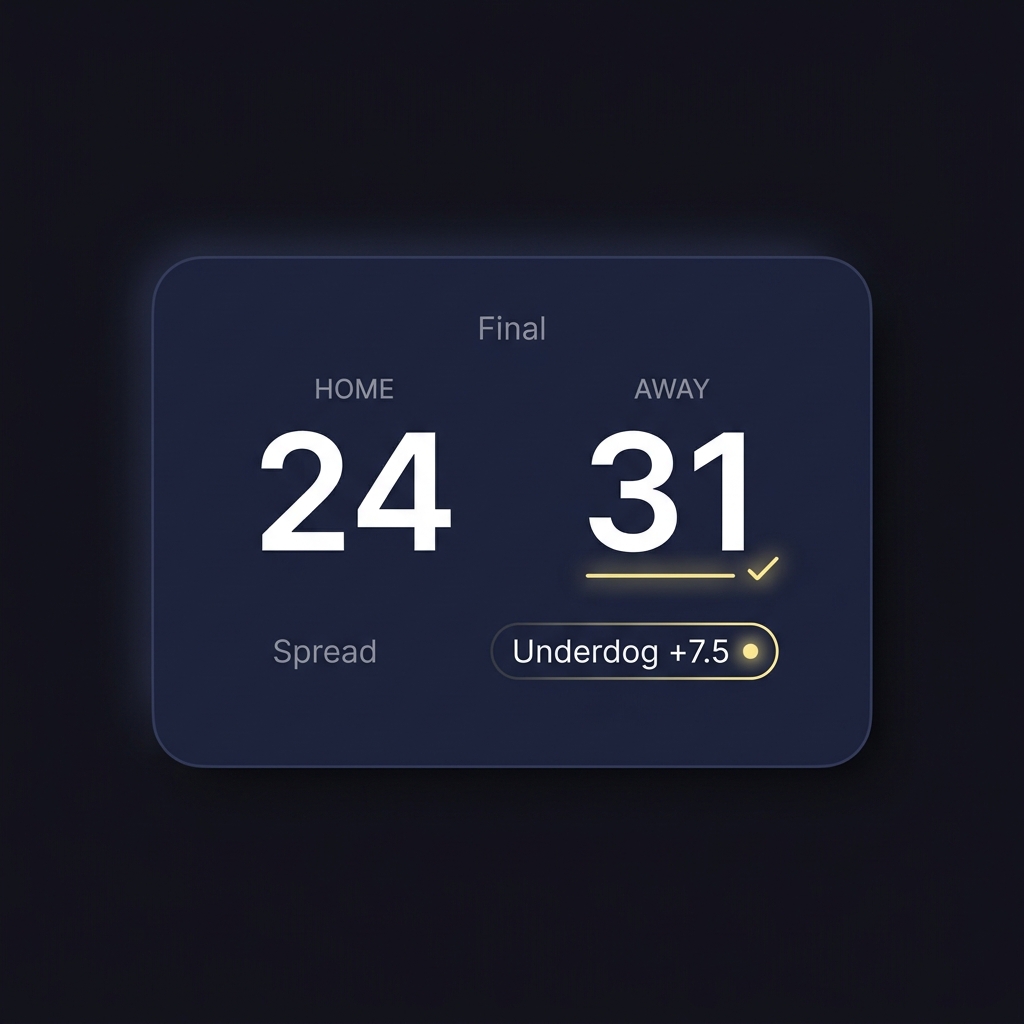
Example: if the underdog with +7.5 loses 24 to 31, that is a seven point loss and a +7.5 bet wins. If the favorite is listed at -7.5, that team must win by eight or more points to cover the spread Point Spread: Definition, How It Works, and Examples.
Practice spread decisions on the FundedPlays Challenges page
Try one short score example on paper now, using the three practice scenarios below to see how a +7.5 line resolves in different game situations.
How point spreads work and how lines are priced
Mirror lines: +7.5 versus -7.5
Spreads are mirror images: if one side is +7.5 the other is -7.5; a -7.5 favorite must win by eight or more points to cover, otherwise the +7.5 wager pays Point Spread: Definition, How It Works, and Examples.
Why books set odds near -110 and what vigorish means
U.S. sportsbooks commonly price each side of a spread near -110 to collect a commission called vigorish or juice; this pricing means bettors must win slightly more than half their bets to break even because a small fee is embedded in the odds Vigorish: What It Is, How It Works in Sports Betting.
At -110 the implied breakeven win rate is about 52.38 percent, which is the percentage of winning bets needed to offset the vig and remain even over time; understanding that gap from 50 percent is key when judging whether your edge is real Implied Probability: Definition, Formula, and Sports Betting Uses.
Step 1: Confirm which team is listed at +7.5 and which is at -7.5, and note the posted odds for each side before staking any money; the team labeled +7.5 is the underdog and starts with the 7.5 point cushion.
Choose a side and read the line
Step 2: Check the moneyline or spread odds, commonly shown around -110, and decide how much of your bankroll to risk given your staking rules and confidence level Sports Betting 101.
A +7.5 spread gives the underdog a 7.5 point cushion; the bet wins if the underdog wins outright or loses by seven points or fewer, and the half point prevents a push so the wager resolves as a win or a loss.
Step 3: Enter your stake and confirm the wager; the betting interface will display potential returns based on the posted odds and stake, and you should double check the team names and spread before finalizing the bet.
Placing and settling the bet
When the game ends the sportsbook settles the spread wager according to the final official score and their settlement rules; because the line uses a half point, pushes are avoided and wagers are resolved as wins or losses based on the margin Point Spread: Definition, How It Works, and Examples.
Practical note: payout calculations at common prices are straightforward: for a -110 price, a typical $100 wager would return a total near $190.91 on a winning bet, which equals about $90.91 profit before any taxes or fees Implied Probability: Definition, Formula, and Sports Betting Uses.
Reading +7.5 in live examples: win, lose, and near-miss scenarios
Game score examples and outcomes
Scenario 1: Underdog wins outright, for example a +7.5 team that wins 28 to 24, is a clear winning wager because the underdog did better than the handicap suggests Point Spread: Definition, How It Works, and Examples.
Scenario 2: Underdog loses by seven, such as 21 to 28, and a +7.5 wager still wins because the margin is less than the handicap; the half point eliminates any possible push in this situation Point spread overview.
Why a 7 point loss still cashes a +7.5 bet
A seven point loss is smaller than the 7.5 handicap, so the underdog with +7.5 covers and bettors on that side are paid according to the posted odds; this is the direct effect of the hook and is why bookmakers use half points to avoid ties Point Spread: Definition, How It Works, and Examples.
How last-minute scoring can change outcomes
Late scores, overtime rules, and which plays count in a book's official result can change settlement; always check the sportsbook's official rules for how they treat overtime and timing because settlement depends on those definitions Sports Betting 101.
How to decide whether to take +7.5: simple decision criteria
Estimate your win probability
Start by estimating the chance the underdog will cover the spread based on team form, injuries, matchup factors, and any edge you believe you have; if your estimate exceeds the market implied probability after accounting for vigorish, the bet may have value Sports Betting 101.
Compare implied probability and breakeven
Use the common -110 price as a reference point: the breakeven win rate at -110 is about 52.38 percent, so your subjective estimate of the underdog covering should be clearly above that threshold to justify a bet when accounting for the house commission Vigorish: What It Is, How It Works in Sports Betting.

Bankroll guidance: size stakes as a consistent percentage of your active bankroll, keep individual wagers modest, and avoid increasing stake size after losses; consistent record keeping and discipline matter more than trying to chase a single result Sports Betting 101.
Common mistakes and pitfalls with +7.5 and spread betting
Misreading the hook
A frequent error is assuming a half point can produce a push; with hooks like +0.5 a push is impossible, so misreading that detail can cause incorrect outcome expectations and wrong settlement assumptions Point spread overview.
Underestimating vigorish
Ignoring the vig is another common trap: pricing near -110 raises the required win rate above 50 percent, so even a small commission erodes long term returns if not accounted for in staking and edge estimates Vigorish: What It Is, How It Works in Sports Betting.

Poor stake discipline
Behavioral mistakes like increasing stakes after losses, failing to shop lines, or treating single bets as calls for revenge can destroy a staking strategy; protect the bankroll with limits and a precommitment plan Sports Betting 101.
How to shop lines and compare the juice
Where to look for small line advantages
Small half point differences or better odds across books can change the value calculation; check multiple lines early and late because timing and market flow affect where value appears Vigorish: What It Is, How It Works in Sports Betting.
Timing and market movement
Lines move for many reasons including public money, news, and sharp action; deciding whether to bet early or wait depends on whether you expect the market to move in your favor or against it, and monitoring movement is part of disciplined line shopping Sports Betting 101.
Track and compare lines and outcomes in a simple table
Update after each game
Simple comparison checklist: record the book, posted spread, and odds, then compare the effective breakeven for the price offered and choose the site that gives the best combination of spread and juice Vigorish: What It Is, How It Works in Sports Betting.
Situation: a home underdog is listed at +7.5. Question: do you estimate the underdog has over a 52.38 percent chance to cover at -110? Walk through team form, matchups, and whether home field meaningfully changes the cover probability, then decide stake size accordingly Implied Probability: Definition, Formula, and Sports Betting Uses.
Situation: the favorite is -7.5 but played two extra days of rest. Question: does fatigue increase the underdog cover probability enough to beat the breakeven threshold after vig? Use your estimate and compare to the -110 breakeven to judge value Vigorish: What It Is, How It Works in Sports Betting.
Situation: the line opens at -6.5 and moves to -7.5 after heavy public action. Question: did the market correctly incorporate new information or did public bias push the line? If you believe the move eroded value, you may prefer the earlier line, and tracking outcomes over time will help refine that judgment Sports Betting 101.

Summary, responsible-play checklist, and next steps
Key takeaways
In short, +7.5 gives the underdog 7.5 points and wins if the underdog loses by seven or fewer or wins outright; the half point removes pushes so the wager always resolves as a win or loss Point Spread: Definition, How It Works, and Examples.
Responsible-play checklist
Know the settlement rules, manage stake sizes relative to bankroll, shop lines for better spreads or lower juice, and accept that no approach guarantees wins; legal markets and consumer guidance continue to emphasize responsible play as the industry matures State of the States 2025.
Where to learn more
Practice decisions in structured, skill focused environments if you want to test methods without direct exposure to traditional wagering, and consider platforms that offer virtual funded challenges for learning and discipline Sports Betting 101.
It means the underdog gets a 7.5 point advantage and wins the bet if they win outright or lose by seven points or fewer; the half point prevents a tie.
The half point, called a hook, removes the possibility of a push so bets resolve as wins or losses, simplifying settlement.
Vigorish is the bookmaker commission built into odds; with common -110 pricing it raises the breakeven win rate above 50 percent, so bettors need an edge to profit long term.
References
- https://www.investopedia.com/terms/p/pointspread.asp
- https://www.britannica.com/topic/point-spread
- https://www.investopedia.com/terms/v/vigorish.asp
- https://www.investopedia.com/terms/i/implied-probability.asp
- https://www.americangaming.org/resource/sports-betting-101/
- https://www.fundedplays.com/challenges
- https://www.sportsline.com/guides/point-spread/
- https://www.cbssports.com/betting/news/point-spread-betting/
- https://sports.betmgm.com/en/blog/nfl/what-does-plus-7-5-spread-mean-in-nfl-betting-bm25/
- https://www.fundedplays.com
- https://www.fundedplays.com/blogs
- https://www.fundedplays.com/blogs/how-fundedplays-evaluations-work
- https://www.americangaming.org/resources/state-of-the-states-2025/