
Quick start: what this guide will teach you
This short guide explains how to bet on horse racing online via state licensed Advance Deposit Wagering platforms and what a beginner needs to do first, step by step. It focuses on practical steps you can follow, the basic bet types to learn, and the regulatory frame to watch for when wagering in the United States, as explained by state ADW guidance.
Open a state licensed ADW account, complete identity and geolocation verification, fund a small practice stake, learn basic bet types and past performance signals, and use conservative bankroll rules.
Read this article to get a clear roadmap: how to open and verify an ADW account, the difference between simple wagers and common exotics, why pari mutuel odds move, how to scan past performances, and basic bankroll rules to protect your session. This is educational information and not legal or financial advice; check your state rules and operator terms before opening an account.
What online horse race betting is and how it is regulated
Pari-mutuel basics and the role of ADWs (how to bet on horse racing online)
In the United States most legal online horse race betting is conducted through state licensed Advance Deposit Wagering platforms that operate under pari mutuel rules, so beginners should start by understanding how those accounts work in their state Oregon Racing Commission on ADW.
Pari mutuel betting means all wagers of a single type are pooled, the operator deducts a takeout, and the remaining pool is divided among winners; that pool based mechanic is why posted odds can change until betting closes and why final payouts appear as dividends after the pools close ARCI model rules on pari mutuel wagering. For additional commentary see coverage by Thoroughbred Daily News.
States and their racing commissions implement wagering rules and procedures, often guided by ARCI model standards, so availability of specific wager types and timing rules can differ from state to state. Check your state commission or the operator terms if you need detail on permitted pools, minimum bets, or deposit rules. For official model rule text see ARCI model rules.
Opening and verifying an ADW account: step-by-step
Before you place your first online wager you will normally create an ADW account, verify identity and age, and confirm your geolocation is within a permitted state. Expect identity checks and age verification during registration and geolocation checks at login or when placing a bet ARCI model rules on pari mutuel wagering.
Here is a practical checklist to follow when registering and funding an ADW account.
1. Register with a valid email and create a secure password. 2. Provide personal details exactly as they appear on an ID. 3. Upload or confirm identity documents if requested. 4. Allow the operator to verify your geolocation and age during the first funding or wager attempt. These steps help ensure you can place legal wagers in your state.
Funding your account and setting a sensible first deposit is next. Many operators accept debit cards, ACH transfers, or other electronic methods, and deposit limits or waiting periods can vary by state and operator; start with a small practice stake you can afford to lose as you learn the platform interface and bet flow Oregon Racing Commission on ADW.
A short verification checklist to follow when opening an ADW account
Keep records of confirmations
Account security tip: enable two factor authentication if available, keep a record of your deposits and wagers for review, and use a unique password. Good record keeping helps you track what works and what does not as you start small and learn.
Beginner bet types explained: win, place, show and common exotic bets
Simple bets: win, place, show - when to use each
Win, place, and show are the three simple building blocks for most beginners. A win bet returns only if your horse finishes first, place pays if the horse finishes first or second, and show pays if the horse finishes first, second, or third. In pari mutuel pools each of these bet types has its own pool and final payouts are calculated after takeout is removed from that pool California Horse Racing Board pari mutuel rules.
Practice structured sports prediction challenges with FundedPlays
Keep reading and set a small practice budget to try one or two simple win bets and one boxed exacta in a weekend session.
Common exotics for beginners: exacta, trifecta and boxed bets
Exacta and trifecta bets are common exotics. An exacta asks you to pick the first two finishers in correct order, while a trifecta asks for the first three in order. Boxing those bets lets you cover multiple finishing orders at higher cost; for example boxing an exacta for three horses covers all pair orders among them and increases your ticket cost accordingly.
What jurisdictions typically restrict or permit
Be aware that states define which exotic pools and minimum bet sizes are offered on ADW platforms, so some exotic combinations you see in one state may not be available in another. Consult your operator's terms or the state rule set if you need to confirm permitted wagers and pool definitions before placing a more complex ticket California Horse Racing Board pari mutuel rules.
How pari-mutuel odds and payouts actually work
Odds in pari mutuel betting are reflections of how money is distributed in each wager pool; they are not fixed prices like in fixed-odds betting and can change right up until betting closes. The pool based nature means the final dividend is only known after the takeout is deducted and the pool is closed ARCI model rules on pari mutuel wagering.

Takeout is the share removed from each pool for state fees, track or operator costs, and other authorized deductions; it materially affects the payout. A higher takeout leaves less money for winners and reduces the dividend per dollar bet, which is why understanding takeout rates matters to long term consistency.
Simple numeric example: if a win pool contains 10,000 dollars, takeout is 15 percent, and there are 2,000 dollars bet on the winning horse, the net pool available for winners after takeout is 8,500 dollars; the dividend per dollar is therefore the net pool divided by the total winning tickets. That final dividend is the payout you receive, not the provisional odds shown earlier in the betting window ARCI model rules on pari mutuel wagering.
Reading past performances: simple signals that help pick a horse
Key fields to scan: speed, class, pace, surface/distance form
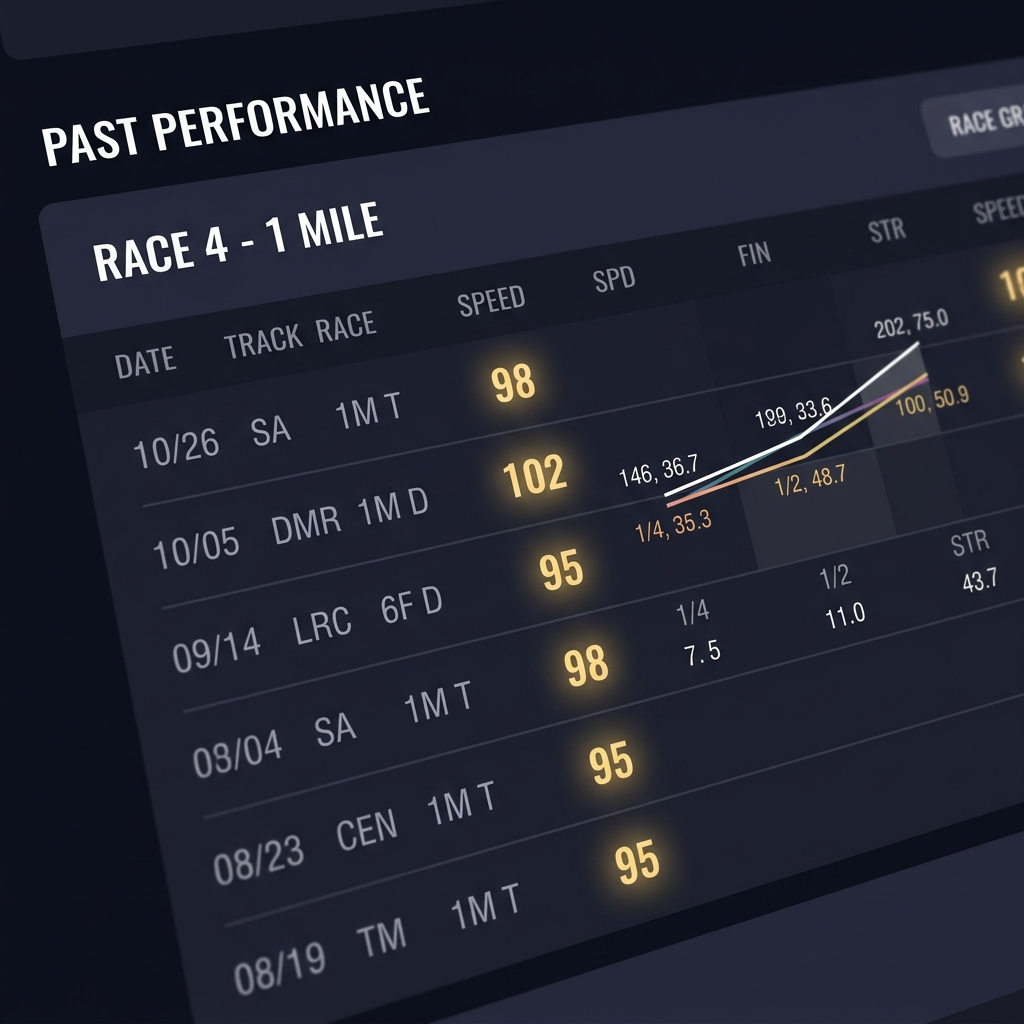
Official past performances summarize recent races and provide key fields beginners should learn to read, such as speed figures, a horse's class level, pace indications in the running lines, and its history at the surface and distance for the upcoming race Equibase guide to past performances.

Speed figures give a compact measure of how fast a horse ran relative to others, class indicates the level of competition, and pace notes show whether the race shape favored front runners or closers. For a new player, these are the most useful quick signals when choosing a simple win bet.
A quick 3-step selection checklist for a win bet
1. Look for consistent class and competitive speed figures for the distance and surface shown in the race. 2. Confirm the pace setup looks likely to suit the horse's running style. 3. Check trainer and jockey recent performance for positive indicators. Using this 3-step checklist helps you focus on the most actionable items in a program before placing a small win wager Equibase guide to past performances.
Official program pages and industry databases are standard study tools and are worth learning gradually; they are the same basic resources professional handicappers use when building more advanced models. See our blog for related reading.
Bankroll management and responsible play for new horseplayers
Set a clear total budget for horse race wagering and treat that total as money you are willing to risk for practice and entertainment. Use percent staking for individual races, for example one percent of your starting bankroll for a single standard bet, and consider session limits to avoid extended losses in a single sitting. These conservative rules are aligned with national responsible play principles and help keep participation controlled Principles for responsible play.
Define a session loss limit and stop once you reach it, rather than increasing stakes to chase losses. Frequent short breaks during a betting session help preserve judgment, and keeping a simple ledger of your wagers helps you review outcomes objectively at the end of the day.
If you notice signs of loss of control, emotional distress, or persistent chasing, seek available help resources and consult responsible gambling material provided by national organizations. These steps are important safety measures when learning any wagering format Principles for responsible play.
Common beginner mistakes and how to avoid them
A top mistake is ignoring takeout. Betting without accounting for the operator and state share overstates the value of low payouts. Check the takeout rate for the pools you use and factor it into your staking plan before deciding whether a series of bets is sensible ARCI model rules on pari mutuel wagering (see reporting by Paulick Report).
Another common error is overbetting favorites simply because they look safe. Favorites win often, but their pools reflect that popularity and payoffs can be small after takeout. A disciplined approach sizes bets to a percentage of your bankroll and reserves funds for selective opportunities rather than betting every race.
Misreading pace is another frequent problem. If you ignore whether a horse is likely to encounter a speed duel or a slow early pace, you can pick horses whose style will be disadvantaged. Add a pace check to your quick past performance scan and use boxed exotics when you want to cover pace uncertainty without over committing.
Finally, review and record each session to learn from mistakes instead of chasing them in the next race. Short, objective reviews improve decision making and reduce emotional wagering over time Principles for responsible play.
Two simple examples and next steps for practice
Example 1: placing a small win bet step-by-step
Step 1: Log in to your ADW account and confirm your balance. Step 2: Open the race program and apply the 3-step checklist: check class, confirm pace, and note trainer and jockey form. Step 3: Select the win pool for your chosen horse, enter a small stake consistent with your bankroll plan, and submit the ticket. The platform will usually show a provisional payoff but remember the final dividend is set after pools close.
This step-by-step process keeps the action focused and repeatable, which is the best way for a beginner to build consistent habits and learn from results. Learn how Funded Plays evaluations work.
Example 2: using a boxed exacta to cover pace uncertainty
Suppose you like horses 2 and 5 but are unsure which will finish first. A boxed exacta for those two horses covers both orders, 2-5 and 5-2. If you bet one dollar per combination, the ticket cost is doubled compared to a single exacta order, but you gain coverage of the likely outcomes. Calculate the ticket cost before you send it and compare the stake to your percent staking rule.
Practice suggestion: keep a simple ledger with date, race, bet type, stake, and result. Review this ledger weekly to identify patterns, learn which signals worked, and adjust your checklist rather than chasing losses in a single session.
Where to practice: use small real stakes on ADW platforms in permitted states or paper trade by recording hypothetical tickets and following actual race results. Either approach helps you learn the timing of odds movements, the operator interface, and how your selection checklist fares in live races. See Funded Plays.

Yes. In the US you typically need an Advance Deposit Wagering account with identity, age verification and geolocation within a permitted state before you can fund and place wagers.
The simplest bet is a win wager, where you pick the horse to finish first. Place and show bets add coverage for second and third finishes respectively.
Set a total budget, use percent staking per race, define session loss limits, avoid chasing losses, and keep a short wager ledger to review performance.