

Craps in a nutshell: what the game is and how to bet on craps
If you are wondering how to bet on craps, start with the simplest description: craps is a dice game played at a casino table where rounds are led by a shooter who rolls two dice. Each round has a clear sequence that determines whether certain bets win or lose, and players place chips on marked areas of the felt to record those wagers. The basic flow is easy to follow once you know the key steps and the terminology.
The round begins with a come-out roll, which either resolves some bets immediately or establishes a point number that the shooter tries to make on later rolls. Once a point exists, the shooter keeps rolling until either the point is rolled again, which benefits some bets, or a seven is rolled, which often ends the shooter’s turn and resolves other bets negatively. Learning this simple flow helps you understand when to place or adjust bets during a round.

At the table you are one of several players backing or opposing the shooter. You can bet that the shooter will succeed in making the point or you can bet the opposite. Bets are resolved relative to the sequence of rolls, not to other players, and many wagers remain active while the dice continue to come off the stick. Keep these movement rules in mind and you will find the basic structure straightforward.
Why people like craps
Players often enjoy craps because the table is social, rolls are frequent, and betting choices cover a wide range from simple to speculative. The visible pace and shared reactions make the game lively, and the structure supports both conservative play and more adventurous wagering. For beginners, focusing on the simplest bets removes most of the complexity while still letting you enjoy the table atmosphere.
High-level flow of a round
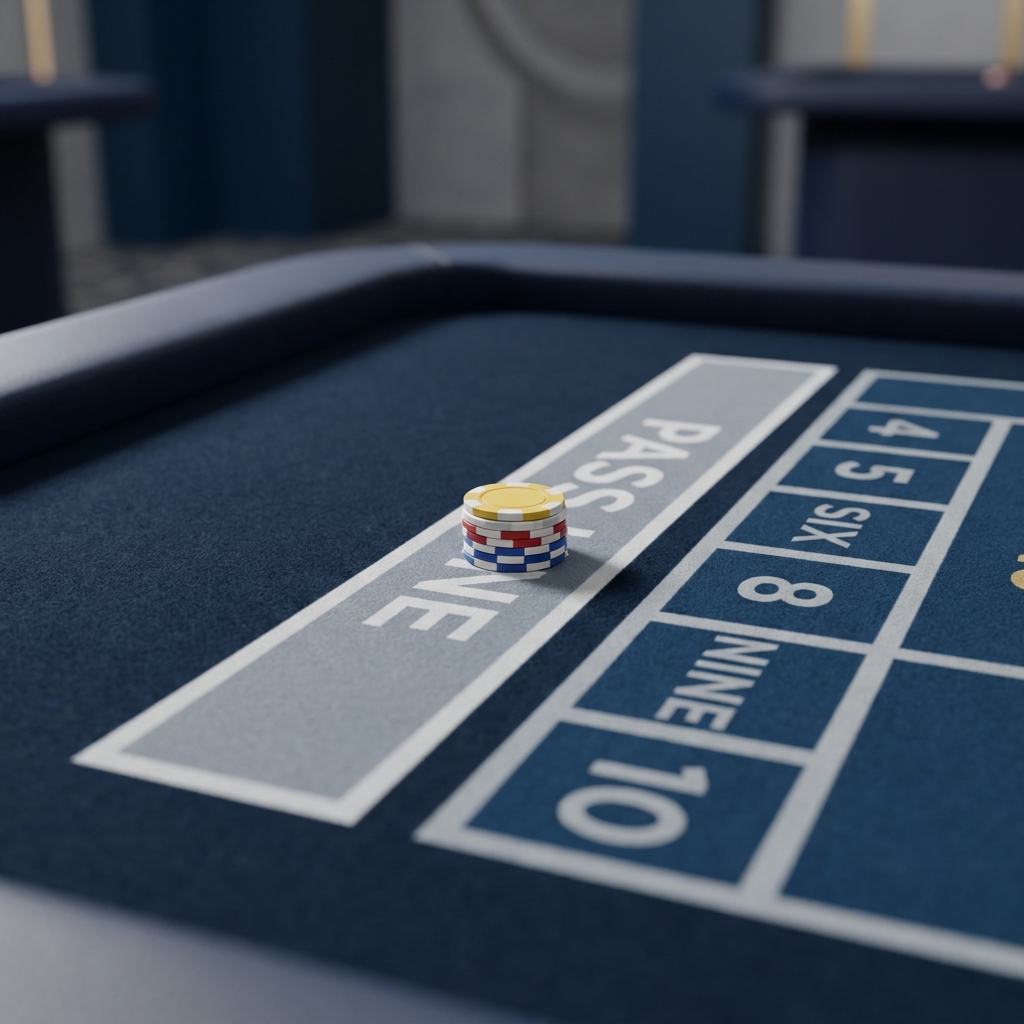
Think of the round in three stages: the come-out roll, the point phase, and the resolution when the dice either make the point or come up seven. On the come-out roll some bets pay or lose immediately. If the roll establishes a point, that point becomes the target until resolution. Understanding this small cycle makes it easier to time decisions like placing line bets, adding odds, or joining the action later.
Understanding the craps table layout and the people at the table
Reading the felt is the first practical skill you need. The layout divides the table into clear zones where different bets live: the pass and don’t pass lines sit along the front edge, number boxes show where to place come and place bets, and the center area usually holds field bets and proposition bets. Chips stay on marked spots to show the dealer which wager you mean. Learn to place chips squarely inside the designated boxes to avoid confusion.
Common markings include the pass line, don’t pass line, come and don’t come boxes, place numbers like four and ten, and a field area for one-roll bets. Dealers and the stickman watch the layout and move markers to show the current point. When you place a bet, put chips where the marking specifies rather than stacking them on the rail; this prevents misunderstanding about which bet you are making.
Table sections and common markings
The front edge is where you typically place pass line and don’t pass bets. The center holds one-roll options and proposition bets, while the number boxes or place sections on the felt represent long-term bets on specific outcomes. If you are unsure where to place a wager, ask a dealer quietly before you put chips down. Most staff are used to helping beginners and will place a bet for you if you indicate what you want.
Roles: dealer, stickman, boxperson, and players
Staff roles are straightforward. Dealers collect and pay chips and handle bets in their section of the table. The stickman watches the dice, changes the dice when needed, and calls roll results. The boxperson manages the bank and resolves disputes. Players decide their bets, hand chips to dealers when buying in, and collect winnings in front of them. Understanding who does what helps you interact smoothly during a session.

Table etiquette matters: handle chips with one hand, avoid touching the dice after they are set, and keep conversations clear and brief. Tip the dealers when they assist you with a tricky payout, but do so politely and in small amounts. Respect the pace of the table and the space of other players; polite behavior keeps the game pleasant for everyone.
The simplest bets for beginners: Pass line and Don’t Pass
Two bets form the foundation of sensible beginner play: the pass line and the don’t pass. The pass line is a bet for the shooter to succeed. On the come-out roll, a pass line bet wins on certain immediate outcomes and loses on others. If a point is established, the pass line pays if the shooter rolls the point before rolling a seven. The don’t pass bet is the mirror image: it wins when the shooter fails to make the point and loses when the shooter succeeds under the corresponding conditions. These two bets let you choose whether you want to support or oppose the shooter with minimal rules to remember.
Many beginners find the don’t pass bet appealing because it is a straightforward way to oppose the shooter without learning many side bets. Conversely, players who like to align with the table energy often choose the pass line because it matches the crowd’s momentum. Either choice is acceptable for a first wager; what matters most at the start is clarity about how the bet resolves on the come-out roll and once a point exists.
How you size these line bets matters: use a consistent unit size and avoid increasing bet size mid-session as a reaction to results. A cautious beginner might bet small and add only modest backing odds after a point is set. Learning the timing of line bets and watching a few rounds before wagering will reduce confusion and help you make better decisions when you do join the action.
Practice betting decisions with structured challenges
Try a short simulated session to practice placing pass and don’t pass bets and see how rounds resolve without risking real money.
What each bet does and when it wins or loses
The pass line pays when the shooter succeeds under the come-out rules or makes the point later. The don’t pass pays when the shooter fails or is seven out when a point is in place. On the come-out roll the behavior of both line bets is immediate for many results and conditional if a point is set. Keeping a small cheat sheet in mind helps you respond to the come-out roll quickly without second guessing.
How line bets relate to the come-out roll and the point
On a come-out roll you can place a pass line or don’t pass bet. If the roll establishes a point, the table moves into the point phase and line bets remain active until the roll resolves. Once the point is made or a seven out occurs, line wagers settle and the next come-out roll begins. This timing is why many players place line bets at the start of a shooter’s turn and add or remove bets when the shooter completes a cycle.
Come bets, Don’t Come, and how they relate to the point
Come and Don’t Come bets allow you to join action after the come-out roll without waiting for a new shooter turn. A Come bet acts like a new pass line wager placed after the point is set: it uses the next roll to establish its own mini come-out and then protects that smaller bet in the same way the pass line is protected. A Don’t Come is the opposite, operating like a don’t pass wager placed mid-shooting turn. These options give you flexibility when you miss the initial opportunity to place a line bet.
Timing is important: you can only place these bets between rolls or when the dealer accepts new wagers. Using a Come or Don’t Come bet is useful when you want to pick a number without waiting for the next shooter. Think of them as portable line bets that start their own sequence, and place them in the numbered boxes so the dealers can manage them properly.
How Come and Don’t Come work as follow-ups to line bets
A Come bet is placed in the come area and will move to the number box corresponding to the first roll after you place it. If that number later hits before a seven, the Come bet wins. Don’t Come uses the same mechanic in reverse. For beginners, these bets mirror the logic of the initial line bets but let you join an ongoing point phase instead of waiting for the next come-out roll to place a pass or don’t pass.
When to use them in play
Use Come or Don’t Come if you arrive mid-shoot and want exposure to specific numbers or if you prefer to add small, isolated bets rather than altering your main line bet. They are especially handy for balancing a table session when you want to spread risk across several numbers. For a beginner, keep these wagers modest and treat them as a way to learn how different numbers pay without committing a large share of your session bankroll.
Using odds bets: what they are and why they matter
Odds bets are a key tool for disciplined players. After a point is established on a pass, don’t pass, come, or don’t come, many tables allow you to place an additional backing bet called odds. This bet sits behind your original wager and pays at true odds for the underlying number. Because it is tied to an existing bet and paid at more favorable terms than many flat bets, adding odds can reduce the relative advantage the house has over your combined stake when used sensibly.
Common practice is to add odds in modest multiples of the base line bet within the table limits. Casinos set maximum odds amounts relative to the base bet, and dealers will show you where to put chips to indicate backing rather than a new flat bet. For cautious beginners, small odds additions protect the structure of your session while taking advantage of better payoff mechanics than many one-roll or proposition bets.
How odds bets differ from flat bets
A flat bet is a single wager on a condition that pays a fixed amount if it wins. An odds bet is conditional on an existing line or come bet and pays at a ratio that reflects the true relationship between hitting the number and the payoff. Because odds bets are not subject to the same margin as many flat bets, they are often the most efficient use of a bet if you want to lower risk per unit wagered while keeping the same exposure to the dice.
Practical rules for taking or laying odds
Only add odds you can afford to keep in play for the entire point phase. Place the backing chips directly behind the original chips and confirm with the dealer that they understand your intent. Respect table limits and avoid overcommitting to large odds early in a session. For most beginners, adding a small, consistent odds stake after each point gives experience with payoff dynamics while keeping session volatility manageable.
Other common bets: Place, Field, and proposition bets explained
Beyond line and come bets, the layout includes Place bets, the Field, and various proposition bets. Place bets let you wager directly on specific numbers to be rolled before a seven. The Field is a one-roll area that pays if certain outcomes appear on the very next roll. Proposition bets are usually single-roll or short-term wagers on specific results and are typically higher variance and less predictable. For new players, these options provide variety but require clear rules to be used safely.
Place and Field bets have straightforward mechanics and can be part of a balanced approach, but proposition bets are best avoided early on because they are often expensive in terms of long-term expectation and can drain a session bankroll quickly. Beginners who want to experiment should limit one-roll bets to small amounts and prioritize learning how the table resolves different payoffs before making larger commitments.
Where these bets sit on the layout
Place bets are positioned on the number boxes and are easy for the dealer to track. The Field occupies the center area for one-roll results. Proposition bets are typically in a cluster of boxes near the center and are served by the stickman for one-roll resolution. If you are unsure, ask the dealer which spot is used for a given wager; that avoids misplacement and helps the staff process your chips correctly.
When beginners should avoid proposition bets
Proposition bets can offer large payouts but at significantly higher risk and with less consistent outcomes. For a beginner focused on learning, these bets are distractions that increase variance and complicate bankroll management. Prefer line, come, place, and gentle field exposure until you are comfortable with the rhythm of the table and can track results without stress.
Bankroll basics and a simple betting framework for beginners
Good bankroll management is the cornerstone of lasting play. Start each session by deciding how much you are willing to risk for that period and divide your session bankroll into consistent units for wagering. A unit should be small enough to allow many bets across several rounds so you are not eliminated by a short run of poor results. This discipline helps you learn and maintain control even when the table gets lively.
Set a stop-loss that limits how much of the session bankroll you will surrender before walking away, and set a quit-win threshold that lets you lock in gains and leave with a positive result. These two simple rules protect your capital and give your play a framework. Stick to the limits you set at the table; changing them in response to short-term emotion is a common path to larger losses.
a short checklist to set session bankroll and unit size
keep units consistent
Setting a session bankroll and stake sizing rules
Decide on a session bankroll before you sit down and translate it into a default unit for most bets. Use the same unit across line bets, come bets, and place bets to make tracking simple. Changing unit sizes mid-session in reaction to outcomes tends to increase risk. Instead, keep units stable and use the stop-loss and quit-win guards to shape behavior when results diverge from expectations.
When to stop: stop-loss and profit targets
Establish a maximum loss for the session and a profit target that will trigger you to close the table. If you hit either threshold, step away and review the session later. This practice preserves bankroll and helps you learn from outcomes rather than chase them. It also builds the habit of disciplined decision-making that transfers to longer-term improvement.
How to play at the table: step-by-step from seating to cashing out
When you approach a table, wait for a break in action or ask politely if a seat is available. Buy chips from the dealer by placing cash on the rail or handing it to the boxperson as required. Once you have chips in front of you, place a pass line or don’t pass bet by setting chips directly on the marked line. Confirm with the dealer if you are unsure and avoid placing ambiguous stacks that could be read as a different wager.
Watch a few rolls before betting if you feel uncertain. Observing the table pace and how the staff handles wagers gives you time to internalize timing and placement. When you do place a bet, use consistent chip stacks and simple signals to make your intent clear. If you need help cashing out, the dealer or boxperson will exchange chips for cash when the table is between rounds or when the dealer indicates chip color is being collected.
Start with the pass line or don’t pass to learn the round structure, use modest odds once a point is set, keep stake sizes consistent with a session bankroll, follow table etiquette, and review short practice sessions to build skill.
During the round, resist touching the dice until the shooter has the dice in hand and sets them on the layout. Keep chips visible and avoid reaching across the felt while rolls are in progress. If you win, let the dealer push winnings toward you; do not grab chips from the table. When asking staff questions, speak calmly and step back slightly so they can move without disruption to other players.
Buying chips and placing your first bet
To buy in, place your cash on the rail or hand it to the dealer as instructed, then receive chips in return. Place your first bet in the pass or don’t pass area and watch how the dealers handle payouts for smaller wins. Practicing this sequence in free-play or low-stakes settings before committing larger amounts reduces stress and helps you focus on learning the game mechanics.
Watching the shooter and adjusting bets through the round
As the shooter rolls, you can choose when to add odds, place bets, or make Come bets. Pay attention to when chips clear and when the dealer accepts new wagers. Adjusting bets mid-round is normal, but do so with patience and avoid overreacting to single rolls. Keeping actions measured preserves your session and helps build repeatable decision habits.
Choosing bets: decision criteria for risk tolerance and session goals
Map your session goals to a simple bet set. If you prefer low variance, focus on pass line or don’t pass plus small odds and avoid place or proposition bets. For balanced play, include occasional place or field bets at modest sizes to introduce variety. If you are playing for entertainment and understand the increased risk, limit speculative bets to a small portion of the session bankroll and expect more volatility.
Consider table limits and dealer practices when choosing stakes. High table limits can encourage larger bets, but they also increase potential losses if the session goes poorly. Match your unit size to both your bankroll and the table limits so you can play several rounds without stress. A clear decision checklist helps you keep risk tolerance aligned with the bets you place.
Matching bets to your appetite for risk
Create three profiles for a session: conservative, balanced, and speculative. For conservative sessions, stick with line bets and modest odds. A balanced plan may add place bets on a couple of numbers. A speculative plan keeps most funds in reserve for one-roll or proposition bets, but these should be smaller relative to your total bankroll. Choose one profile per session and avoid mixing styles mid-session.
How session goals change bet selection
If your goal is extending play time, reduce unit sizes and favor low-variance bets. If your goal is entertainment with potential for larger wins, accept higher variance but restrict the fraction of bankroll used for riskier wagers. Always keep stop-loss and quit-win rules visible to prevent emotion from shifting your strategy mid-session.
Typical beginner mistakes and how to avoid them
Common errors include chasing losses by increasing bet sizes, overusing proposition bets that are high variance, and varying bet sizes across similar situations. These habits accelerate losses and make it hard to learn. A precise correction is to set a single unit size, implement stop-loss and quit-win rules, and avoid bets you do not understand. That combination reduces regret and lets you gain experience steadily.
Emotional traps often manifest as quick reactions to a bad roll or a hot streak. Practiced players take the long view and respond to patterns only after multiple rounds of evidence. For a beginner, stopping when you hit predetermined thresholds and logging the session results for later review is a simple way to avoid emotional errors and to cultivate a measured mindset at the table.
Common emotional traps
Frustration and fear of missing out can lead to reckless changes in strategy. Keep a short checklist by your notes to remind you of your unit size, stop-loss, and quit-win rules. When you feel the impulse to chase, take a short break, count breaths, and revisit your checklist before making a new wager. That pause often prevents costly mistakes.
Betting errors that cost players time and money
Placing unclear chips, failing to respect table limits, and misunderstanding bet resolution are common operational mistakes that create disputes and lost bets. Watch the dealer handle a payout the first few times and ask simple clarifying questions when needed. These steps prevent avoidable errors and keep your session focused on learning rather than fixing misunderstandings.
Practical session examples and short practice plans
Sample 30-minute conservative session: set a session bankroll, choose a small unit for pass line bets, add only minimal odds when a point is established, and stop if you lose a preset portion or hit a modest profit target. Keep a short log of each bet, the outcome, and how you felt about the decision. The goal is repetition and steady learning rather than chasing a big payout.
Sample 30-minute balanced session: maintain the same session bankroll but allow occasional place bets or a couple of small field bets to add variety. Limit speculative bets to a strict portion of the bankroll and be ready to return to the conservative profile if results go against you. After the session, review your log to see whether place and field bets added useful information for future decisions.
Two sample 30-minute sessions: conservative and balanced
Both plans emphasize consistency: same session bankroll, same default unit, and a clear stop-loss and quit-win. By keeping those constants, you can compare sessions and see what adjustments paid off. Use practice simulators or low-stakes games to run these scripts repeatedly until the steps become second nature.
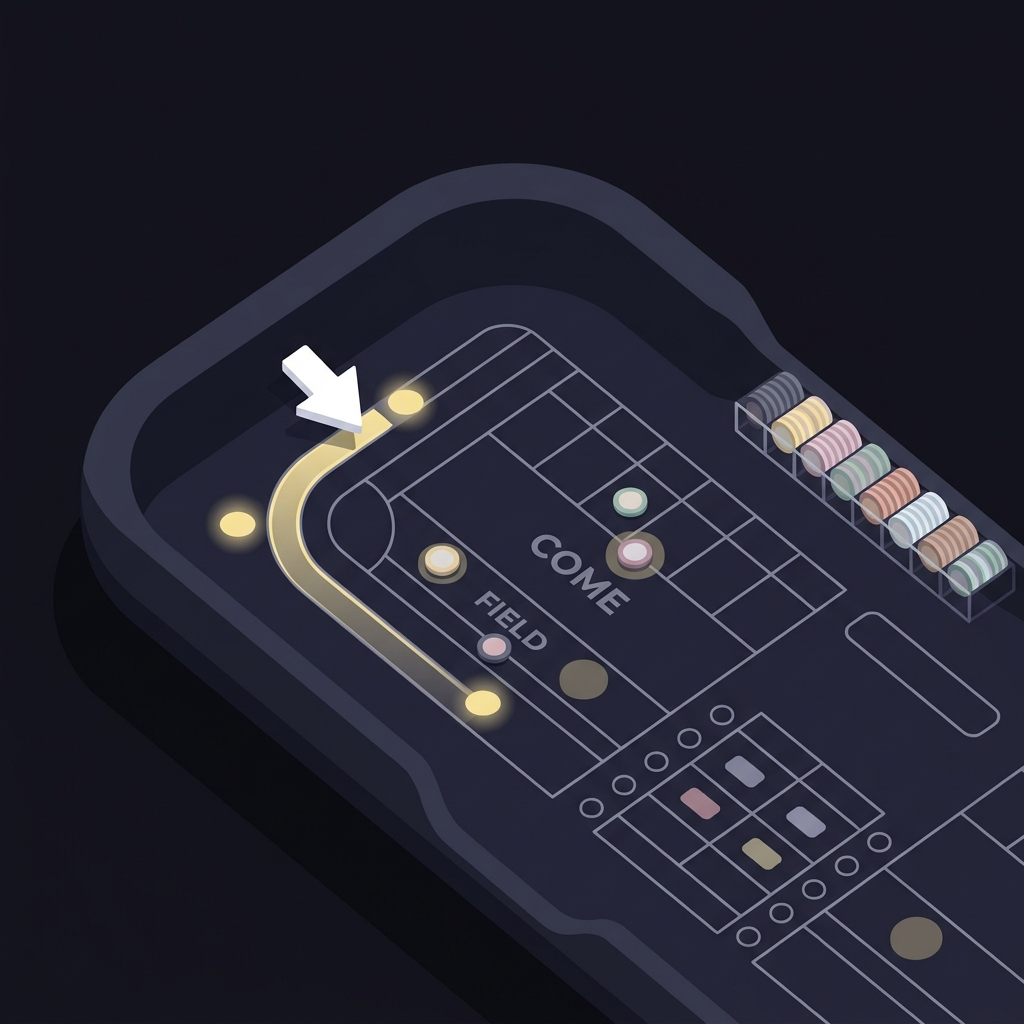
How to track progress and adjust after a session
Keep a simple hand log that records the number of bets, types of bets, and outcome for each session. Note emotional states and any deviations from the plan. Over time you can see whether certain adjustments improve play or whether changing table profiles is warranted. Iteration based on real logs is the most reliable path to better decision-making.
Where to go next: practice options, resources, and responsible play reminders
Resources and practice options include free online simulators and low-stakes live tables that let you test decisions without large sums. Practicing builds fluency with bet placement, timing, and the pacing of the table. Use simulation to rehearse typical sequences so you can react calmly at a live table and focus on understanding rather than scrambling to place chips.
Responsible play reminders: outcomes are not guaranteed, and consistent rules preserve capital and learning ability. Follow the bankroll framework you set for each session, respect table etiquette, and take breaks when needed. If you feel play is becoming more emotional than enjoyable, step away and review your approach before returning.
Final checklist: know the come-out and point phases, use line bets and modest odds as your foundation, avoid proposition bets early, set unit size and stop rules, and log sessions for review. These steps give you a clear path to learn the game while preserving your session bankroll and attention.
The simplest bets are the pass line and don’t pass, which resolve on the come-out roll and during the point phase and are easy to track.
Set a session bankroll, divide it into consistent unit bets, and use stop-loss and quit-win thresholds to protect funds and keep decisions disciplined.
No, proposition bets are higher risk and better avoided early; focus on line, come, and small place or field bets until you gain experience.
References
- https://www.fundedplays.com/challenges
- https://www.venetianlasvegas.com/resort/casino/table-games/craps-basic-rules.html
- https://entertainment.howstuffworks.com/craps4.htm
- https://www.riverwind.com/blog/craps-strategy-guide-best-bets-to-make-in-craps/
- https://www.fundedplays.com/blogs/how-fundedplays-evaluations-work
- https://www.fundedplays.com
- https://www.fundedplays.com/blogs