

Why balancing opportunity and capital protection matters
Defining opportunity versus capital preservation in practice
Learning how to balance opportunity and capital preservation starts with two clear ideas: opportunity is the potential for return, and capital preservation is the deliberate effort to limit drawdowns so you have runway to keep acting. In a challenge environment, that runway matters because a series of early losses can prevent you from demonstrating skill over time. Asset allocation and diversification are the first-line defenses that help you marry upside with protection, and they work by spreading exposure so that a single event rarely wipes out progress U.S. Securities and Exchange Commission guidance on asset allocation.
Think of allocation as setting how much fuel you put in each tank and preservation as the seatbelt you wear while flying. In sports prediction challenges that use virtual funded accounts, the goal is not only to generate returns but to limit deep drawdowns that remove opportunity to improve. No single tool can eliminate downside risk; defensive tools should augment allocation choices and predefined risk budgets rather than replace them.
A brief checklist to set objectives and risk tolerance
Use to capture initial allocation decisions
How the trade-off shows up in prediction and trading challenges
In structured evaluation programs, participants often face constraints such as maximum drawdown rules and position limits that make the trade-off concrete. Choosing larger, concentrated selections increases potential upside but also increases the chance of hitting a drawdown limit and losing a funded opportunity. That is why many successful participants treat their virtual bankroll as a living budget to be preserved across multiple events.
Practical capital preservation strategies in this context include limiting exposure per event and diversifying across event types and time horizons so your performance reflects skill rather than a single lucky outcome. Documenting these rules up front helps avoid emotionally driven departures from plan later.

A step-by-step framework to balance upside and preservation
Set objectives, time horizon, and risk budget
Start by defining your objective. Are you trying to show consistent edge over 30 days, 90 days, or a full season? Your time horizon determines how much short-term volatility you can tolerate and therefore how aggressive your allocation should be. Then translate that into a risk budget: a clear statement such as maximum acceptable drawdown over the evaluation period or percent of capital you are willing to risk per selection. This kind of firm-level discipline echoes regulatory emphasis on risk governance and defined limits FINRA regulatory oversight report.
Prioritize asset allocation and diversification first, set a numeric risk budget, convert that into position sizing and exits, and test defensive overlays only when their cost is justified by the value of preserved runway.
Translate budgets into position sizing and exposure limits
Once you have a numeric risk budget, convert it into position sizing rules. One common approach is to cap capital at risk per selection to a fixed percentage of the bankroll so a string of losses does not end your challenge prematurely. For example, if your budget allows a 15 percent maximum drawdown, you might size each selection so that a single loss costs no more than 1 to 2 percent of capital. That keeps multiple independent chances to demonstrate skill while protecting runway.
Order handling, execution quality, and supervision are important complements to sizing rules. A well sized position can still suffer unintended losses if orders are mis-executed or if execution rules trigger at inopportune moments. Treat order types and process steps as part of your control environment and test them in simulated conditions before relying on them in live evaluation challenges.
Allocation and diversification: the first line of defense
How allocation reduces risk without denying opportunity
Asset allocation aligned to risk tolerance and time horizon remains the core mechanism to balance return potential with capital preservation. The practice is not about avoiding opportunity; it is about choosing where to concentrate skill and where to accept lower exposure to reduce the chance of catastrophic loss. Investor education materials highlight allocation and diversification as foundational steps for managing volatility and long-term risk Investor.gov on asset allocation.
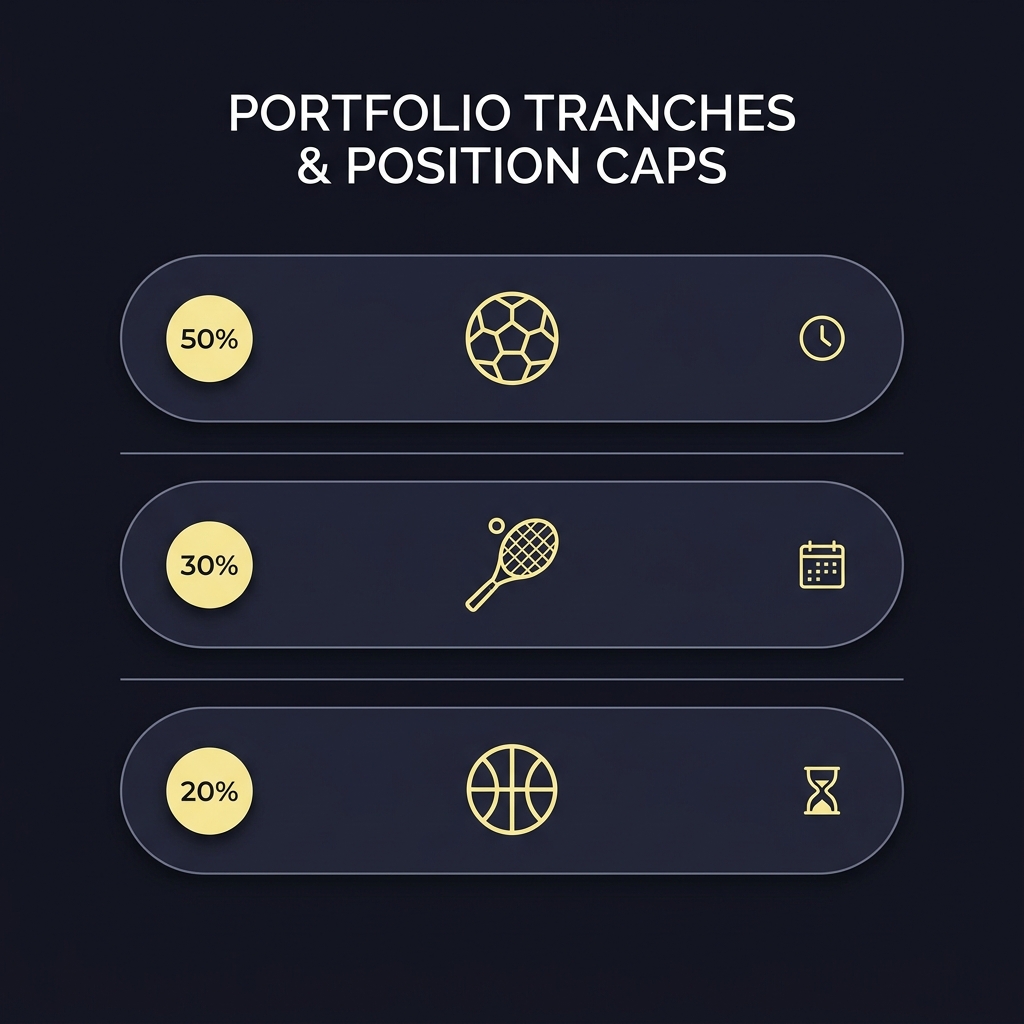
One simple allocation rule for challenge participants is to split capital into tranches for different objectives: a testing tranche for new strategies, a steady tranche focused on consistent small edges, and a reserved tranche for spice plays. That structure preserves long-term opportunity by ensuring you can continue to participate after setbacks.
Practical diversification approaches for challenge portfolios
In sports prediction portfolios, diversification can mean mixing sports, event types, and time horizons. Correlated outcomes such as multiple selections tied to the same game or market outcome increase the risk of simultaneous losses. By distributing selections across less correlated events, you lower the chance that a single shock removes your runway.
Diversification can reduce volatility while also diluting short-term upside, so weigh the trade-off against your evaluation objectives. If the aim is to show consistent performance across an extended period, a diversified approach usually improves the odds of meeting minimum performance targets required by funded account challenges.
Rules for exits, stops, and why orders are not a perfect shield
What stop and stop-limit orders can and cannot do
Stop and stop-limit orders are useful tools, but they do not guarantee an execution price and can be triggered in volatile or gapping markets. Because of that, they should be used to support position sizing and documented exits, not as the sole line of defense FINRA guidance on stop orders.
In simulated or virtual funded account settings, testing how stops behave under different market conditions will reveal common failure modes. For example, a stop can be executed at a worse price after a gap, or in fast markets an order may not fill at the limit you set. Designing exits with those limits in mind helps keep worst-case outcomes bounded.
Designing exit rules that work under volatility and gaps
Effective exit rules combine multiple layers: predefined stop levels based on position size, time-based exits for stale selections, and manual review triggers when events are highly uncertain. Use exits to enforce the maximum acceptable loss per event, and map exit rules to the size of the position so a bigger position has more conservative triggers.
Document the exact order types you will use and how they interact with platform execution rules. When possible, practise exits in simulation to see how the orders behave before relying on them in a live evaluation. That practical rehearsal reduces surprises when volatility arrives.
Rebalancing and routine maintenance to prevent risk drift
How rebalancing keeps portfolios aligned to targets
Routine rebalancing helps recover intended exposure after market moves and prevents risk drift that can upset your plan. Rebalancing is a discipline that nudges the portfolio back toward the allocation chosen to achieve your objectives, even if it means selling some winners to buy laggards. Research on rebalancing explains the benefits and the trade-offs involved Vanguard rebalancing basics, and a related approach is discussed by BBH and tax-optimized rebalancing is examined in academic work from Columbia.

Rebalancing may not maximize nominal returns in every period, but it enforces the intended risk profile and reduces the chance that short-term performance skews long-term exposure. For funded challenge participants this means maintaining the same risk posture across the evaluation window rather than drifting into concentrated bets after a streak of wins.
Choosing a frequency and process that fits taxes and fees
Common practical approaches include calendar rebalancing, threshold rebalancing, or a hybrid of both. Calendar rebalancing uses set dates to restore targets, threshold rebalancing triggers only when allocations move beyond predefined bands, and hybrid policies combine a periodic review with threshold checks. Each approach has pros and cons related to transaction costs, tax events, and opportunity cost.

When picking a cadence, document the trade-offs for your account. If taxes or fees matter, less frequent or threshold-based rebalancing can reduce costs. If you need tight risk control for a short evaluation window, a more disciplined calendar schedule may make sense. Testing these approaches in a simulated account helps you settle on a policy before committing capital.
Defensive overlays: what protection costs and when it helps
Options-based protection and the return trade-off
Document your protection criteria with FundedPlays Challenges in mind
Document clear criteria for when you will buy paid protection and what maximum hedging cost you accept, including how protection affects your chance of meeting evaluation objectives.
Options-based protective overlays, such as systematic put protection, can reduce drawdowns and volatility but generally come at the expense of long-run returns because hedging costs accumulate over time. That trade-off is well described in research on put protection strategies Cboe whitepaper on put protection.
Use overlays when the preservation of capital has asymmetric value relative to the cost. Examples include short evaluation windows where a single large loss would end your chance to qualify, or situations where capital at risk carries outsized consequences beyond the balance sheet, such as regulatory limits in a challenge model.
When overlays are appropriate in a funded challenge or trading plan
Decide in advance whether overlays are part of your toolkit and how you will pay for them. Compare the expected hedging cost to the value of avoided drawdowns and the impact on your probability of meeting performance thresholds. Document the decision criteria and update them as option pricing or your objectives change.
Remember that overlays do not remove the need for allocation, sizing, exits, and rebalancing. They supplement those controls by smoothing downside risk in exchange for an ongoing cost. Keep the overlay size and duration measured so you do not inadvertently dull the signal of your underlying skill.
Common mistakes and how to avoid them
Overreliance on a single tool or order type
Many participants make the mistake of treating a stop order as a guarantee rather than a control. Stops can fail in gaps or fast markets, and oversized positions magnify the damage when they do. That is why combining position limits with predefined exits is essential to protect capital FINRA guidance on stop orders.
A corrective action is to enforce a hard cap on percent of capital at risk per event and train to size orders so that worst-case outcomes remain within your documented budget. Use simulation to see how these rules behave under stress.
Chasing short-term performance at the expense of runway
Abandoning allocation rules after a streak of wins is a common behavioral error. Increasing size to chase momentum may produce a quick gain, but it raises the risk of a reversal that ends your funded opportunity. Keep a written rule that ties any size increases to measurable improvements in edge, not emotion.
Oversight and monitoring are simple fixes: keep a running log of rule violations, review them weekly, and apply pre-agreed penalties for breaches. That kind of supervision helps maintain discipline and protects the capital you need to sustain performance.
Practical scenarios and a disciplined checklist to follow
Scenario A: conservative allocation with occasional overlays
Scenario A splits capital into three tranches: 60 percent steady picks sized conservatively, 30 percent moderate plays, and 10 percent reserved for short-term overlays. Position caps are set so no single selection risks more than 1 percent of capital, exits are preplanned, and rebalancing occurs monthly. Paid protection is used selectively for high volatility windows where a single loss could terminate the evaluation.
This setup prioritizes capital preservation while leaving room for measured upside. It favors portfolio rebalancing and small, repeated edges over concentrated big bets, and it is particularly suited to participants who must demonstrate steady performance across an evaluation window Morningstar on rebalancing trade-offs.
Scenario B: aggressive growth focus with strict position caps
Scenario B pursues higher upside by increasing allocation to high-conviction events but enforces a strict position cap such as 3 percent of capital per selection and a maximum drawdown threshold of 20 percent. Exits are tighter for larger positions, and rebalancing uses threshold bands to prevent accidental concentration. No permanent overlays are purchased; instead, capital preservation relies on sizing and exits.
That approach can capture more short-term opportunity while keeping runway through disciplined caps. It suits skilled participants who have strong conviction on a subset of events but still need to control catastrophic losses through structured risk budgeting Vanguard rebalancing basics.
Checklist to implement now:
- Define objective and time horizon
- Set a numeric risk budget for the period
- Decide position cap per selection
- Write clear exit rules and test them
- Choose a rebalancing policy and document it
- Decide if and when to use paid overlays
- Track results and adjust only with evidence
Closing: how to start, test, and iterate your preservation plan
Small-scale testing and documentation
Begin with small-scale testing in simulated funds or evaluation challenges to see how your rules play out in practice. Treat the test as a controlled experiment: keep variables limited, observe outcomes, and document the lessons. Regulatory guidance emphasizes documentation and monitoring as part of sound risk oversight, which applies equally to individuals running disciplined experiments FINRA regulatory oversight report.
Keep a short log that records each rule change, the reason for it, and the performance impact. Over time you will build evidence that guides adjustments to rebalancing frequency, sizing limits, or the use of overlays.
When to adjust rules and when to stick to them
Adjust rules when a pre-specified test shows a consistent improvement in risk-adjusted performance. Avoid changing rules in reaction to short-term outcomes. If an adjustment is made, apply it prospectively and document the criteria used so you do not unintentionally optimize to noise instead of skill.
Disciplined adherence to a tested plan preserves capital more reliably than chasing silver-bullet tools. In challenge-style platforms and trading alike, the combination of thoughtful allocation, clear risk budgets, sizing discipline, and routine maintenance is the practical path to balancing opportunity with capital preservation.
Define your objective and time horizon, then set a clear numeric risk budget that limits maximum acceptable drawdown and per-selection exposure.
No, stop and stop-limit orders do not guarantee an execution price and can be triggered in gaps or volatile markets; they should complement position sizing and exits.
Use paid overlays when short time horizons or asymmetric downside risks make preserving capital more valuable than the ongoing hedging cost, and document the decision criteria first.
References
- https://www.investor.gov/introduction-investing/investing-basics/asset-allocation
- https://www.finra.org/rules-guidance/guidance/reports/2024-annual-regulatory-oversight-report
- https://www.finra.org/investors/insights/stop-loss-orders-stop-limit-orders
- https://investor.vanguard.com/investor-resources-education/investing/rebalancing-basics
- https://www.fundedplays.com/challenges
- https://www.cboe.com/resources/indices/whitepapers/options-based-strategies-for-downside-protection-pput.pdf
- https://www.morningstar.com/portfolios/rebalancing-why-when-how
- https://www.bbh.com/us/en/insights/capital-partners-insights/our-approach-to-portfolio-rebalancing-for-taxable-investors.html
- https://cfe.columbia.edu/sites/cfe.columbia.edu/files/content/Posters/2025/11.%20PortfolioRebalanceTaxOptimizatio.pdf
- https://www.fundedplays.com
- https://www.fundedplays.com/blogs
- https://www.fundedplays.com/blogs/how-fundedplays-evaluations-work