
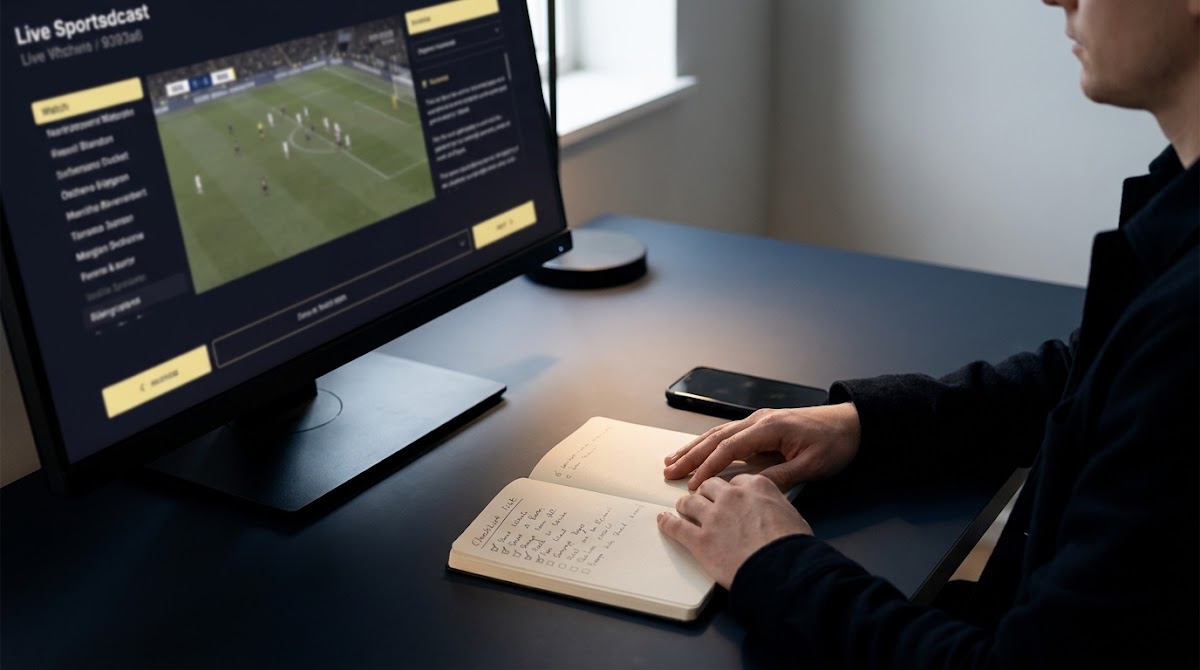
What emotional trading is and why personal stress raises the risk
How to Avoid Emotional Trading After Personal Stress is first about understanding a simple point: acute personal stress changes how you decide. Psychosocial stress reliably impairs decision quality and shifts behavior toward faster, more habitual responding, which raises the chance of emotion-driven trades; this pattern is summarized in a recent systematic review and meta-analysis Frontiers in Psychology meta-analysis.
In practice that means your attention narrows and executive control weakens. When you are personally stressed, tasks that normally get careful evaluation are more likely to be handled by well-worn habits or quick heuristics rather than deliberate analysis. For short-term sports prediction work, that can look like taking the first prop that seems right, increasing size on an impulsive hunch, or skipping a routine checklist because you want a fast outcome.
Those cognitive shifts are particularly relevant to live props and in-play choices where decisions arrive rapidly and options are numerous. Sports prediction often demands quick pattern recognition combined with calm assessment of probabilities; stress biases that mix of speed and judgment toward reactive moves instead of measured responses.
People differ. Under stress some become more risk seeking, others more risk averse, and some oscillate between both. Because individual responses vary, the safest approach for trading or prediction after strong personal stress is conservative and rule-based rather than relying on subjective confidence. See a broader review on decision-making under stress Decision-making under stress (PMC).
Explore FundedPlays challenge programs to practice disciplined prediction
Pause, breathe, and run a short checklist before placing any trade when you are feeling stressed.
This section defines the problem and the need for safeguards, not a promise that any single tactic guarantees outcomes. The point is practical: reduce the chance that temporary emotion replaces your normal decision process.
Immediate regulation: what to do in the first 10 to 30 minutes
When stress is recent and strong, the priority is quick regulation so you can restore enough focus to follow your rules. Public-health guidance recommends simple immediate steps such as paced breathing and grounding to lower arousal before making important decisions NIMH coping guidance.

Start with a brief, repeatable micro-routine you can do anywhere. Example: sit quietly and do four cycles of paced breathing, inhaling four seconds, holding one second, exhaling six seconds, for about two to three minutes. This slows heart rate and gives you a short delay to avoid reactive choices.
Follow breathing with a grounding exercise: name five things you can see, four things you can touch, three sounds you hear, two things you can smell, and one thing you can taste or a single grounding phrase. Public health resources list similar grounding steps as practical emotion-regulation techniques CDC coping with stress and guidance from major clinics Cleveland Clinic.
Combine that with a timeout rule. A simple operational routine is: five minutes of breathing, then at least ten minutes away from screens or live feeds. Use that time to review your checklist or step away completely if you cannot follow rules reliably. If stress is present now, delay trades until immediate regulation is completed.
These are acute coping steps, not long-term solutions. They are intended to restore enough cognitive control to apply your pre-trade rules rather than to make you 'ready' for high-stakes decisions on a single short exercise.
A pre-trade checklist and pre-commitment framework to prevent snap decisions
How to Avoid Emotional Trading After Personal Stress
A short written checklist is one of the most reliable pre-commitment tools to prevent emotion-driven entries and exits. Investor education resources recommend pausing and using clear, written rules during periods of high personal stress to reduce regret-driven decisions FINRA investor guidance.
Keep the checklist concise so you will use it under pressure. Core items to include are: current stress check, objective signal criteria, maximum position sizing cap, stop-trade condition, required cooldown period, and a verification step. Below are example items you can copy into a notes field.
Example pre-trade checklist (copy into your notes):
- Stress check: On a scale of 1 to 5, my current stress level is ___ (if 3 or above, do timeout routine).
- Signal criteria: I will take this trade only if it meets my written entry signal and odds threshold.
- Position sizing: Max size today = ___ or reduce usual size by 50 percent when stressed.
- Stop-trade: If drawdown hits the preset cap, stop trading for the session.
- Cooldown: Wait the timeout routine before execution.
- Verification: I initial or tick this box to confirm I followed the checklist.
The psychology is straightforward. Writing rules ahead of time removes reliance on in-the-moment willpower and anchors behavior to a process you designed when calm. Pre-commitment converts subjective impulses into objective checks, reducing the chance that a single emotional story drives trading.
Pause and do a short paced-breathing plus grounding routine, then complete a concise pre-trade checklist before making any decision.
Integrate the checklist into your workflow so verification is simple. Use a platform note field, a small paper card, or a persistent checklist in a phone note that you must mark before placing a live prop. See our blog for more on workflow and notes integration.
When stress is high, the checklist should include a stronger sizing cap and an explicit requirement to pause if you cannot complete all items. The checklist is a protective tool; it does not promise success but reduces the risk of impulsive, regret-prone choices.
Temporary risk-management adjustments when judgment may be compromised
If your judgment may be compromised by stress, adjust risk parameters conservatively until control is restored. Investor education and risk guides recommend preset caps such as reduced position sizes and daily loss limits to lower potential harm FINRA investor guidance.
Conservative sizing rules are easy to apply immediately. For example, set a rule to reduce your typical stake by a fixed fraction when you detect elevated stress. A simple operational rule: commit to 50 percent of your usual size on any new positions until you complete your cooldown routine.

Preset daily loss or drawdown caps work as last-resort breakpoints. Decide ahead of time what you will accept as a maximum loss for the day or session and stop trading when that cap is reached. This removes the temptation to chase losses and enforces a forced pause that lets acute emotion subside.
Use stop-trade triggers and automation where possible. Many platforms offer limit and stop orders or session-level block features; using automation to enforce caps is more reliable than relying on in-the-moment restraint. When automation is not available, make the stop-trade condition part of your active checklist so it is visible and enforced.
These adjustments are intended as temporary protections, not wholesale strategy changes. Revert to your usual sizing and rules only after you have completed your regulation steps and verified you can follow process consistently.
Long-term stress reduction to improve decision resilience
Reducing baseline stress reactivity over weeks and months improves decision quality and lowers the frequency of crisis regulation. Public-health advice emphasizes habits such as consistent sleep, regular exercise, and social support as ways to reduce stress reactivity and strengthen cognitive control NIMH coping guidance and offers tips consistent with APA recommendations APA stress tips.
Good sleep hygiene matters because sleep directly affects attention and executive function. Establish consistent bed and wake times, reduce late-night screen exposure, and treat major sleep disruptions as signals to pause high-stakes decision making until rest is restored. Over time better sleep reduces the intensity of stress responses.

Regular physical activity and social support likewise buffer stress. Short daily exercise, regular social check-ins, and brief mindfulness or relaxation practices lower daily stress and make it less likely that a difficult personal event will immediately impair trading judgment.
If stress is persistent or it interferes with normal functioning, seek professional help. A qualified clinician can help you build a plan that reduces reactivity and supports better decision making over time. Long-term habits reduce the frequency with which you will need emergency regulation tactics during trading.
Common mistakes and cognitive traps to avoid after a stressful event
Recognizing predictable errors helps you spot them and apply safeguards. Common patterns after stress include revenge trading, overtrading, abandoning stops, and chasing recent wins or losses. These behaviors often follow a short emotional script rather than a disciplined process.
Stress also amplifies confirmation bias and availability bias, making one-sided interpretations of signals seem more convincing. When stressed, the evidence in favor of a favored idea feels clearer and more urgent even when it is not, so explicit checks against confirmation are essential.
Corrective actions tie directly to the checklist and risk rules: require that every trade meets the written signal criteria, enforce reduced sizing caps, and stop trading when your preset drawdown is reached. Use the verification step to slow down and force a second look at evidence you might otherwise accept too quickly.
Finally, distrust the ‘insight’ that arrives with high emotion. If a new story about a player, matchup, or event feels like the only valid explanation, treat it as a hypothesis that needs checking, not as a directive to trade immediately.
Practical examples and short scenarios for sports predictors
Real scenarios make the rules easier to use. Scenario A shows a typical short-term stress case: you get upsetting personal news an hour before an evening of live props and you usually place several small in-play wagers over the next three hours. Use the immediate regulation routine, run the checklist, and reduce size before considering any live prop CDC coping with stress.
Scenario A step list:
- Stop and do the paced breathing routine for three minutes.
- Do the grounding exercise and wait at least ten minutes away from the feed.
- Run the pre-trade checklist and mark verification before any action.
- If stress is still rated 3 or above, restrict size to the temporary cap and use stop-trade triggers or refrain from trading for the session.
Scenario B covers sustained stress across a tournament or season. If stress is persistent for days or weeks, adopt a temporary trading pause or move to smaller, less frequent position sizing while you follow a three-week habit plan to rebuild resilience. During this period, apply daily drawdown caps and limit the number of trades per day.
Use short scripts to check in with yourself and with an accountability partner. Example checkpoint questions you can say aloud or message to a teammate: "Can I list the objective reasons for this pick?" and "Have I completed my checklist and timeout routine?" If you use an accountability partner, send a brief status message before resuming full-size activity to increase external commitment and perspective.
enforce the pre-trade checklist before execution
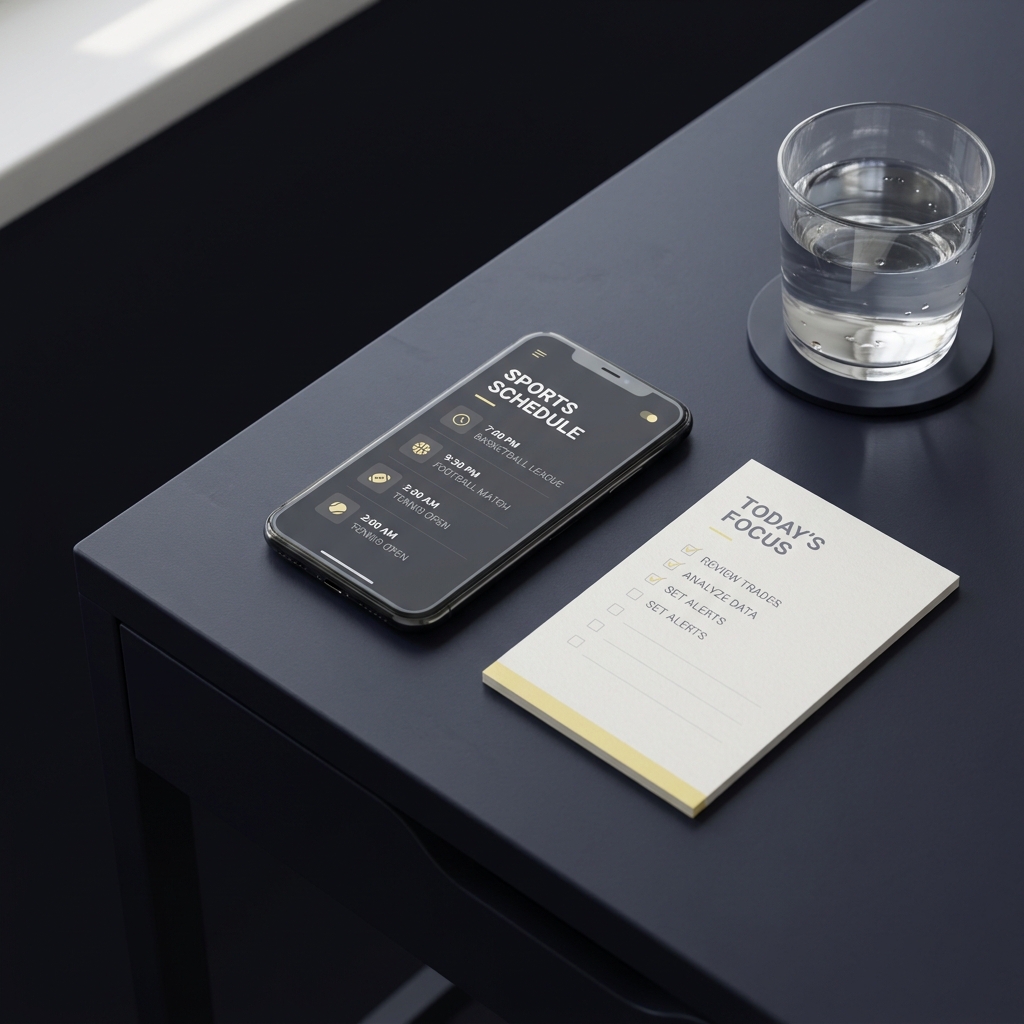
Keep this as a pinned note on your device
These scenarios map directly to the rules earlier: immediate regulation first, then checklist verification, then temporary sizing and drawdown limits. Practicing these scripted steps when calm makes them easier to follow under stress. For context on how Funded Plays evaluations work, see how Funded Plays evaluations work.
Quick plan and next steps: a one-page cheat sheet
Two-minute checklist to copy into your notes field:
- Stress check 1-5: if 3+, run timeout routine.
- Breathe 3 minutes, grounding 5 items.
- Confirm signal criteria and mark verification.
- Reduce size to temporary cap if stressed, enforce daily drawdown cap.
- If cap hit or persistent stress, pause trading and follow three-week plan.
Three-week habit plan, brief:
- Week 1: Re-establish sleep routine, nightly wind-down, limit late screens.
- Week 2: Add 20 to 30 minutes of moderate exercise four times per week and daily 5-minute breathing practice.
- Week 3: Set one weekly social check-in and use platform notes to practice the checklist on low-stakes simulations.
Red flags that should trigger a pause: sustained inability to follow the checklist, repeated failure to respect drawdown caps, or stress that impairs daily functioning. If any red flag appears, consider a temporary trading break and seek support if needed. Visit the Funded Plays homepage for account and platform details.
Remember, no approach guarantees outcomes. These rules are protective measures designed to reduce the risk of emotion-driven decisions while you recover control.
No. Trading immediately after a strong personal stressor increases the chance of impulsive choices. Use a short regulation routine and wait until you can complete your checklist reliably.
Pause long enough to complete immediate regulation and the checklist; if stress persists over days, consider a temporary pause lasting the period of elevated stress or follow a three-week habit plan to rebuild stability.
They reduce the likelihood but do not eliminate it. Checklists and caps are protective tools that lower risk but do not guarantee outcomes.
References
- https://www.frontiersin.org/articles/10.3389/fpsyg.2024.00000
- https://www.nimh.nih.gov/health/publications/stress
- https://pmc.ncbi.nlm.nih.gov/articles/PMC11061251/
- https://www.cdc.gov/mentalhealth/stress-coping/index.htm
- https://my.clevelandclinic.org/health/articles/6392-stress-coping-with-lifes-stressors
- https://www.finra.org/investors/insights/keep-your-emotions-in-check-when-investing
- https://www.apa.org/topics/stress/tips
- https://www.fundedplays.com/challenges
- https://www.fundedplays.com
- https://www.fundedplays.com/blogs
- https://www.fundedplays.com/blogs/how-fundedplays-evaluations-work