
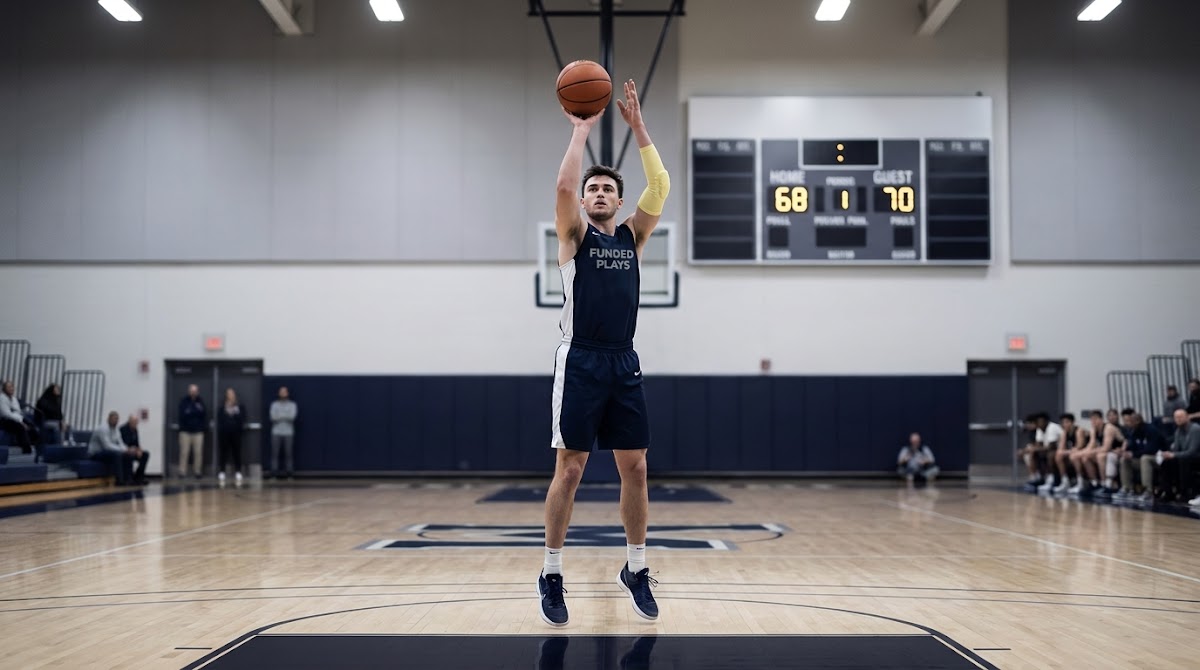
Introduction: why three-point variance matters for college basketball
How Three-Point Variance Affects College Basketball
Three-point shots are exciting because each attempt can change the scoreboard quickly. That same feature makes three-point attempts a key source of short-term unpredictability in college basketball. Coaches, fans, and analysts who understand how three-point variance works can make clearer decisions about lineups, game plans, and forecasts.
Roadmap for this article: we begin with a plain-language definition, then look at shot-level mechanics, measurement approaches, game and season effects, strategy and roster implications, modeling guidance, common interpretation mistakes, and practical scenarios. Each section ends with concrete takeaways you can use in coaching notes, model documentation, or game previews.
Explore FundedPlays challenge formats and evaluation rules
This article offers practical steps to think about three-point shooting variability without assuming advanced math, aiming to help coaches, analysts, and informed fans make better, calmer decisions.
The core term we use is three-point variance, which captures how much a player or team’s long-range results swing around their typical expectation. This differs from a raw shooting percentage because it emphasizes variability over time and across samples, not just the long-run average.
How single shots create variance: the mechanics behind makes and misses
Shot-level randomness and binary outcomes
At the simplest level, every three-point attempt is a binary event: it either goes in or it does not. That binary nature means even a player with a steady true shooting ability can have streaks of makes or misses in small samples. Thinking in terms of individual attempts makes it easier to see why short stretches of unusually hot or cold shooting are common.
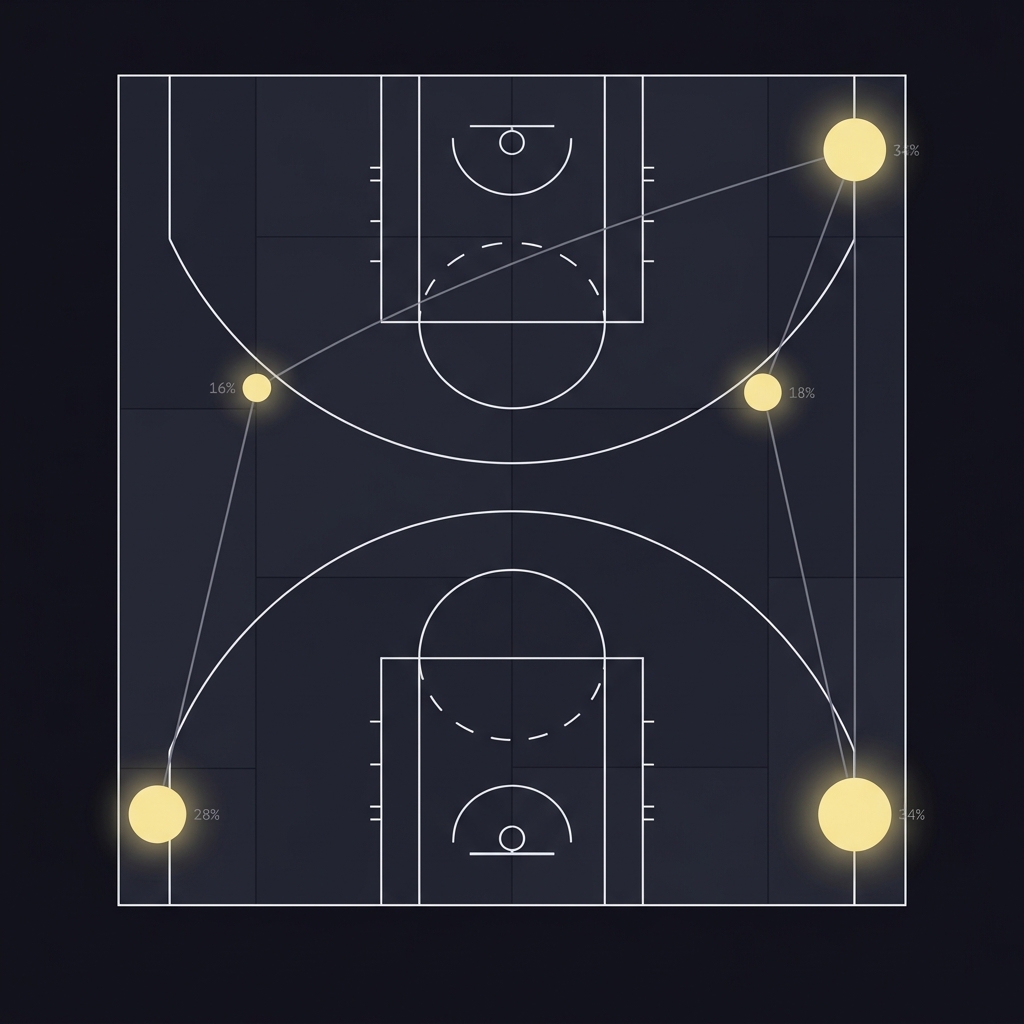
Shot attempts are affected by many factors that create randomness. For example, whether a shooter gets a clean look, if the defender closes out quickly, or how the ball bounces off the rim on a rim-out can all change one attempt’s result. Those micro-variations add up and appear as variance when you look at a game or a few games.
Role of shot difficulty and context
Not all three-point attempts are the same quality. A wide-open corner three is different from a contested step-back from the top of the key. Shot quality interacts with randomness: lower-quality attempts raise the chance of misses and can increase observed variability, while consistently high-quality chances tend to reduce noise over time.
As a practical example, a late offensive sequence that forces a difficult long-range shot can produce a high-variance outcome for the possession. Coaches who recognize the difference between high-quality and low-quality looks can better interpret the meaning of a single make or miss.
Measuring three-point variance: metrics and practical approaches
Simple descriptive stats: variance and standard deviation
Conceptually, variance and standard deviation describe how spread out shooting results are around an average. If a player's long-range outcomes swing widely from game to game, they have higher variance. If outcomes cluster close to the average, variance is low. These ideas help convert vague impressions of "streakiness" into measurable summaries that can inform decisions.
Because formal statistical formulas can feel heavy, a simple working approach is to track rolling shooting percentages across fixed windows of games and note how much those windowed numbers jump around. Large swings over small windows usually indicate high short-term variability rather than a sudden, lasting change in skill (see analysis at The Power Rank).
Treat short-term swings as informative but noisy; favor smoothed estimates, require contextual confirmation, and use probabilistic forecasts rather than single-point predictions when making roster, game, or model decisions.
Contextual metrics: effective field goal and shot quality models
Contextual measures like effective field goal percentage and shot quality estimates add information that plain percentage does not. Effective field goal percentage adjusts for the fact that three-point makes are worth more than two-point makes. Shot quality models try to rate each attempt based on location, defender proximity, and other clues about how likely a make was before luck and execution intervene. Using these together helps separate cleaner indicators of skill from noisy results.
Keep in mind small samples limit what any metric can show. Early in a season or over short stretches, per-game figures can mislead. The best practice is to combine descriptive stats with context-adjusted metrics and treat early signals as provisional.
Short-term effects: how variance shapes single games and tournament upsets
Hot nights, cold nights, and game outcomes
A single hot shooting night from three can tilt a close game decisively. The opposite is also true: an off night on threes can remove a team’s primary scoring edge. In single games the gap between expected and actual shooting often explains why underdogs win or favorites struggle, because the small sample of attempts in one game amplifies variance.
For coaches and analysts, recognizing that a single high-variance performance can change a game’s shape helps set realistic expectations. It also clarifies when a postgame narrative is mainly about an unsustainably hot or cold performance rather than a true change in team quality.
How variance changes end-of-game decision making
At the end of tight games, variance in three-point shooting affects decisions like who should take the final shot, whether to foul early, and when to use timeouts. If a team’s makers are cold, a coach might favor more interior looks to reduce variance. Conversely, a hot shooter can be singled out to create potential upside, accepting greater variance for a chance at a decisive score.
In single-elimination tournaments these choices matter more because one high-variance night can eliminate a better team. Teams that manage game-end choices with variance in mind often improve their odds of avoiding surprise losses or exploiting hot streaks.
Season-level effects: standings, luck, and regression to the mean
Cumulative outcomes and the law of large numbers
Over a full season, the law of large numbers tends to smooth out short-term swings: many shots average to a player's true long-run level. That smoothing reduces the influence of any single hot or cold night on season averages, but it does not erase the fact that recurring variance can still affect wins and losses throughout a schedule.

Luck versus skill in season records
Season records reflect both skill and luck. Repeatedly getting lucky in three-point outcomes can lift a team's win total beyond what their core abilities suggest, and repeated bad luck can do the opposite. Understanding that some fraction of season-to-season movement is noise helps teams and analysts avoid overreacting to a single season’s record when making projections or roster decisions.
Regression to the mean is a useful concept here: extreme shooting performances tend to move back toward a player’s typical level over time. That expectation should temper how aggressively a team or evaluator adjusts long-term plans based on one season of outlier shooting.
Team strategy: how coaches can account for three-point variance
Shot distribution and reducing reliance on single shooters
One straightforward strategy to reduce team-level variance is to distribute three-point attempts across several capable shooters rather than concentrating volume in one player. Spreading attempts lowers the chance that a single off night from one shooter will dramatically change a game’s outcome.
In practice this can mean designing sets that free up multiple spot-up shooters, encouraging off-ball movement, and giving minutes to complementary players who can reliably hit catch-and-shoot opportunities. These changes shift volatility away from individual peaks and toward more predictable team scoring.
In-game adjustments to manage variance
During a game, coaches can adjust play-calling when three-point makes dry up (see Live by the Three research at Sloan Sports Conference). Common tactics include emphasizing high-percentage two-point actions, attacking closeouts to draw fouls, and increasing offensive rebounding focus to reclaim lost possessions. These adjustments do not guarantee better scoring, but they reduce reliance on long-range variance.
Practice work that focuses on shot selection analytics and clear decision rules for late-game possessions can also make in-game management more consistent. Players who are comfortable with alternative options can help a team avoid the extremes of variance in clutch situations.
Player evaluation: separating genuine skill from short-term variance
What sample size is useful for talent assessment
Short windows of games are poor bases for strong conclusions about shooting skill. Evaluators should look for larger samples and contextual evidence, such as consistent shooting splits across multiple seasons or sustained performance after role changes. Patience reduces the chance of mislabeling a player as skilled or unsound because of a temporary run.
quick tracker for shot quality and sample completeness
update after each game
Context matters: usage rate, shot location, and defender proximity affect how we interpret a shooter’s numbers. A player who shoots well on open corner threes but struggles with contested attempts may have a different long-term value than raw percentage shows. Evaluators who combine counting stats with contextual notes form a more reliable view of talent.
Contextual evaluation: role, usage, and defensive attention
When judging a shooter, consider whether their role has changed. A player moved from low-usage spot minutes to high-usage creation duties may see their percentage fall initially even if their true ability is steady. Defensive attention shifts also matter: more focus from opponents typically raises difficulty and short-term variance.
Simple heuristics help: require a minimum number of attempts before making a firm judgment, and compare a player's shot quality indicators to peers with similar roles. This reduces the chance of overreacting to noisy early-season numbers.
Modeling and forecasting: practical ways to account for three-point variance
Smoothing and shrinkage techniques
Modelers can improve early-season forecasts by applying smoothing or shrinkage to raw percentages. These techniques pull extreme early measurements toward a reasonable prior, reducing overfitting to noisy inputs. The idea is to balance new data with prior expectations until the sample is robust enough to warrant larger updates.
Smoothing need not be complicated. Even a simple rolling average or weighted blend of season-to-date numbers with a league baseline can reduce wild swings in forecasts and produce more stable model outputs for coaching staff and fans who rely on probability estimates.
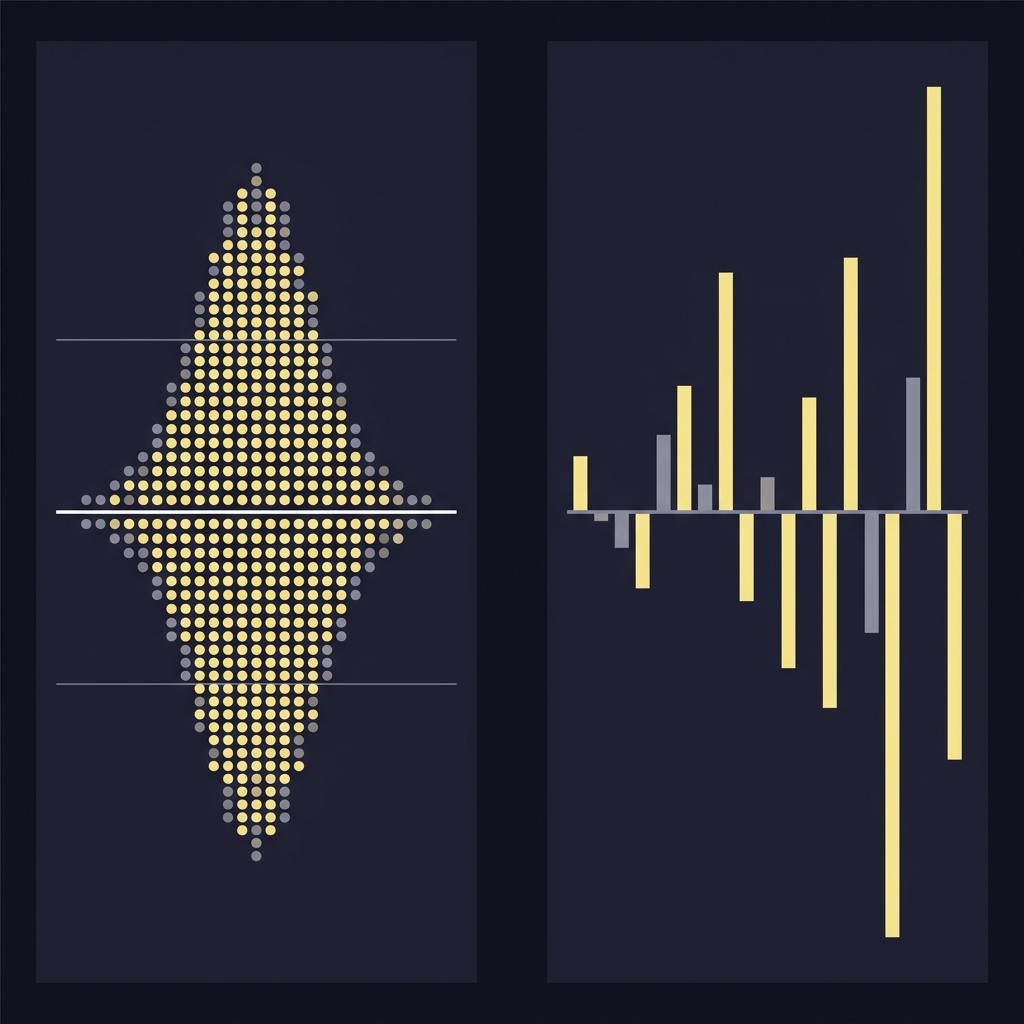
Using probabilistic forecasts rather than single-point predictions
Presenting outcomes as probabilities and ranges acknowledges the inherent uncertainty created by three-point variance. Rather than giving a single predicted score, models that output win probabilities or confidence intervals provide users with a clearer sense of how much noise exists in the estimate.
Ensembles that combine different model views also help. Blending a context-rich shot quality model with a simpler descriptive model reduces sensitivity to any one noisy signal and makes forecasting more robust when three-point shooting is erratic.
Roster construction: building teams that are resilient to shooting variance
Balance of creators and spot-up shooters
When building a roster, front offices can aim for a balance between creators who generate high-quality attempts and spot-up shooters who convert reliably. Having multiple players who can act as both creator and catch-and-shoot options reduces the impact of any single shooter's cold spell.
Depth matters: a second or third reliable shooter in the rotation makes a team less dependent on hot nights from one star. In recruiting and rotations, prioritize players whose shot selection and role produce meaningful contributions even when three-point attempts are less successful.
Defensive emphasis to offset offensive variance
A strong defensive identity and rebounding can offset offensive variance. Teams that limit opponent scoring and control the glass reduce the degree to which their own three-point variance determines game outcomes. Defensive consistency buys tolerance for offensive noise.
Coaches who emphasize defensive fundamentals and transition control create environments where one off-shooting night is less likely to lose a game than for teams that rely solely on perimeter scoring.
Implications for fantasy, predictive products, and fans
How variance changes short-term fantasy value
In fantasy contexts, a player’s short-term value can swing dramatically because of three-point variance. A run of hot games can boost counting stat production and perceived value, while a cold streak can sink a player's weekly output. Managers should weigh sample size and seek stabilizing indicators before making long-term roster moves. For resources, see Funded Plays.
For those using subscription predictions or public models, favor outputs that show probability ranges or note confidence levels. That helps avoid overreacting to a single hot streak when deciding to trade or drop a player.
What predictive consumers should watch for
Fans and model users should watch for signs that a player's underlying shot quality is changing: consistent movement to more open looks, a change in role that improves shot selection, or repeated improvements in contested attempts. These patterns suggest a genuine shift rather than short-term luck.
Conservatism is often warranted. When evidence is ambiguous, prefer smoothed estimates and track multiple games before making subscription or lineup decisions based on three-point outcomes.
Common mistakes analysts and fans make when interpreting three-point variance
Overfitting to small samples
A common error is treating a short streak as proof of a lasting change. Small samples are noisy, and overfitting to them leads to bad decisions. Simple diagnostic checks, like ensuring a minimum attempts threshold before updating a view, reduce this risk.
Another tendency is selection bias: noticing only the stories that fit a preferred narrative and ignoring counterexamples. Keep a log of both supporting and conflicting evidence before shifting opinions about players or teams.
Misreading correlation as causation
Correlation between strong three-point nights and wins does not always imply causal impact. Often other factors, such as defensive stops or opponent turnovers, co-occur with hot shooting and also drive outcomes. Analysts should test whether three-point results still explain wins after accounting for those factors before drawing causal claims.
When unsure, ask conservative next steps: wait for more games, use smoothed metrics, and document the evidence that would be required to change a view. Small, deliberate updates are better than sweeping changes based on noisy patterns.
Practical scenarios: three short case-style examples to build intuition
Scenario A: a team with one high-volume three-point shooter
Imagine a team that relies heavily on a single player for most three-point attempts. That concentration creates high team variance: the player’s off nights hurt the team more, while hot nights can carry them to wins. For coaching, the practical implication is to prepare alternative scoring plans and limit single-player reliance when possible.
Steps to respond: 1) add plays that free other shooters, 2) give minutes to a reliable secondary option, 3) emphasize inside scoring in the event of a cold stretch. For modeling, reduce the weight on the single shooter’s recent hot streak until it is supported by a larger sample.
Scenario B: balanced shooters and reduced volatility
Now imagine a team where three-point attempts are spread across four or five reliable shooters. The team’s scoring becomes more stable; even if one shooter cools, others can pick up volume. Coaches should value movement and role clarity in practice to sustain this balance.
Steps to respond: 1) maintain rotation of spot-up shooters, 2) prioritize offensive sets that generate multiple good looks per possession, 3) monitor shot quality metrics to ensure balance is genuine rather than illusionary.
Scenario C: a tournament upset driven by a hot shooting night
In a single-elimination game, an underdog hits an unusually high share of threes. That hot night can overcome a difference in overall team quality. For forecasting, this scenario shows why probabilistic outputs are preferable: the underdog had a nonzero chance to win because of variance, even if the favorite was favored on average.
Steps to respond: 1) treat such upsets as examples of variance rather than proof of sustained superiority, 2) update models only modestly unless subsequent games show persistent change, 3) use the upset to refine checks for when a hot night might indicate real improvement versus mere luck.
How to incorporate three-point variance into your forecasts and decisions
Practical checklist for analysts
Use a short checklist: smooth early-season percentages toward a league baseline, require minimum attempt thresholds before strong updates, combine descriptive and contextual metrics, express outcomes as probabilities, and track shot quality signals that would justify larger updates. This checklist is simple enough to include in model documentation and handy for quick pregame notes.
For coaches, a shorter operational checklist helps: diversify shot creators, prepare alternative late-game options, and monitor players whose role changes may temporarily distort shooting numbers.
Simple adjustments coaches and fans can use
Coaches can add basic rules: if a primary shooter goes three straight possessions without a make, increase inside actions for the next trip; or rotate in a reliable spot-up shooter after a cold half. Fans and fantasy managers can adopt conservative trading rules that avoid reacting to single-game extremes.

Over time, these small adjustments reduce the harm that noisy three-point swings cause to decision quality and improve the resilience of both teams and model forecasts.
Conclusion: key takeaways and responsible use of variance-aware thinking
Summary of practical lessons
Three-point variance matters because each attempt is a binary outcome that, when aggregated in small samples, produces large swings. Understanding the mechanics, measuring variance with both simple and contextual metrics, and applying smoothing and probabilistic thinking help coaches, analysts, and fans separate noise from genuine change.
Apply pragmatic steps: diversify shooting sources, use smoothed forecasts early in the season, design in-game adjustments for cold nights, and require contextual signals before concluding a lasting shift in skill. These practices lead to steadier decision-making.
Final cautions and next steps
Be cautious about making big roster or model changes based on short samples. Track indicators that suggest underlying changes in shot quality, and treat single-game outliers as informative but not definitive. Responsible interpretation of three-point shooting variance helps avoid overreaction and improves long-term outcomes.
Wait for a reasonable sample of attempts and look for contextual confirmation like shot quality and role stability before changing long-term assessments.
Not usually; single-game outliers are often noise. Look for repeated changes in shot quality or role before assuming a lasting shift.
Emphasize high-percentage twos, attack closeouts to draw fouls, and diversify shot sources to reduce reliance on one shooter.
References
- https://www.fundedplays.com/challenges
- https://thepowerrank.com/2020/07/28/predictability-vs-skill-in-sports-analytics-3-point-shooting/
- https://www.ncaa.com/stats/basketball-men/d1
- https://www.sloansportsconference.com/research-papers/live-by-the-three-die-by-the-three
- https://www.fundedplays.com
- https://www.fundedplays.com/blogs
- https://www.fundedplays.com/blogs/how-fundedplays-evaluations-work