

What trading consistency means and why routines matter
What trading consistency means in a trading-style decision environment is primarily about reducing execution variability and following predefined rules rather than promising any particular return profile. For people who participate in prediction challenges or manage a virtual bankroll, consistency looks like repeatable adherence to entry and risk rules, fewer impulsive deviations, and stable decision processes that are auditable over time.
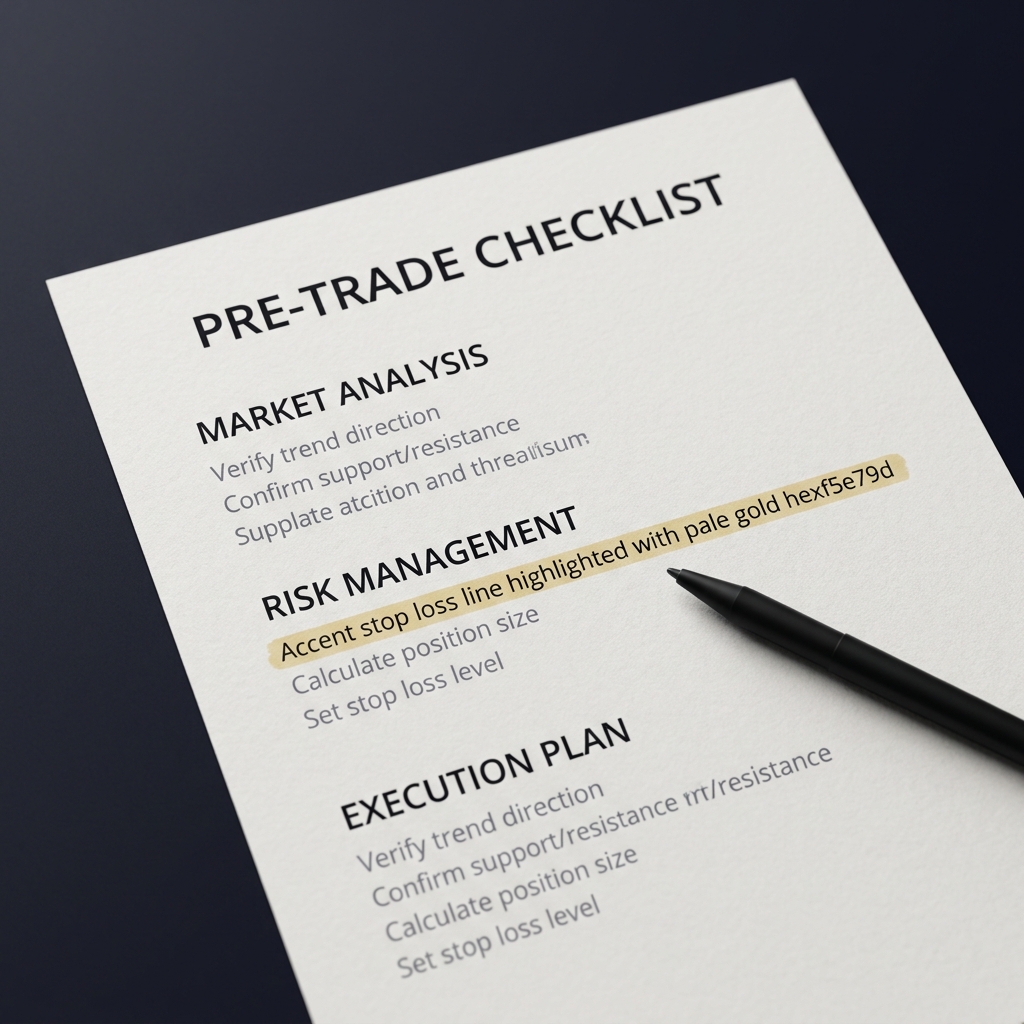
That emphasis on execution quality is why a structured trading routine can be a credible lever for better results. By codifying preparation steps, quick must-pass checks, and clear triggers, routines make it easier to apply the same decision filters each time and to spot when behavior drifts away from your plan. The approach borrows from other high-stakes fields where process reliability matters, and it is best understood as a way to reduce decision variance rather than to guarantee outcomes.
The direct randomized evidence specifically in trading is limited, so the recommendations below translate findings from adjacent domains and experimental studies in self-paced tasks; readers should treat these translations as pragmatic hypotheses to test rather than proven trading prescriptions. For the core idea that a short, repeatable pre-performance protocol improves execution in self-paced tasks see the Sports Medicine meta-analysis on pre-performance routines, which summarizes evidence from multiple studies Sports Medicine meta-analysis.
The science behind routines and decision consistency
Experimental and meta-analytic work offers two consistent findings that apply to trading-style decisions. First, short pre-performance routines increase the reliability of self-paced actions by reducing omissions and variation in execution. Translating that to trading, a brief pre-trade block that confirms fit to strategy and risk rules can reduce impulsive entries and improve repeatability in choice behavior Sports Medicine meta-analysis.

Second, forming implementation intentions, often expressed as if-then plans, increases the probability of carrying out goal-directed actions. When a trader pairs a concrete if-then rule with regular progress checks, adherence to that rule tends to rise. For a broad review of how if-then planning supports goal attainment see the meta-analysis in Advances in Experimental Social Psychology and for complementary evidence on monitoring benefits see the Psychological Bulletin meta-analysis on progress monitoring Advances in Experimental Social Psychology review and related meta-analyses meta-analysis.
Operational checklist practices from aviation and surgical safety also map well to short pre-trade checklists. These domains use concise must-pass items and brief team confirmations to avoid critical omissions, and similar surgical and manual checks are effective at capturing small but consequential errors before they propagate WHO surgical safety checklist.
Across these findings the takeaway is straightforward: brief, testable routines and clear if-then triggers reduce execution noise, while ongoing monitoring helps maintain adherence over time. The next sections turn those principles into a practical framework you can adopt and test in a focused way.
Practice routines in a structured challenge
Try a one-item pre-trade checklist this week, for example, confirm position size only, and log whether you followed it.
A core routine framework you can adopt
A usable framework splits routines into three phases: pre-trade, in-trade, and post-trade. The pre-trade phase is a short preparation block that checks strategy fit, size, and obvious risk exposures. The in-trade phase defines how to manage live positions with clear stop and scaling rules. The post-trade phase captures execution data, immediate notes, and short review actions.
Design principles for each phase should emphasize brevity, must-pass items, and explicit triggers with recovery actions. Take the checklist habit from surgical and aviation practice: short lists with critical items only, a forced pause to confirm, and clear statements of what to do if an item fails. Those same principles reduce omission errors in other complex tasks WHO surgical safety checklist.
Combine these phase steps with if-then rules so decisions under pressure are less ad-hoc. For example, an if-then might read: If my per-trade risk exceeds 1.5 percent of my active virtual bankroll, then cancel the entry and re-evaluate the setup. Implementation intentions are supported by meta-analytic work showing they raise goal attainment when paired with monitoring Psychological Bulletin meta-analysis and related reviews implementation intentions study.
Build a practical pre-trade checklist
A practical pre-trade checklist must be short and focused on the single most error-prone items. Typical must-pass items include: confirm strategy fit, position sizing confirmation, drawdown exposure check, stop-loss and profit target set, quick calendar or news check, and a final signal confirmation. Each item should take only a few seconds to verify.

Keep the checklist to a single page and phrase items so they are binary pass or fail. Surgical and aviation evidence shows that long expansive lists erode compliance, while concise must-pass items help operators focus on the essentials and avoid omission errors WHO surgical safety checklist.
Sample one-page pre-trade checklist template
1. Strategy fit: Does this trade match my documented setup? Yes or no.
2. Position size: Is the calculated size within my per-trade limit? Yes or no.
3. Account exposure: Will this trade keep me within session and daily drawdown rules? Yes or no.
4. Stop and target: Have I entered a stop-loss and a target in the platform? Yes or no.
5. News check: No scheduled event in the next X hours that invalidates the setup? Yes or no.
6. Signal confirmation: Primary signal and one secondary confirmation agree? Yes or no.
Why brevity matters and how to test the checklist: short checklists reduce the chance of skipping an item and make it practical to use every trade. For a first-week test, use the checklist on every trade and record a simple pass rate, then compare outcomes such as rule adherence and execution deviations to the prior week Sports Medicine meta-analysis.
Pick one checklist item, apply it consistently for a fixed period, log rule adherence and one execution metric, and compare the results to a prior baseline to determine improvement.
Instructions for a first-week test: commit to using the checklist for one week, log each trade with a single-line note on whether each item passed, and measure your rule adherence rate at the end of the week. Set a modest success threshold such as 80 percent adherence to consider the checklist useful for further refinement.
In-trade rules and explicit risk limits
In-trade rules are the guardrails you follow while a position is live. Effective rules specify per-trade risk, session limits, and daily drawdown caps with clear recovery steps. A simple sample session limit rule is: stop trading for the session after a cumulative loss of 3 percent of the active virtual bankroll and perform a short review before resuming.
Risk management frameworks that include defined limits, triggers, and recovery actions reduce behavioral variance under stress because they remove judgment from the immediate decision loop. This approach mirrors guidance in aviation risk management where predefined recovery actions help crews act consistently under pressure FAA risk management handbook.
Automated triggers and explicit recovery actions are useful because they create a concrete default behavior during stressful moments. For example, if a session drawdown limit is hit then the recovery action might be a mandatory cooling-off period and a short journal entry that lists the deviations to investigate. Treat these rules as testable hypotheses and measure whether they reduce execution variance rather than assuming they will improve profit.
Post-trade review, journaling and progress monitoring
Good post-trade reviews capture measurable metrics and short notes that make future iteration possible. Core metrics to track include rule adherence rate, average risk per trade, win-rate by setup, drawdown history, and execution deviations. These metrics enable objective comparison across weeks and setups and form the basis of reliable progress monitoring Psychological Bulletin meta-analysis and resources on implementation intentions Implementation Intentions.
Structured progress monitoring combined with implementation intentions raises adherence to routines because it turns loose goals into observable commitments. Weekly dashboards that report adherence and a small set of performance indicators make it easy to spot behavior shifts early and to set specific experiments for improvement Advances in Experimental Social Psychology review.
In a funded account challenge workflow, users complete evaluation objectives using virtual funds and track those outcomes through a performance dashboard with drawdown limits and progression milestones. This structure is useful for separating execution measurement from real money emotions and for running small, measured experiments on routines.

Weekly review ritual template: list trades from the week, compute your rule adherence rate, note two deviations and their contexts, set one small experiment for next week, and record a clear success criterion. Over time these short reviews compound into clearer evidence about what aspects of a routine work for you.
Common mistakes and cognitive traps to avoid
Checklist bloat is a common mistake. Long checklists with many low-value items become hard to use and are often skipped. Surgical and aviation literature recommends focusing checklists on critical must-pass items and keeping the rest for more comprehensive training documents WHO surgical safety checklist.
Decision fatigue and irregular sleep schedules also erode routine benefits. Consistent sleep and regular work windows protect attention and decision quality, which matters when you must apply rules under time pressure. For guidance on how schedules influence cognitive performance see the CDC review on shift work and long work hours CDC NIOSH guidance.
Other cognitive traps include confirmation bias, revenge trading, and incremental rule-nibbling. Quick corrective steps are practical: enforce short cooling-off periods after a loss, record only objective facts in the journal, and add simple if-then contingencies such as if you break the position size rule then stop trading for the session. Framing these steps as experiments reduces moralizing language and makes behavior change easier to measure.
Practical examples and sample routines to try this month
Here are two 7-day routines you can try. Beginner routine: limit sessions to a fixed two-hour window, use a one-page pre-trade checklist on every trade, cap per-trade risk at 0.5 percent, and run a short end-of-day log with pass rates. Disciplined trader routine: follow your full three-phase routine with a slightly higher per-trade risk, apply session and daily drawdown rules, and run a focused weekly dashboard review every Sunday.
How to run a one-week A/B test on a single checklist item: pick one item such as position sizing, run the original workflow for the first three trading days, then enforce the checklist item for the next three trading days, and compare rule adherence rate and execution deviations. Use a clear success criterion such as a relative improvement in rule adherence of at least 20 percent to guide whether to keep the change Psychological Bulletin meta-analysis.
Simple A B test template for one checklist item
Copy to a spreadsheet and duplicate rows for each trade
Run these two 7-day routines back to back or in parallel using separate accounts or logs. Keep each experiment narrow and measurable, and update only one element at a time so you can attribute changes to the specific routine adjustment.
Putting it together: a 30-day routine plan and next steps
Week 1: Introduce the one-page pre-trade checklist and apply it to every trade. Track rule adherence rate daily and record a short note for deviations. Week 2: Add in-trade rules such as per-trade and session drawdown limits and require the stop-loss to be placed before position entry. Week 3: Start the weekly dashboard review and add one small experiment based on early logging insights. Week 4: Evaluate 30-day metrics against your initial success criteria and decide whether to iterate or scale the routine.
Rules for iterating versus scaling: if a checklist change improves rule adherence and execution deviations by your predefined threshold then keep and standardize it. If a change shows no improvement after a reasonable sample then revert and try a different small experiment. Remember routines improve execution quality and reduce variability but they do not guarantee any specific financial result.
Final note: routines are habits that require data, small experiments, and patience. Treat them as testable process improvements, keep logs short and objective, and let measured results drive whether you keep, tweak, or drop a routine element.
A pre-trade checklist is a short list of must-pass items to verify before entering a trade. It reduces omissions, enforces risk rules, and makes behavior measurable.
Expect to see changes in rule adherence within one to four weeks, depending on how consistently you apply the routine and record metrics.
No. Routines improve execution quality and reduce variance, but they do not guarantee specific financial outcomes or profits.
References
- https://www.fundedplays.com
- https://www.fundedplays.com/blogs
- https://www.fundedplays.com/blogs/how-fundedplays-evaluations-work
- https://link.springer.com/article/10.1007/s40279-020-01238-7
- https://www.sciencedirect.com/science/article/pii/S0065260106380020
- https://www.who.int/teams/integrated-health-services/patient-safety/research/safe-surgery
- https://www.ncbi.nlm.nih.gov/pmc/articles/PMC4784095/
- https://www.fundedplays.com/challenges
- https://www.faa.gov/regulations_policies/handbooks_manuals/aviation/risk_management_handbook
- https://www.cdc.gov/niosh/topics/workschedules/
- https://www.sciencedirect.com/science/article/abs/pii/S2352550925000260
- https://pmc.ncbi.nlm.nih.gov/articles/PMC11920387/
- https://cancercontrol.cancer.gov/brp/research/constructs/implementation-intentions